Home
>>
Technical Platform
>>
Protein Expression Platform
>>
Yeast Expression System
Download Center
Quick Inquiry & Consultation
Yeast Expression SystemIntroduction

The yeast expression system offers numerous advantages, including a well-characterized genetic background, fast growth, simple cultivation conditions, and high safety, making it widely applicable in protein production, drug development, and vaccine manufacturing. As a versatile eukaryotic expression platform for producing recombinant proteins, yeast systems commonly utilize Saccharomyces cerevisiae (budding yeast) or Pichia pastoris (methylotrophic yeast) as host organisms, with Pichia pastoris being the most frequently used.

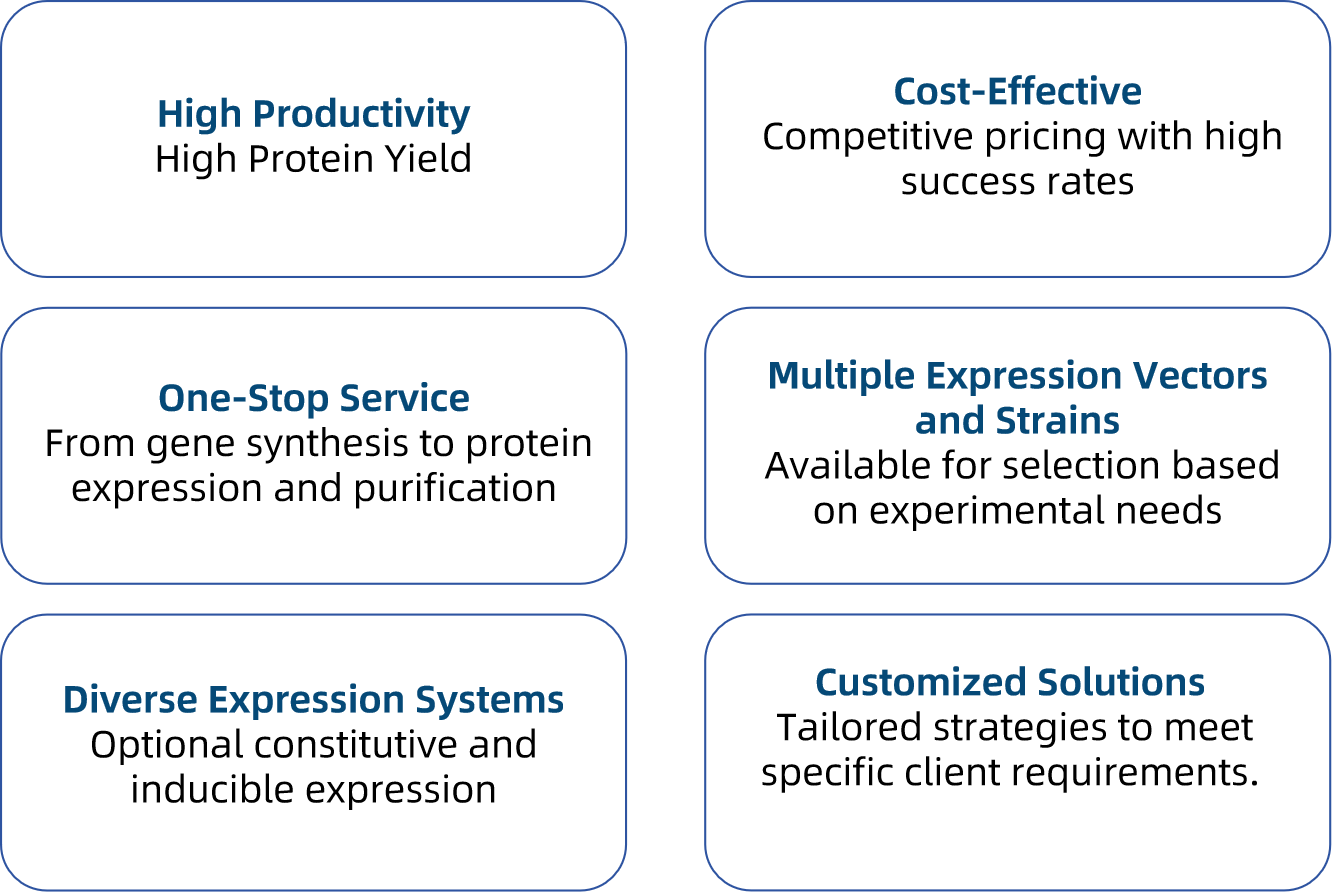
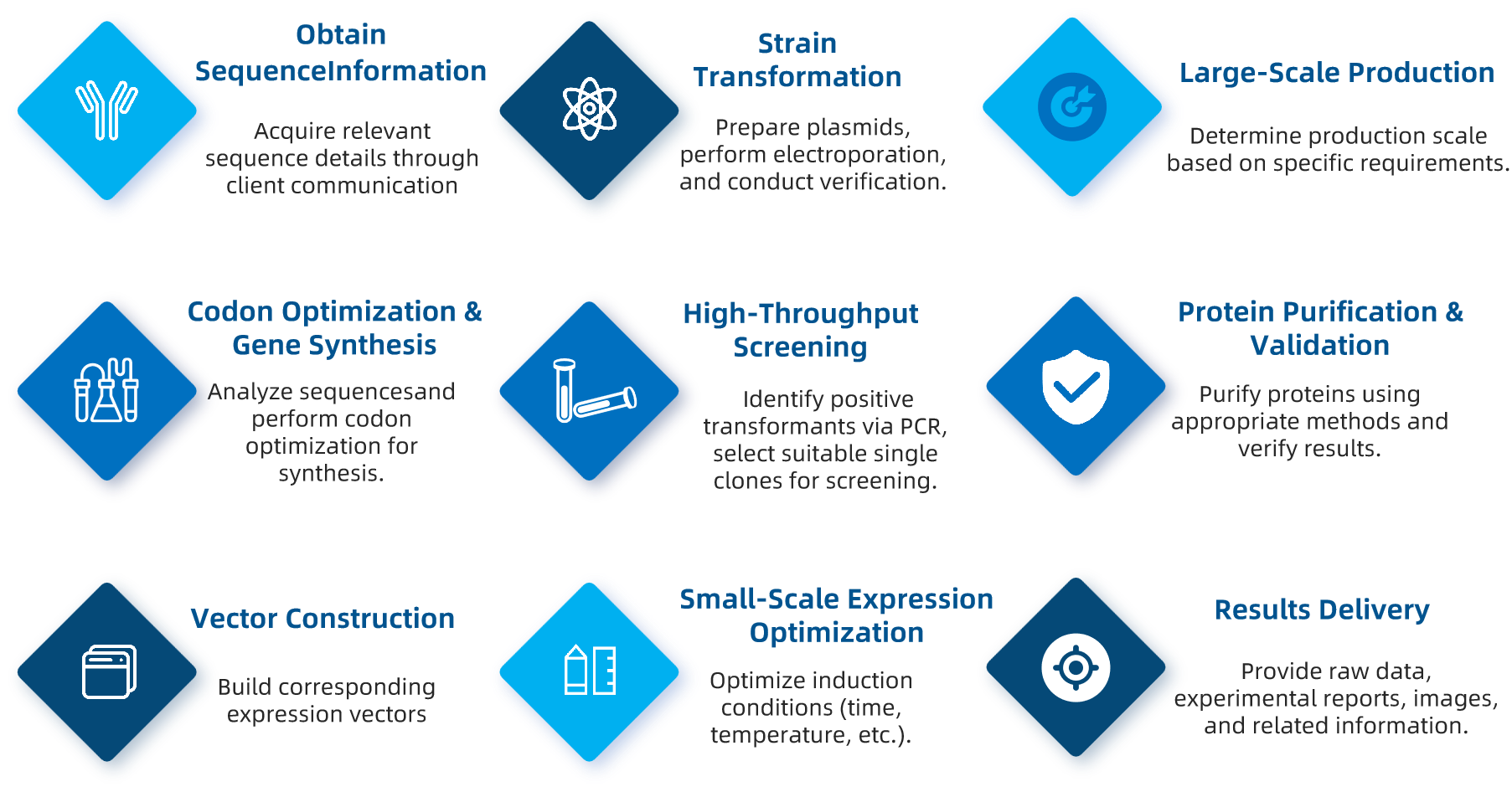
KMD Bioscience has established a mature and comprehensive yeast expression platform, offering one-stop services from gene synthesis to yeast-based protein expression and purification. Our experienced scientific team continuously optimizes experimental conditions to ensure high-level expression of recombinant proteins. We are committed to delivering exceptional technical support and customized solutions to meet our customers’ needs.
The commonly used strains in yeast expression systems

1. Saccharomyces cerevisiae: Also known as budding yeast or baker’s yeast, Saccharomyces cerevisiae is a widely used strain for protein expression. It is suitable for expressing a broad range of proteins, including those with complex structures. This yeast strain is frequently applied in recombinant protein expression, metabolic engineering, and studies of various cellular processes.

2. Pichia pastoris: Pichia pastoris is another commonly used yeast strain for recombinant protein expression. It has advantages such as high-level expression, the ability to perform post-translational modifications, and the secretion of recombinant proteins into the culture media. Pasteur Pichia pastoris is a methylotrophic yeast and another popular host for recombinant protein expression, particularly suitable for the expression of secreted proteins and membrane proteins. It is capable of producing high levels of recombinant proteins and performing post-translational modifications, including glycosylation.

3. Kluyveromyces lactis: Kluyveromyces lactis is a non-conventional yeast that has become a popular host for recombinant protein expression. It offers advantages such as fast growth, high transformation efficiency, and the ability to secrete recombinant proteins. It is commonly used to produce heterologous proteins including enzymes and therapeutic proteins.

Features of Yeast Expression Systems

图片2.png

Introduction to Yeast Expression Systems

In yeast expression systems, gene expression can be categorized into constitutive expression and inducible expression, depending on the mode of regulation.

1. Constitutive Expression

Constitutive expression refers to the continuous and stable expression of a heterologous gene integrated into the yeast chromosome without the need for specific inducers. The main advantage of this strategy is its operational simplicity—no external inducers are required—and it generally supports a relatively high expression level. However, constitutive expression may also impose a metabolic burden on yeast cells, potentially affecting their growth and viability.

Commonly used yeast strains for constitutive expression include Saccharomyces cerevisiae and Pichia pastoris, both known for their strong protein synthesis capacity and excellent fermentation performance. These yeasts are widely applied in the production of heterologous proteins.

2. Inducible Expression

Unlike constitutive expression, inducible expression requires specific environmental conditions or the addition of an inducer to activate heterologous gene expression. This approach offers greater flexibility, allowing precise control over the timing and level of protein production. It also reduces the metabolic load on yeast cells, thereby improving their growth and survival.

Common yeast systems for inducible expression include methylotrophic yeasts and galactose-inducible yeasts. For example, Pichia pastoris, a methylotrophic yeast, expresses foreign proteins when cultured in media using methanol as a carbon source. Galactose-inducible systems use galactose as the inducer and regulate gene expression through control of the galactose metabolism pathway.

Service process

图片4.png

Login

Don’t have an account?Sign Up Now

Register

Already have an account?Log In Now