


An scFv consists of the variable regions of an immunoglobulin's heavy chain (VH) and light chain (VL), connected by a flexible linker peptide, retaining the antigen-binding properties of IgG Antibodies. Compared to the traditional hybridoma technology for producing full-length IgG, scFvs offer advantages including small size, strong specificity, and suitability for large-scale production in E. coli expression systems. With a size of only about 25 kDa, scFvs exhibit enhanced diffusion within tumors and higher blood clearance rates. Several scFvs have been approved for clinical use in targeted tumor therapy.
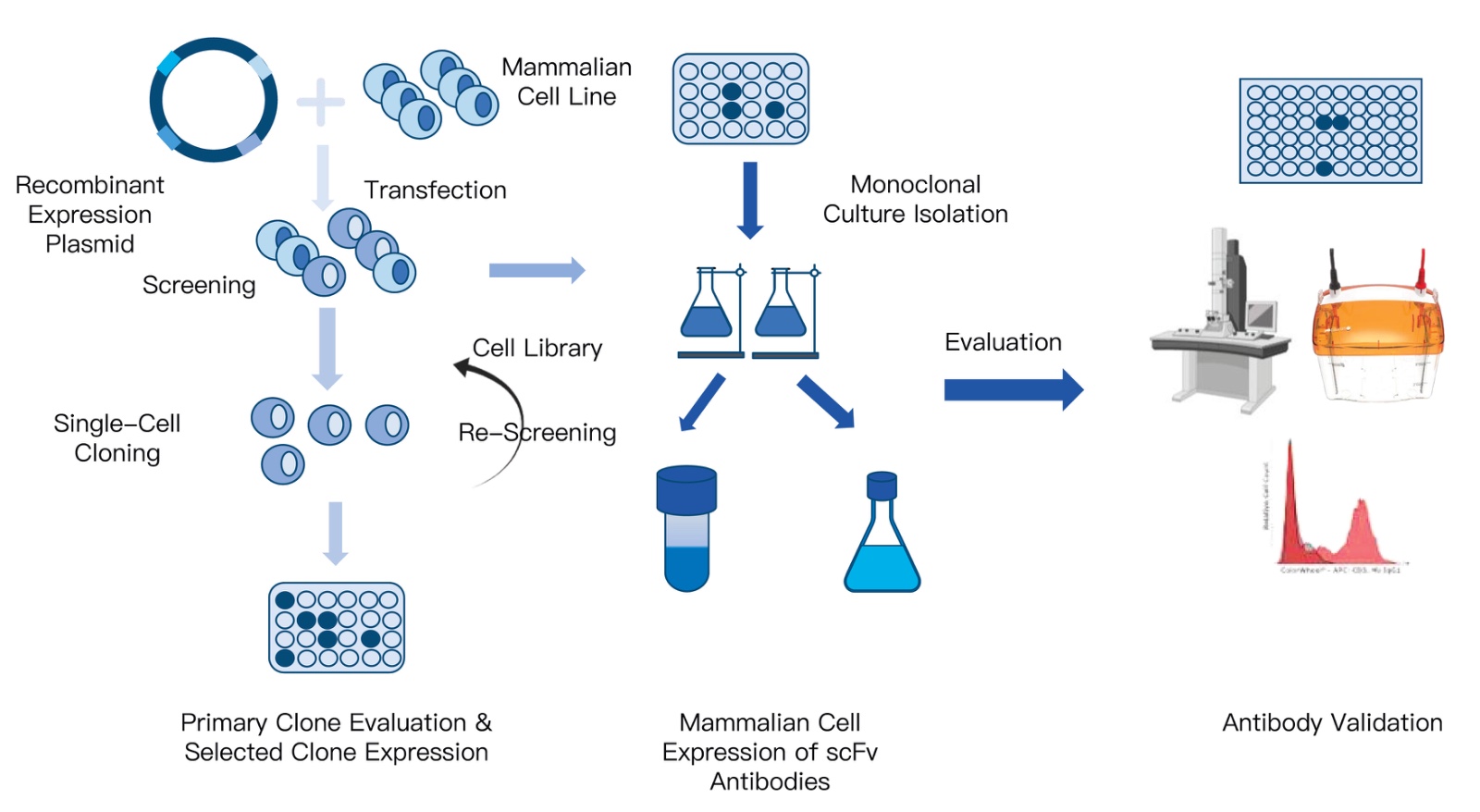
Single-chain variable fragments (scFvs) are composed of the variable regions of the immunoglobulin heavy chain (VH) and light chain (VL), connected by a flexible peptide linker, and retain the antigen‑binding specificity of full‑length IgG antibodies. Compared with conventional hybridoma technology for producing full‑length IgG, scFvs offer distinct advantages, including small size, high specificity, and the capability for large‑scale production in E. coli expression systems. With a molecular weight of approximately 25 kDa, their diminutive size confers excellent tumor tissue penetration, although it also accelerates their clearance from the bloodstream. Several scFv‑based drugs have already received regulatory approval for clinical use and are being successfully applied in targeted cancer therapy.
KMD Bioscience possesses a well‑established technical system in recombinant antibody production, covering the entire workflow from scFv library construction and screening to expression and purification. Leveraging multiple protein expression systems, we provide high‑quality scFv preparation services and can customize personalized antibody characterization and functional validation protocols according to specific research needs, thereby accelerating the preliminary assessment and effectiveness verification of antibody functions.
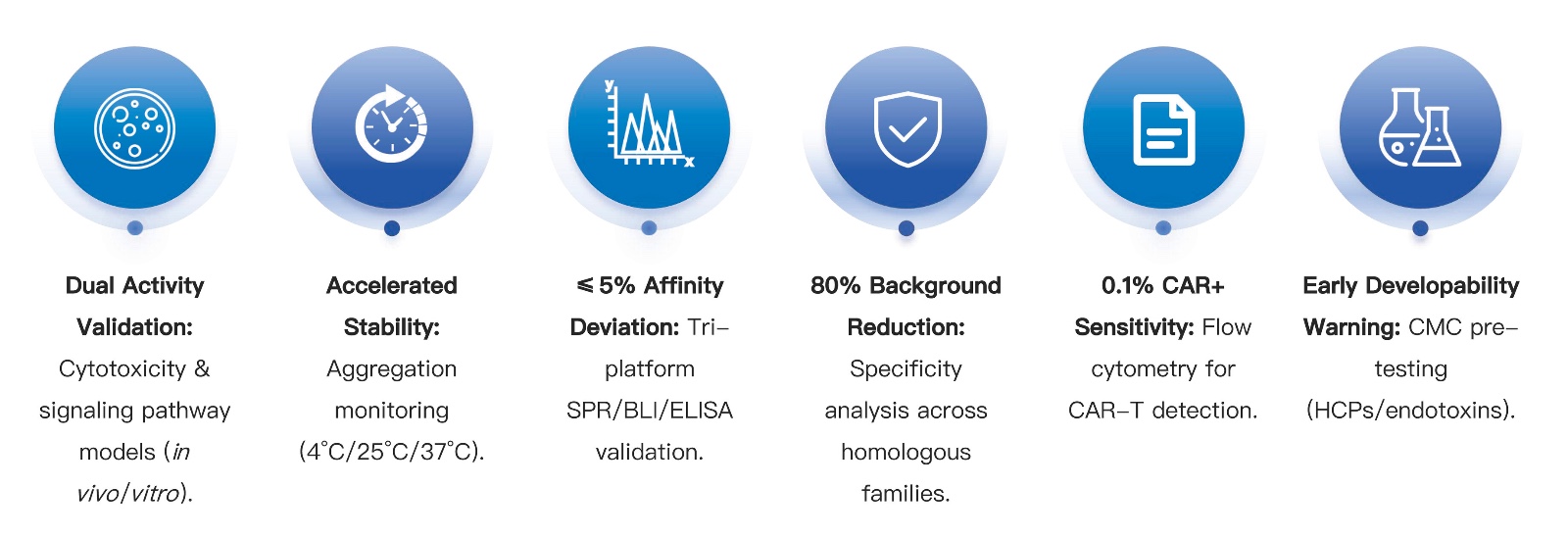
To evaluate key performance parameters such as reproducibility, specificity, stability, and affinity of antibodies, KMD Bioscience has established a comprehensive validation platform. The commonly employed techniques include Western blotting (WB), immunohistochemistry (IHC), immunocytochemistry (ICC), immunofluorescence (IF), enzyme‑linked immunosorbent assay (ELISA), immunoprecipitation (IP), chromatin immunoprecipitation (ChIP), peptide arrays, flow cytometry (FC), and validation using gene knockout cell lines. When used in combination, these techniques ensure that the produced scFv antibodies exhibit correct epitope binding, clear background signals, and meet the research requirements of clients across various experimental scenarios.
scFv Antibody Characterization and Functional Validation–Service Workflow
Validation Method | Principle and Advantages |
Western Blot | Determines the molecular weight of the target protein and verifies antibody specificity. |
IHC | Identifies tissue‑specific expression and subcellular localization of the target protein. |
ELISA | Supports both qualitative and quantitative detection; provides objective, clear, and easily interpretable results. |
IHC/ICC | Combines cellular and subcellular localization data to further validate antibody specificity. |
Peptide Array | A high‑throughput platform that screens hundreds of peptides in a single assay, enabling efficient and comprehensive assessment of antibody specificity. |





 0
