Home
>>
Technical Platform
>>
Viral Vector and Cell Technology Platform
>>
Slow virus packaging service
Download Center
Quick Inquiry & Consultation
Slow virus packaging serviceIntroduction

    KMD Bioscience has extensive experience in protein expression research and possesses profound expertise in viral vector development. The company has established a comprehensive lentiviral packaging technology platform, providing end-to-end technical services encompassing vector design, viral packaging, purification processes, and transduction validation. Building upon its lentiviral packaging system, KMD Bioscience employs high-titer production processes and stringent quality control assays to ensure optimal technical parameters such as viral titer and cytotoxicity from the outset. This approach guarantees lentiviral vectors exhibit high infectivity, low cytotoxicity, and batch-to-batch stability, thereby reducing overall experimental costs while maximizing protection for precious primary cells or stem cell samples, thereby safeguarding clients' research endeavors.

    KMD Bioscience‘s technology employs second-and third-generation self-inactivating lentiviral infection vector systems to achieve lentiviral packaging for human cells (e.g., HEK293T, HUVEC), animal cells (e.g., primary mouse neurons, rat cardiomyocytes), and difficult-to-transfect cells (e.g., primary T cells, stem cells). Each batch of viruses undergoes titration testing, sterility assessment, mycoplasma detection, and insertion fragment validation, ensuring viral safety, efficacy, and accurate expression of the target gene, thereby providing a solid foundation for your scientific research.
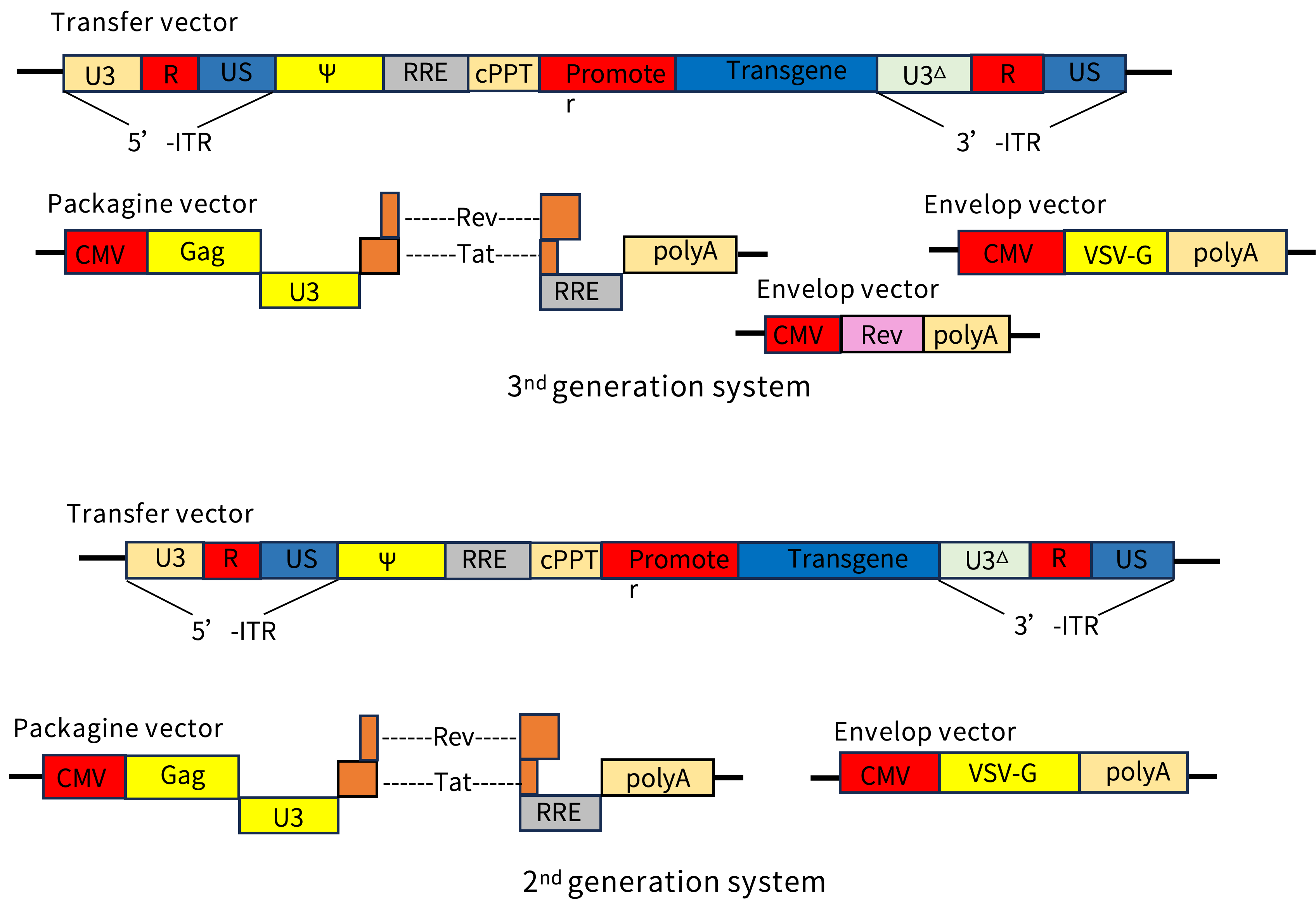

Introduction to Lentiviral Vectors

The lentiviral vector is a gene therapy vector engineered from human immunodeficiency virus type 1 (HIV-1), belonging to the retrovirus family, and exhibits high transduction efficiency in both dividing and non-dividing cells. Compared to transient transfection, the lentiviral vector enables effective integration of exogenous genes into the host chromosome for stable and sustained expression, with low immunogenicity, making it suitable for both in vivo and in vitro experiments.

The HIV-1 viral genome consists of a single-stranded RNA with a length of approximately 9.7 kb, each end containing reverse terminal repeat sequences (ITRs). The core region comprises three structural genes—gag, pol, and env—as well as six regulatory genes: tat, rev, nef, vif, vpr, and vpu. Through optimization for safety and packaging efficiency, modern engineered vectors have systematically eliminated pathogenic regulatory genes, retaining only essential components such as gag, pol, and rev. These systems have now evolved into second-generation (three-plasmid system) and third-generation (four-plasmid self-inactivating SIN system) packaging platforms, meeting diverse experimental requirements of users.

Lentiviral packaging  process.png

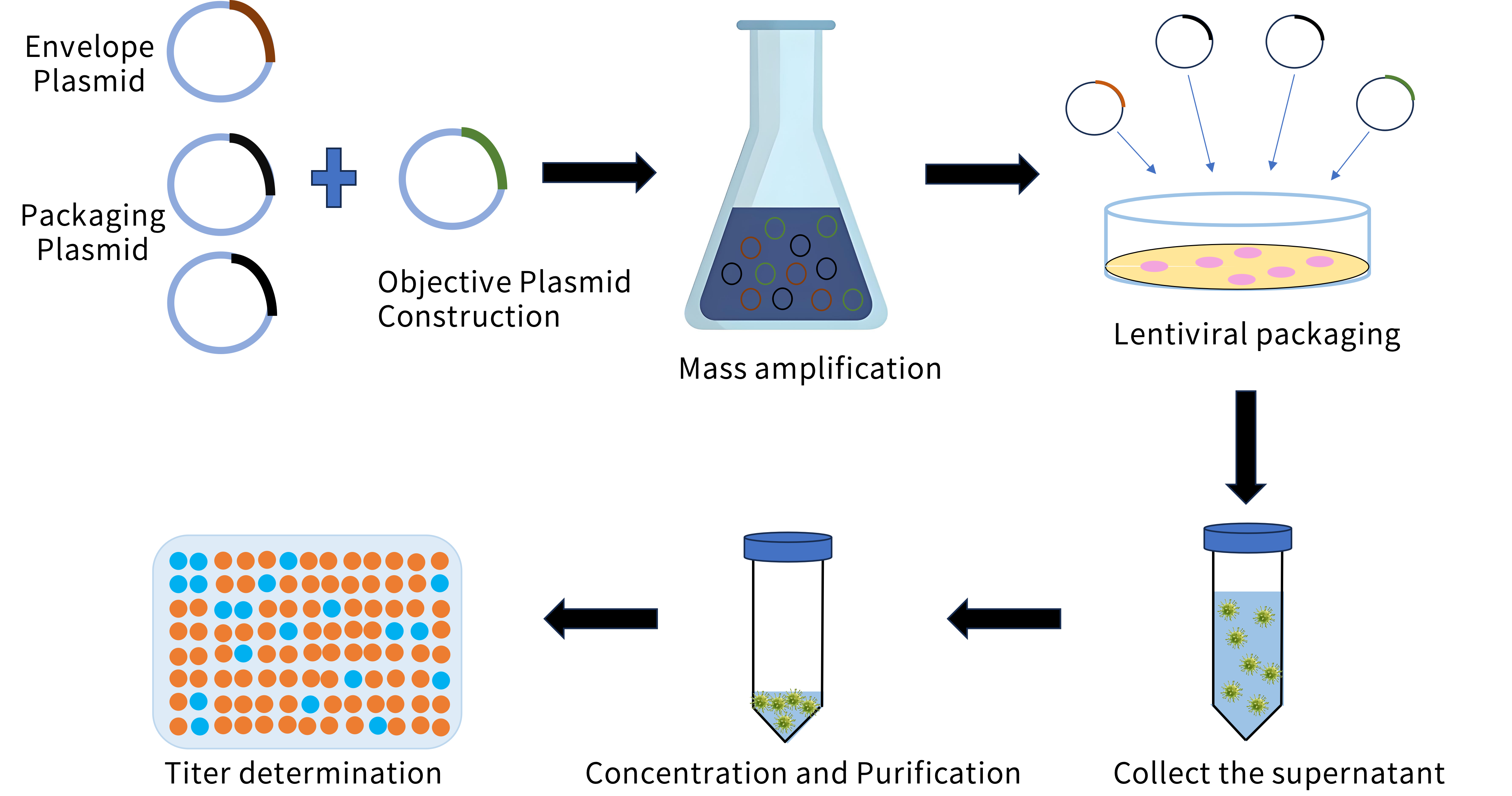
Lentiviral Packaging Service Process

    The lentiviral packaging system consists of a transfer plasmid, packaging plasmid, and envelope plasmid, with the second-generation three-plasmid system and third-generation four-plasmid system being the most widely used. KMD Bioscience Technology designs or synthesizes shRNAs based on the target gene provided by clients, constructs the corresponding vectors, performs large-scale extraction using an endotoxin removal kit, co-transfects the lentiviral plasmid system into 293T cells, collects viral supernatant, concentrates and purifies it, ultimately determines the viral titer, and delivers the samples.


Lentiviral packaging service process.png

Type of service

    Based on clients'th overex diverse research objectives, KMD Bioscience‘s technology  offers two packaging services: lentivirus wipression vectors and lentivirus carrying shRNAs, enabling precise control over the expression levels of target genes within host cells and providing flexible, reliable viral tools for experimental studies.

type of service

Overexpression of the lentivirus

shRNA slow virus

preparation method

The target gene is cloned into a lentiviral vector, and viral infection is employed to achieve stable and efficient overexpression of the gene in target cells.

The shRNA sequence designed for the target gene is cloned into a lentiviral vector, processed into siRNA within cells, and specifically degraded the target mRNA via the RNA interference (RNAi) mechanism to achieve gene knockdown.

Core Mechanism

The stable integration of genes

Mandatory Expression

RNA interference (RNAi)

Main Scope of Application

*Functionality acquisition studies: Investigating the effects of gene overexpression on cellular phenotype, signaling pathways, differentiation, etc.;

*Reporter gene system: Expresses fluorescent proteins (e.g., GFP) or luciferase for tracing, sorting, or detection;

Protein Production and Research: Large-scale production of specific proteins in cells for functional studies or antibody preparation.

*Gene therapy/cell therapy research: Expression of therapeutic genes in stem cells or immune cells.

*Functional deficiency studies: By knocking down the target gene, investigate the impact of its functional deficiency on life processes;

*Drug target validation: Determine whether a specific gene serves as a potential therapeutic target;

*Signal pathway investigation: By knocking down key genes in the pathway, the regulatory mechanisms of the pathway are elucidated.

*Synthetic lethality studies: Identifying novel targets for cancer therapy.

experimental period

Relatively short:

Once the vector is successfully constructed, the viral packaging and expression validation procedures are relatively straightforward.

Relatively long:

Additional time is required for efficient and specific shRNA sequence screening and validation.

superiority

High expression intensity, stable and sustained efficacy, and relatively high success rate

Gene knockdown, inducible systems, high-throughput screening


Service Advantages

--KMD Bioscience Technology has specialized in providing viral packaging services for over a decade, boasting extensive expertise.

--Providing end-to-end services ranging from vector design and construction/synthesis to viral packaging, concentration/purification, and titer determination, thereby shortening the research cycle.

--Multiple viral vector systems are available, with customized solutions tailored to customer requirements.

– Capable of delivering lentiviral particles with a titer of ≥1×10⁸ TU/mL for safe transportation

--A comprehensive customer service system, including technical support, project follow-up, and after-sales services, has earned unanimous praise from clients.


Technical Resources

Login

Don’t have an account?Sign Up Now

Register

Already have an account?Log In Now

