Home
>>
Antibody Platform
>>
Phage Display Platform

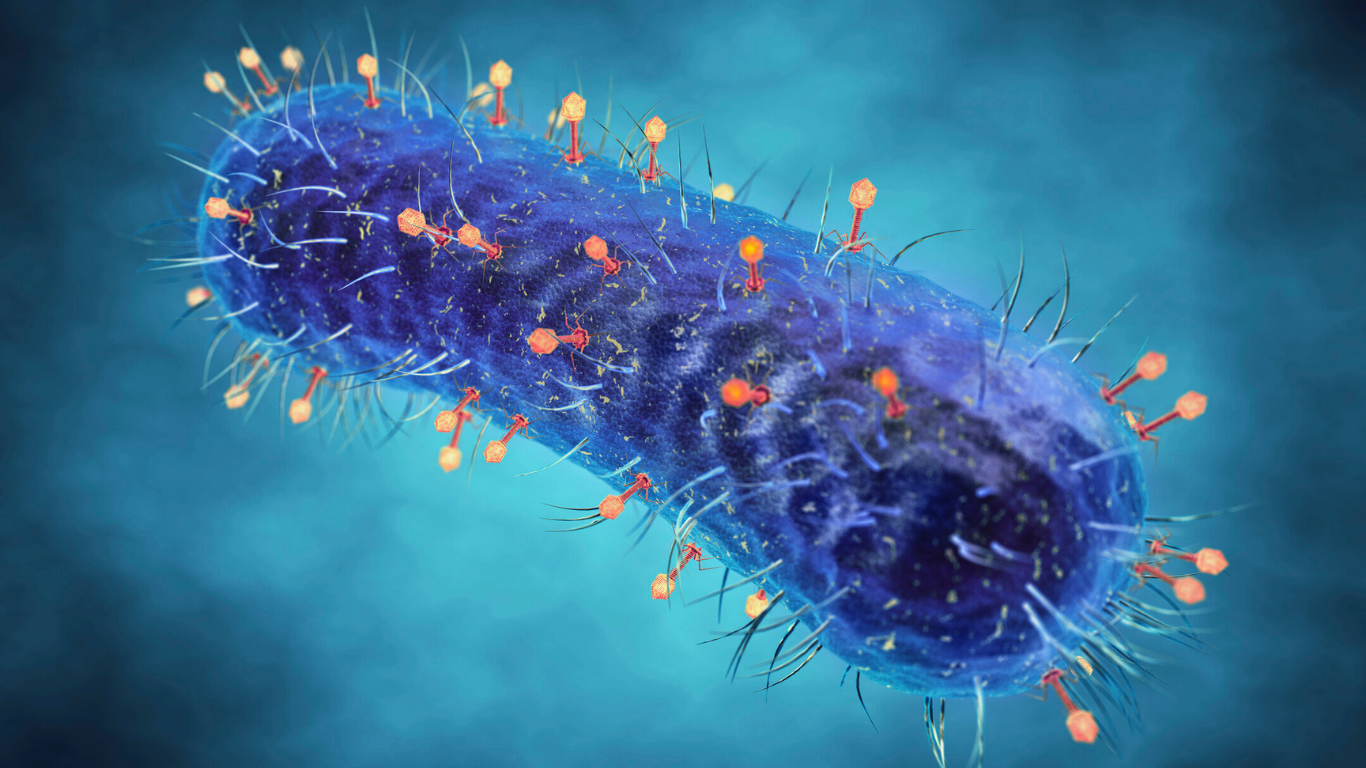
KMD Bioscience possesses an advanced phage display technology platform, offering customized high-quality phage display library construction services. We can create diverse natural libraries (mouse, rabbit, human, etc.), immune libraries (such as VHH libraries, scFv libraries, Fab libraries), synthetic libraries (e.g., peptide libraries), and semi-synthetic libraries for our clients, along with professional library panning and screening services. Through this platform, clients can rapidly identify antibodies or ligands with high affinity and specificity for their target of interest.

The advantages of phage display technology lie in its high throughput and flexibility, enabling rapid responses to various demands. In the antibody discovery process, we not only provide a range of optimization services such as antibody sequence expression, affinity maturation, and antibody labeling but also offer antibody humanization to further enhance antibody stability and clinical application value. Additionally, we have extensive experience in discovering antibodies against challenging targets, particularly in areas such as GPCRs (G-protein-coupled receptors), ion channel-related proteins, small molecules, and peptides, delivering tailored solutions for our clients.

Through KMD Bioscience’s phage display platform, clients can not only obtain high-quality, highly specific antibodies but also receive comprehensive support in antibody optimization and engineering, facilitating smooth progress in research. We are committed to providing innovative and precise technical services to drive continuous advancements in the biopharmaceutical field.

General Process

Phage Display PlatformGeneral Process

  • Customer Inquiry

  • Plan Confirmation

  • Contract Signing

  • Project Launch

  • Product Delivery

Customer Reviews

  • The M13 phage display platform facilitated smooth communication, and the project was successfully concluded. We obtained dozens of sequences, and the team has proceeded with downstream validation.

    Mr. P**

  • Leveraging its specialized phage display platform, KMD Bioscience successfully screened multiple high-affinity antibodies, which performed excellently in subsequent functional validation, helping us rapidly advance the project.

    Miller**

  • With the assistance of KMD Bioscience, our experiments achieved unprecedented breakthroughs, exceeding expectations and significantly advancing the project's progress.

    Susan**

  • Leveraging KMD Bioscience's high-throughput screening technology, we successfully identified multiple antibodies with exceptionally high affinity in a remarkably short time, further advancing the project.

    Davis**

  • Thanks to KMD Bioscience's proprietary phage display platform, we were able to efficiently screen antibodies with optimal affinity, which greatly met the requirements of our subsequent experiments.

    Jessica**

Frequently Asked Questions

Phage Display Platform(FAQs)

  • What are the advantages of phage display screening over other antibody development methods?

    Compared to the hybridoma technique, phage display technology offers significant advantages. The hybridoma method is limited to mice, rats, hamsters, and guinea pigs. In contrast, phage display can be used to generate high-affinity monoclonal antibodies from all common antibody-producing species, including but not limited to humans, mice, rats, rabbits, chickens, camels, camels, alpacas, cattle, dogs, sheep, monkeys, and sharks. Hybridoma-based monoclonal antibody development can generate only a small number of candidate antibodies against a specific immunogen at a time; in contrast, phage display technology can present the entire antibody repertoire of the immunized animal, of which nearly 10% are immunogen-specific. Given such a vast potential library of binding agents, the chances of discovering antibodies with the desired characteristics using phage display technology are much greater, and phage screening offers short turnaround times and flexible experimental design.

  • In which areas of research can phage display technology be applied?

    Depending on the specific target molecules, they can be broadly classified into the following two categories: 1) Proteins/Antibodies: Diagnostics, drug targeting, protein structure analysis, humanization, and custom antibodies for scientific research. 2) Random peptide libraries: Protein-protein interactions (ligand-receptor, signal transduction, antagonists/inhibitors, etc.), protein-DNA interactions, diagnostics, neutralizing activity, etc.

  • What is the nature and purpose of phage titer determination?

    In phage display technology, auxiliary phages containing the pⅢ phage display vector are typically used to infect E. coli to produce phage particles. The expression of fusion proteins in these particles follows a Poisson distribution: approximately 90% of the particles display only the wild-type pⅢ protein, less than 10% display a single copy of the fusion protein, and cases where multiple copies are displayed are extremely rare. Consequently, most fusion proteins are displayed in a monovalent form. Compared to multivalent display, monovalent display allows for the removal of weakly binding antibodies during the screening process. In contrast, multivalent display, due to the avidity effect, tends to enrich even weakly binding clones.

  • What is the method for storing a phage library?

    Improper storage methods can reduce the titer of phages. In principle, phage libraries stored in 50% glycerol at low temperatures (below -80°C) can be preserved for a relatively long time.

Online Ordering

Please fill in the required information below, and we will contact you within 24 hours!

  • Last Name*

  • First name*

  • E-mail*

  • Phone*

  • Country*

  • Company/Organization*

  • Detailed content*

Login

Don’t have an account?Sign Up Now

Register

Already have an account?Log In Now