Home
>>
Protein Platform
>>
Protein Modification & Detection Services
>>
De Novo Sequencing Service
De Novo Sequencing ServiceIntroduction

KMD Bioscience has been dedicated to protein expression and sequencing research for many years, and is capable of providing high-quality De Novo Protein Sequencing Services. Amino acid sequence analysis is fundamental and essential to protein research. The information obtained through De Novo protein sequencing has numerous valuable applications, such as protein identification, probe design for molecular cloning, and synthetic peptide design for use as immunogens. Leveraging high-resolution mass spectrometry and high-fidelity gene cloning technologies, we offer accurate and reliable sequencing services for antibodies and proteins.

We have highly skilled technical personnel and accumulated extensive experience in both protein and antibody sequencing. We offer mass spectrometry-based De Novo Protein Sequencing Analysis Services. By integrating gene sequencing and bioinformatics databases, we have established a mature sequencing platform for proteins and antibodies, enabling rapid and accurate analysis of primary protein structures. Additionally, we also provide N-terminal protein sequencing services.

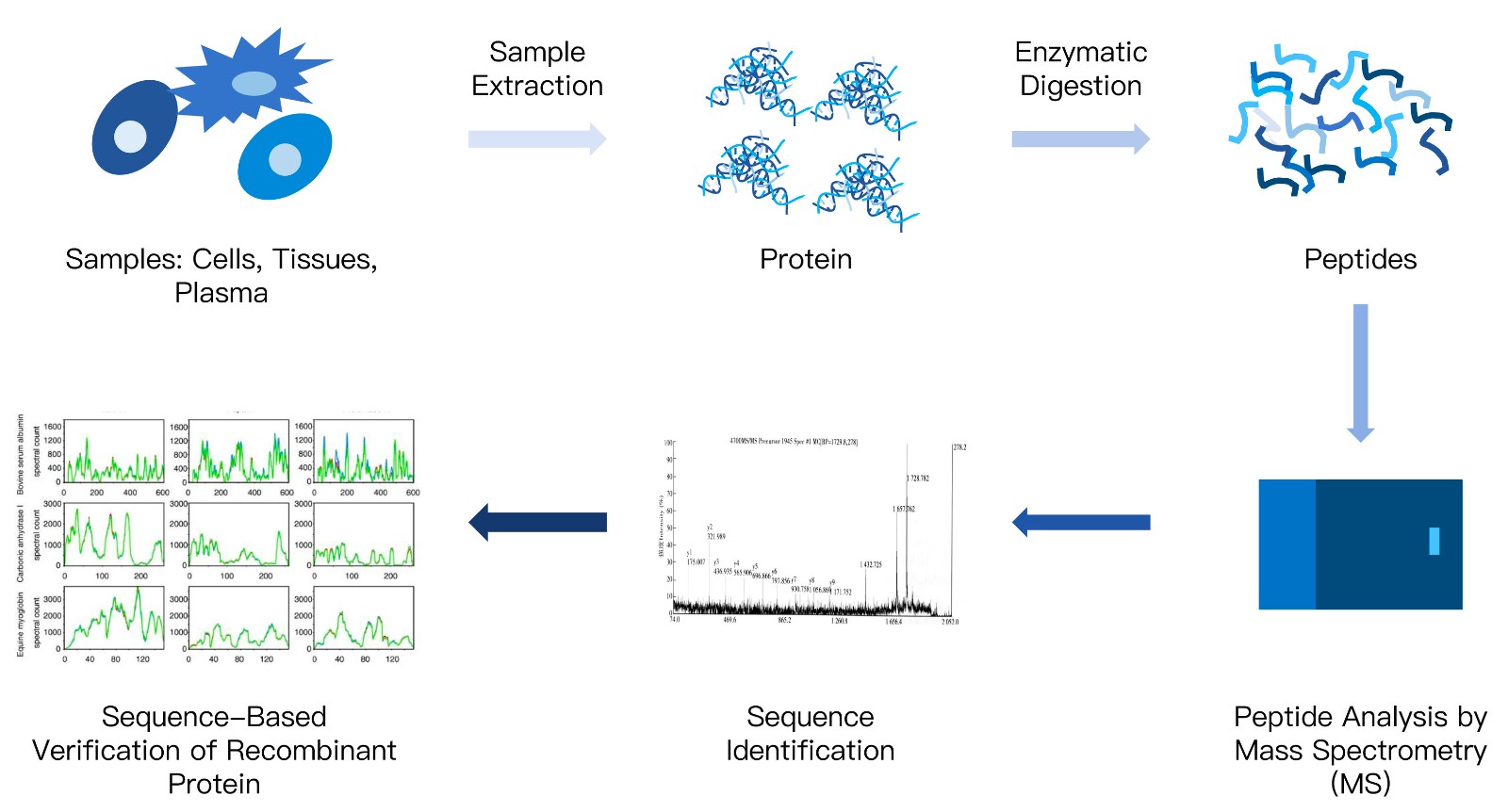
8-KMDBioscience-Protein-DeNovo-Sequencing-Service.jpg

Introduction to the Principles of Protein De Novo Sequencing Services

The protein sequence, namely the order of amino acid residues, is a key physicochemical property of proteins and plays a crucial role in protein identification and the prediction of higher-order structures. With the continuous advancement of life science technologies, various protein sequencing methods have emerged, which can be broadly classified into mass spectrometry-based and non-mass spectrometry-based approaches. Non-mass spectrometry methods mainly include the Sanger method, Edman degradation, dinitrofluorobenzene (DNFB) method, dansyl chloride method, hydrazinolysis, and carboxypeptidase digestion, among which Edman degradation is the most commonly used.

Both mass spectrometry and Edman degradation can be used for protein sequence analysis, but they differ significantly in analytical principles and the regions of the sequence that can be determined. Edman degradation is a chemical method targeting the N-terminal amino acids and does not rely on protein databases. It directly yields the amino acid sequence. Through three consecutive chemical reactions, one N-terminal amino acid residue is cleaved and identified, after which the remaining protein (now shortened by one residue) undergoes the same process repeatedly. Each cycle identifies one amino acid residue. However, N-terminally modified or blocked proteins cannot undergo these chemical reactions, rendering Edman degradation ineffective for such proteins. Additionally, the sequencing quality of Edman degradation declines as the number of cycles increases, so it is typically used to determine only the first 30–60 amino acids, with a maximum sequencing length not exceeding 100 amino acids. Therefore, Edman degradation is not suitable for full-length protein sequencing.

In mass spectrometry-based methods, proteins are enzymatically digested into peptides of 5–25 amino acids, which are then analyzed by mass spectrometry. The collected data are matched against theoretical sequence databases to confirm the N-terminal sequence. Mass spectrometry can identify N-terminal sequences even in the presence of modifications or blockages, making it the preferred method for full-length antibody sequencing. Compared with Edman degradation, mass spectrometry enables full-length protein sequence analysis and can be applied to proteins with N-terminal modifications, overcoming the limitations of Edman degradation. Moreover, mass spectrometry also supports de novo sequencing, providing solutions for novel proteins or those without corresponding theoretical databases.

Our team is equipped with a high-performance Orbitrap Fusion Lumos mass spectrometer and has established a comprehensive database-assisted sequencing platform, offering high-quality Full-Length Protein Sequencing Services to clients. To accommodate different experimental needs, we also provide Edman degradation services capable of determining up to 67 amino acids from the protein N-terminal for scientific researchers.

De novo full protein sequencing combining Orbitrap Fusion Lumos mass spectrometry with Edman degradation

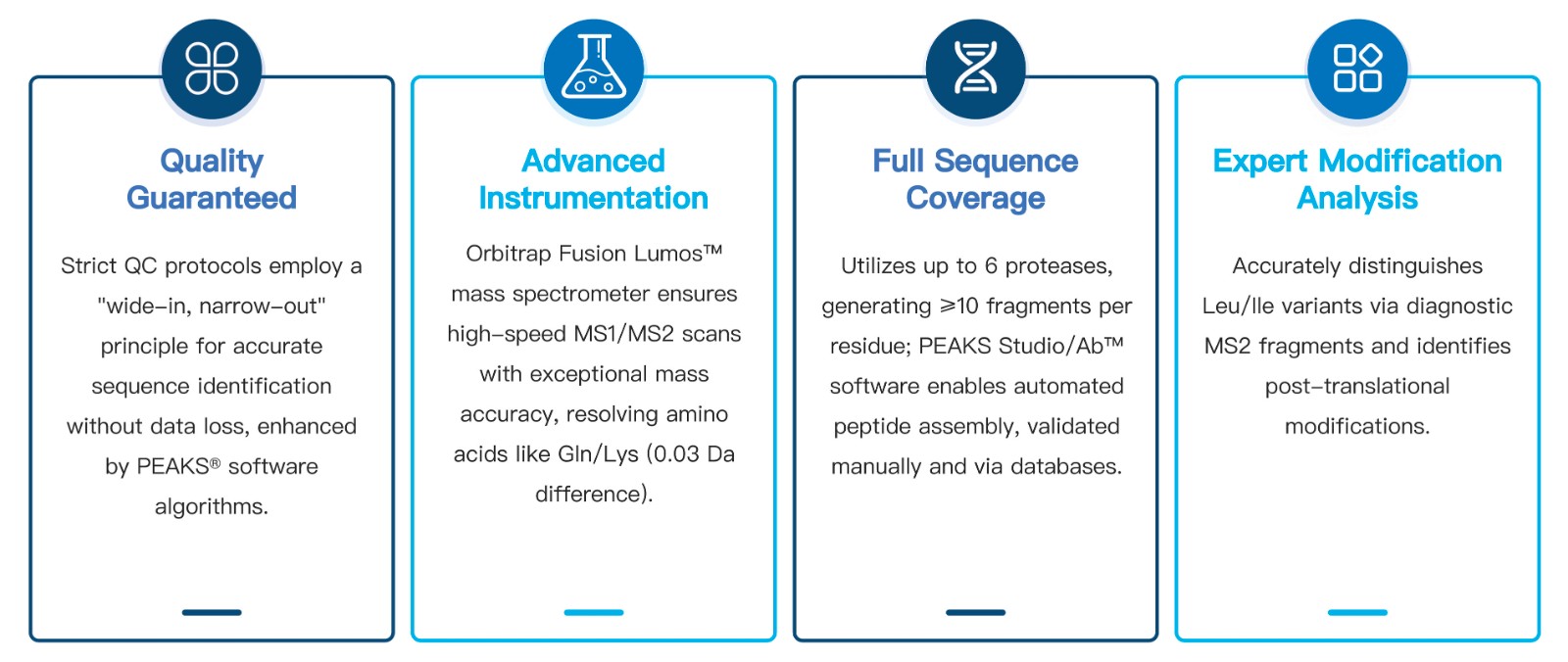
After receiving the protein samples from the client, we will first carry out protein identification and fragmentation processing. We employ six commonly used proteases including Trypsin, Chymotrypsin, Asp-N, Glu-C, Lys-C, and Lys-N to generate a wide range of peptide fragments, maximizing sequence coverage of the entire protein. The peptide sequences obtained through mass spectrometry are assembled using PEAKs Studio (for protein samples) and PEAKs Ab (for antibody samples), supplemented by manual curation to ensure accurate reconstruction of the full-length primary sequence of the protein or antibody. For more information on De Novo amino acid sequencing, please refer to our Antibody De Novo Sequencing Service.
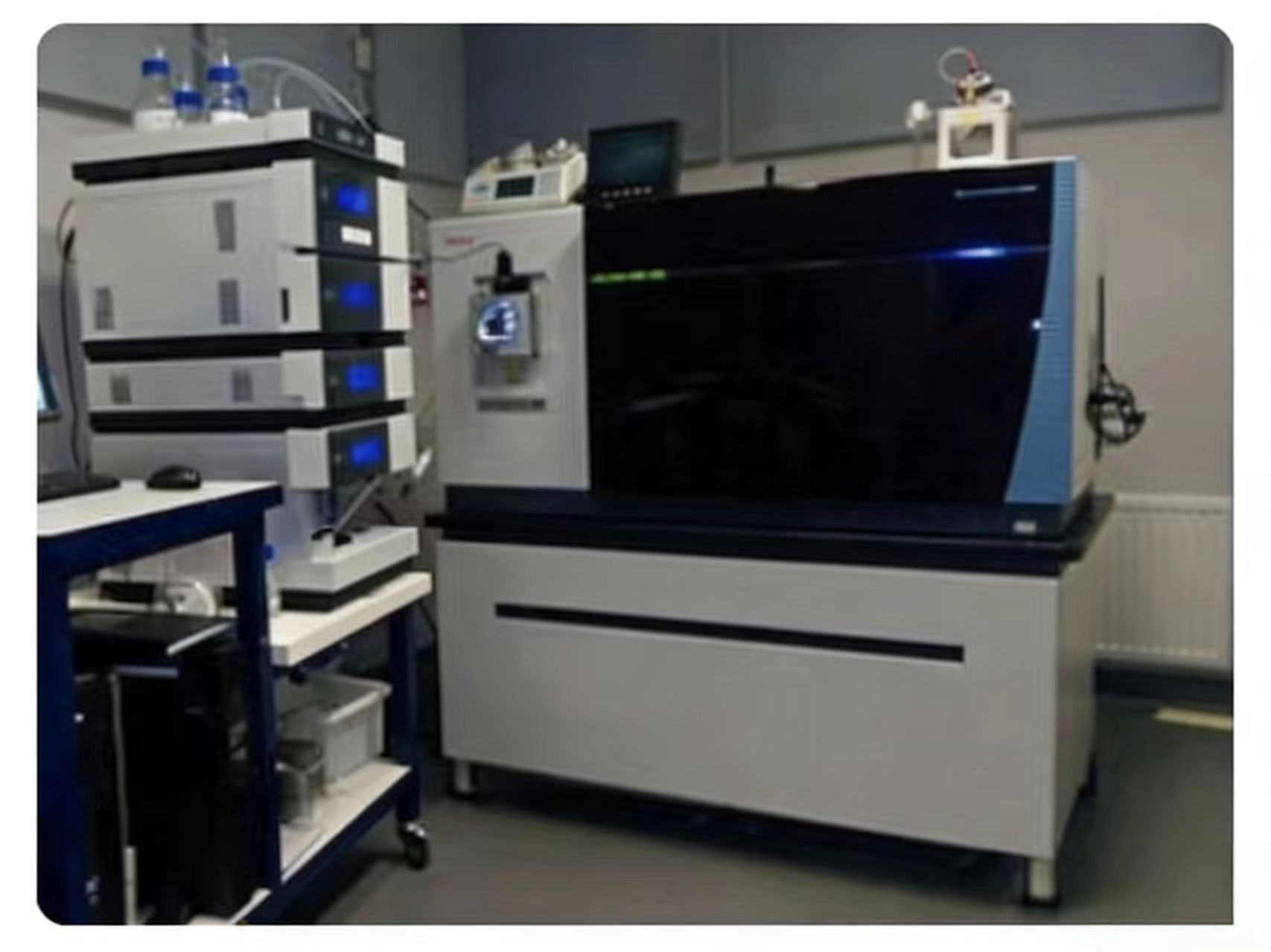
f013e7ad3cbff9d978a2f3345fe3771a.jpg

Figure 1. Orbitrap Fusion Lumos Mass Spectrometer

The Orbitrap Fusion Lumos is an advanced, hybrid, tribrid mass spectrometer equipped with a newly designed atmospheric pressure ion source, advanced quadrupole technology, an ultra-high-field Orbitrap analyzer, and a next-generation dual-pressure linear ion trap. As one of the most advanced instruments available, the Orbitrap Fusion Lumos is designed to extend the frontiers of proteomics, biopharmaceutical, and metabolomics applications. These include isotopic labeling quantification, low-abundance phosphoproteomics, data-independent acquisition (DIA), and top-down proteomic analysis.

Thanks to its superior performance and advanced configurations, the Orbitrap Fusion Lumos is widely used in various fields, including high-throughput protein identification, large-scale label-free quantitative proteomics, analysis of post-translational modifications (PTMs) such as acetylation, ubiquitination, phosphorylation, and glycosylation, as well as top-down protein characterization.

The Orbitrap Fusion Lumos is an advanced hybrid tribrid mass spectrometer, equipped with a newly designed atmospheric pressure ion source, advanced quadrupole technology, an ultra-high-field Orbitrap analyzer, and the latest dual-pressure linear ion trap. The instrument is designed to expand applications in proteomics, biopharmaceuticals, and metabolomics through its advanced performance, including isotope labeling quantification, low-level phosphoprotein analysis, data-independent acquisition (DIA), and top-down proteomics research. With its excellent performance and advanced configuration, the Orbitrap Fusion Lumos is widely used in high-throughput protein identification, large-scale label-free quantitative proteomics, post-translational modification (PTMs) analysis (such as acetylation, ubiquitination, phosphorylation, glycosylation, etc.), and top-down protein analysis.

The features of Orbitrap Fusion Lumos

-- New High-Sensitivity API Interface: Combines high-capacity ion transfer tube and electric ion funnel to enhance ion flow and reduce detection limits.

-- Advanced Active Ion Beam Transport: Prevents neutral particles and high-speed ion clusters from entering the quadrupole that separates ions.

-- Advanced Quadrupole Technology: Combines high sensitivity and ion transfer efficiency to allow selected ions to pass through the center of the separation window.

-- Advanced Vacuum Technology: Increases the speed of high-molecular-weight ion transmission to the Orbitrap analyzer.

-- New ETD HD: High-dynamic-range ETD significantly improves fragment ion coverage.

-- Advanced Peak Detection (APD): Substantially increases the number of identified feature peptides and analytical throughput.

-- Simultaneous Ion Selection for MS and MSn (SPS) Experiments: Not only significantly increases the number of identified peptides and proteins but also improves the accuracy of quantitative analysis.

-- Universal Method: Suitable for most peptide identification without requiring method optimization for samples with unknown concentrations, reducing time requirements for both samples and instruments in routine peptide identification experiments.

-- Intuitive and Flexible Drag-and-Drop User Interface: Simplifies method development and enables unique and complex workflows.

The sample requirements for protein De Novo sequencing services

Service Item

Sample Type

Sample State

Standard Sample Volume

Purity Requirement

Remark

Full-length Protein or Antibody Sequencing

Monoclonal Antibodies, Antibody-Drug Conjugates, Recombinant Proteins, Peptide Drugs

Liquid/Dry Powder/Gel Strips

≥100μg

≥90%

1. Samples should preferably be free from BSA. If BSA is present, its concentration in the buffer must be specified in the sample information.

2. Recombinant protein samples must include an SDS-PAGE result image, and specify whether they are dimeric or oligomeric.

3. N-terminal sequencing and peptide mapping require a reference sequence.

4. (Gel Strips) For gel strip samples, at least 15 µg per well is required, with a minimum of 6 wells per sample. Store at 4°C and ship in EP tubes with deionized water, using ice packs or dry ice.

5. (Solution) For protein dissolved in buffer, use either pure water or PBS buffer. If other buffer components are used, specify in the sample information. Store at -20°C, place in EP tubes, and ship with ice packs or dry ice.

6. (Dry Powder) Protein dry powder obtained from freeze-drying with pure water or PBS buffer. If other solvent components are used, specify in the sample information. Store in EP tubes and ship at room temperature or with ice packs.

Peptide Coverage Analysis

Monoclonal Antibodies, Antibody-Drug Conjugates, Recombinant Proteins, Peptide Drugs

Liquid/Dry Powder/Gel Strips

≥100μg

≥90%

N-terminal Amino Acid Sequence Analysis

Monoclonal Antibodies, Antibody-Drug Conjugates, Recombinant Proteins, Peptide Drugs

Liquid/Dry Powder/Gel Strips

≥100μg

≥90%

7. Prior communication is required before sample submission.

Advantages of Protein De Novo Sequencing Services

9-KMDBioscience-Protein-DeNovo-Sequencing-Service.jpg

Login

Don’t have an account?Sign Up Now

Register

Already have an account?Log In Now