Home
>>
Protein Platform
>>
Protein Interaction Services
>>
Dot Blot Assay Service
Dot Blot Assay ServiceIntroduction

KMD Bioscience has been dedicated to research in the field of molecular biology for many years. As research and understanding of the structure of genes, gene expression, and regulation at the microscopic level deepens, molecular biology detection technologies have gradually become powerful tools in scientific research. Despite the widespread application of molecular biology technologies, they are often tedious, with relatively unstable results, consuming both researchers’ energy and time.

We have established a comprehensive Molecular Biology and Immunology Testing Platform, equipped with complete molecular biology and immunology detection instruments, to provide a wide range of molecular hybridization services, including Dot blot, Western blot and other experiments. Our scientists have accumulated rich experimental experience and, with their skilled techniques, are able to quickly complete the required experiments within the specified timeline, ensuring accurate, objective, and reliable results. We are committed to providing high-quality services to our clients. We also offer a one-stop service, including SNP Detection, DNA Methylation Sequencing, cDNA Library Construction, and more, to meet the diverse experimental needs of our customers.
Principle of Dot Blot Hybridization

Dot blot is a commonly used method in molecular biology and immunogenetics. The experimental principle involves denaturing the DNA sample and applying it as a dot on a nitrocellulose membrane (or nylon membrane, NC membrane), followed by hybridization with a labeled probe. After washing the membrane (to remove unbound probes) and using autoradiography, the presence and intensity of hybridization can be determined. It is mainly used for detecting gene deletions or copy number changes.

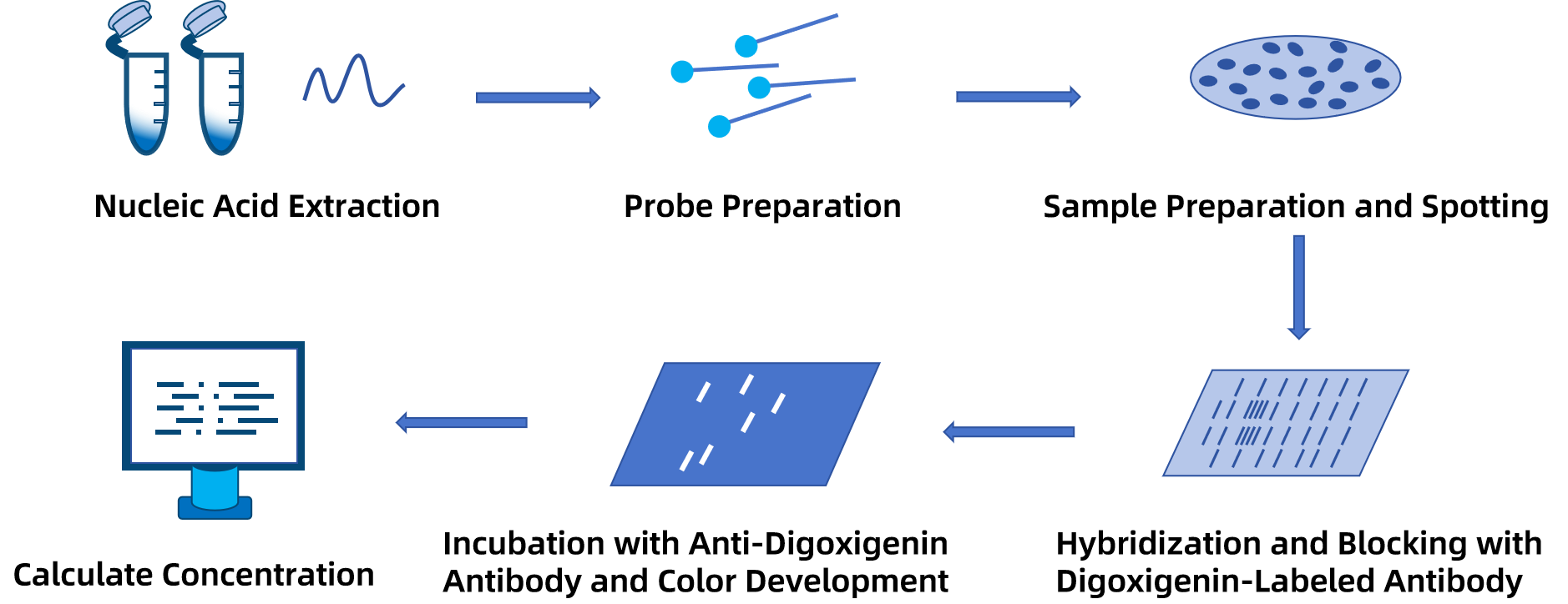
The experimental steps for Dot blot involve extracting nucleic acids from the sample, covalently crosslinking them onto a nitrocellulose membrane, followed by blocking, antibody incubation, color development, and semi-quantitative detection of nucleic acid content in the sample. Compared to traditional autoradiographic techniques, our laboratory uses the Roche non-radioactive detection method. By using alkaline phosphatase (AP) color development, we can provide customers with highly accurate sample testing services. The experimental sensitivity is maintained at the level of 0.5 pg/ml. For special samples, we can also use national standard nucleic acid reference materials for internal quality control.

Dot Blot Hybridization Experimental Procedure

图片17.png

Sample requirements

Provided by the Customer

Requirement

Cell, Inactivated Viruses, DNA, RNA, etc.

* DNA, RNA samples require 15 µg (for probe preparation, detection, etc.)

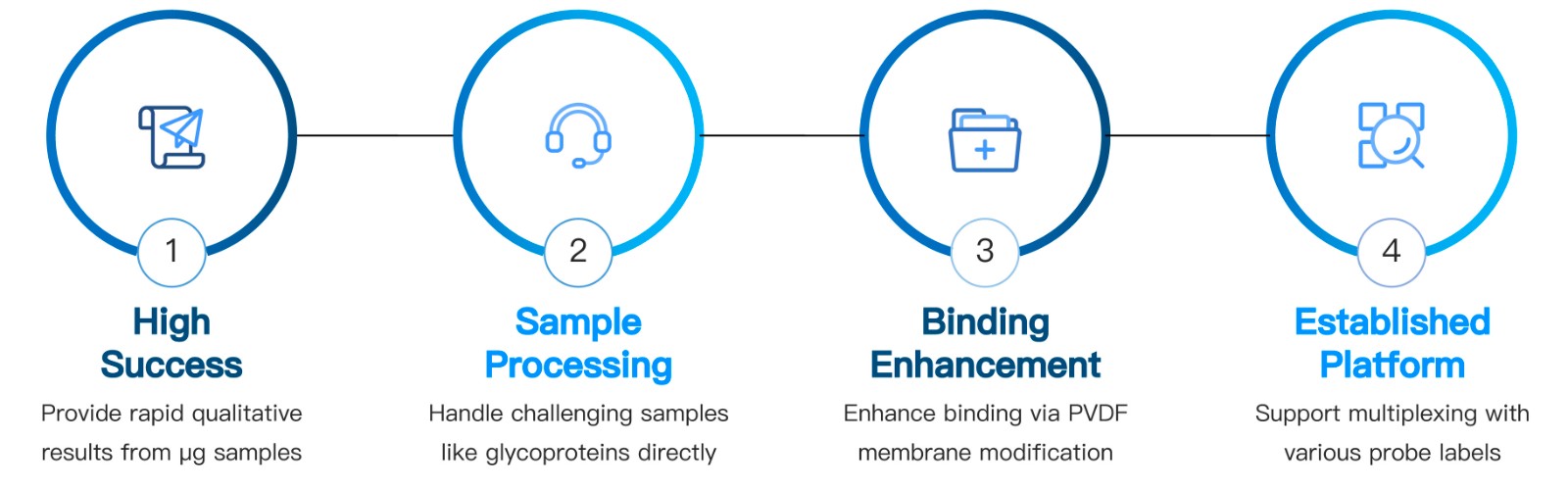
Dot Blot Hybridization Service Advantages

24-KMDBioscience-Dot-Blotting-Service.jpg

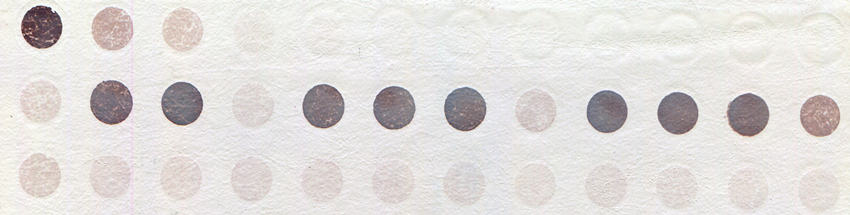
Experimental result presentation

斑点杂交实验结果展示-卡梅德科技.jpg

Login

Don’t have an account?Sign Up Now

Register

Already have an account?Log In Now