


Model animals are tools used by biologists to uncover universal life phenomena through studies on specific animals. These animals are artificially bred with well-defined genetic backgrounds and are classified into gene-modified and wild-type categories. Gene-modified animals are generated by altering their DNA sequences to create specific genotypes. Zebrafish, with their transparent embryos that facilitate observation and easy genetic manipulation, are commonly used to model human diseases.
Conditional gene knockout technology is based on the Cre/LoxP system, where Cre recombinase recognizes LoxP sites and mediates DNA recombination, enabling gene knockout at specific times and in specific tissues. By crossing “loxP-floxed” mice with Cre transgenic mice, target genes can be knocked out in specific tissues or cells.
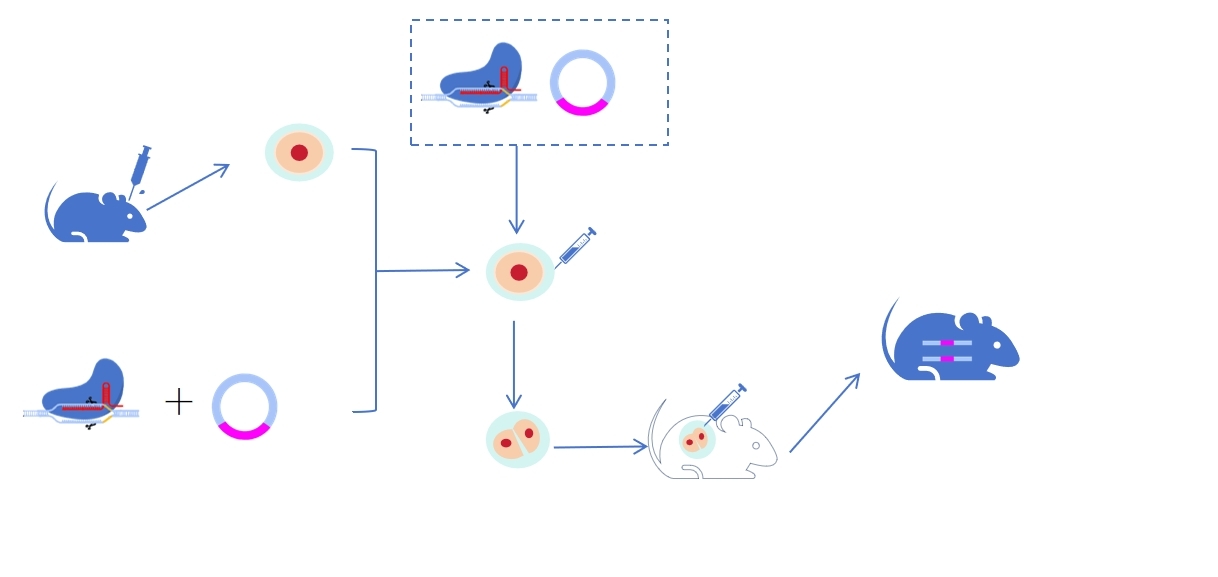
Using CRISPR-Cas9 technology, the time required to obtain gene knockout animals has been greatly shortened—gene knockout animals can be produced in only 4–6 months. The principle involves microinjecting Cas9 protein and sgRNA into animal fertilized eggs. Under the guidance of sgRNA, the Cas9 protein cuts the target gene, triggering the cell’s DNA repair mechanism. If the cell repairs via non-homologous end joining (NHEJ), insertions or deletions are often introduced, leading to the loss of target gene function. As the fertilized egg develops, these mutations are passed on to the offspring, resulting in gene knockout animals.
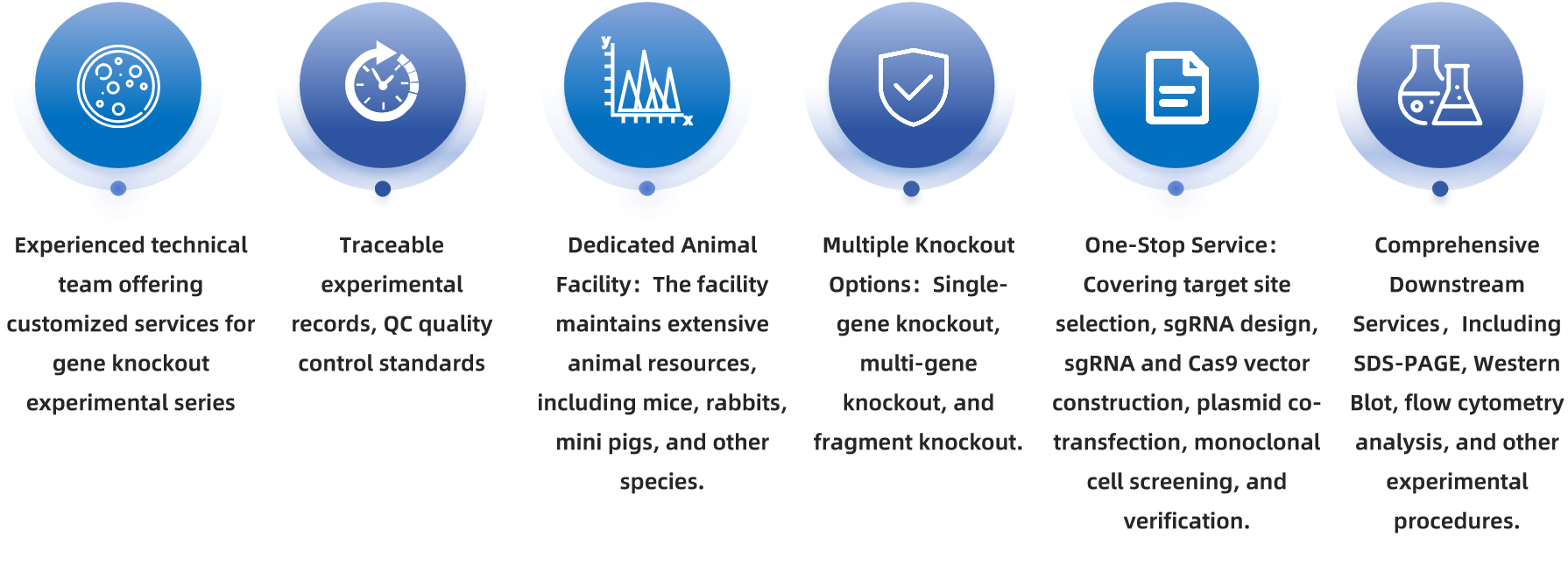
KMD Bioscience has established an Animal Gene-Editing Platform that provides customers with comprehensive services ranging from custom knockout mouse model generation to functional gene studies. In addition, the platform offers a series of services including animal breeding, housing, immunization, antibody preparation, antibody humanization, and animal model construction, providing researchers with one-stop solutions.
Animals | Disease Model |
Mouse | Tumors (lung cancer, pancreatic cancer, prostate cancer, gastric cancer, liver cancer, colon cancer, etc.); Metabolic (pulmonary fibrosis, diabetes models, obesity models); Depression models; |
Rabbit | Diabetes models, progeria models, rickets models, intracerebral hemorrhage models, spinal cord glioma models, brain glioma models, migraine models, Parkinson’s disease models, Alzheimer’s disease models; |
Pig | Diabetes models, progeria models, rickets models, intracerebral hemorrhage models, spinal cord glioma models, brain glioma models; |





 0
0
