


How to Establish a Complete Cell-Free Protein Expression Workflow? Key Control Points from Vector Construction to Purification.
- 2026-11-07
- 3
Traditional protein production relies on living host cells. Common options include E. coli, yeast, insect cells and mammalian cell lines. Each type carries unavoidable flaws. Some toxic proteins kill host cells entirely, making production impossible. Multi-transmembrane membrane proteins easily clump together. Limited space inside cell membranes stops them from folding correctly. Screening mutant protein libraries demands repeated transformation and cell culture. The whole workflow drags on for weeks. These cell-based platforms also lack simple ways to add unnatural amino acids to protein chains.
Cell-free protein synthesis (CFPS) fixes all these limitations. This method needs no cell culture, transfection or fermentation steps. Researchers only add DNA plasmids or linear PCR fragments as templates. Target proteins form within hours inside mixed cell lysates. The technology has become a mainstream tool for synthetic biology, drug target screening and membrane protein structural research [1].
Three mature commercial cell-free systems are widely used today. They are E. coli lysate, wheat germ extract and rabbit reticulocyte lysate. Each fits distinct protein preparation goals. The E. coli system delivers high yields with low lab costs. Wheat germ extracts contain full eukaryotic folding machinery, suited for complex intracellular proteins. Rabbit reticulocyte lysates support mammalian-style post-translational modifications, ideal for making functional human proteins.
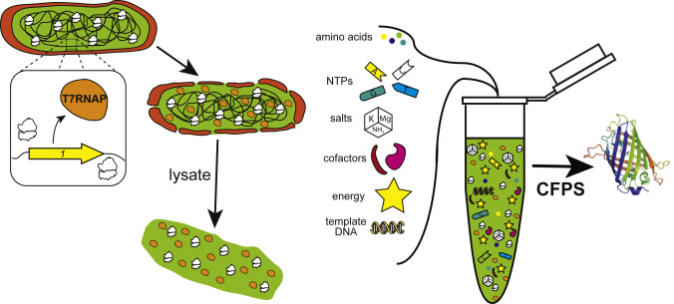
Figure1 Cell-Free Protein Synthesis Catalyzed by Escherichia coli Lysate[2]
I、Core Principles of Cell-Free Protein Synthesis
CFPS reconstructs the complete transcription-translation cycle outside live cells. It removes metabolic limits unique to intact organisms, while keeping all molecular tools required for gene expression.
Core reaction components
Cell lysate contains RNA polymerase, ribosomes and transfer RNAs. It also stores translation elongation factors and molecular chaperones. Operators mix in buffer, amino acids, nucleotide triphosphates and ATP/GTP energy cycling reagents. These materials build an open biochemical reaction pool.
Coupled transcription and translation
Users add plasmids or linear DNA carrying strong T7 or SP6 promoters to the system. T7 RNA polymerase rapidly generates messenger RNA. Ribosomes read mRNA and assemble peptide chains. Transcription and translation run at the same time in vitro. No waiting period for cell growth is needed [2].
Benefits of open reaction conditions
No intact cell membrane blocks material exchange. Lab staff can freely add detergents, nanodiscs, chaperones or unnatural amino acids. They precisely adjust the microenvironment for protein folding. Toxicity stress no longer restricts production. Even highly lethal proteins can be synthesized steadily.
Functional differences across three cell-free platforms
E. coli lysate: Prokaryotic translation background. It produces large protein quantities at low cost, best for simple unmodified proteins.
Wheat germ lysate: Complete eukaryotic folding pathways with abundant chaperones. It works well for soluble large proteins with multiple disulfide bonds.
Rabbit reticulocyte lysate: Supports phosphorylation and other post-translational changes. It matches research on human signaling proteins and membrane receptors.
II、Full Experimental Procedures & Critical Control Points
1. Expression vector construction
Adjust gene codons to match cell-free translation preferences. Eliminate rigid secondary structures in mRNA sequences.
Build vectors with T7 or SP6 strong promoters and optimized UTR translation enhancers. His or GST fusion tags can be added based on experimental needs.
Complete enzyme digestion, ligation and bacterial transformation. Run full-length sequencing to check reading frames and promoter sequences for mutations.
Key control note: An intact T7 promoter directly decides transcription efficiency. Rebuild the vector immediately if sequencing detects frameshift mutations.
2. Cell-free reaction assembly and protein synthesis
Select E. coli, wheat germ or rabbit reticulocyte lysate. Match each lysate with custom energy regeneration buffer [3].
Test different template dosages, incubation temperatures and reaction durations in small parallel trials. Pick conditions that generate the highest protein output.
Add nanodiscs, detergents or chaperone proteins to boost solubility of membrane proteins.
Key control note: Minor temperature shifts sharply reduce protein yields. Keep incubation temperature stable throughout the whole reaction. Membrane protein reactions must include membrane-mimicking additives, or newly translated proteins will aggregate quickly.
3. Preliminary testing of synthesized products
Collect samples once reactions finish. Run SDS-PAGE to roughly assess target protein abundance.
Carry out Western blot to confirm specific target bands.
Optional fluorescence or enzyme activity tests measure the biological function of synthesized proteins.
Key control note: Prepare negative control samples with blank templates at the same time. Controls help separate endogenous impurity bands from target recombinant proteins.
4. Protein purification and final quality inspection
Load reaction supernatants onto affinity chromatography columns to capture tagged target proteins.
Combine ion exchange and size exclusion chromatography to remove miscellaneous proteins, nucleic acids and degraded protein fragments.
Use SDS-PAGE to test purity and BCA assay to measure protein concentration. Split samples into small portions, freeze them and prepare for delivery.
Key control note: Cell-free mixtures hold large volumes of ribosomal impurities. Multi-step chromatography is required to reach purity above 90%.
III、Application Scenarios
①Production of toxic proteins: Nucleases, pro-apoptotic proteins and bacterial toxins cannot express in live cell hosts. Cell-free systems enable their stable synthesis.
②Structural research on membrane proteins: Add nanodiscs or detergents into reactions. GPCRs, ion channels and other multi-transmembrane proteins fold correctly during translation. This avoids inclusion body formation common in cell culture workflows.
③Synthesis of proteins labeled with unnatural amino acids: Fluorescent or cross-linking unnatural amino acids can be added directly into in vitro reactions. Modified proteins support protein interaction analysis and single-molecule imaging tests.
④High-throughput screening of mutant libraries: Only linear PCR templates are needed. No cell transformation steps are required. Hundreds of mutant proteins express in parallel within hours. The full cycle of target screening shortens significantly.
⑤Construction of enzyme components for synthetic biology: Assemble multi-enzyme pathways and large non-ribosomal synthetase complexes outside living cells.
⑥Fast small-scale trials for peptide drugs and antigen raw materials: Skip fermentation and cell expansion steps. Tiny reaction volumes quickly produce antigen proteins for antibody screening work.
IIII、Services and Technical Advantages from KMD-Bioscience
1.Full service scope
①Custom gene and vector development: Codon optimization, construction of dedicated T7/SP6 expression vectors. A wide range of fusion tags can be selected to fit research demands.
②Product identification and testing: SDS-PAGE and Western blot deliver qualitative protein analysis. Enzyme activity or fluorescence functional tests can be added upon request.
③Multi-stage chromatographic purification: Combine affinity, ion exchange and size exclusion separation steps to deliver high-purity protein samples.
④Complete experimental data delivery: Traceable reports containing original electrophoresis images, Western blot scanning files, reaction parameter logs and purification chromatograms.
2.Core technical strengths
①Resolve tough expression barriers
The dedicated cell-free platform generates toxic targets and complex membrane proteins. These samples cannot be prepared through conventional cell-based expression systems.
②Flexible and adjustable open reaction system
The open reaction environment supports insertion of unnatural amino acids and site-specific labeling. Custom co-translational modifications match unique research design requirements.
③Support high-throughput screening workflows
Micro-volume automated equipment runs dozens to hundreds of gene expression tests side by side. The setup accelerates mutant library screening and reaction condition optimization.
④Linear and seamless process scaling
Lab workflows scale smoothly from micro-volume screening to mass production. Process parameters transfer stably between batches, shortening the timeline from basic research to large-scale sample preparation.
⑤Lower difficulty for downstream purification
The system carries low background impurities and high target protein ratios. Combined with optimized fusion tag designs, total protein recovery and final purity both improve greatly.
⑥Real-time integrated analysis tools
Enzyme activity and protein folding status can be tracked during synthesis. Protein production and functional testing merge into one unified workflow. Functional identification and kinetic studies finish in less time.
References:
[1] Carlson ED, Gan R, Hodgman CE, Jewett MC. Cell-free protein synthesis: applications come of age. Biotechnol Adv. 2012;30(5):1185-1194. doi:10.1016/j.biotechadv.2011.09.016
[2] Des Soye B, Gerbasi V, Thomas P .A Highly Productive, One-Pot Cell-Free Protein Synthesis Platform Based on Genomically Recoded Escherichia coli. Cell Chemical Biology, 2019; 26, 1743-1754.e9
[3] Endo Y, Sawasaki T. High-throughput, genome-scale protein production method based on the wheat germ cell-free expression system. Biotechnol Adv. 2003;21(8):695-713. doi:10.1016/s0734-9750(03)00105-8
FAQs
Q1: Membrane proteins show much higher solubility in wheat germ cell-free systems compared with E. coli cell-free lysates. What causes this difference?
1.Wheat germ creates a eukaryotic translation environment. It contains abundant native chaperones and complete auxiliary folding pathways. These factors assist correct folding of hydrophobic transmembrane segments during translation. E. coli prokaryotic lysates only carry limited chaperones. They cannot stabilize multi-transmembrane proteins, which aggregate rapidly.
2.Wheat germ systems tolerate nanodiscs and low-concentration detergents gently. These membrane-mimicking additives do not slow down translation efficiency. E. coli lysates have weak tolerance to detergents. Even mild surfactant concentrations suppress ribosome activity and cut overall protein yields.
3.The eukaryotic translation environment inside wheat germ extracts resembles natural human membrane protein synthesis conditions. Synthesized proteins hold stable folded hydrophobic transmembrane domains. Their solubility far exceeds products from prokaryotic cell-free reactions.
- cell-free protein expression
- recombinant protein expression service
- membrane protein cell-free expression
- toxic protein in vitro expression

- Protein Platform
- Protein Expression Services
- Protein Modification & Detection Services
- Protein Interaction Services
- Protein Purification Service
- Antibody Discovery Platform
- VHH Antibody Platform
- Phage Display Platform
- Antibody Humanization Platform
- Single B Cell Screening Platform
- Antibody Expression & Validation Platform
- Peptide Library Platform
- Custom Antibody Platform
- Innovative Drug Discovery Platform
- Product Center
- Proteins
- Antibodies
- Raw Materials Reagents
- Small Molecule Reagents
- Peptide Products
- Nanoparticle Products
- Contact Us
- Phone:400-621-6806
- Mobile:13116038708
- E-mail:[email protected]
- Address:Room 108, Building 10, No. 6 Hechang Road, Wuqing Development Zone, Tianjin City
-

WeChat
-

Service Account
-
 400-621-6806
-
 3599163699
-
 Monday to Friday 9:00-18:00
-

-
 0
-
