


KMD Bioscience leverages a specialized scientific team and advanced technology platforms to comprehensively address the development needs of Proteolysis-Targeting Chimeras (PROTAC) in early-stage drug discovery. Through standardized experimental workflows, we perform target protein structural characterization, ternary complex modeling of PROTAC-mediated E3 ubiquitin ligase–target protein interactions, and structure-based optimization to enable rational design and screening of PROTAC molecules. This approach yields candidate molecules with validated target protein degradation activity, establishing a solid foundation for subsequent mechanistic studies.
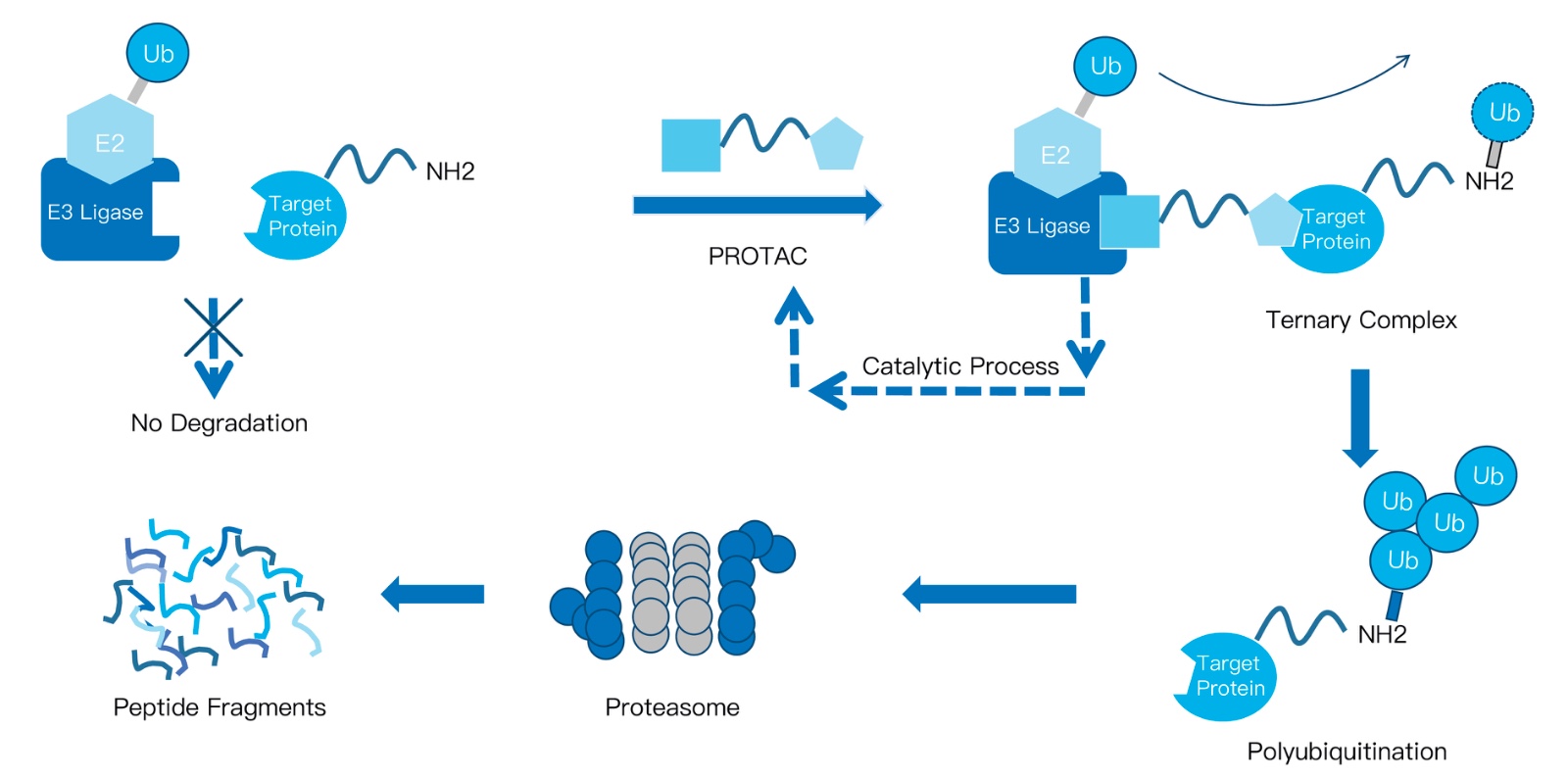
Conventional small-molecule anticancer drugs primarily function by occupying the active pockets of target proteins to exert inhibitory effects, which restricts their applicability to a limited set of targets with well-defined catalytic or binding sites. Consequently, a large number of "undruggable" targets lacking classical active pockets remain inaccessible through traditional strategies. PROTAC represents a next-generation drug development modality that harnesses the ubiquitin–proteasome system to induce targeted protein degradation. This technology does not depend on the presence of an active site; in principle, it can utilize any accessible binding surface on the target protein for recruitment, thereby overcoming the druggability limitations of conventional small molecules and offering a transformative solution for difficult-to-target proteins.
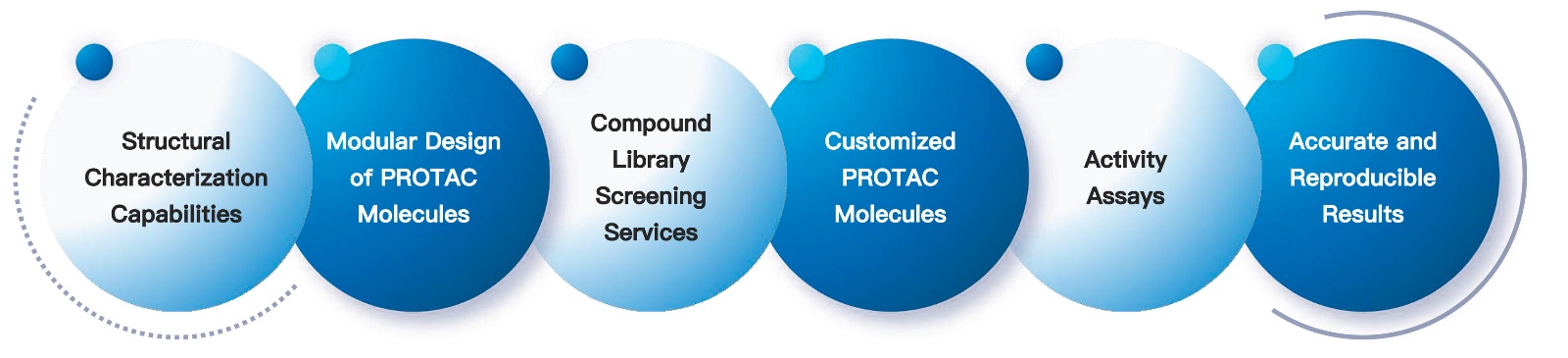
KMD Bioscience provides a full-chain PROTAC discovery service encompassing structural biology analysis, rational molecular design and virtual screening, chemical synthesis and production, as well as degradation activity and biological function validation—covering all critical steps to support early-stage PROTAC lead discovery and development.





 0
