


KMD Bioscience has long been dedicated to the research and development of recombinant protein expression and purification. With the successful completion of hundreds of protein expression and purification projects each year, we have established a comprehensive and well-structured protein purification system. We provide diversified purification solutions tailored to meet different client requirements. We offer one-on-one customized service plans. Based on the properties of the target protein, we design purification strategies using affinity chromatography, ion exchange, size-exclusion chromatography, hydrophobic interaction chromatography, and other techniques. We are capable of purifying both tagged and untagged recombinant proteins, as well as native proteins derived from a variety of species and tissues, to obtain high-standard, high-purity target proteins that meet our clients' project needs and support downstream experimental research.
Recombinant protein purification is generally divided into three categories: Purification of Tagged Recombinant Proteins, Purification of Untagged Recombinant Proteins, and Purification from Inclusion Bodies through Denaturation and Refolding.
Tagged recombinant protein purification: The histidine tag (His-tag) is one of the most commonly used affinity tags for protein purification. Its purification principle is based on the imidazole groups on the histidine residues chelating with metal ions in the chromatography medium. Target proteins are then eluted through competitive binding by increasing the imidazole concentration in the buffer. One major advantage of the His-tag is its small molecular weight, which minimally affects the biological function and characteristics of the target protein. Therefore, His-tagged proteins can be directly used as antigens for immunizing animals without compromising the specificity of the resulting antibodies. We also provide purification services for a variety of other affinity tags, such as GST-tag, SUMO-tag, and MBP-tag.
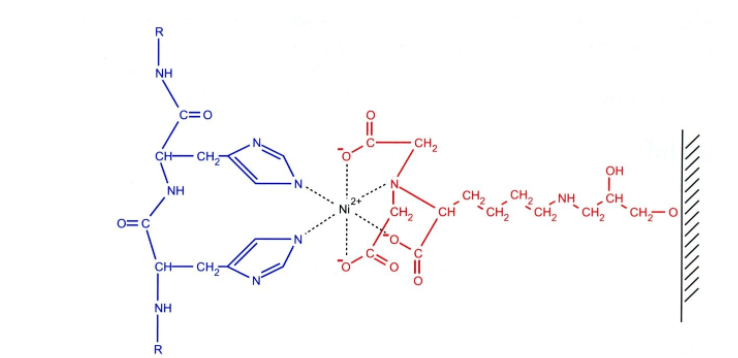
Figure 1. Interaction between 6×His Tag and Adjacent Residues on Ni-NTA Resin
Untagged Recombinant Protein Purification: For recombinant proteins without purification tags, we analyze the protein properties in detail based on the client's samples and requirements. We design an integrated Purification Plan using size-exclusion chromatography, ion exchange chromatography, and hydrophobic interaction chromatography. Typically, we apply antibody affinity purification to isolate the target protein through the specific interaction between a ligand and its target. Alternatively, gel filtration may be used for separation and purification.
Inclusion Body Denaturation and Refolding Purification: For proteins expressed in the form of inclusion bodies, we perform denaturation and refolding procedures. Depending on the protein’s characteristics, denaturation can be achieved using urea, guanidine hydrochloride, detergents, or extreme pH conditions to obtain the protein in a monomeric denatured state.
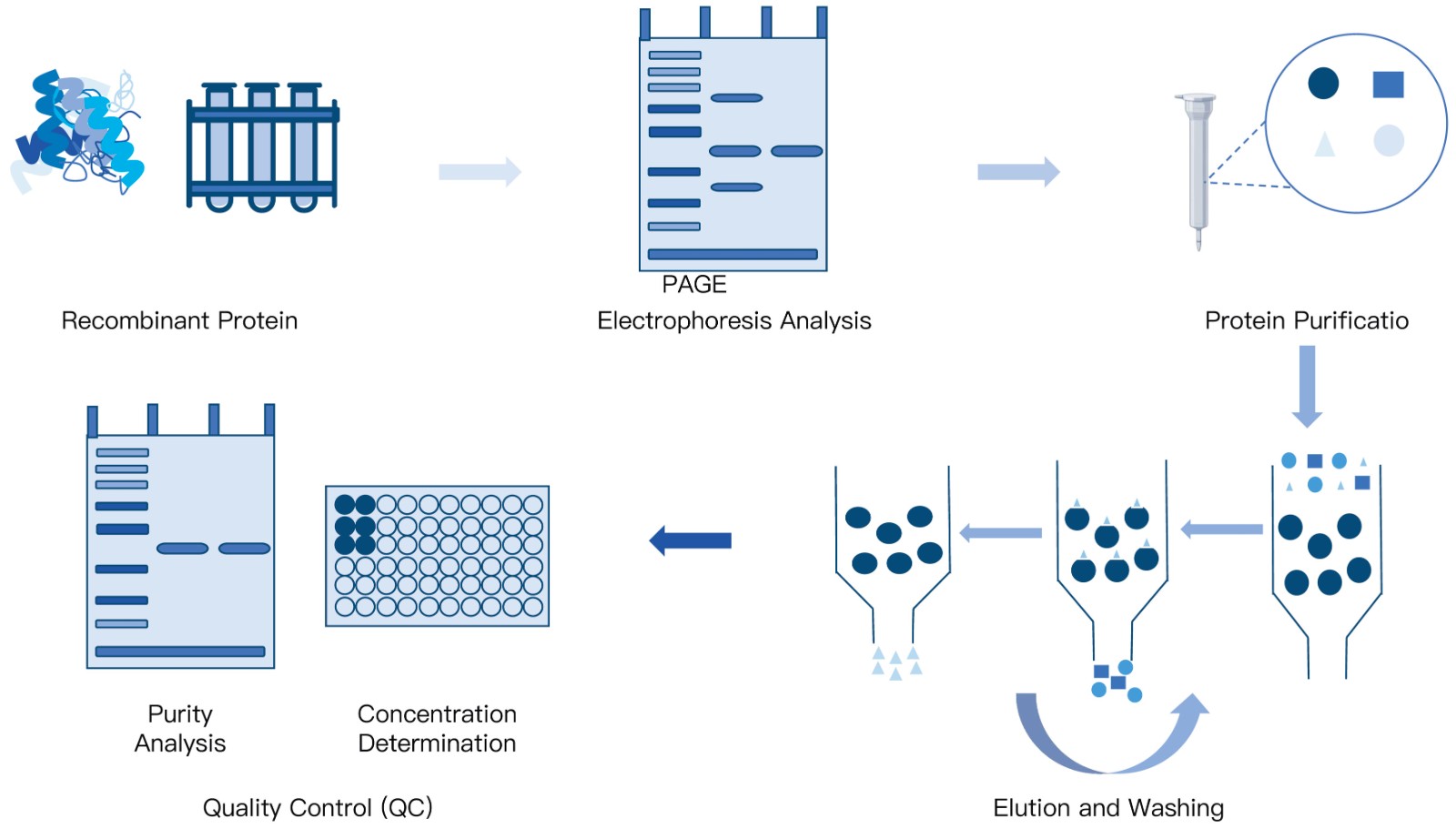
Step | Service content | Timeline |
Step1 Pre-purification testing & pilot purification | * SDS-PAGE analysis of the sample | 2-3 weeks |
Step2 Protein purification and detection | * Large-scale purification (based on pilot conditions) | 2-3 weeks |
Delivery | * Final purified protein | |
-
A Guide to Avoiding Pitf...
Phage display peptide library screening is a core techno...
View Details→
-
Amid the Peptide Drug Bo...
Amid the peptide drug boom, this review compares linear ...
View Details→
-
Fitting Enzymes with a B...
Leveraging its mature yeast surface display technology p...
View Details→
-
10 Peptide Characterizat...
.kmd-article-wrapper { max-width: 980px; margi...
View Details→

- Protein Platform
- Protein Expression Services
- Protein Modification & Detection Services
- Protein Interaction Services
- Protein Purification Service
- Antibody Discovery Platform
- VHH Antibody Platform
- Phage Display Platform
- Antibody Humanization Platform
- Single B Cell Screening Platform
- Antibody Expression & Validation Platform
- Peptide Library Platform
- Custom Antibody Platform
- Innovative Drug Discovery Platform
- Product Center
- Proteins
- Antibodies
- Raw Materials Reagents
- Small Molecule Reagents
- Peptide Products
- Nanoparticle Products
- Contact Us
- Phone:400-621-6806
- Mobile:13110936064(WeC
- E-mail:[email protected]
- Address:Room 108, Building 10, No. 6 Hechang Road, Wuqing Development Zone, Tianjin City
-

WeChat
-

Service Account
-
 400-621-6806
-
 3599163699
-
 Monday to Friday 9:00-18:00
-

-
 0
-
