


Fitting Enzymes with a Biological Anchor—The Underlying Logic and Evolutionary Power of Yeast Surface Display Technology
- 2026-08-04
- 229
Enzymes are highly efficient, specific biological catalysts produced by living organisms that play an irreplaceable role in fields such as biomedicine, bioenergy, food processing, and fine chemicals. However, the production and application of traditional enzyme preparations have long been hampered by a series of bottlenecks: complex operations, high costs, significant loss of enzyme activity, and mass transfer resistance—problems that have yet to be fundamentally resolved[1].
In this context, cell surface display technology has emerged; compared with traditional enzyme immobilization methods, it offers significant advantages, including high catalytic activity, a relatively mild process, and ease of preparation. Among the many display hosts, Yeast Surface Display (YSD) has become one of the most dynamic technological platforms in the field of enzyme engineering due to its unique advantages in eukaryotic expression[2]. Since its initial establishment by Wittrup’s team in 1997, YSD has continued to occupy a central position in high-throughput display methods for protein engineering.
I. The Technical Principles of Yeast Surface Display
The technical principle behind Yeast surface display involves fusing the target enzyme with a yeast cell wall protein for co-expression, and using the cell’s natural protein transport mechanism to anchoring it to the outer surface of the yeast cell wall. A complete YSD system primarily consists of three key components: the display host, the anchor protein, and the target enzyme[3]. The Yeast surface display workflow primarily encompasses: library construction → yeast transformation and homologous recombination → induction of expression and surface display → magnetic bead-based initial screening → flow cytometry-based fine screening → sequencing identification → affinity maturation → solubility validation, forming a complete closed-loop process of discovery, screening, optimization, and validation[4].
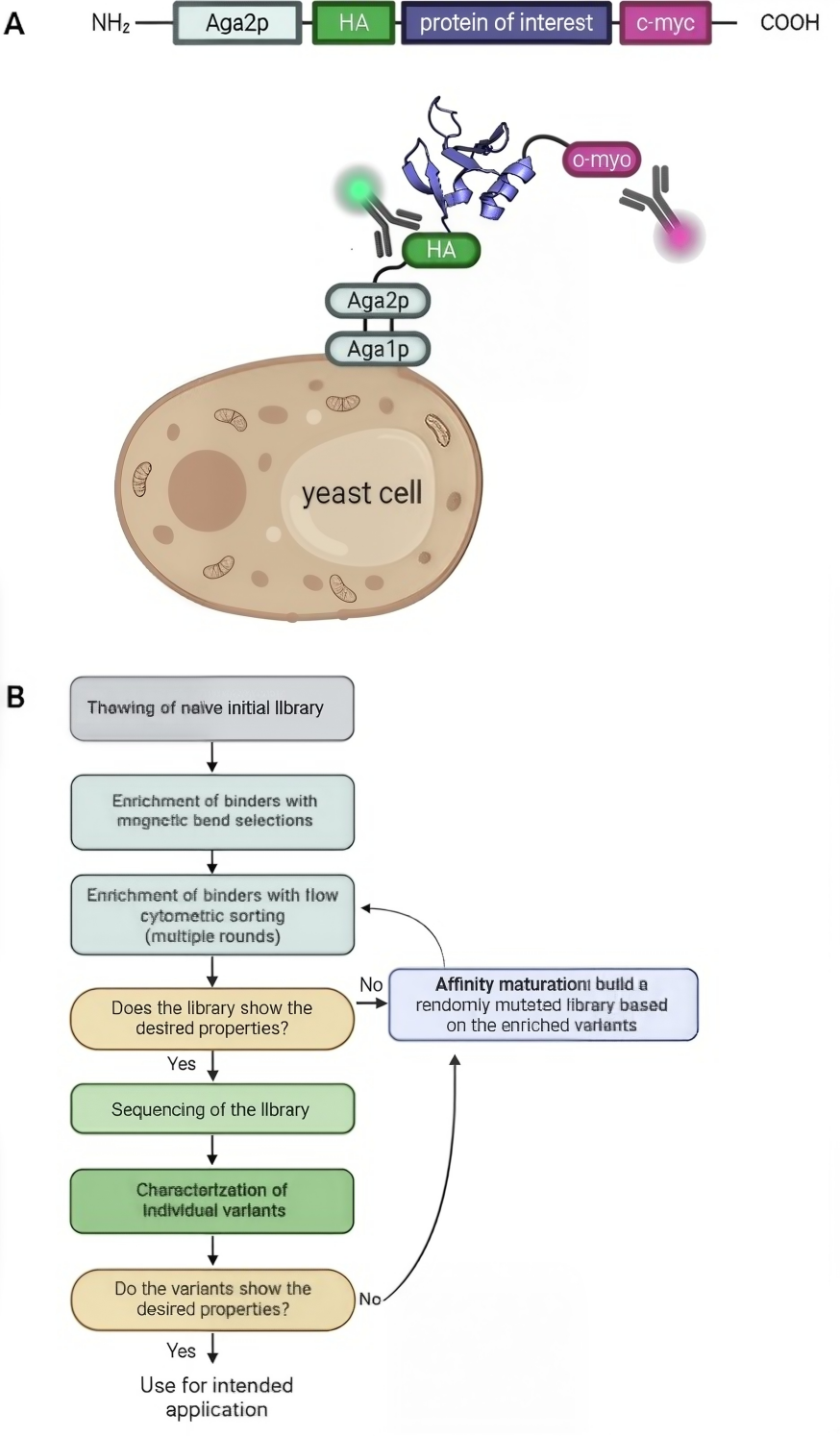
Figure 1: Diagram Illustrating the Working Principle and Process Flow of Yeast Surface Display (YSD) Technology[4]
II. Yeast Surface Display's Unique Advantages
(i) Eukaryotic expression system
Yeast is a eukaryotic organism with a well-developed protein folding mechanism and the capacity for post-translational modifications, including disulfide bond formation and glycosylation. By utilizing a eukaryotic expression system capable of post-translational modifications, this capacity facilitates the folding and secretion of large or complex proteins, thereby addressing challenges that may arise in phage or bacterial display systems[3].
(ii) Eliminates the need for purification and immobilization
In traditional enzyme engineering research, multiple steps—including expression, purification, and immobilization—are typically required. Yeast surface display technology, however, combines expression and immobilization into a single process: the enzyme is anchored to the cell surface as it is expressed, eliminating the need for separate purification and chemical immobilization steps[1].
(iii) The kinetic advantage of easy substrate entry and easy product release
In traditional immobilized enzyme systems, enzymes are not exposed but are instead concealed within the pores or three-dimensional network structure of the carrier, and substrates and products often must overcome significant mass transfer barriers. In contrast, enzymes displayed on the surface of yeast cells are directly exposed to the extracellular surface; substrates can approach the enzyme’s active site unimpeded, and products can rapidly diffuse away, thereby conferring a natural kinetic advantage.
(iv) Natural Suitability for High-Throughput Screening
Another unique advantage of yeast surface display technology lies in its natural compatibility with flow cytometry (FACS). Since the target enzyme is displayed on the cell surface, enzyme activity or binding capacity can be monitored using fluorescently labeled substrates, antibodies, or products, thereby enabling high-throughput sorting of yeast cells displaying different enzyme mutants via FACS.
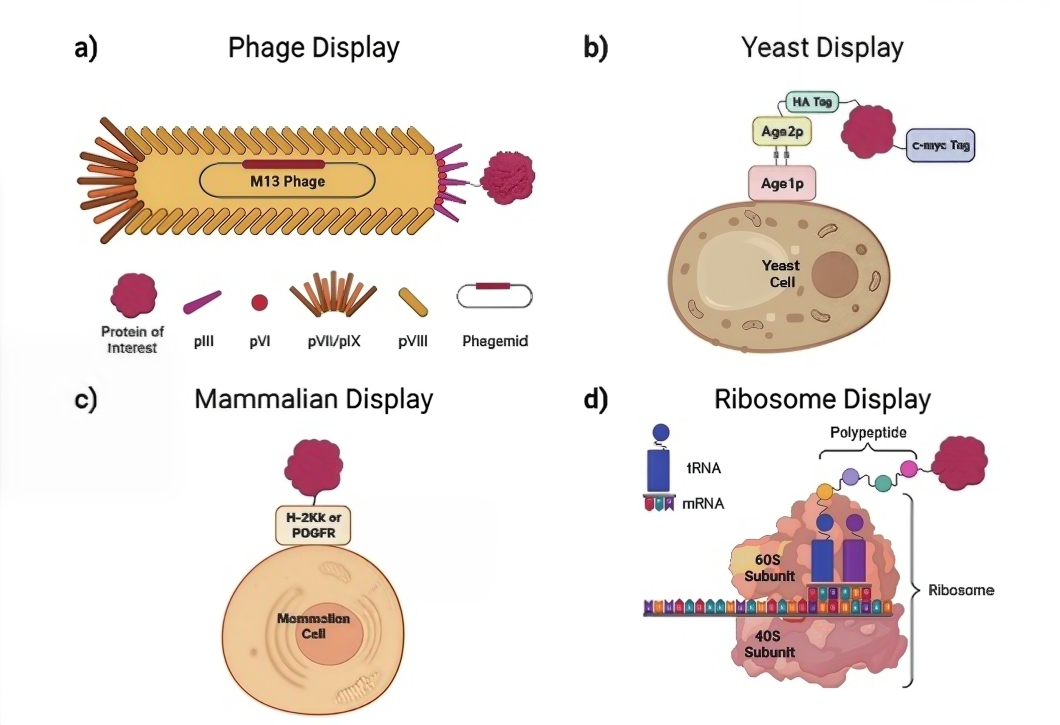
Figure 2: Comparison of Various Protein Display Systems[5]
III. Core Applications of Yeast Surface Display in Enzyme Engineering
(i) Directed Evolution and High-Throughput Screening
Directed evolution is one of the most powerful tools in enzyme engineering. At its core, directed evolution mimics natural selection and accelerates the evolutionary process; the technical challenge lies in the screening process. The precise selection of superior variants is a pressing issue in enzyme engineering. However, yeast surface display provides an ideal platform for this process. Mikolajczyk et al. developed a strategy for co-displaying enzymes and substrates, enabling the efficient isolation of high-activity mutants via FACS[6].
(ii) Multi-Enzyme Co-Expression and Synergistic Catalysis
Many important biotransformation processes involve multi-step enzymatic reactions. The traditional approach involves mixing multiple free enzymes within a system, which results in intermediate products being transferred between enzyme active sites via slow diffusion—a process that is inefficient and prone to the accumulation or loss of intermediate products[7]. Yeast surface display technology offers an excellent solution for constructing multi-enzyme cascade reaction systems: by co-displaying the enzymes required for multi-step reactions on the surface of a single yeast cell, it achieves a “substrate channel” effect through spatial proximity. This enhances enzyme-enzyme proximity and substrate channeling, addresses the key limitations of traditional multi-enzyme systems, improves display efficiency, and significantly enhances the system’s catalytic performance[7].
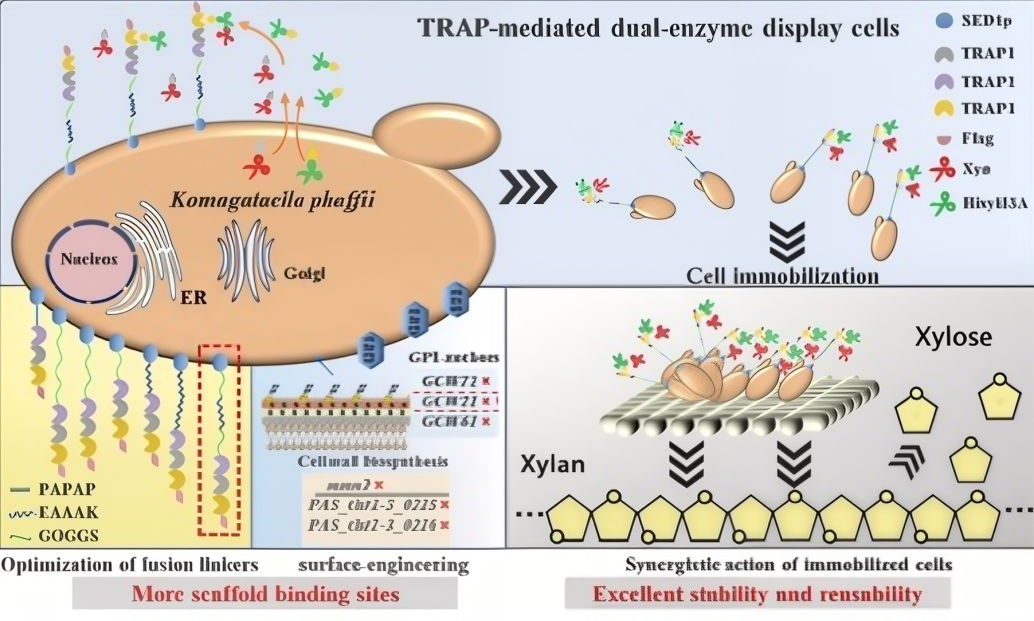
Figure 3: Flowchart of the Construction of a Scaffold-Mediated Dual-Enzyme Display System[7]
(iii) Improved Stability of Whole-Cell Catalysts
The stability of enzymes under production conditions is a key factor limiting their large-scale application. Yeast surface display technology significantly enhances the thermal stability and pH tolerance of enzymes by anchoring them to the cell wall, a natural protective matrix.
IV. KMD Bioscience: Your Partner in Yeast Research
Yeast surface display is profoundly transforming the research paradigm in enzyme engineering—shifting from free-floating to anchored, from low-throughput to high-throughput FACS screening, and from single-enzyme to multi-enzyme synergy. However, researchers still face numerous challenges, such as the selection of anchoring proteins and the optimization of display vectors.
KMD Bioscience offers a proven yeast surface display technology platform and yeast expression system services. Combined with its high-throughput FACS screening capabilities, the company is committed to providing researchers with comprehensive solutions ranging from technical consulting to experimental implementation.
[1]Zhang B, Gao X, Zhou Y, You S, Qi W, Wang M. Surface Display Technologies for Whole-Cell Biocatalysts: Advances in Optimization Strategies, Food Applications, and Future Perspectives. Foods. 2025 May 19;14(10):1803. doi: 10.3390/foods14101803. PMID: 40428582; PMCID: PMC12111073.
[2]Li Z, Zhang B, Liu M, Deng C, Wu X, Wang L, Verstrepen KJ, Zhao G, Zhang Y. CEN-Display: Construction and optimization of a surface display system in Saccharomyces cerevisiae CEN.PK2-1C. Bioresour Technol. 2026 Jun 8;458:135113. doi: 10.1016/j.biortech.2026.135113. Epub ahead of print. PMID: 42264410.
[3]Li Y, Wang X, Zhou NY, Ding J. Yeast surface display technology: Mechanisms, applications, and perspectives. Biotechnol Adv. 2024 Nov;76:108422. doi: 10.1016/j.biotechadv.2024.108422. Epub 2024 Aug 6. PMID: 39117125.
[4]Zajc CU, Sylvander E, Teufl M, Traxlmayr MW. Protein Engineering by Yeast Surface Display. J Vis Exp. 2024 Nov 29;(213). doi: 10.3791/66994. PMID: 39671346.
[5]Kizerwetter M, Pietz K, Tomasovic LM, Spangler JB. Empowering gene delivery with protein engineering platforms. Gene Ther. 2023 Dec;30(12):775-782. doi: 10.1038/s41434-022-00379-6. Epub 2022 Dec 19. PMID: 36529795; PMCID: PMC10277311.
[6]Mikolajczyk BM, Golinski AW, Hackel BJ. Enzyme-substrate co-display on yeast empowers engineering of tobacco etch virus protease activity. Protein Eng Des Sel. 2025 Jan 10;38:gzaf011. doi: 10.1093/protein/gzaf011. PMID: 41001844; PMCID: PMC13010152.
[7]Zhou C, Chen F, Leng J, Liang C, Sha Y, Sun W, Niu H, Chen Y, Ying H. Construction of a scaffold-mediated dual-enzyme display system in Komagataella phaffii with immobilized cells for continuous biocatalysis. Bioresour Technol. 2026 Jul;452:134527. doi: 10.1016/j.biortech.2026.134527. Epub 2026 Apr 4. PMID: 41942042.
Q1: What is “genotype-phenotype coupling”? Why is it important?
Genotype-phenotype coupling refers to the physical correspondence between the genes inside each yeast cell (which encode specific enzyme mutants) and the proteins displayed on its surface (the products of gene expression). When you detect a highly active enzyme on the cell surface, you can directly “trace” it back to the gene sequence inside that cell. This coupling makes the “screening–sequencing–validation” workflow extremely efficient—you are screening for “living cells,” not just “proteins,” so you can directly amplify the gene from positive clones for the next round of evolution.
Q2: Why is the display efficiency of YSD affected by the size of the target protein molecule?
Yeast cell wall-anchored proteins have limited transport capacity; the larger the target protein, the more likely the fusion protein is to encounter folding abnormalities or steric hindrance issues in the secretory pathway. The CEN-Display platform, developed by the Tianjin Institute of Industrial Biotechnology of the Chinese Academy of Sciences, successfully displayed the large-molecule enzyme β-glucosidase (BGL1) on the yeast surface by introducing an ultra-long, rigid linker peptide to alleviate steric hindrance. Generally, proteins with smaller molecular weights (such as nanobodies and small-molecule enzymes) are displayed more efficiently, while large proteins exceeding 100 kDa require special optimization.
Q3: You mentioned that YSD “eliminates the need for purification and immobilization steps,” but wouldn’t the yeast cells themselves cause background reactions or interference?
It is true that whole-cell catalysts cannot be considered entirely equivalent to purified enzymes—the metabolic byproducts and cell wall components of yeast cells may cause background interference in certain reaction systems. However, in the vast majority of enzyme-catalyzed reactions, this background interference is negligible for three reasons:
Ø Yeast cells are typically heat-treated or washed prior to the reaction to inactivate endogenous enzymes;
Ø The target enzyme is expressed on the cell surface, and its catalytic activity is significantly higher than the cell's intrinsic background activity;
Ø ØThe cost and time savings achieved with YSD (no purification or chemical immobilization required) far outweigh the slight increase in background it introduces. For pharmaceutical applications requiring extremely high purity, the background can be further reduced through simple centrifugation and washing.
Q4: Just how “high-throughput” is FACS screening? How many mutants can it screen?
Flow cytometry (FACS) typically has a throughput of 10⁴ cells per second, allowing for the sorting of approximately 10⁷ cells per hour. For screening enzyme mutant libraries, where enzyme activity is monitored at the single-cell level using fluorescently labeled substrates or products, FACS can complete the detection and sorting of 10⁶–10⁸ mutants within a few hours. This throughput is tens of thousands of times greater than that of traditional 96-well plate screening (approximately 10³ samples per day), making it possible to “fish out” a very small number of high-performance variants from a vast library.
Q5: How many times can the “whole-cell catalyst” prepared by YSD be reused?
Reusability varies depending on the enzyme type and reaction conditions. Generally, YSD whole-cell catalysts can be recovered by simple centrifugation and can be reused 5–10 times under mild reaction conditions (e.g., 30–40°C, neutral pH) while retaining more than 50% of their activity. Organophosphate hydrolases immobilized using the SSA system retained 77.7% of their activity after six reuses. However, under harsh conditions—such as high temperatures, organic solvents, or mechanical agitation—the integrity of the yeast cells themselves and the anchoring stability of the enzyme molecules are compromised, resulting in a corresponding reduction in the number of reuses. For industrial applications, a trade-off between catalytic efficiency and operational lifespan is typically required.
- Yeast Surface Display (YSD)
- Enzyme Engineering Services
- High-Throughput FACS Screening
- Directed Evolution Platform

- Protein Platform
- Protein Expression Services
- Protein Modification & Detection Services
- Protein Interaction Services
- Protein Purification Service
- Antibody Discovery Platform
- VHH Antibody Platform
- Phage Display Platform
- Antibody Humanization Platform
- Single B Cell Screening Platform
- Antibody Expression & Validation Platform
- Peptide Library Platform
- Custom Antibody Platform
- Innovative Drug Discovery Platform
- Product Center
- Proteins
- Antibodies
- Raw Materials Reagents
- Small Molecule Reagents
- Peptide Products
- Nanoparticle Products
- Contact Us
- Phone:400-621-6806
- Mobile:13110936064(WeC
- E-mail:[email protected]
- Address:Room 108, Building 10, No. 6 Hechang Road, Wuqing Development Zone, Tianjin City
-

WeChat
-

Service Account
-
 400-621-6806
 -
 3599163699
 -
 Monday to Friday 9:00-18:00
 -

-
 0
0
-
