


VHH antibodies are derived from the naturally occurring heavy‑chain antibodies found in camelids (camels, alpacas, and llamas). With a monomeric molecular weight of only 13–15 kDa, they are considerably smaller than full‑length IgG antibodies, Fab fragments, and scFv fragments. VHHs exhibit excellent physicochemical stability and tissue penetration, and are capable of recognizing cryptic epitopes, enzyme active sites, and other target regions that are often inaccessible to conventional antibodies. Furthermore, they can be produced at large scale in E. coli expression systems, making them widely applicable in academic research, clinical diagnostics, therapeutic antibody development, and cell‑based therapies. However, because camelid VHHs are heterologous proteins, their application in humans carries a risk of immunogenicity. They may elicit anti‑drug antibodies (ADAs) that accelerate drug clearance or even trigger inflammatory responses, thereby limiting their therapeutic value.
KMD Bioscience maintains a professional recombinant antibody R&D team and offers comprehensive VHH antibody development services. Our workflow includes alpaca immunization followed by phage display‑based screening to identify target‑specific VHHs, which are then produced at scale using either E. coli or mammalian expression systems. The resulting antibodies possess both high affinity and high specificity, and are suitable for a broad range of applications, including cryptic epitope recognition, enzyme active‑site binding, diagnostic imaging, and viral neutralization.
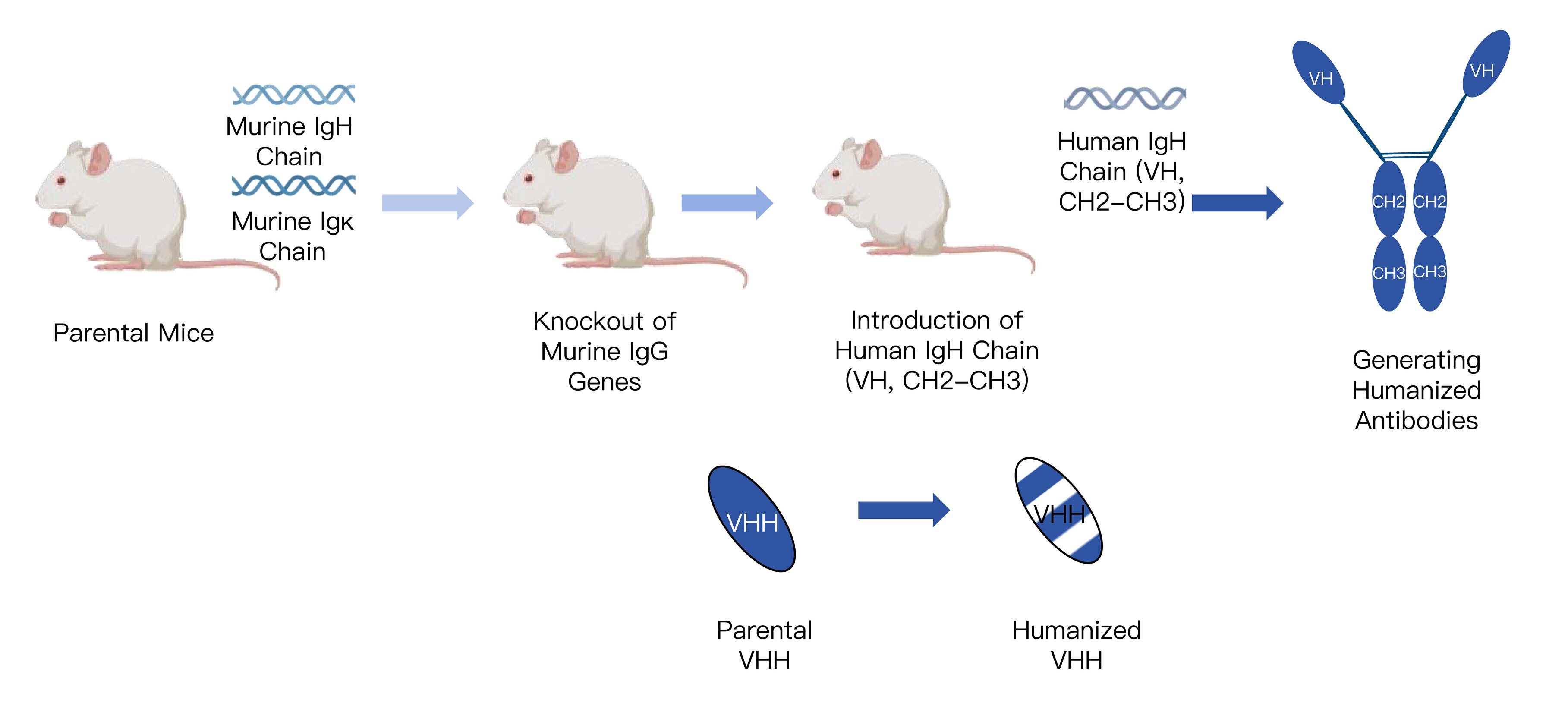
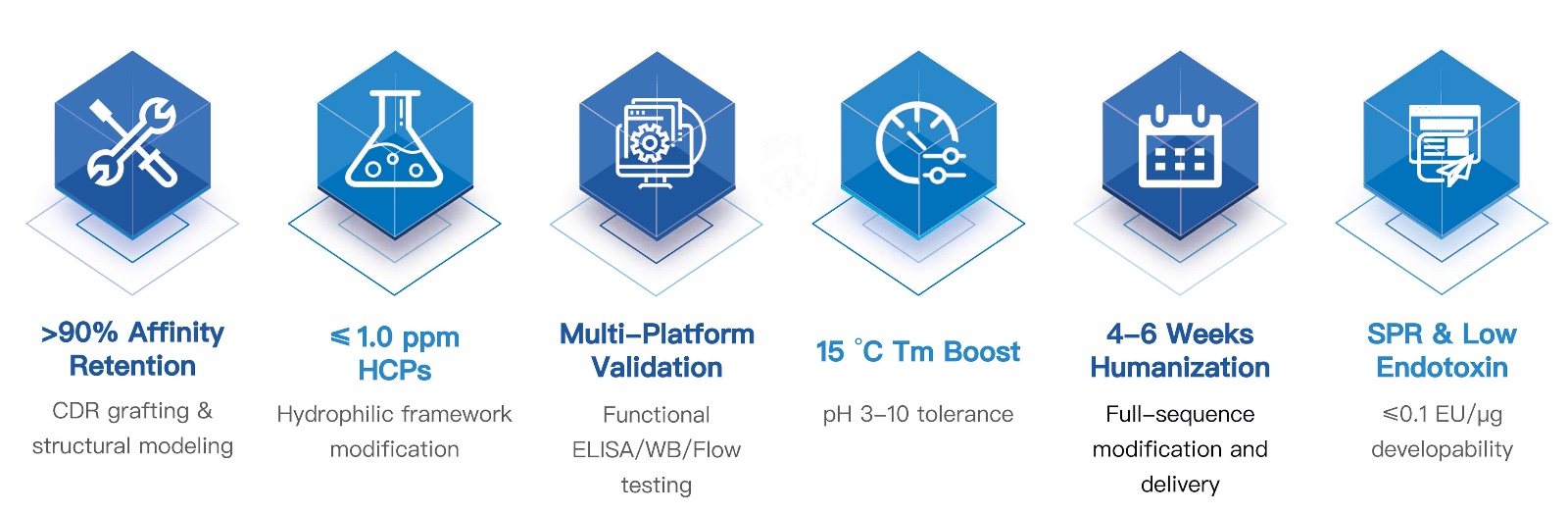
In addition, we provide customized humanization solutions. We can humanize VHHs through CDR grafting combined with sequence homology optimization, which preserves binding activity while substantially reducing immunogenicity. Alternatively, we offer a human heavy‑chain transgenic mouse platform that enables direct screening of fully human heavy‑chain variable regions, thereby eliminating immunogenicity concerns from the outset. To validate the functionality of the humanized VHH antibodies, we perform comprehensive characterization using a range of analytical methods, including ELISA, Western blotting, immunoprecipitation, flow cytometry, immunohistochemistry, IC50 determination, and endotoxin testing. This rigorous validation ensures that the final antibodies precisely meet the requirements of downstream research and therapeutic applications.





 0
