Home
>>
Technical Platform
>>
Gene Editing Platform
>>
Gene Knock-In Cell Line Service
Download Center
Quick Inquiry & Consultation
Gene Knock-In Cell Line ServiceIntroduction

Due to the high cost, long duration, and low throughput associated with animal model construction, suitable in vitro cell models have been increasingly applied in drug development research, especially as cell biology technologies are widely promoted and the international community increasingly emphasizes and implements the 3R principles for laboratory animals. Gene-edited cell lines have broad applications in disease model construction and gene therapy. By simulating disease cell models, researchers can study pathogenesis, screen therapeutic targets, and provide new strategies for treating genetic diseases and cancer.

KMD Bioscience has established a cell Gene Editing Platform, utilizing advanced CRISPR-Cas9 technology and a comprehensive cell culture system. By simultaneously transfecting humanized Cas9 protein, dual-target gRNA, and donor DNA into target cells, homologous recombination is achieved, allowing for efficient gene knock-in. We offer gene knock-in services for various cell types, including HEK293, CHO cells, cancer cells, immortalized cells, IPS/ES cells, and more. In addition, we provide a range of downstream services such as Stable Cell Line Development, Cell Scale-Up Production, and Recombinant Protein Production.

Cell Type

Typical Cells

Quality Control

Timeline

Liver Cancer Cells

HCC-7721、LM3、HepG2、hepa1-6

qPCR, Western Blot

As fast as 4 weeks

Non-Cancer Immortalized Cells

Jurkat、HK-2、AC16

Stem Cells

H1、H9、iPSC

Breast Cancer Cells

MCF-7、MDA-MB-231、T-47D

Colorectal Cancer Cells

COLO 205、HCT116、HT-29

Lung Cancer Cells

SK-MES-1、A549、SK-MES-1、NCI-H69

Pancreatic Cancer Cells

PL45、BxPC-3、HPAF-2

Deliverable: Cell Pool or monoclonal Homozygous Cell Line, Experimental Report.


Content

Currently, CRISPR-Cas9-based site-specific integration is primarily used to modify and replace target genes in animal cells with human genes, thereby constructing animal (CDX) models and others.

The strategies to achieve Knock-In (KI) include: using synthetic oligonucleotides (Oligo) or single-stranded DNA (ssDNA) as donors for integrating large fragments. Using adeno-associated virus (AAV)-mediated delivery, which takes advantage of its property of existing in the cell nucleus in single-stranded form, to deliver ssDNA as a donor vector. And using double-stranded DNA fragments or circular plasmids as donors to achieve KI.


Step

Content

Timeline

Step 1 sgRNA Design

(1) The customer provides the target gene;

40 days

(2) Design and synthesize the sgRNA.

Step 2: sgRNA Plasmid Construction, Donor DNA Synthesis

(1) Construct sgRNA plasmids;

(2) Ligate sgRNA with Cas9-containing vector;

(3) Construct recombinant vectors containing sgRNA and donor DNA;

(4) Sequence and verify recombinant vector.

Step 3 Co-transfection of Vector Into Cells

(1) Co-transfect recombinant vectors into cells;

(2) Drug Screening;

(3) Pool efficiency validation.

Step 4  monoclonal

(1) Sort single-clone gene-edited cells by flow cytometry.

Step 5 Knockout Efficiency Validation

(1) Validate knockout efficiency by Sanger sequencing and WB.

Step 6  Cell Cryopreservation

(1) Cryopreserve cells using DMSO in liquid nitrogen.


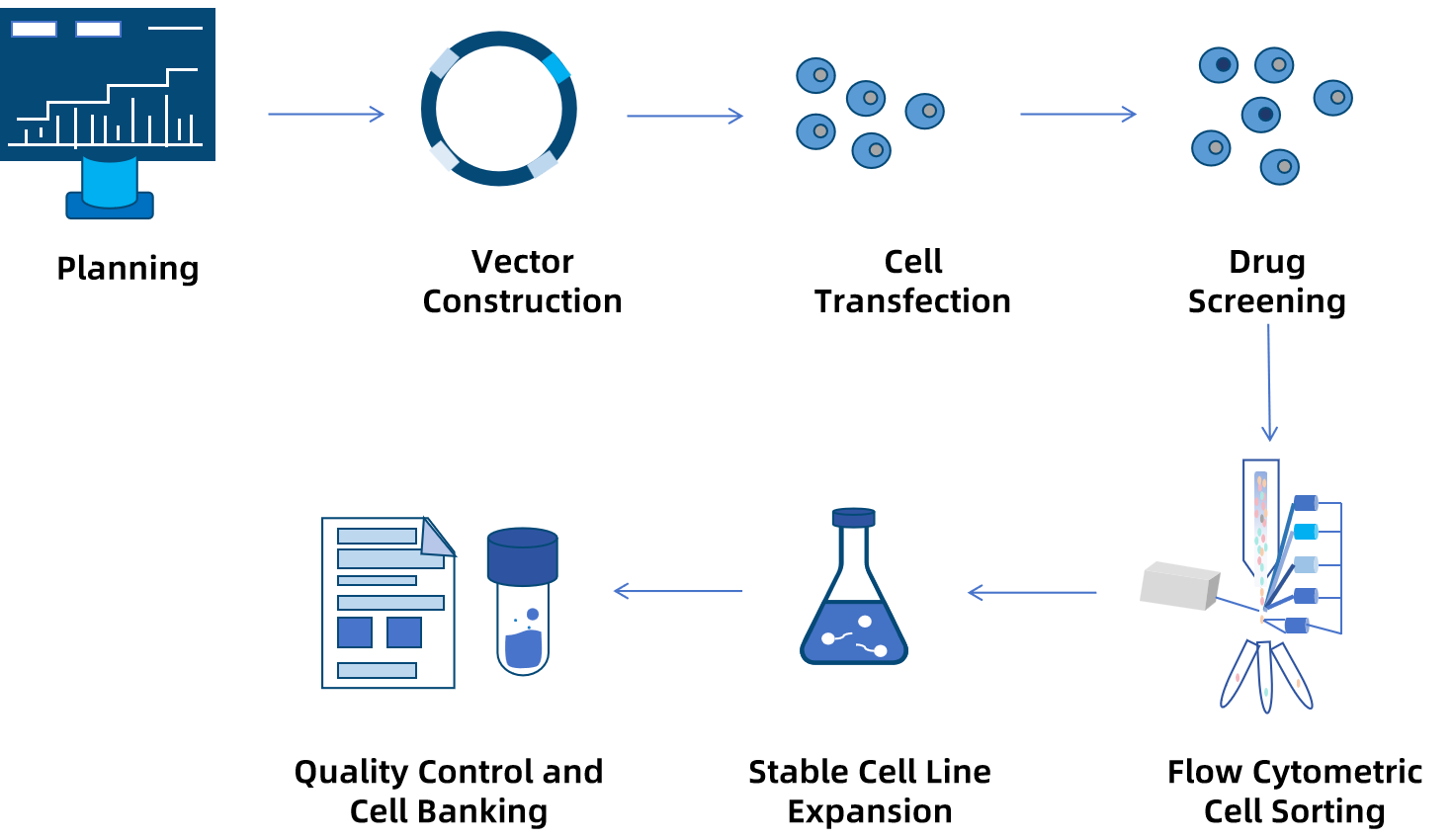
Process

图片46.png

Figure 1. Service workflow for cell gene knock-in

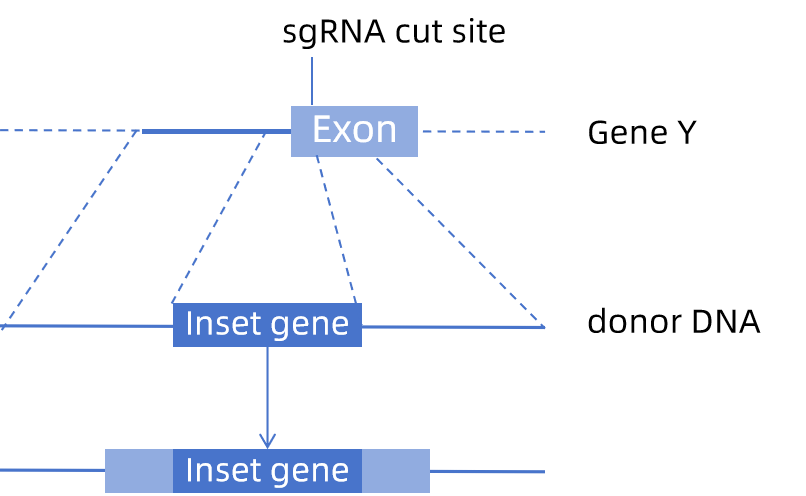
图片47.png

Figure 2. Gene knock-in cell strategy

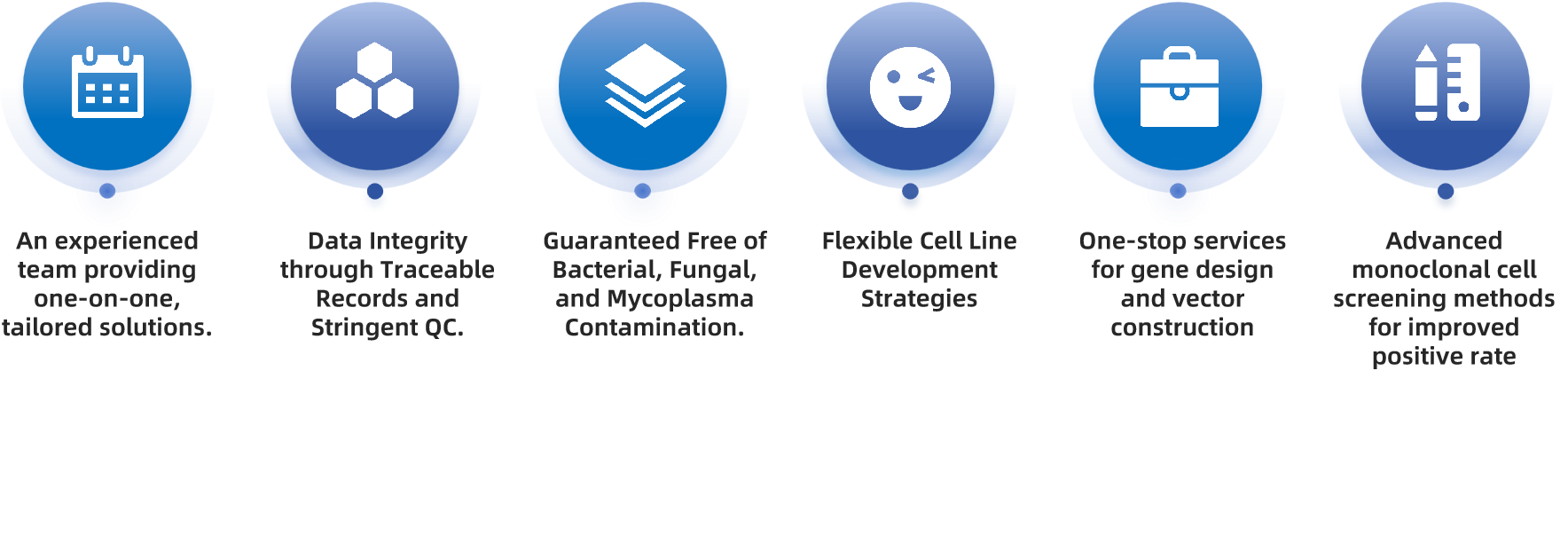
Advantage

图片52.png

Frequently Asked Questions

1.What is cell gene knock-in technology?

Answer: Cell gene knock-in is a technique that precisely inserts a specific exogenous gene fragment into the cell genome. This is typically achieved through advanced gene-editing tools, such as the CRISPR/Cas9 system combined with the homologous recombination repair mechanism. By designing guide RNA (gRNA) targeted at the insertion site, Cas9 nuclease induces a double-strand break at a specific location in the cell genome. A repair template containing the target gene fragment and sequences homologous to the target insertion site is provided. The cell uses homologous recombination repair to insert the gene fragment accurately into the target location.


2.What are the advantages of cell gene knock-in technology?

Answer: On one hand, it allows for precise insertion of the target gene at specific locations, enabling accurate modification of the cell genome. This facilitates gene function research, expression regulation, and protein-protein interactions. On the other hand, by knocking in genes with specific functions, such as reporter genes, tagged genes, or therapeutic genes, it provides powerful tools for cell biology research, disease model creation, and gene therapy.


3.What is the process for cell gene knock-in services?

Answer: The process includes cell testing, knock-in vector construction, donor vector construction, cell transfection (introducing gRNA, Cas9, and Donor into cells), constructing the gene mutation Cell pool, monoclonal screening and identification, and cultivating and verifying stable knock-in cell lines.

Login

Don’t have an account?Sign Up Now

Register

Already have an account?Log In Now