Alpaca VHH are functional single-chain antibodies (VHH antibodies or single-domain antibodies) derived from Camelidae (specifically Alpaca and Llama). Composed solely of heavy chains, they lack light chains and the functional CH1 and CH4 domains. This single-domain structure confers unique advantages over traditional antibodies, making them highly valuable for biotechnological applications.
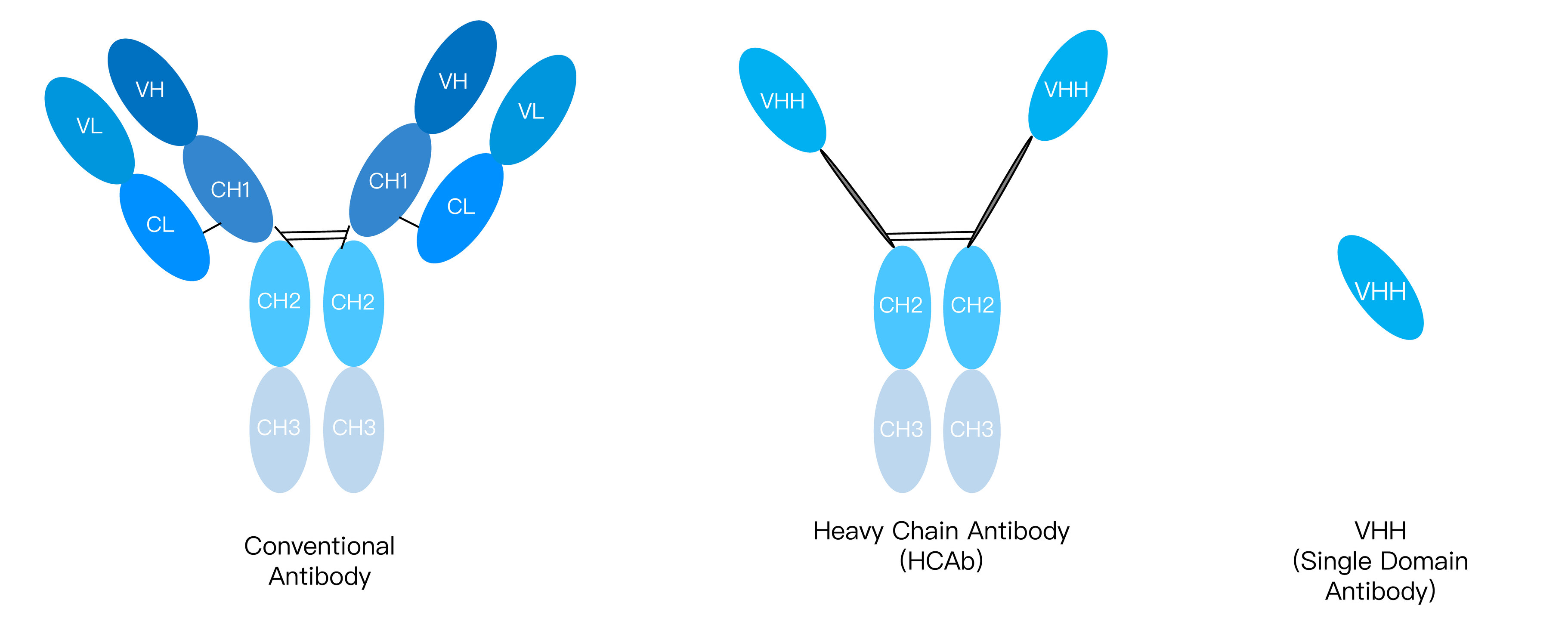
Figure 1. Schematic Representation of the Antibody Domain Structure in Alpacas.
Advantages of VHH Antibodies:
(1) High Stability: Maintains structural integrity under high temperature and varied pH conditions.
(2) Unique Paratopes: Recognizes distinct antigenic epitopes inaccessible to conventional antibodies.
(3) Robust Penetration Capability: Nanoscale molecular fragments facilitate rapid tissue penetration, labeling applications, and notably, crossing the blood-brain barrier.
(4) Cost Efficiency: Serves as a cost-effective alternative for large-scale production.
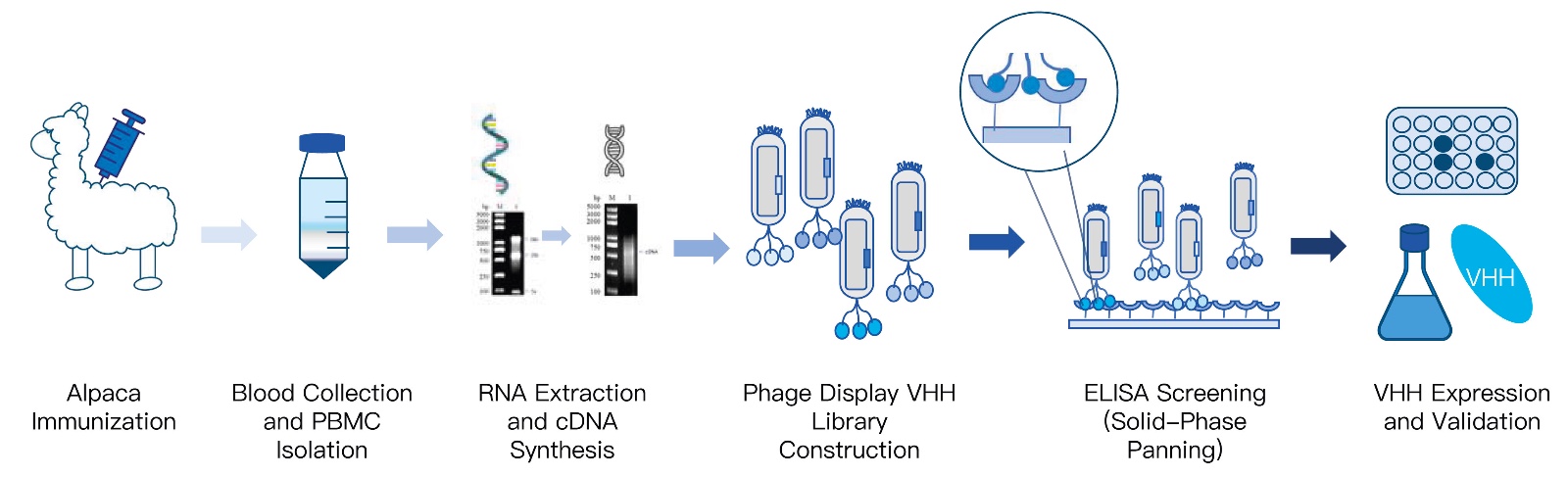
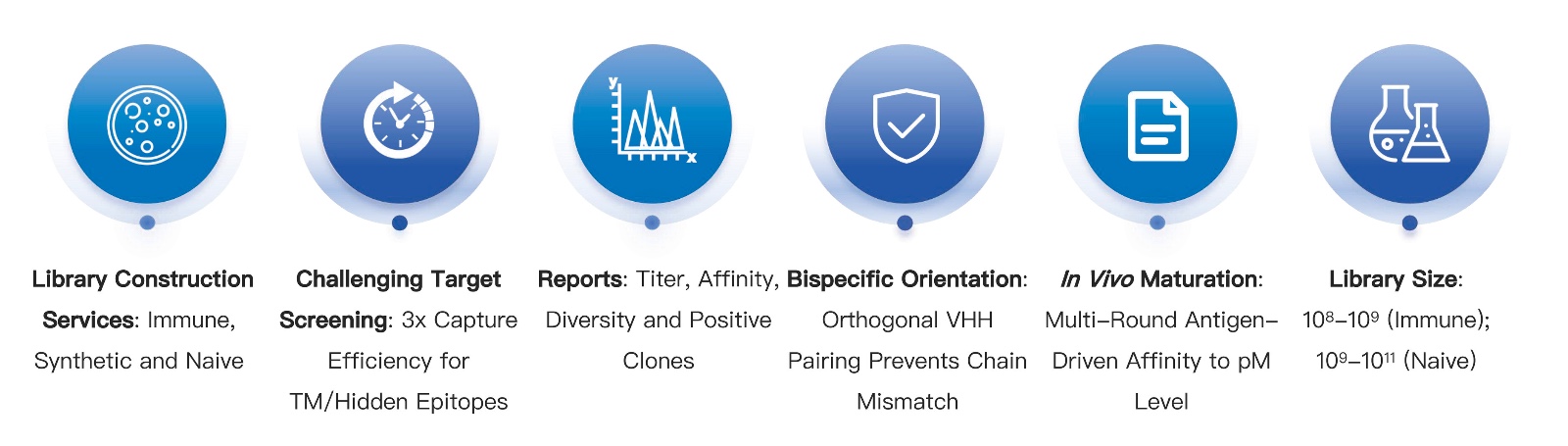
Scientists at KMD Bioscience will perform VHH antibody surface display using the pIII protein of M13 phage. A phage vector with dual tags (Flag and 6×His) was constructed, and TG1 and XL1 Blue host cells with a transfection efficiency of 108 were prepared. After 2 to 3 rounds of transfection and amplification, we can provide clients with a high-quality Alpaca VHH Display Library, with a library size of 108 to 109 and a packaging capacity of 1013 to 1016/ml. Through multiple rounds of VHH Library Screening with antigen restriction pressure, up to 20 to 30 high-affinity phage clones can be obtained. Finally, large-scale antibody expression products can be acquired within 1 to 2 weeks via IPTG induction to meet client research needs (such as FACS and cell viability assay).







 0
0
