


Key Technology of Plasmid Construction and Vector Selection for Recombinant Protein Expression
- 2026-08-24
- 96
一、Introduction
Plasmid assembly acts as the foundational molecular step in recombinant protein pipelines. Expression plasmids carry target genes and multiple functional modules: promoters, ribosome binding sites, resistance markers, fusion tags and terminators. Host cells read these genetic sequences to complete transcription and translation. Flawed plasmid design or cloning errors block target protein production, even with optimized induction parameters in later stages.
Different vector backbones fit prokaryotic or eukaryotic host systems separately. Cloning methods, codon tuning, tag position and linker sequences all change final protein output and solubility. The molecular platform of KMD-Bioscience builds diverse recombinant plasmids. Technicians select matched backbones based on target protein traits. Services include codon optimization, gene synthesis, fragment assembly and full sequencing verification of positive clones. Qualified plasmids are delivered to support subsequent protein expression and purification workflows.
二、Core Functional Components of Recombinant Expression Plasmids
A functional expression plasmid contains indispensable modules: origin of replication, antibiotic resistance marker, promoter, ribosome binding site (RBS), multiple cloning site (MCS), fusion tag sequence and protease cleavage site.
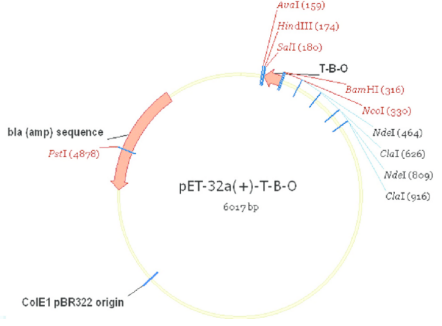
Figure 1 Schematic map of prokaryotic expression vector pET‑32α[1]
①Origin of replication: Enables stable plasmid replication inside host cells.
②Resistance screening marker: Screens successfully transformed bacterial colonies after plasmid transfer.
③Promoter: Controls transcription intensity. T7 promoters dominate prokaryotic systems; CMV promoters are widely used in mammalian cells.
④RBS: Regulates translation initiation efficiency and directly impacts protein yield.
⑤MCS: Provides restriction sites for inserting target gene fragments.
⑥Fusion tag: Assists protein purification and improves solubility.
⑦Protease cleavage site: Allows tag removal after protein purification.
Operators pick matching vectors according to target protein properties. The pET series supports high-level expression in E. coli. pMAL vectors suit poorly soluble proteins. pcDNA series are designed for mammalian cell expression. The same gene delivers vastly different expression outcomes when cloned into distinct vector backbones.
三、Common Cloning Technologies and Standard Plasmid Assembly Workflow
Complete plasmid construction breaks down into several core steps: target gene preparation, vector linearization, fragment assembly, bacterial transformation, positive colony screening and full plasmid sequencing. Three mainstream cloning methods are widely applied.
1.Restriction digestion and T4 ligation
This traditional approach cuts target inserts and vectors with restriction enzymes. Sticky ends drive fragment ligation. Its limitation lies in built-in enzyme cutting sites inside some target genes. It only fits simple single-fragment plasmid assembly [1].
2.Gibson seamless assembly
Homologous arms mediate recombination between linear vectors and gene fragments. Restriction sites are no longer required. Multiple fragments can be spliced in one reaction. It serves as the most popular cloning method currently. Users flexibly add tags and linker sequences to build complex recombinant constructs [2].
3.Golden Gate cloning
Type IIS restriction enzymes separate recognition sequences from cutting positions. Modular multi-fragment assembly becomes possible. This method fits high-throughput parallel construction of plasmids with different fusion tags [3].
Whichever cloning technology is adopted, single colonies must be picked after transformation. Extract plasmids and run full sequencing. Only plasmids with intact target sequences, correct insertion orientation and unbroken open reading frames can proceed to protein expression trials.
四、Critical Notes for Plasmid and Vector Construction
1.Codon optimization
Heterologous genes carry codon bias mismatched with host translation machinery. This causes premature termination and low protein yield. Codon adjustment matching the host organism must be completed during plasmid design.
2.Fusion tag and cleavage site layout
Plan N-terminal or C-terminal tag placement reasonably. Add flexible linker sequences to stop tags from disturbing target protein folding. Insert cleavage sites for TEV or Ulp1 ahead of time for post-purification tag removal.
3.Open reading frame validation
Frameshift mutations fully halt recombinant protein translation. Operators must guarantee intact open reading frames during gene insertion.
4.Vector matching for toxic proteins
Toxic target proteins cannot be cloned into vectors with strong leaky promoters. Strictly inducible backbones prevent plasmid mutation or loss during bacterial passaging.
五、Plasmid Construction Services of KMD-Bioscience
1.Vector evaluation and custom scheme design
Select proper vector backbones based on target gene sequences, expression hosts and downstream assays. Design matching tags, cleavage sites and linkers; complete host-specific codon optimization.
2.Gene synthesis and fragment assembly
Three cloning workflows are available: restriction ligation, Gibson seamless assembly and Golden Gate. Single or multi-fragment assembly is supported, including dual-tag and fusion protein complex vectors.
3.Positive clone identification
Screen colonies via colony PCR. Extract plasmids and perform full-length sequencing to confirm intact open reading frames, correct insertion direction and error-free gene sequences.
4.Plasmid preparation and delivery
Deliver fully verified recombinant plasmids together with vector maps and complete sequencing reports. Pre-transformed expression strains can also be provided for immediate small-scale protein expression tests.
FAQs
Q:The full gene sequencing result of a plasmid shows zero errors, yet no target protein can be detected after host transformation. What plasmid-level causes could lead to this issue?
Sequencing only verifies the coding region of the target gene. Other functional elements on the plasmid may still malfunction.
1.Mutations occur on promoter or RBS sequences. Transcription and translation cannot initiate normally.
2.The spacing between RBS and initiation ATG site is unreasonable, leading to extremely low translation efficiency.
3.The vector promoter is incompatible with the selected expression host.
4.The target protein carries toxicity to host cells. Spontaneous mutation or deletion happens during strain passaging. The sequenced clone is intact, but plasmids inside expression bacteria have already mutated.
5.Tag or linker sequences trigger abnormal secondary mRNA structures, which suppress translation.
Solutions to troubleshoot: Recheck all components of the expression cassette. Transform fresh competent cells again. Swap vector backbones or host strains for verification.
References:
[1] Liu ZQ, Yang PC. Construction of pET-32 α (+) Vector for Protein Expression and Purification. N Am J Med Sci. 2012;4(12):651-655. doi:10.4103/1947-2714.104318
[2] Taschner M, Dickinson JB, Roisné-Hamelin F, Gruber S. 4G cloning: rapid gene assembly for expression of multisubunit protein complexes in diverse hosts. Life Sci Alliance. 2024;8(1):e202402899. Published 2024 Dec 2. doi:10.26508/lsa.202402899
[3] Gaur D, Wohlever ML. A suite of pre-assembled, pET28b-based Golden Gate vectors for efficient protein engineering and expression. Protein Sci. 2025;34(4):e70106. doi:10.1002/pro.70106
- recombinant plasmid construction
- expression vector design
- codon optimization service
- T7 promoter vector

- Protein Platform
- Protein Expression Services
- Protein Modification & Detection Services
- Protein Interaction Services
- Protein Purification Service
- Antibody Discovery Platform
- VHH Antibody Platform
- Phage Display Platform
- Antibody Humanization Platform
- Single B Cell Screening Platform
- Antibody Expression & Validation Platform
- Peptide Library Platform
- Custom Antibody Platform
- Innovative Drug Discovery Platform
- Product Center
- Proteins
- Antibodies
- Raw Materials Reagents
- Small Molecule Reagents
- Peptide Products
- Nanoparticle Products
- Contact Us
- Phone:400-621-6806
- Mobile:13110936064(WeC
- E-mail:[email protected]
- Address:Room 108, Building 10, No. 6 Hechang Road, Wuqing Development Zone, Tianjin City
-

WeChat
-

Service Account
-
 400-621-6806
 -
 3599163699
 -
 Monday to Friday 9:00-18:00
 -

-
 0
0
-
