Home
>>
Protein Platform
>>
Protein Interaction Services
>>
Yeast Two-Hybrid Service
Yeast Two-Hybrid ServiceIntroduction

KMD Bioscience has been dedicated to the research of the Yeast Two-Hybrid (Y2H) system for many years. Our yeast hybrid system consists of a library based on the SMART method, yeast strains, a rigorous reporter gene, and high-expression vectors. This technology can be used for: studying protein-protein interactions, confirming protein-protein interactions, and defining protein-protein interaction domains.

The Yeast Two-Hybrid system is an in vivo method used for identifying new genes that encode protein-protein interactions with target proteins. This system provides several innovations for recognizing interacting proteins. The two-hybrid system is the first genetic and molecular method for detecting interacting proteins in vivo, enabling the detection of protein-protein interactions in their natural structures. Therefore, the two-hybrid system offers high sensitivity for detecting weak and transient protein-protein interactions. Additionally, the system enables easy retrieval of the gene sequences encoding interacting proteins, requiring only plasmid construction and eliminating the need for antibodies, protein purification, and other tedious steps required in in vitro protein-protein interaction assays. The two-hybrid system can be used to screen libraries for genes encoding proteins interacting with a known target protein or to test interactions of known proteins.
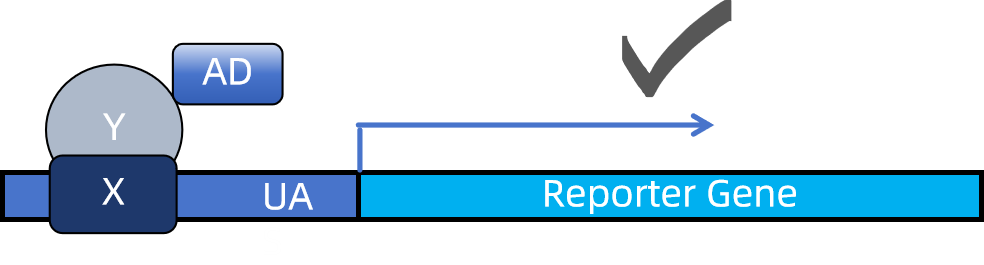
Principle of the Yeast Two-Hybrid (Y2H) System

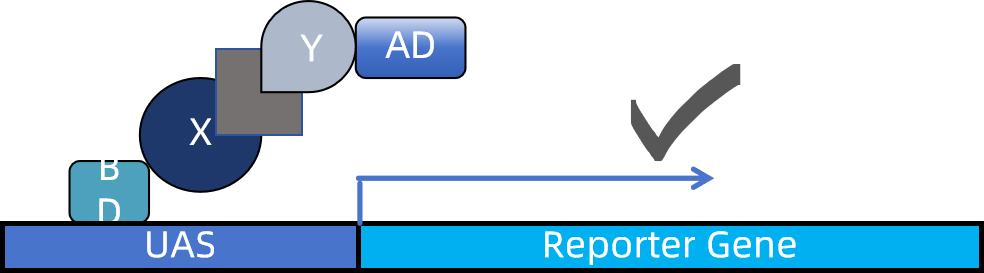
The traditional Y2H detection principle utilizes a reporter gene whose activation depends on a specific transcription factor. Specifically, the protein X and Y to be tested are fused with the DNA-binding domain (BD) and the activation domain (AD) of the transcription factor. The BD-X fusion protein binds to the upstream activation sequence (UAS) of the reporter gene promoter. When X and Y interact, the AD is recruited to the promoter, reconstructing a functional transcription factor, which triggers the subsequent transcription of the reporter gene. (Figure 1)

As a genetic technology, yeast two-hybrid screening offers a sensitive and economical method to test direct interactions between two target proteins, or to use a protein as bait to screen protein fragment libraries derived from the desired cell types, tissues, or entire organisms. The corresponding plasmids from the selected yeast colonies are sequenced to determine the interactions.

图片18.png

Figure 1: Schematic Diagram of Basic Y2H Principle

Experimental procedures

1. Create BD-X bait.

2. Test the self-activation of BD-X bait.

3. Perform yeast two-hybrid screening and identify the prey.

Yeast Two-Hybrid (Y2H) Assay Service

To study the interactions of a large number of proteins, scientists have developed several systems based on the Y2H system to adapt to the different subcellular localizations and biochemical characteristics of proteins.We offer a variety of systems to meet the diverse needs of different projects.

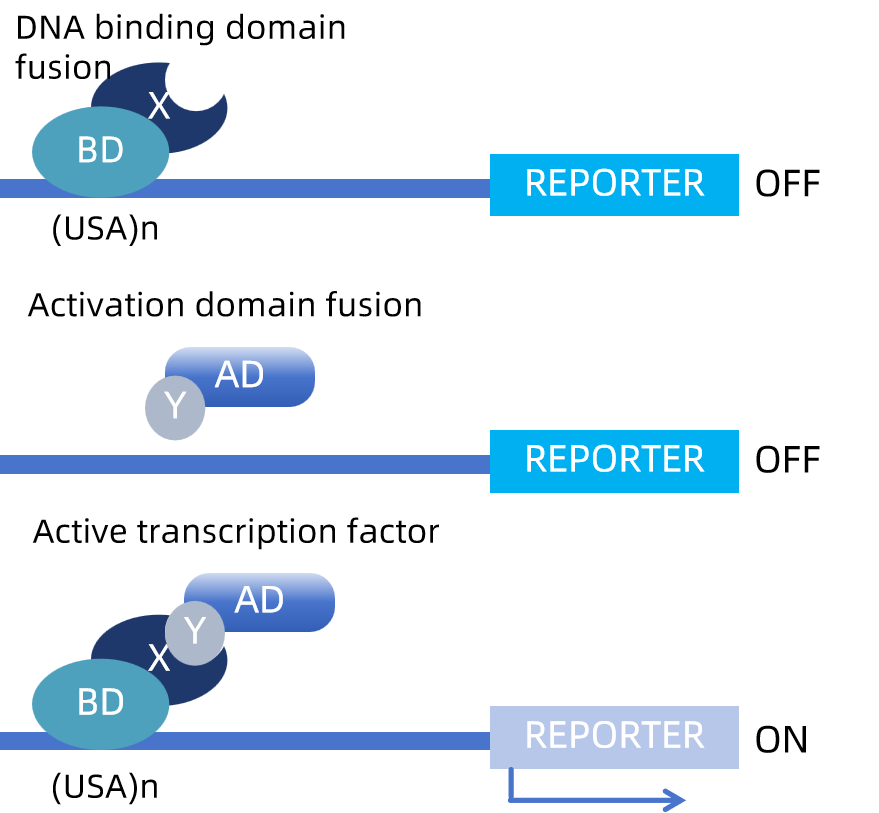
·Yeast Single-Hybrid System: Studies protein-DNA interactions (see Figure 2).

图片19.png

Figure 2: Schematic Diagram of Y1H Principle

·Yeast Triple-Hybrid System: Studies protein-protein interactions mediated by a third component (see Figure 3).

图片20.png

Figure 3: Schematic Diagram of Y3H Principle

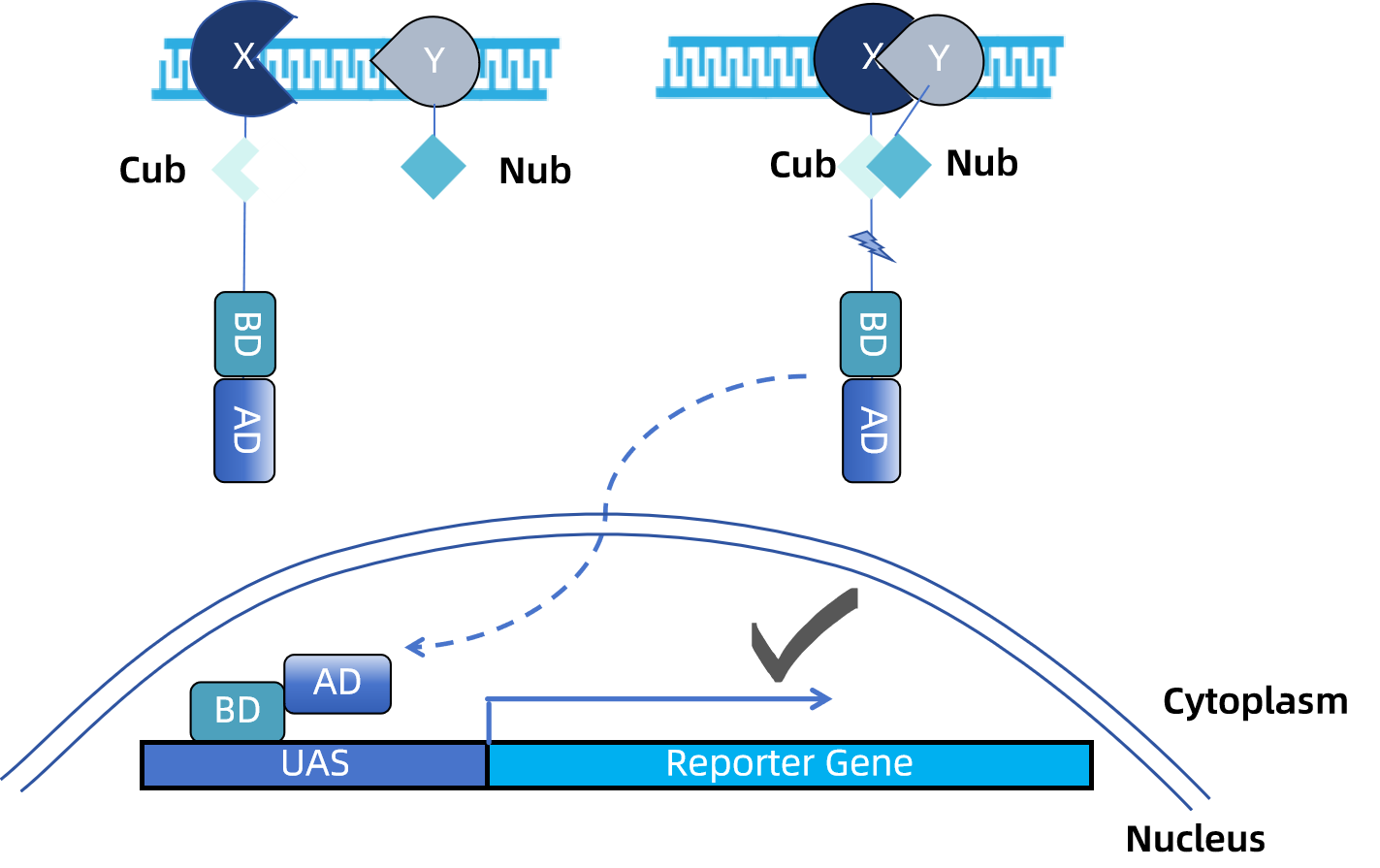
·Split-Ubiquitin Y2H System: Used to study membrane proteins (see Figure 4).

图片21.png

Service scope

We provide a one-stop service: from library construction to positive clone screening. This enhances efficiency, avoids errors, and objectively saves costs for our clients.

Service Content:

-- Clone the bait target gene into a Y2H vector and sequence it. The bait target gene can be a gene fragment (cut by restriction enzymes) or a full-length gene.

-- Test the self-activation ability and toxicity of the bait gene.

-- Library screening and interaction verification.

-- Isolation, extraction of positive clones, and sequencing of DNA.

Provided by the customer

-- At least 2μg of plasmid (including bait target gene).

-- The DNA sequence of the gene for us to design the synthesis plan and perform gene synthesis (subject to additional charges).

Deliverables:

-- Several positive clones and DNA sequencing results.

-- At least 2μg of plasmid for each positive clone.

-- Experimental Timeline: Approximately 6-8 weeks.

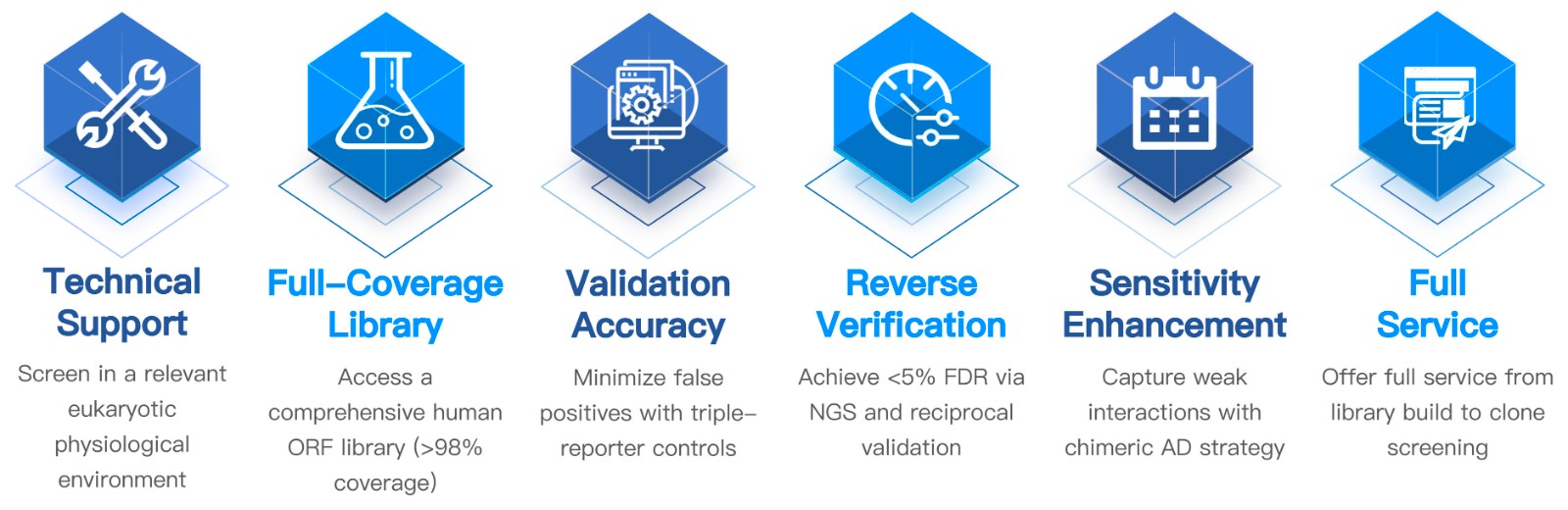
Service advantages

23-KMDBioscience-Yeast-Two-Hybrid-Service.jpg

Login

Don’t have an account?Sign Up Now

Register

Already have an account?Log In Now