Home
>>
Technical Platform
>>
Gene Editing Platform
>>
Plant Gene Knock-In Service
Download Center
Quick Inquiry & Consultation
Plant Gene Knock-In ServiceIntroduction

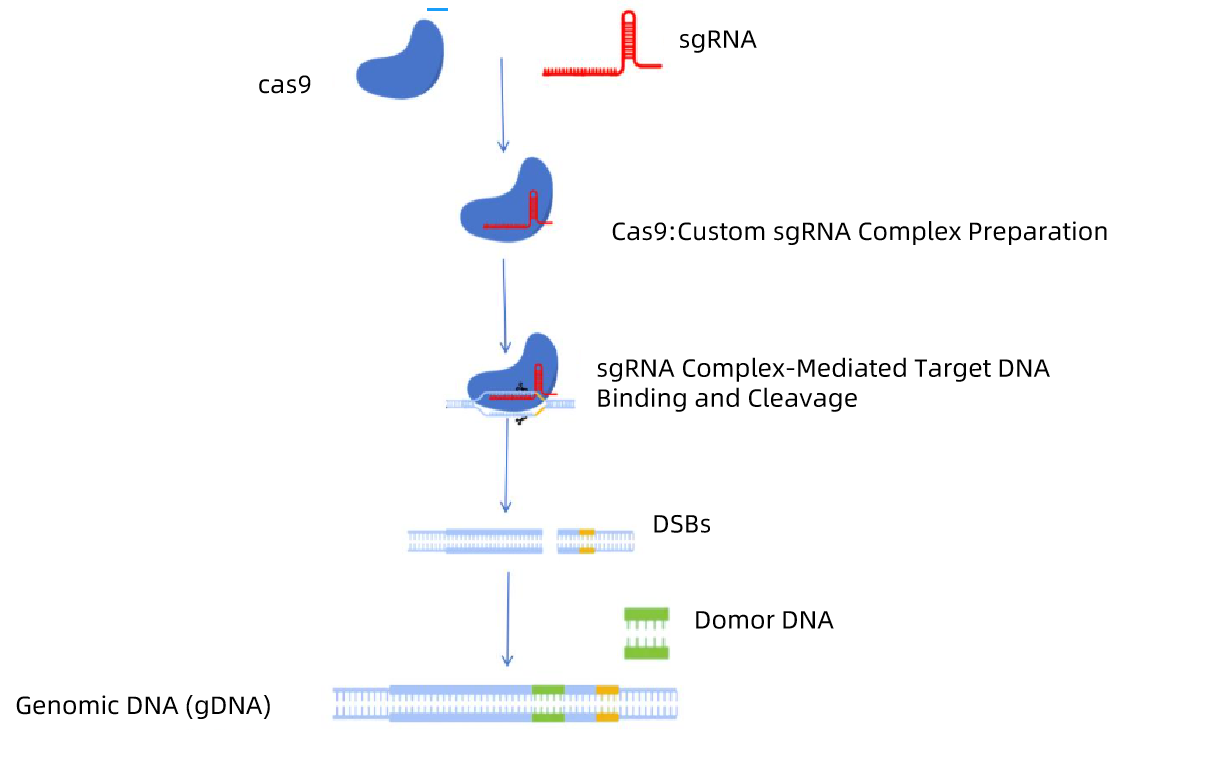
Gene knock-in (KI) refers to the precise insertion of a specific gene or DNA sequence into the genome, primarily achieved through homologous recombination and the CRISPR/Cas9 system. In homologous recombination–mediated methods, a DNA repair template containing homologous recombination arms must be constructed. For the CRISPR/Cas9 system, Cas9 first cleaves the target sequence to generate DSBs. Subsequently, a highly homologous DNA repair template is introduced. The cell activates HDR or NHEJ repair mechanisms, and the exogenous donor DNA template enables precise gene knock-in.

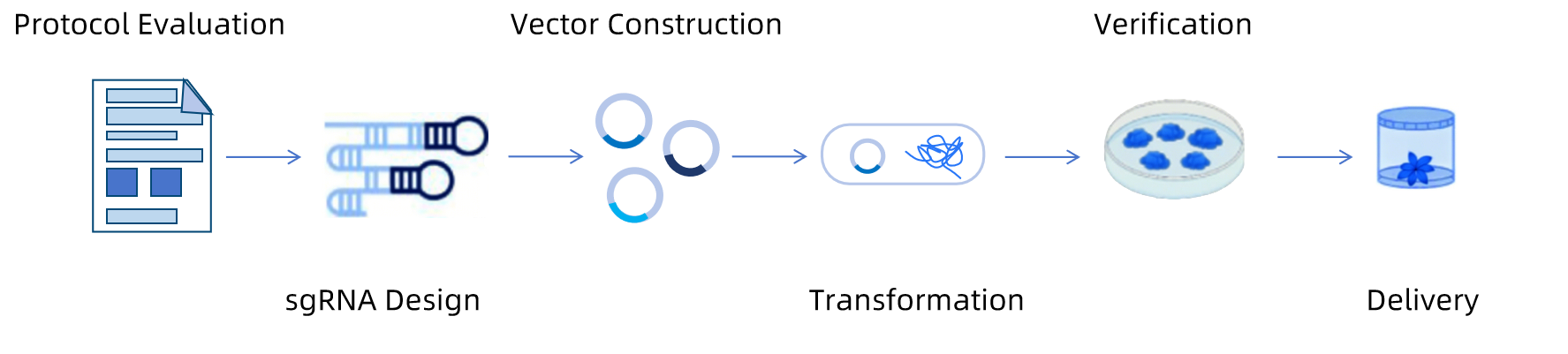
KMD Bioscience, leveraging years of experience in genetic engineering, has established a CRISPR/Cas9-based Gene Editing Platform that provides customers with Plant Gene Knock-In Vector Construction and Genetic Transformation Services. This includes sgRNA Design, knock-in vector construction, genetic transformation, screening, verification and other experimental steps. Additionally, the platform supports downstream experiments such as plant protein expression and protein-protein interaction studies.
Content

CRISPR/Cas9-based gene knock-in involves donor DNA construction. Donor DNA contains the target gene sequence and homologous arms flanking the target site; therefore, donor DNA construction is crucial for gene insertion. For small-fragment insertion, single-stranded DNA donor molecules are used. For large-fragment insertion, double-stranded DNA donors containing 3’ homologous arms are preferred. For plant transformation using CRISPR-Cas vectors, Agrobacterium-mediated transformation is commonly employed, while gene gun methods are used for monocotyledonous plants. In addition, GFP expression cassettes facilitate monitoring gene expression and protein localization studies and accelerate the screening and identification of transgenic plants.

图片33.png

Figure 1. Gene Knock-in Based on the CRISPR-Cas9 System

Process

图片31.png

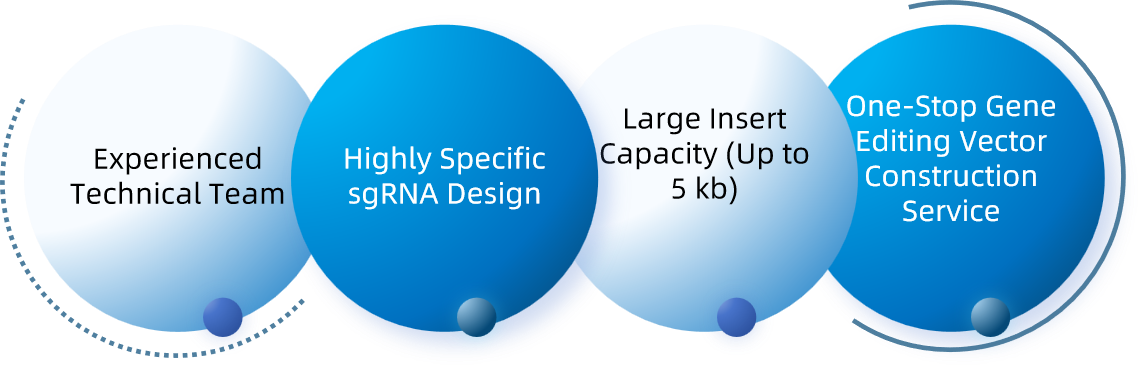
Advantage

图片34.png

Frequently Asked Questions

1. How is donor DNA designed?

Answer: Donor DNA refers to the DNA molecule carrying the target gene fragment, used for integration into the target genomic site. It can be either single-stranded or double-stranded DNA.


2. What is the role of homologous arms?

Answer: Homologous arms are regions of homology between donor DNA and recipient DNA where homologous recombination occurs. When designing donor DNA, homologous arms complementary to the recipient DNA sequence are added to both sides of the target gene fragment. The length of homologous arms generally ranges from 50 to 2000 bp, depending on the size of the inserted fragment and the requirements of the gene editing technique.


3. How is donor DNA introduced?

Answer: Liposome-mediated transfection encapsulates donor DNA and CRISPR-Cas9 complexes within liposomes, followed by transfection into target cells. Virus vector–mediated transfection, which offers high infection efficiency, can be applied in both in vivo and in vitro experiments.

Login

Don’t have an account?Sign Up Now

Register

Already have an account?Log In Now