


Since the development of hybridoma technology, murine monoclonal antibodies have been widely applied in the diagnosis and treatment of various diseases due to their well-defined target specificity, demonstrating significant clinical value. Although recombinant antibodies such as scFv offer unique advantages including low molecular weight and high tissue penetrability, they also carry potential immunogenicity risks. Antibody humanization technology, through sequence-directed modification, can significantly reduce the immunogenicity of monoclonal antibodies and scFv fragments, minimize host immune rejection, prolong in vivo half-life, while fully preserving their target-binding activity. This effectively enhances the safety and clinical therapeutic efficacy of antibody-based drugs.
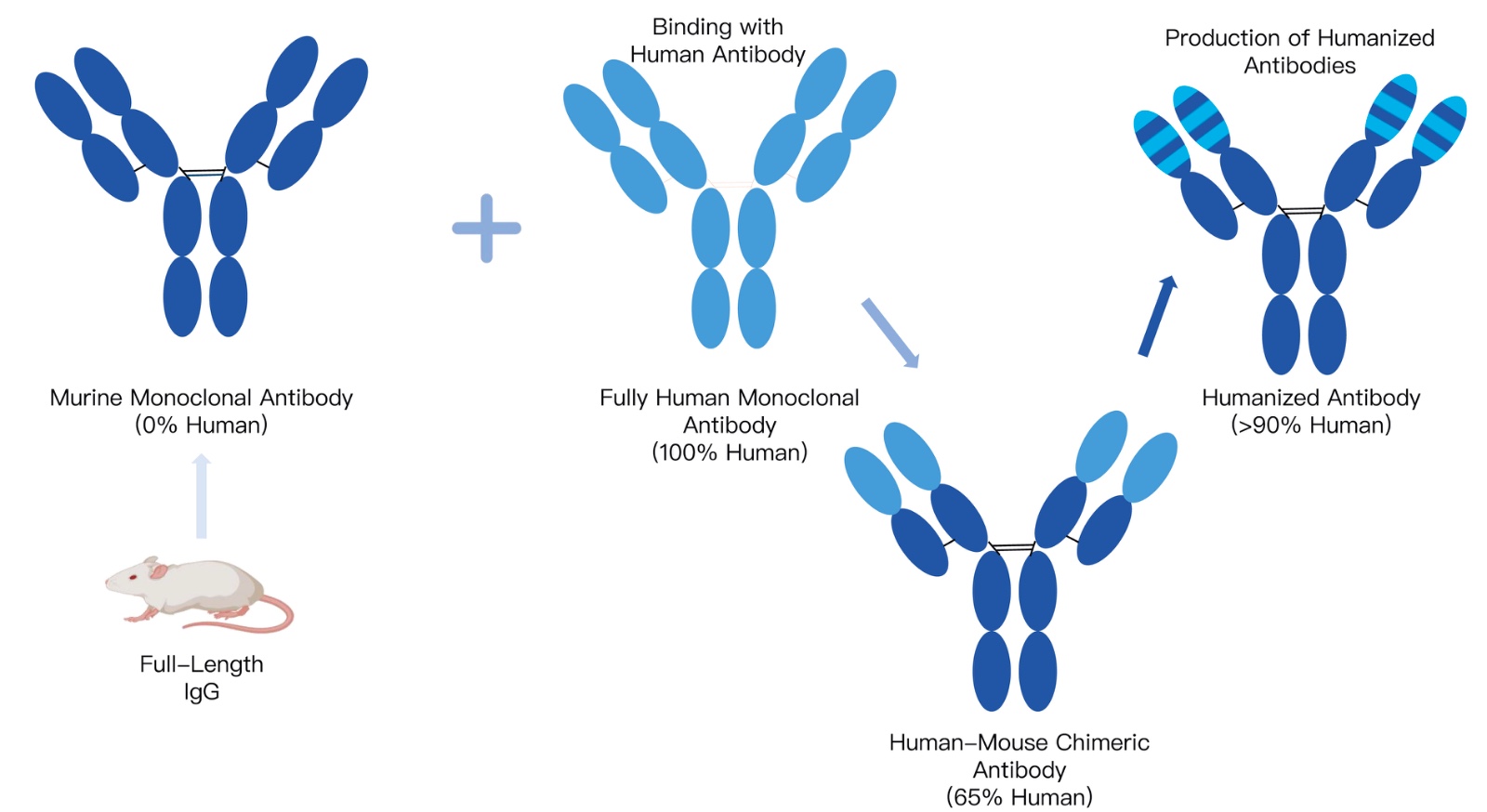
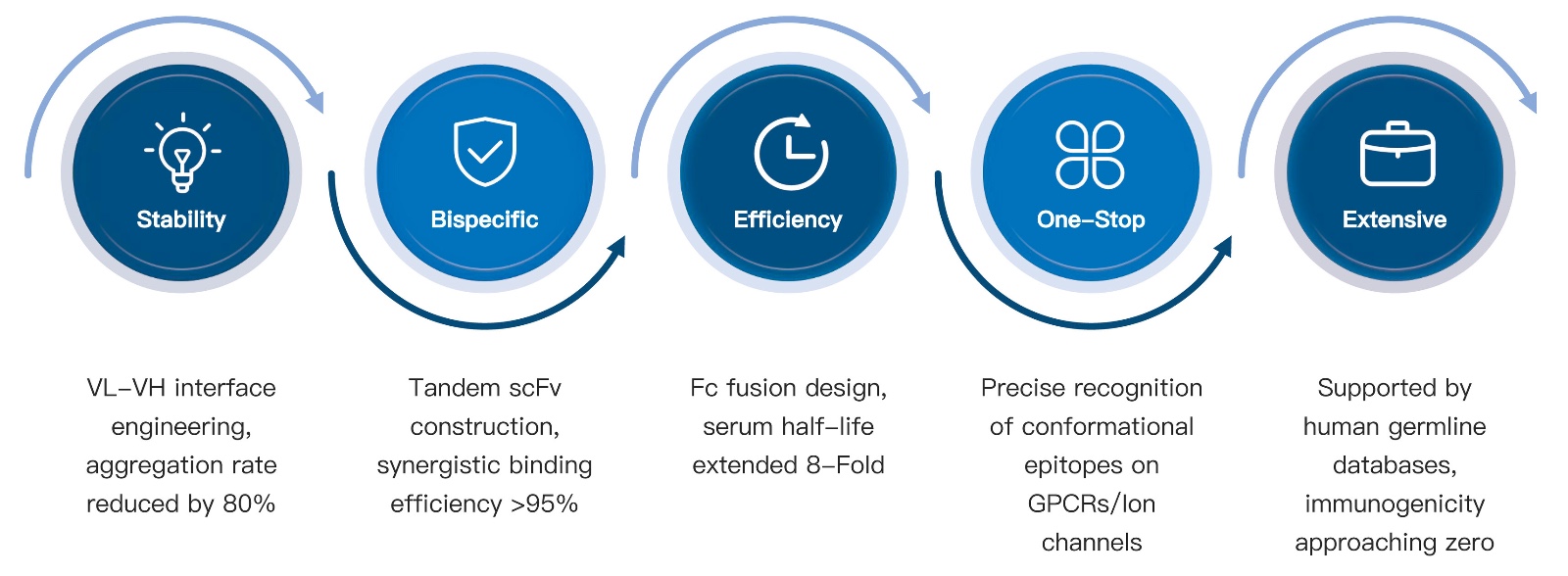
KMD Bioscience has years of experience in antibody humanization, offering full-service customization from non-human antibodies to humanized scFv fragments. We have successfully delivered multiple antibody humanization projects derived from various species, including non-human primates, rabbits, dogs, chickens, goats, and more. Our platform integrates phage display-based CDR grafting, chain shuffling, and mammalian cell surface display library combined with high-throughput FACS screening. This approach significantly reduces immunogenicity while fully preserving the antigen specificity and affinity of the scFv. The humanized antibodies achieve a degree of humanization close to that of natural human antibodies. Following affinity maturation, antibody affinity can be enhanced by at least 8-fold. To validate the efficacy of scFv antibodies, we perform comprehensive characterization using ELISA, WB, IC50, SPR, endotoxin testing, and other assays, ensuring thorough evaluation of antibody performance and strict quality control.





 0
