Home
>>
Technical Platform
>>
Molecular Platform
>>
Custom Gene Library Service
Download Center
Quick Inquiry & Consultation
Custom Gene Library ServiceIntroduction

Gene libraries are core tools in life science research, widely used in protein engineering-directed evolution, antibody drug screening, disease mechanism elucidation, and functional genomics. With the rapid development of synthetic biology and gene-editing technologies, highly complex and highly precise gene libraries have become key to overcoming research bottlenecks. For example, constructing targeted mutagenesis libraries to screen for high-affinity antibodies or using CRISPR libraries to systematically analyze gene functions. However, traditional library construction techniques face challenges such as insufficient diversity, long timelines, and high costs, necessitating upgrades through the integration of intelligent design and high-throughput synthesis technologies.

KMD Bioscience has extensive research experience in the field of genomics. Leveraging a professional scientific team and high-throughput gene synthesis technologies, our experts provide Customized Gene Library Services tailored to customer needs. A DNA library refers to a collection of DNA sequences cloned into vectors. The DNA Library Customization Services provided by us are applicable to research areas such as protein engineering, antibody engineering, enzyme engineering, synthetic biology, discovery biology, and structural biology, helping customers identify and isolate DNA fragments and laying the foundation for further studies. We offer multiple types of gene libraries, including Site-Directed Mutagenesis Libraries, Scanning Libraries, Random Libraries, Combinatorial Libraries, and Truncation Libraries.
Site-directed Mutagenesis Library

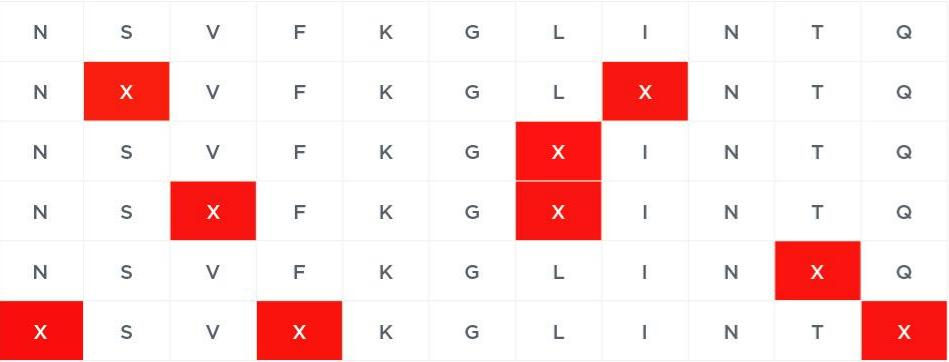
Site-Directed Mutagenesis Libraries involve replacing customer-specified amino acid residues sequentially with each of the remaining 19 amino acids to create mutant libraries. This approach enables scientists to perform structure–function analyses to examine the benefits or drawbacks of specific amino acid substitutions.

定点突变文库-卡梅德.png

Figure 1. Site-directed Mutagenesis Library

Scan Library

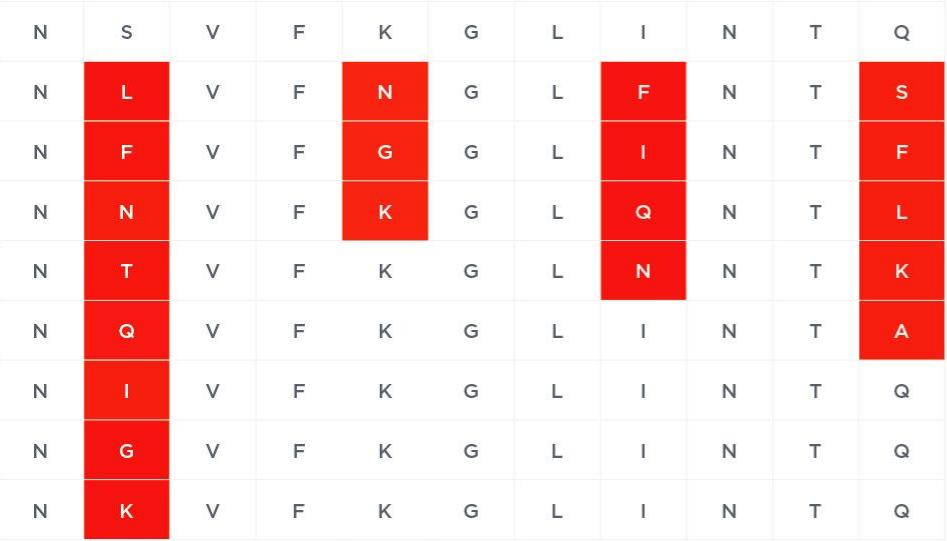
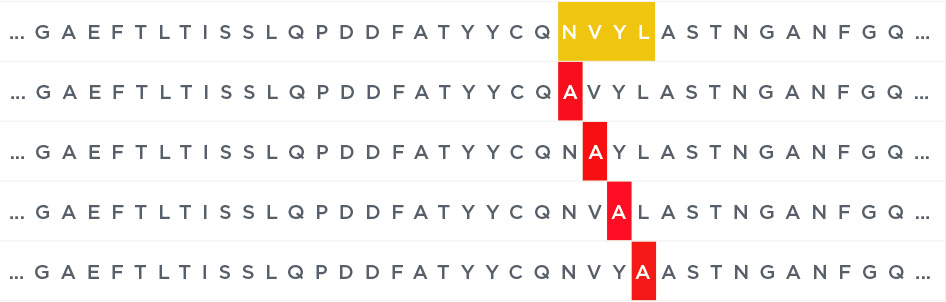
Scanning Libraries are one of the core types of customized gene libraries. By systematically substituting specific amino acid residues or regulatory sequences of the target protein, these libraries reveal their impact on structure, function, and interactions. They are widely applied in protein engineering, antibody optimization, and drug target screening. Alanine scanning and cysteine scanning are two commonly used approaches in scanning libraries.

扫描突变文库-卡梅德.png

Figure 2. Scanning Mutagenesis Library

Random Mutagenesis Library

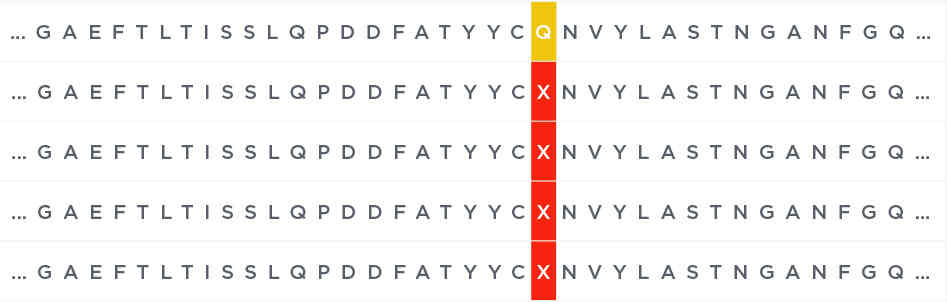
Random Mutagenesis Libraries are generated by introducing nucleotide mutations randomly into gene sequences using specific methods, producing a mixture of mutated genes. These mutations may involve single-base substitutions, insertions, or deletions. The purpose is to introduce diversity through mutagenesis, enabling the screening of mutants with desired functions or properties.

随机突变文库-卡梅德生物.png

Figure 3. Random Mutagenesis Library

Combinatorial Library

By combining different genetic elements in multiple ways, scientists can create mutant libraries to identify beneficial combinations. We provide both conventional partially randomized (NNK/NNS) and fully randomized (NNN) combinatorial library services.

组合库.png

Figure 4. Combinatorial Library

Truncation Library

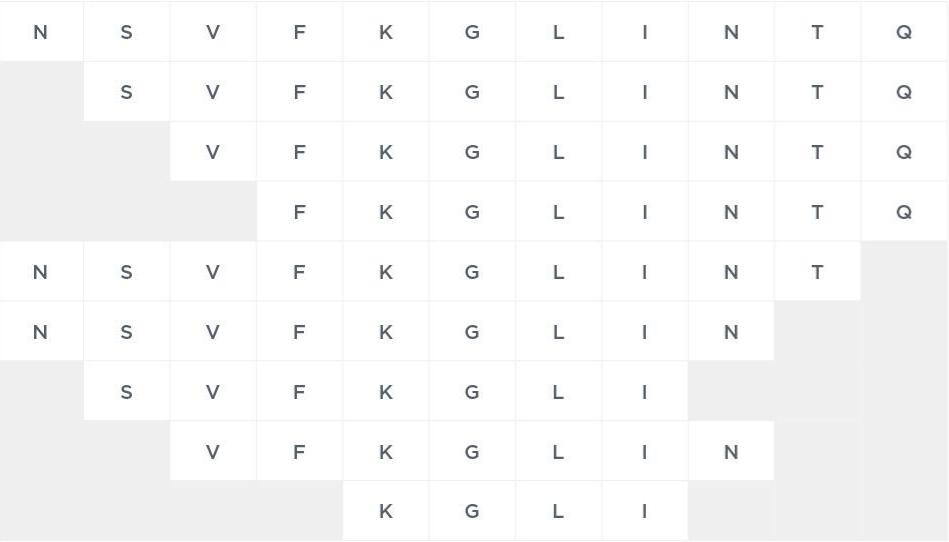
Truncation libraries are constructed by trimming amino acids from the N-terminal, the C-terminal around a designated core region of the protein, or both. This approach enables scientists to determine the core regions responsible for the protein’s function.

截短库.png

Figure 5.Truncation Library

Gene Library Services

Type

Library Capacity

Deliverables and QC Standards

Site-Directed Mutagenesis Library

Sequence-verified monoclonal

2–5 µg lyophilized plasmid DNA.

* Certificate of Analysis (COA).

* Restriction digestion map.

* Sequencing trace data with alignment.

* Sequence file of individually synthesized genes or genes subcloned into vectors.

Scanning Library

Sequence-verified monoclonal

2–5 µg lyophilized plasmid DNA.

* Certificate of Analysis (COA).

* Restriction digestion map.

* Sequencing trace data with alignment.

* Sequence file of individually synthesized genes or genes subcloned into vectors.

Random Mutagenesis Library

Ready-to-use PCR fragment library or pooled clone library with up to 10⁹ variants

* PCR fragment library: 2–4 µg linear ds DNA.

* Pooled clone library: 5–10 µg lyophilized plasmid DNA; total library size up to 10⁹ transformants.

* Sequence verification of a predetermined number of clones based on library size (statistical analysis).

Combinatorial Library

Ready-to-use PCR fragment library or pooled clone library with up to 10⁹ variants

* PCR fragment library: 2–4 µg linear ds DNA.

* Pooled clone library: 5–10 µg lyophilized plasmid DNA; total library size up to 10⁹ transformants.

* Sequence verification of a predetermined number of clones based on library size (statistical analysis).

Truncation Library

Sequence-verified monoclonal

2–5 µg lyophilized plasmid DNA.

* Certificate of Analysis (COA).

* Restriction digestion map.

* Sequencing trace data with alignment.

* Sequence file of individually synthesized genes or genes subcloned into vectors.

Frequently Asked Questions

1. Low library transformation efficiency.

Answer: Possible causes include low adapter ligation efficiency and low purification recovery rates.

Solution: Optimize adapter ligation conditions to ensure ligation efficiency, and use highly efficient purification methods to improve recovery rates.

2. Mutation frequency and diversity of the variant library do not meet expectations.

Answer: Possible causes include suboptimal error-prone PCR conditions, resulting in mutation frequencies being either too low or too high, and improper design of degenerate codons, leading to insufficient mutation diversity.

Solution: Optimize error-prone PCR conditions by adjusting dNTP concentration, Mg²⁺ concentration, or adding Mn²⁺; design degenerate codons rationally to ensure sufficient mutation diversity.

3. Library fragment length smaller or larger than expected.

Answer: Possible causes include inappropriate fragmentation time or temperature, or residual inhibitors from sample extraction affecting fragmentation efficiency.

Solution: Optimize fragmentation time and temperature to ensure the desired fragmentation effect. Extend fragmentation time or remove inhibitors of the fragmentation enzyme. Use capillary electrophoresis to verify library fragment length and ensure compliance with requirements. If you require specific technical assistance, please contact our sales support team.

Login

Don’t have an account?Sign Up Now

Register

Already have an account?Log In Now