


Introduction to Hybridoma Technology and Phage Display Antibody Library Technology
- 2026-07-09
- 319
In the antibody industry, hybridoma technology and phage display antibody library technology remain the two most prominent antibody discovery platforms today, each with its own distinct advantages.
1. The Origin, Development, and Applications of Hybridoma Technology
Hybridoma technology, first developed in 1975, represents a major milestone in the life sciences and was awarded the Nobel Prize in Physiology or Medicine in 1984. The scientific principle and design behind this technology are remarkably ingenious.B cells are capable of producing and secreting antibodies, with each B cell clone generating a single type of antibody—known as a monoclonal antibody. However, since B cells are primary cells and cannot be passaged indefinitely in vitro, it was impossible to efficiently screen and produce monoclonal antibodies outside the body at that time. In that era, genetic engineering techniques such as antibody gene cloning, phage display antibody libraries, and mammalian cell antibody expression had not yet been developed. There was an urgent need for a technology that could provide monoclonal antibody products for disease diagnosis and treatment.
Myeloma cells, a type of immortalized tumor cell, also originate from B cells. Two pioneering British scientists, Georges Köhler and César Milstein, used Sendai virus as a cell fusion agent to fuse mouse myeloma cells with mouse B cells in vitro. This process generated various homologous or heterologous diploid/polyploid daughter cells, along with unfused parental cells. Among these, only the heterologous hybrid cells could survive in HAT selection medium, while the others died within days. These surviving heterologous hybrid cells were termed hybridoma cells.Furthermore, these hybridoma cells could be injected into the peritoneal cavity of animals to produce ascites, offering a straightforward method for antibody production.
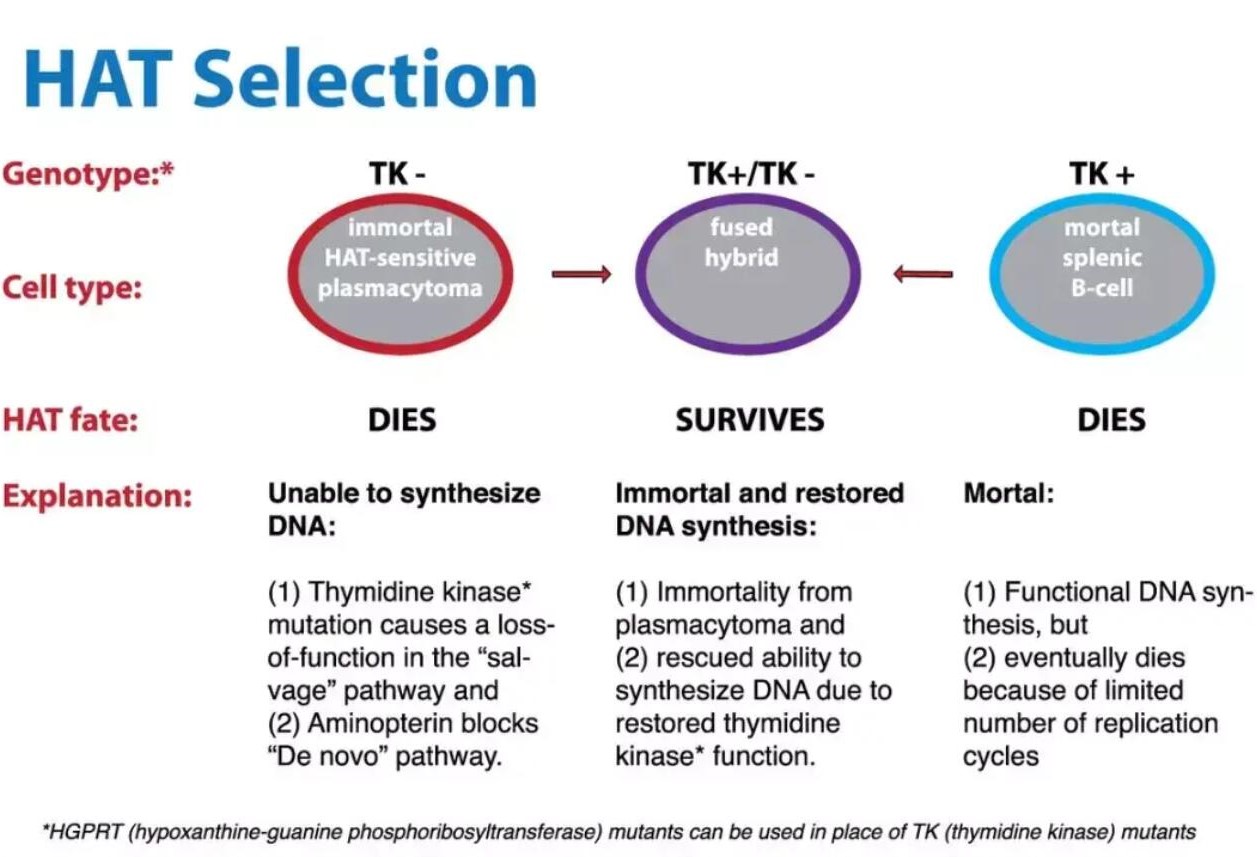
Figure 1. Principle of HAT Selection
The advent of hybridoma technology has significantly advanced the development of monoclonal antibody products. In modern scientific research, disease diagnosis and treatment, and industrial applications, monoclonal antibodies and their derivatives play an irreplaceable role. Even today, with the maturation of genetic engineering antibody technologies, hybridoma technology remains indispensable.
2. Phage Display Antibody Library Technology
In the late 1980s, the combination of phage display technology, PCR technology, and genetically engineered antibody technology gave rise to phage display antibody library technology.
The entire repertoire of antibody heavy and light chain genes is cloned and then fused with the structural proteins of phage particles (primarily the P3 protein) in molecular forms such as single-chain antibodies (scFv), single-domain antibodies (VH or VL), or Fab antibodies, which are subsequently displayed on the surface of the phage particles.
Since the antibodies are displayed on the surface of the phage particles while their corresponding genes are contained inside, this achieves the coupling or unification of functional phenotype and genotype. This allows for affinity panning, where antibody genes are screened based on the phenotype of specific antigen-antibody binding. Because the genes used to construct the antibody library are derived from lysates of mixed B lymphocytes, the heavy and light chain genes from different B-cell clones undergo combinatorial pairing, hence the technology is also referred to as combinatorial antibody library technology.
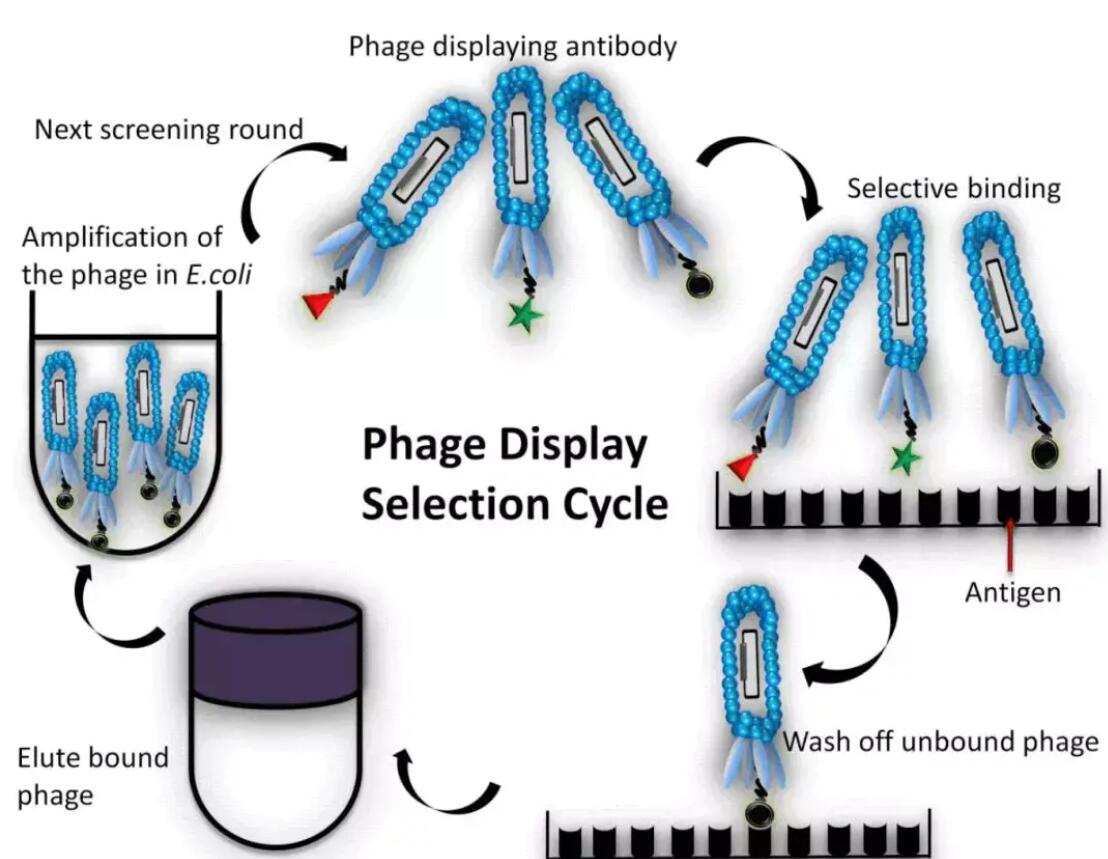
Figure 2 Schematic diagram of phage antibody library screening
3. Comparison of the Two Technologies
In the antibody industry, hybridoma technology and phage display antibody library technology remain the two primary methods for antibody discovery. Each technique has its own advantages and disadvantages.
The advantages of hybridoma technology include:
(1) Mice or rats are easy to raise and immunize. Effective immunization ensures the screening of high-affinity antibodies, and hybridoma technology along with mouse/rat immune antibody libraries are efficient methods for obtaining highly active murine antibodies.
(2) Since cell fusion is simple and stable, only basic cell culture knowledge, techniques, and experimental conditions are required—no molecular biology-related expertise or infrastructure is necessary to obtain monoclonal antibodies. For developing monoclonal antibodies for research or diagnostic purposes, the barrier to entry is relatively low, making it easier to promote and popularize.
(3) Injecting mouse hybridoma cells into the mouse peritoneal cavity enables simple monoclonal antibody production, which is also advantageous for developing antibodies for research or diagnostics.
(4) The heavy and light chains of hybridoma-derived monoclonal antibodies are naturally paired as in the original B cells. In contrast, non-natural pairings screened from combinatorial antibody libraries may affect antibody activity and stability.
Compared to phage display antibody library technology, the disadvantages of hybridoma technology are mainly reflected in the following aspects:
(1) For toxic antigens, self-antigens, immune tolerance antigens, and weakly immunogenic antigens, effective immunization cannot be achieved, making hybridoma technology unsuitable for antibody production. In such cases, universal natural antibody libraries, synthetic or semi-synthetic antibody libraries can be used to screen for antibodies against these antigens.
(2) After cell fusion, the number of candidate clones produced is limited. Even with electrofusion techniques, the number of candidate clones typically reaches only around 10^4, whereas antibody libraries can achieve capacities of 10^10 or higher. Under the same immunization conditions, a larger pool of candidate clones increases the likelihood of screening high-activity antibodies.
(3) The recombination and pairing of antibody heavy and light chains can also optimize antibody performance, which is another advantage of combinatorial antibody libraries.
(4) Due to ethical considerations, the development and application of human hybridoma technology are limited. Typically, hybridoma-derived monoclonal antibodies are of animal origin, and humanization is required when developing them into therapeutic drugs.
For immunized transgenic humanized mice, hybridoma technology can also be used to produce fully human antibodies. However, transgenic humanization technology involves high technical barriers and strong patent restrictions, making it difficult to widely adopt thus far.
In contrast, fully human antibody libraries allow direct screening of fully human antibodies without the need for humanization, and fully human antibodies are currently the preferred choice for antibody drug development.
(5) Antibody libraries are a genetic engineering technology, while hybridomas are a cell engineering technology. Therefore, modern molecular biology techniques can be leveraged to construct immune antibody libraries for species such as chickens, rabbits, camels, alpacas, and sharks. This approach overcomes the challenge of being unable to produce hybridoma-derived monoclonal antibodies for these animals due to the lack of suitable myeloma cell lines.
KMD Bioscience has established a comprehensive antibody platform. We possess not only well-established hybridoma technology but also utilize phage display antibody library technology for monoclonal/polyclonal antibody production across various species. Additionally, we provide diverse technical services including antibody purification, antibody labeling, antibody humanization, and affinity measurement.
- Hybridoma Technology
- Phage Display Antibody Library Technology
- Antibody Production and Preparation
- Antibody Library Construction Services

- Protein Platform
- Protein Expression Services
- Protein Modification & Detection Services
- Protein Interaction Services
- Protein Purification Service
- Antibody Discovery Platform
- VHH Antibody Platform
- Phage Display Platform
- Antibody Humanization Platform
- Single B Cell Screening Platform
- Antibody Expression & Validation Platform
- Peptide Library Platform
- Custom Antibody Platform
- Innovative Drug Discovery Platform
- Product Center
- Proteins
- Antibodies
- Raw Materials Reagents
- Small Molecule Reagents
- Peptide Products
- Nanoparticle Products
- Contact Us
- Phone:400-621-6806
- Mobile:13110936064(WeC
- E-mail:[email protected]
- Address:Room 108, Building 10, No. 6 Hechang Road, Wuqing Development Zone, Tianjin City
-

WeChat
-

Service Account
-
 400-621-6806
 -
 3599163699
 -
 Monday to Friday 9:00-18:00
 -

-
 0
0
-
