


Every bioorganic chemist, pharmaceutical formulation scientist, and therapeutic developer eventually faces a sobering reality: a synthetic peptide order arriving with a generic Certificate of Analysis stating "greater than 95% purity by HPLC" is often far less defined than it appears. Relying solely on a single chromatographic peak has derailed countless preclinical assays, produced irreproducible binding kinetics in cell culture, and triggered costly delays during regulatory chemistry, manufacturing, and controls (CMC) reviews. Synthetic peptides are structurally sophisticated biomacromolecules. During solid-phase peptide synthesis (SPPS) or recombinant fermentation, side reactions continuously generate deletion sequences, truncated fragments, diastereomers via chiral inversion, beta-sheet amyloid fibrils, and adducts carrying residual protective groups. Navigating this analytical minefield requires deploying rigorous, multi-dimensional Peptide Characterization Methods.
Mastering comprehensive Peptide Characterization Methods is not merely an academic exercise; it directly dictates therapeutic efficacy, immunogenicity risk profiles, and commercial patent defense. In our testing across diverse synthetic and recombinant libraries at KMD Bioscience, we routinely discover that uncharacterized counterions, sub-visible aggregates, and co-eluting isomeric impurities account for the majority of inconsistent experimental results. Here is our direct, practitioner-grade evaluation of the 10 essential Peptide Characterization Methods every researcher must master, detailing the physical mechanics, instrumentation requirements, operational limitations, and decision criteria needed to validate your peptide assets with uncompromising precision.

Quick Answer: What Are the 10 Essential Peptide Characterization Methods?
Comprehensive peptide evaluation requires an orthogonal analytical strategy that spans primary sequence, purity, secondary/tertiary conformation, aggregation kinetics, and residual chemical burdens. The ten indispensable Peptide Characterization Methods are: (1) Reversed-Phase HPLC (RP-HPLC) for baseline chromatographic purity and hydrophobic impurity profiling; (2) High-Resolution Electrospray LC-MS and MALDI-TOF MS for accurate intact molecular mass verification; (3) Tandem Mass Spectrometry (MS/MS) & Peptide Mapping for definitive primary sequence and post-translational modification (PTM) localization; (4) Amino Acid Analysis (AAA) for stoichiometric ratio confirmation and absolute net peptide content determination; (5) Circular Dichroism (CD) Spectroscopy for solution-phase secondary structure monitoring (alpha-helix vs. beta-sheet dynamics); (6) Nuclear Magnetic Resonance (NMR) Spectroscopy (1D/2D 1H, 13C, 15N) for atom-level tertiary structure and conformational folding; (7) Size-Exclusion Chromatography (SEC-HPLC) & Dynamic Light Scattering (DLS) for oligomeric state quantification and soluble aggregation tracking; (8) Fourier-Transform Infrared (FTIR) Spectroscopy for solid-state and liquid-state intermolecular beta-sheet aggregation audits; (9) Capillary Electrophoresis (CE / CZE / CIEF) for charge-variant profiling, optical purity, and D/L-enantiomeric separation; and (10) Residual Counterion & Volatiles Analysis (Ion Chromatography, Headspace GC, Karl Fischer) for quantifying trifluoroacetate, acetate, residual organic solvents, and bound water. For routine discovery, methods 1 through 4 are mandatory; for therapeutic translation and regulatory filings, all ten methods form the expected orthogonal characterization matrix.
Article Directory
Quick Summary Table: The 10 Peptide Characterization Methods at a Glance
Detailed Teardown: 10 Peptide Characterization Methods Evaluated
Platform Spotlight: KMD Bioscience High-Throughput Peptide Services
Direct Technical Comparison: Resolution, Sample Mass, Cost, and Regulatory Value
Pros and Cons: Routine Screening vs. Comprehensive Orthogonal Workflows
Commercial & Laboratory Realities: The Net Peptide Content Trap
Who Needs Comprehensive Profiling vs. Who Can Rely on Basic QC
Costly Mistakes Researchers Make in Peptide Characterization
Essential Sourcing Checklist: Auditing a Contract Peptide Analytical Lab
The Orthogonal Imperative: Why Single-Method Analysis Fails
In most professional situations, research laboratories accept synthetic peptides based on a two-page document showing an analytical RP-HPLC trace and a low-resolution mass spectrum. From our experience, this approach represents an enormous risk for clinical translation. Reversed-Phase HPLC separates molecules strictly based on surface hydrophobicity. If a 30-mer therapeutic candidate undergoes racemization at a single chiral carbon center—inverting an L-alanine into a D-alanine—the resulting diastereomer frequently possesses an identical partition coefficient on a standard alkyl C18 stationary phase. The two species co-elute under a single sharp, symmetrical chromatographic peak, giving the illusion of 99% purity while containing up to 10% of an inactive or potentially immunogenic isomer.
Similarly, standard mass spectrometry confirms nominal molecular weight, but it cannot differentiate between sequence permutations involving isobaric amino acids, such as leucine and isoleucine (both exhibiting a monoisotopic mass of 113.084 Da), nor can it detect subtle deamidation events without high-resolution instrumentation. Furthermore, lyophilized peptide powders are never 100% active drug substance. A white, fluffy lyophilized cake typically contains between 15% and 40% non-covalently bound trifluoroacetic acid (TFA) salts, sodium adducts, and interstitial water. Without quantitative counterion testing, biological assays become systematically skewed by incorrect dosing calculations.
Regulatory authorities, including the U.S. Food and Drug Administration (FDA) and the International Council for Harmonisation (ICH) under guideline Q6B, mandate an orthogonal testing strategy. Orthogonal characterization demands using two or more analytical mechanisms based on entirely different physical principles (e.g., charge-based separation coupled with hydrophobic separation and mass-to-charge detection) to cross-verify purity, primary sequence, and higher-order structures. Deploying multi-platform Detection Platform architectures ensures that critical impurities cannot hide behind physical blind spots.
Quick Summary Table: The 10 Peptide Characterization Methods at a Glance
| Methodology | Physical Principle | Primary Analytical Target | Typical Sample Requirement | Turnaround & Complexity |
|---|---|---|---|---|
| 1. RP-HPLC | Hydrophobic partition chromatography | Purity percentage, related hydrophobic impurities | 10 – 50 μg | Fast; routine daily QC |
| 2. LC-MS / MALDI-TOF | Gas-phase ionization and mass-to-charge ratio | Exact molecular mass, major adduct verification | 1 – 10 pmol | Fast; high sensitivity |
| 3. LC-MS/MS & Mapping | Collision-induced dissociation & fragmentation | De novo sequencing, PTM localization, Leu/Ile | 50 – 200 ng | Moderate; advanced data interpretation |
| 4. Amino Acid Analysis | Total acid hydrolysis & post-column derivatization | Net peptide content (%), stoichiometric ratios | 100 – 500 μg | Destructive; 24h hydrolysis step |
| 5. Circular Dichroism | Differential absorption of circularly polarized light | Secondary structure (α-helix, β-sheet, coil) | 50 – 200 μg (Low-salt buffer) | Fast; highly sensitive to buffer optical cutoffs |
| 6. NMR Spectroscopy | Nuclear spin resonance in magnetic fields | 3D atomic structure, folding, backbone dynamics | 2 – 10 mg (often isotopic labels) | Slow; high computational complexity |
| 7. SEC-HPLC / DLS | Hydrodynamic volume exclusion & Rayleigh scatter | Oligomers, aggregates, hydrodynamic radius | 20 – 100 μg | Fast; critical for shelf-life stability |
| 8. FTIR Spectroscopy | Vibrational molecular dipole absorption (Amide I/II) | Intermolecular β-sheet fibril formation | 100 – 500 μg (Solid or liquid) | Fast; requires solvent subtraction |
| 9. Capillary Electrophoresis | Charge-to-hydrodynamic-size migration in capillary | Charge variants, deamidation, optical D/L purity | 10 – 50 nL injected | Moderate; exceptional orthogonal power |
| 10. Counterion & Volatiles | Ion exchange, headspace GC, coulometric titration | TFA, acetate, residual organic solvents, water % | 5 – 20 mg bulk powder | Essential for GMP release & formulation |
Detailed Teardown: 10 Peptide Characterization Methods Evaluated
1. Reversed-Phase High-Performance Liquid Chromatography (RP-HPLC)
Reversed-Phase HPLC remains the non-negotiable cornerstone of routine peptide purity evaluation. The methodology operates by partitioning peptide analytes between a non-polar stationary phase—typically silica particles bonded with octadecylsilane (C18), octylsilane (C8), or butylsilane (C4) alkyl chains—and an aqueous-organic mobile phase gradient. For standard linear peptides under 30 residues, a pore size of 100 Å to 120 Å is standard; for larger, hydrophobic therapeutic peptides, a 300 Å wide-pore silica matrix is mandatory to prevent restricted diffusion and peak tailing.
In our testing, the selection of the ion-pairing modifier fundamentally dictates chromatographic resolution. Trifluoroacetic acid (TFA, typically 0.05% to 0.1% v/v) serves as the industry standard modifier: it buffers the mobile phase to roughly pH 2.0 (suppressing silanol ionization) while simultaneously pairing with basic amino acid side chains (lysine, arginine, histidine) to mask positive charges. However, if your downstream detector is an electrospray mass spectrometer, TFA causes severe ion suppression. In such workflows, researchers must substitute TFA with formic acid (FA) or volatile difluoroacetic acid (DFA). While RP-HPLC is unparalleled for quantifying hydrophobic degradation products, it represents an incomplete analytical assessment if used in isolation. To inspect custom synthesized lots, explore our verified catalog across Peptide Products.
2. High-Resolution Mass Spectrometry (LC-MS & MALDI-TOF MS)
Mass spectrometry provides the primary molecular identity gate for any peptide asset. In contemporary laboratories, this is achieved through two distinct soft-ionization mechanisms: Matrix-Assisted Laser Desorption/Ionization Time-of-Flight (MALDI-TOF) and Electrospray Ionization Liquid Chromatography-Mass Spectrometry (ESI-LC-MS).
For high-throughput screening and rapid synthetic fraction verification, MALDI-TOF is unmatched. By co-crystallizing the peptide with an ultraviolet-absorbing chemical matrix (such as α-cyano-4-hydroxycinnamic acid, CHCA), the analyte is desorbed and ionized into predominantly singly charged $^+$ ions. This simplifies spectra interpretation and enables automated mass verification in seconds. However, for complex therapeutics, high-resolution ESI-Q-TOF or Orbitrap instruments are required. ESI generates multiply charged envelope states ($^{n+}$), allowing ultra-high-resolution mass analyzers to resolve the monoisotopic isotopic envelope down to sub-part-per-million (ppm) mass accuracy. This resolution is required to differentiate synthetic modifications from isobaric salt adducts or unexpected chemical trunking.
3. Tandem Mass Spectrometry (MS/MS) & Peptide Mapping
Intact mass spectrometry confirms that a peptide possesses the correct gross atomic formula, but it cannot determine whether the constituent amino acids are arranged in the correct linear order. Tandem Mass Spectrometry (MS/MS) solves this by isolating a specific precursor peptide ion in a collision cell, fragmenting it via Collision-Induced Dissociation (CID), Higher-Energy C-Trap Dissociation (HCD), or Electron-Transfer Dissociation (ETD), and measuring the resulting fragment ions.
CID and HCD primarily break the relatively weak amide backbone bonds, generating a predictable ladder of N-terminal $b$-ions and C-terminal $y$-ions. By calculating the mass delta between consecutive peaks in the ion series, researchers sequence the peptide de novo, definitively verifying the primary structure. Crucially, high-resolution MS/MS is the only reliable method for pinpointing the exact sites of post-translational modifications (PTMs), such as phosphorylation, sulfation, and oxidation. When managing complex biologics, these workflows are supported directly by our specialized Protein Modification & Detection Services.
4. Amino Acid Analysis (AAA) & Net Peptide Content
Amino Acid Analysis is one of the oldest, yet most commercially misunderstood, Peptide Characterization Methods. It remains the absolute gold standard for two critical parameters: confirming stoichiometric amino acid ratios and quantifying true Net Peptide Content. AAA is entirely distinct from chromatographic purity. When a researcher weighs out 1.0 mg of a lyophilized peptide powder that is certified as "98% pure by HPLC," the actual peptide active pharmaceutical ingredient (API) in that tube is typically only 0.70 mg to 0.85 mg; the remainder consists of counterions, inorganic salts, and bound atmospheric moisture.
The AAA workflow involves subjecting the sample to harsh liquid-phase or gas-phase acid hydrolysis (typically 6N HCl with 0.1% phenol at 110°C for 24 to 72 hours under an inert argon atmosphere). This cleaves all peptide bonds into free amino acids. The hydrolysate is then separated via cation-exchange chromatography or derivatized with reagents like ninhydrin, o-phthalaldehyde (OPA), or 6-aminoquinolyl-N-hydroxysuccinimidyl carbamate (AQC) and analyzed via UV/fluorescence detection. While certain residues require specialized handling (tryptophan is destroyed under acid hydrolysis; cysteine must be oxidized to cysteic acid or alkylated prior to analysis), AAA provides the only absolute, quantitative baseline for in vitro dosing calculations.
5. Circular Dichroism (CD) Spectroscopy
Therapeutic peptides frequently rely on precise secondary conformations—such as amphipathic alpha-helices or structured beta-hairpins—to bind their target receptors with high nanomolar affinity. Circular Dichroism (CD) spectroscopy measures the differential absorption of left-handed versus right-handed circularly polarized light caused by chiral electronic transitions within the peptide backbone amide chromophore.
By monitoring the Far-UV spectrum between 190 nm and 260 nm, researchers can quantitatively deconvolve the peptide's conformational state in physiological buffers:
Alpha-Helical Structures: Exhibit characteristic, pronounced negative ellipticity minima at 222 nm ($n \rightarrow \pi^*$ transition) and 208 nm ($\pi \rightarrow \pi^*$ parallel transition), alongside a positive maximum near 193 nm.
Beta-Sheet Conformations: Display a single negative minimum near 218 nm and a strong positive band around 195 nm.
Random Coils (Unstructured): Characterized by a strong negative peak near 195 nm and minimal ellipticity above 210 nm.
6. Nuclear Magnetic Resonance (NMR) Spectroscopy
When researchers require atomic-resolution tertiary structure and dynamic spatial conformation in solution, Nuclear Magnetic Resonance (NMR) spectroscopy is the premier analytical standard. While X-ray crystallography demands the generation of rigid, diffraction-quality single crystals (a process notoriously difficult for flexible linear peptides), high-field liquid-state NMR (600 MHz to 900 MHz) characterizes the peptide directly in aqueous solution under biologically relevant conditions.
For short peptides (under 15 residues), homonuclear 1D and 2D $^1\text{H}$-NMR experiments—including Correlation Spectroscopy (COSY), Total Correlation Spectroscopy (TOCSY), and Nuclear Overhauser Effect Spectroscopy (NOESY)—are often sufficient to assign all proton resonances and measure through-space spatial restraints (distances < 5 Å). For larger, cyclic, or heavily modified peptides, heteronuclear $^1\text{H}$-$^{13}\text{C}$ and $^1\text{H}$-$^{15}\text{N}$ HSQC/HMBC spectra are required. NMR not only maps stable tertiary folds, but also reveals dynamic chemical exchange, pKa values of individual ionizable side chains, and transient aggregation states that escape detection by other platforms.
7. Size-Exclusion Chromatography (SEC-HPLC) & Dynamic Light Scattering (DLS)
Peptides exhibit a natural thermodynamic propensity toward self-assembly. Even a single hydrophobic patch can drive monomeric peptides into dimers, soluble oligomers, protofibrils, and eventually visible precipitates. In a therapeutic context, soluble aggregates are dangerous: they dramatically increase the risk of triggering anti-drug antibody (ADA) cascades in vivo, leading to therapeutic neutralization or systemic hypersensitivity reactions.
Evaluating this risk requires pairing Size-Exclusion Chromatography (SEC-HPLC) with Dynamic Light Scattering (DLS):
SEC-HPLC: Employs porous hydrophilic silica or polymer matrices to separate peptides strictly based on hydrodynamic volume. Unaggregated monomers enter the internal pore volume and elute last, while high-molecular-weight oligomers are excluded and elute early. It provides quantitative percentage-based reporting of dimer and trimer fractions.
Dynamic Light Scattering (DLS): Measures the Brownian motion of particles in solution by tracking fluctuations in scattered laser light over time, calculating the translational diffusion coefficient via the Stokes-Einstein equation. DLS is sensitive to the earliest nucleation events, detecting sub-nanometer aggregates long before they register as distinct chromatographic peaks on an analytical column.
8. Fourier-Transform Infrared (FTIR) Spectroscopy
While Circular Dichroism dominates liquid-state secondary structural characterization, Fourier-Transform Infrared (FTIR) spectroscopy is the undisputed authority for evaluating solid-state lyophilized formulations, high-concentration suspensions, and hydrogels. FTIR detects the vibrational absorption frequencies of chemical bonds, focusing primarily on the Amide I band (1600 cm$^{-1}$ to 1700 cm$^{-1}$), which arises predominantly from the backbone $C=O$ stretching vibration coupled to $N-H$ bending.
The precise position of the Amide I band directly reflects hydrogen-bonding networks:
Native alpha-helices absorb strongly between 1650 cm$^{-1}$ and 1658 cm$^{-1}$.
Native, anti-parallel beta-sheets show prominent peaks between 1620 cm$^{-1}$ and 1640 cm$^{-1}$.
Irreversible, non-native amyloid-like fibrils display a pathognomonic, sharp shift to an ultra-low frequency between 1612 cm$^{-1}$ and 1618 cm$^{-1}$.
9. Capillary Electrophoresis (CE / CZE / CIEF)
Capillary Electrophoresis provides an orthogonal analytical separation mechanism that operates on a completely different physical axis than RP-HPLC. Inside a sub-100 μm fused-silica capillary filled with an electrolyte buffer, peptides migrate under an applied electric field (typically 15 kV to 30 kV) based strictly on their charge-to-hydrodynamic-size ratio.
Capillary Zone Electrophoresis (CZE) routinely resolves subtle peptide impurities that co-elute on reversed-phase stationary phases, such as single-charge deamidation variants (glutamine to glutamic acid conversion), truncated sequences lacking basic residues, and cyclic peptide conformers. Furthermore, when equipped with chiral selectors in the background electrolyte (such as sulfated cyclodextrins), Micellar Electrokinetic Chromatography (MEKC) enables high-precision chiral purity separation. It separates and quantifies unwanted D-amino acid optical isomers down to trace levels (<0.1%), providing critical data for synthetic peptides destined for clinical trials. Integrate these workflows with our specialized Process Development Platform to streamline analytical validation.
10. Counterion, Residual Solvent, and Water Content Analysis
The final pillar of comprehensive characterization involves quantifying non-peptide chemical residues. During preparative solid-phase synthesis and downstream HPLC purification, peptides are exposed to strong acids, organic solvents, and protective scavengers. Unless rigorously monitored, these chemical residues persist in the final solid cake, altering solubility, physical stability, and biological safety.
This characterization category requires three dedicated analytical tools:
Ion Chromatography (IC): Quantifies counterion concentrations. Synthetic peptides purified with TFA mobile phases typically retain significant trifluoroacetate levels. Because TFA is cytotoxic in primary cell cultures and triggers inflammatory cascades in animal models, commercial applications require exchanging TFA for acetate or hydrochloride. IC provides absolute quantification of counterion exchange efficiency.
Headspace Gas Chromatography (HS-GC): Detects and quantifies Class 2 and Class 3 residual organic solvents—such as acetonitrile, dichloromethane (DCM), N,N-dimethylformamide (DMF), and diethyl ether—adhering strictly to ICH Q3C limits.
Coulometric Karl Fischer Titration: Directly measures residual water content within the lyophilized cake. Excessive moisture (>5% to 8%) acts as a physical plasticizer, dramatically accelerating peptide deamidation and hydrolysis pathways during long-term storage.
Enterprise Solution Spotlight: KMD Bioscience Peptide Platform
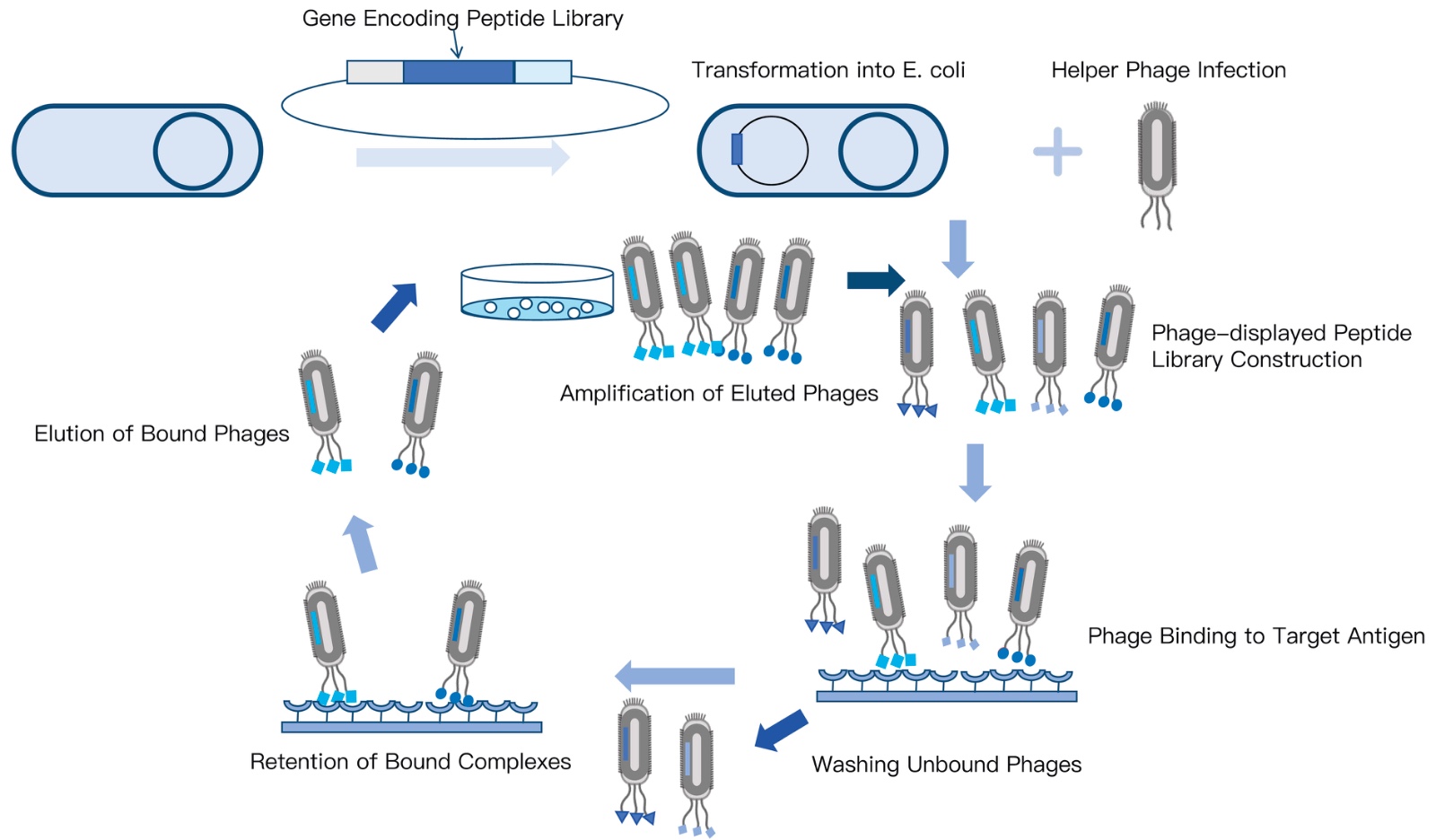
Developing high-affinity peptide therapeutics requires high-throughput sequence discovery supported by rigorous analytical quality control. KMD Bioscience has dedicated years to research in protein expression, peptide synthesis, and macromolecular characterization, providing comprehensive solutions for complex biomedical challenges.
| Screening Capacity | Phage display peptide libraries up to 1013/ml clones; 109–1010/ml independent clones |
| Discovery Yield | Identifies up to 105 effective, high-affinity peptide or antibody sequences per campaign |
| Core Applications | Enzyme substrate identification, protein-protein interaction inhibitors, and lead optimization |
| Characterization Support | End-to-end analytical suites: RP-HPLC, ESI-HRMS/MS, AAA, CD, and endotoxin assays |
| Regulatory Compliance | Data packages formatted for academic publication, IND filings, and industrial quality standards |
Expert Guidance: Accelerate your discovery pipeline by reviewing the official Peptide Library Screening Service Introduction, explore broader screening options on the Peptide Library Platform, or leverage our enterprise Innovative Drug Discovery Platform.
Direct Technical Comparison: Resolution, Sample Mass, Cost, and Regulatory Value
| Characterization Method | Analytical Resolution Level | Sample Consumption | Operational Cost | Primary Regulatory Driver (ICH/FDA) |
|---|---|---|---|---|
| RP-HPLC | High (Hydrophobic resolution) | Low (10 – 50 μg) | Low ($) | Mandatory release test: Purity and impurity profile |
| HR-LC-MS / MALDI | Extremely High (Mass accuracy < 2 ppm) | Very Low (pmol range) | Moderate ($$) | Mandatory identity test: Accurate mass confirmation |
| Tandem MS/MS | Single-residue sequence resolution | Low (< 1 μg) | Moderate-High ($$$) | Mandatory structural proof: Sequence confirmation & PTMs |
| Amino Acid Analysis | Quantitative molar ratio accuracy | Moderate (100 – 500 μg) | Moderate ($$) | Mandatory potency baseline: Net peptide content & ratio |
| Circular Dichroism | Global ensemble secondary structure | Low (50 – 200 μg) | Low-Moderate ($$) | Higher-order structure (HOS) confirmation & stability |
| NMR Spectroscopy | Atomic coordinate structural resolution | High (2 – 10 mg) | High ($$$$) | De novo structural proof & 3D conformation (IND/NDA) |
| SEC-HPLC / DLS | Molecular size & hydrodynamic volume | Low (20 – 100 μg) | Low-Moderate ($$) | Critical safety test: Aggregation & immunogenicity risk |
| FTIR Spectroscopy | Backbone vibrational dipole resolution | Moderate (100 – 500 μg) | Low-Moderate ($$) | Solid-state stability & amyloid aggregation profiling |
| Capillary Electrophoresis | High (Charge & chiral resolution) | Extremely Low (nL volumes) | Moderate ($$) | Orthogonal purity verification & chiral D/L compliance |
| IC / GC / Karl Fischer | Parts-per-million chemical quantification | High (5 – 20 mg bulk) | Moderate ($$) | Mandatory release criteria: Residual solvents, TFA, moisture |
Pros and Cons: Routine Screening vs. Comprehensive Orthogonal Workflows
| Analytical Strategy | Practical Laboratory Advantages (Pros) | Operational Realities & Vulnerabilities (Cons) |
|---|---|---|
| Routine QC Screening (RP-HPLC + MALDI-TOF Only) |
|
|
| Comprehensive Orthogonal Matrix (All 10 Characterization Platforms) |
|
|
Commercial & Laboratory Realities: The Net Peptide Content Trap
The single most destructive financial and scientific trap in peptide research centers on the failure to understand Net Peptide Content (NPC). In standard commercial catalogs, peptides are priced and sold by gross powder weight. When a research group purchases 10 mg of a lyophilized peptide for a critical animal dosing study, they typically dissolve the entire 10 mg into a calculated volume of phosphate-buffered saline (PBS), assuming a 1.0 mg/mL concentration.
This assumption is fundamentally incorrect. Synthetic peptides are isolated as salts. If the peptide was cleaved and purified using standard trifluoroacetic acid protocols, each basic functional group (the N-terminal amine, plus side chains of lysine, arginine, and histidine) stoichiometrically associates with a TFA counterion ($CF_3COO^-$, molecular weight 113 Da). In a basic peptide containing several basic residues, TFA can account for 20% to 30% of the gross weight. Add 5% to 10% coordinated water molecules and trace inorganic salts, and the actual peptide API inside the tube is often only 65% to 75% of the total mass.
Consider the practical consequences:
Dosing Inconsistencies: In vitro IC$_{50}$ and in vivo pharmacodynamic studies become skewed by up to 35%, leading researchers to conclude that a peptide candidate is less potent than it actually is.
Batch-to-Batch Experimental Drift: Batch 1 arrives with 78% NPC; Batch 2 arrives with 64% NPC. Even though both batches display ">98% HPLC purity," their biological responses diverge wildly because the actual delivered molar doses differ significantly.
Cytotoxicity Artifacts: Free TFA counterions are toxic to mammalian cell lines. Observed cellular mortality is frequently caused by counterion toxicity rather than the peptide's pharmacological activity.
Who Needs Comprehensive Profiling vs. Who Can Rely on Basic QC
Every dollar allocated to analytical characterization should reflect your project's regulatory stage and biological risk profile. Deploying all ten Peptide Characterization Methods on hundreds of early-stage screening candidates is commercially unviable; conversely, cutting corners during preclinical IND-enabling studies is regulatory suicide.
When Basic QC (RP-HPLC + Intact MS) Is Completely Sufficient:
High-Throughput Phage Display & Epitope Mapping: When screening hundreds of crude or semi-purified peptide variants to map binding motifs, high-throughput RP-HPLC and MALDI-TOF mass confirmation provide sufficient information to confirm target synthesis.
Preliminary Qualitative In Vitro Assays: Early-stage target binding verification where microgram quantities are used strictly to determine binary hit-or-miss activity on an ELISA or surface plasmon resonance (SPR) chip.
When a Comprehensive Orthogonal Matrix Is Mandatory:
Preclinical Animal Pharmacokinetics & Toxicology: In vivo dosing studies demand accurate Net Peptide Content (via AAA), validated counterion identity (acetate preferred over TFA), and endotoxin screening to prevent systemic septic shock in model organisms.
Therapeutic Lead Candidates & IND Filing: Regulatory agencies require absolute structural proof: de novo MS/MS sequencing, higher-order structure confirmation via CD/NMR, soluble aggregate quantification via SEC-HPLC/DLS, and residual solvent quantification via GC.
Self-Assembling Peptide Biomaterials & Vaccines: Peptides engineered to form hydrogels, nanofiber scaffolds, or targeted antigenic epitopes require continuous monitoring via FTIR, CD, and DLS to track secondary structure assembly and prevent uncontrolled fibrillization.
Costly Mistakes Researchers Make in Peptide Characterization
Laboratory Advisory: The "Single-Peak Co-Elution" Blind Spot
The most common failure in peptide quality control is assuming that a single, sharp peak on a standard 30-minute C18 RP-HPLC run proves sample homogeneity. Peptides containing identical molecular weights with single D-amino acid inversions (diastereomers), or truncations involving hydrophobic amino acids like leucine, frequently co-elute under standard gradient conditions. Always verify purity using an orthogonal separation mechanism—such as Capillary Zone Electrophoresis (CZE) or a modified mobile phase utilizing a different ion-pairing modifier or column chemistry (e.g., C4 vs. Cyano vs. Phenyl-Hexyl).
Neglecting Endotoxin Testing on In Vivo Formulations: Synthetic peptides prepared using non-sterile water or recombinant expression platforms routinely contain lipopolysaccharides (endotoxins). Administering peptides with endotoxin levels exceeding 5 EU/kg into animal models induces pyrogenic fever, cytokine storms, and systemic immune activation, completely confounding immunological and pharmacokinetic data. Always mandate Limulus Amebocyte Lysate (LAL) testing for in vivo materials.
Dissolving Lyophilized Peptides in the Wrong Buffer: Attempting to dissolve a hydrophobic or basic peptide directly into neutral PBS (pH 7.4). The peptide immediately crashes out of solution or forms invisible, sub-micron beta-sheet aggregates that destroy activity. Peptides should first be dissolved in a minimal volume of sterile water, dilute acetic acid (for basic peptides), or dilute ammonium hydroxide (for acidic peptides) before diluting into target assay buffers.
Failing to Account for Methionine and Cysteine Oxidation: Peptides containing methionine (Met) or free cysteine (Cys) residues are exceptionally sensitive to ambient atmospheric oxidation. Storing dissolved stock solutions in standard plastic tubes without degassing leads to the conversion of methionine into methionine sulfoxide ($+16$ Da), drastically altering receptor binding affinity. Always verify oxidation states via high-resolution LC-MS and store sensitive peptides with oxygen scavengers or under argon.
Using Plastic Tubes for Hydrophobic Peptide Storage: Hydrophobic peptides have a high thermodynamic affinity for standard polypropylene centrifuge tubes. Over 24 hours of storage, up to 50% of the active peptide can irreversibly adsorb onto the plastic tube walls, causing apparent assay degradation that is mistakenly blamed on chemical instability. Always utilize low-protein-binding fluoropolymer or silanized glass vials.
Essential Sourcing Checklist: Auditing a Contract Peptide Analytical Lab
Before commissioning analytical characterization or commercial peptide synthesis, require prospective contract research organizations (CROs) to verify compliance across these four non-negotiable operational standards:
1. Verified Chromatography & Mass Spectrometry Instrumentation
Audit the laboratory's physical equipment fleet:
Do they operate modern ultra-high-performance liquid chromatography (UHPLC) systems coupled to high-resolution mass spectrometers (e.g., Thermo Orbitrap, Waters Q-TOF, or Bruker timsTOF)?
Is their mass accuracy certified to sub-2 ppm tolerances with external and internal calibration protocols?
Do they maintain dedicated columns for specific modalities to prevent cross-contamination between synthetic batches?
2. Formal Orthogonal Platform Capabilities
A qualified partner cannot rely solely on HPLC. Verify that the analytical provider houses in-house capabilities for Amino Acid Analysis (AAA), Circular Dichroism (CD), Size-Exclusion Chromatography (SEC), and Coulometric Karl Fischer titration. Subcontracting critical analytical tests across three different third-party vendors introduces sample degradation risks during transit and fragments your analytical data trail. Review integrated platform capabilities through our Molecular Platform.
3. Regulatory Auditing & Quality System Standards
Ensure all analytical workflows adhere strictly to established international compendial monographs:
4. Total Vertical Biologics Integration
The strongest characterization partners do not operate in a vacuum; they understand the entire life cycle of macromolecular engineering. Whether supporting recombinant production through our Protein Expression Platform, executing advanced gene synthesis via our Gene Editing Platform, or developing specialized agronomic tools through our Plant Genetic Transformation Platform, an integrated partner ensures that your analytical data directly informs upstream design and downstream commercial scale-up.
Expert Sourcing Verdict: The Integrated Analytical Roadmap
In our professional assessment across decades of bioorganic synthesis and macromolecular analysis, relying on minimal characterization is the single most expensive shortcut in modern life science research. A peptide is not merely an amino acid formula; it is a three-dimensional, chemically reactive entity whose biological efficacy is governed by purity, counterion kinetics, and conformational stability.
Here is your definitive, field-tested characterization roadmap:
For Early-Stage Discovery & Screening: Screen libraries using high-throughput RP-HPLC coupled with MALDI-TOF mass confirmation. Prioritize rapid hit identification while establishing baseline purity metrics.
Before Launching Quantitative In Vitro or Animal Studies: Mandate an immediate Amino Acid Analysis (AAA) to quantify true Net Peptide Content. Measure counterions via Ion Chromatography, exchange TFA for biocompatible acetate, and verify endotoxin levels are beneath 5 EU/kg.
For Preclinical Lead Candidates & Formulation Design: Execute a full orthogonal characterization gauntlet. Deploy high-resolution LC-MS/MS for sequence confirmation, Circular Dichroism for solution conformation, SEC-HPLC/DLS to rule out immunogenic aggregation, and Karl Fischer/Headspace GC for residual volatile profiling.
Partner with a Vertically Integrated Technical Leader: Align your research with an established biotechnology partner like KMD Bioscience. Leveraging our advanced analytical testing platforms, high-throughput phage display libraries, and deep protein chemistry expertise ensures your peptide assets are characterized with uncompromising scientific rigor, accelerating your journey from target discovery to definitive clinical success.
Frequently Asked Questions
Why is RP-HPLC alone insufficient for peptide purity characterization?
Reversed-Phase HPLC (RP-HPLC) separates peptides based strictly on hydrophobicity. It frequently co-elutes critical impurities such as diastereomers (D/L-amino acid epimers), deletion peptides with near-identical retention factors, and isobaric deamidation products. Regulatory frameworks like ICH Q6B mandate orthogonal separation techniques, such as Capillary Electrophoresis (CE) and high-resolution LC-MS/MS, to detect impurities invisible to standard C18 columns.
What is the difference between peptide content and chromatographic purity?
Chromatographic purity measures the percentage of target peptide relative to other UV-absorbing peptide-related substances in the sample (often reported as >95% or >98%). Peptide content (determined by Amino Acid Analysis) measures the actual mass percentage of net peptide material in the lyophilized powder, which typically ranges from 60% to 85% due to non-covalent counterions (trifluoroacetate or acetate), coordinated salts, and bound residual moisture.
When should researchers upgrade from MALDI-TOF to high-resolution LC-MS/MS?
MALDI-TOF mass spectrometry is ideal for high-throughput mass confirmation and quick synthetic batch screening. However, researchers must upgrade to high-resolution electrospray ionization tandem mass spectrometry (ESI-HRMS/MS) when verifying isobaric sequence permutations, identifying low-abundance deletion impurities below 0.1%, characterizing disulfide bonding patterns, or preparing regulatory dossiers for IND and ANDA filings.
How does circular dichroism spectroscopy assist in therapeutic peptide development?
Circular Dichroism (CD) spectroscopy monitors the secondary structural conformation of peptides in solution (alpha-helices, beta-sheets, beta-turns, and random coils). It allows researchers to track conformational stability under varying formulation buffers, pH conditions, and thermal stress, identifying aggregation-prone intermediate states before self-assembly compromises therapeutic activity.





 0
