


Amid the Peptide Drug Boom, How Has Peptide Library Construction Become a Hard Currency for CROs
- 2026-08-08
- 138
The widespread success of GLP-1 receptor agonists on the market has prompted the global pharmaceutical industry to reevaluate the commercial value of peptide drugs. To date, the FDA has approved more than 85 peptide-based drugs[1]. However, the success of GLP-1 drugs is just the tip of the iceberg; next-generation drugs—such as PCSK9 inhibitors, dual-target agonists, and inhibitors of intracellular protein-protein interactions-place unprecedented demands on the diversity and conformational complexity of peptide libraries.
Peptide library screening is the starting point of drug discovery. Whether it is a phage display library, a DNA-encoded library, or an mRNA display library, the core logic remains the same: systematically screening a vast number of random peptide sequences against a target protein to identify those that can bind to the target with high affinity. The ability to efficiently and effectively construct and screen peptide libraries directly determines whether a CRO can gain a competitive edge in the field of peptide drug discovery.
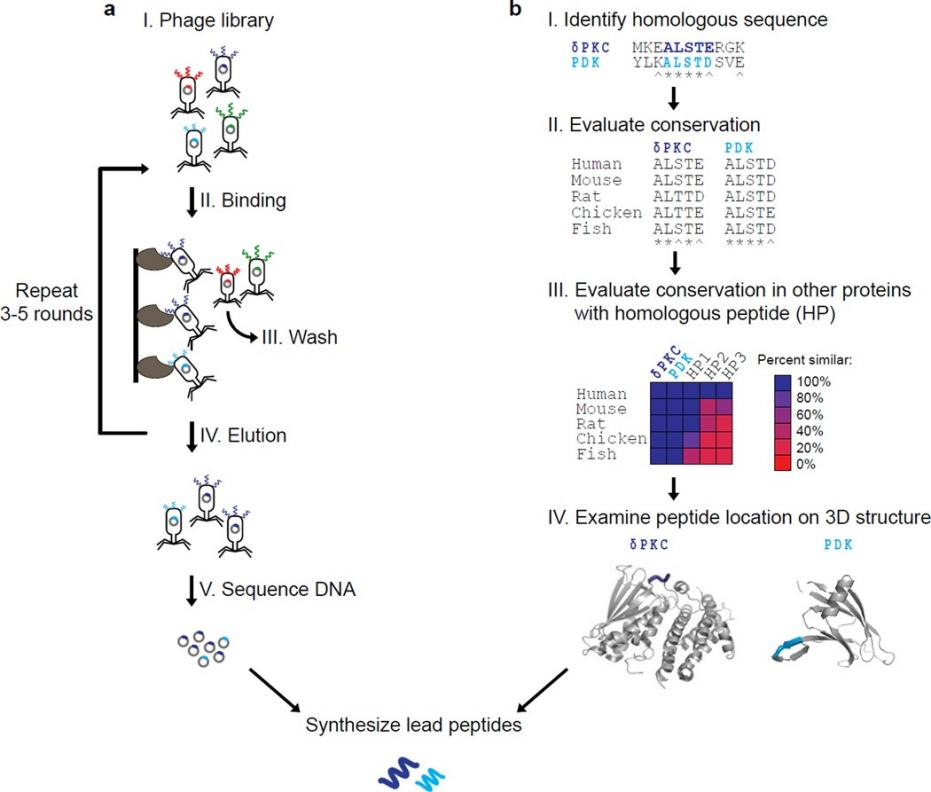
Figure 1: Phage-Displayed Peptide Workflow[2]
I. Peptide Library Types
(i) Linear Peptide Library
A linear peptide library is a collection of peptides formed by linking amino acids end-to-end via peptide bonds in a linear fashion.
Advantages:
Ø Simple to construct, with mature technology: The technology for constructing linear peptide libraries is the most mature and relatively simple to implement. Using techniques such as phage display, it is possible to easily construct and expand massive libraries with capacities ranging from 108 to 1011, making it possible to identify rare binding peptides for specific targets.
Ø Low cost and easy to obtain: The synthesis of linear peptides is relatively inexpensive, and the costs associated with their construction and amplification using phage display technology are also relatively low. Furthermore, many libraries are commercially available and can be purchased directly.
Ø High-efficiency screening with broad applications: The screening process is relatively simple and fast. This type of library is most commonly used for preliminary screening; it is particularly well-suited for mock epitope screening and is also widely used in fields such as antibody production, enzyme inhibitor screening, and vaccine development.
Ø Flexible structure, comprehensive coverage: Linear peptides are highly flexible and can adopt a variety of different conformations. This flexibility makes it more likely to identify initial binders for specific targets.
Disadvantages:
Ø Poor metabolic stability: Linear peptides are easily recognized and degraded by proteases and typically have a short half-life in vivo[3].
Ø High entropy penalty upon binding: Due to their flexible structure, linear peptides incur a high entropy penalty when binding to their targets.
Ø Limited target specificity: The lack of a fixed structure reduces the binding affinity between the peptide and the antigen and makes it difficult to determine the active conformation.
Ø Limited library diversity: As peptide length increases, the difficulty of synthesis rises; as a result, the sequence diversity of larger libraries may actually be lower than that of short peptide libraries.
(ii) Cyclic Peptide Library
A cyclic peptide library is a collection of peptide molecules with cyclic structures. These peptides form a ring structure either by linking their amino (N-terminus) and carboxyl (C-terminus) ends end-to-end, or by forming a loop between the side chains of amino acids.
Advantages:
Ø Increased Conformational Rigidity and Binding Affinity: Cyclization improves binding entropy through conformational constraints, enabling cyclic peptides to bind more tightly than linear peptides with the same sequence. The rigid conformation of cyclic peptides enhances binding affinity, specificity, and proteolytic stability.
Ø Significantly enhanced metabolic stability: Cyclic peptides exhibit greater resistance to proteolytic degradation.
Ø Cyclic peptides retain the advantages of peptides—such as ease of production, high diversity, and high potential specificity—while enhancing metabolic stability and binding affinity through conformational constraints.
Disadvantages:
Ø Lower probability of identifying binding compounds: Due to structural constraints, the probability of identifying effective binding compounds from a cyclic peptide library may be lower than that from a linear library[4].However, once a positive clone is identified, its affinity and specificity are often significantly superior to those of linear peptides.
Ø High synthesis difficulty and cost: The chemical synthesis of cyclic peptides requires additional cyclization steps, and cyclic peptides containing disulfide bonds are complex to handle in coupling chemistry and have high production costs.
Ø Membrane permeability and oral bioavailability remain challenges: Although cyclic peptides show improvements over linear peptides, poor membrane permeability and low oral absorption efficiency remain key challenges that must be addressed in the development of oral cyclic peptide drugs.
Whether it is the “casting a wide net” approach of linear peptide libraries or the conformation-locked nature of cyclic peptide libraries, the ultimate outcome depends on the precision of the screening process. Traditional screening relies on Sanger sequencing to randomly select clones, which makes it difficult to capture the full diversity of the library and makes it difficult to grasp the full picture of the library. In recent years, the introduction of NGS technology has been fundamentally changing this situation.
II. Upgraded Peptide Library Screening Technology: NGS Combined with Peptide Library Screening
The combination of NGS technology and phage display is revolutionizing the precision of peptide library screening. While traditional screening methods may result in a certain amount of non-specific enrichment, NGS enables a detailed analysis of the library composition and the evolutionary trajectory during the selection process[5].
Advantages:
Ø End-to-End Quality Control: NGS enables a comprehensive assessment of constructed peptide libraries. It can accurately evaluate a library’s functional diversity and design coverage, and diagnose biases in the construction process. This helps researchers identify issues early on and avoid wasting resources on ineffective libraries.
Ø Real-time Monitoring and Strategy Optimization: NGS enables deep sequencing of libraries before and after each round of screening. This real-time monitoring allows researchers to dynamically adjust their screening strategies based on the data, rather than proceeding blindly based on experience.
Ø Accelerating Candidate Molecule Discovery: NGS enables direct sequencing of the entire screened library, allowing researchers to directly identify the highest-quality candidate molecules based on enrichment levels and sequence integrity, thereby shortening the time from screening to validation.
Disadvantages:
Ø Experimental design must meet extremely high standards: To overcome noise issues, NGS experiments require carefully designed controls, including sequencing of raw, unamplified libraries, amplified libraries, target-free screening, and duplicate screening.
Ø Sequencing Depth: Sequencing depth is a key parameter in NGS applications. Insufficient depth can underestimate the true diversity of a library, leading to a misjudgment of library quality; conversely, pursuing excessively high sequencing depth can significantly increase costs and the complexity of data analysis.
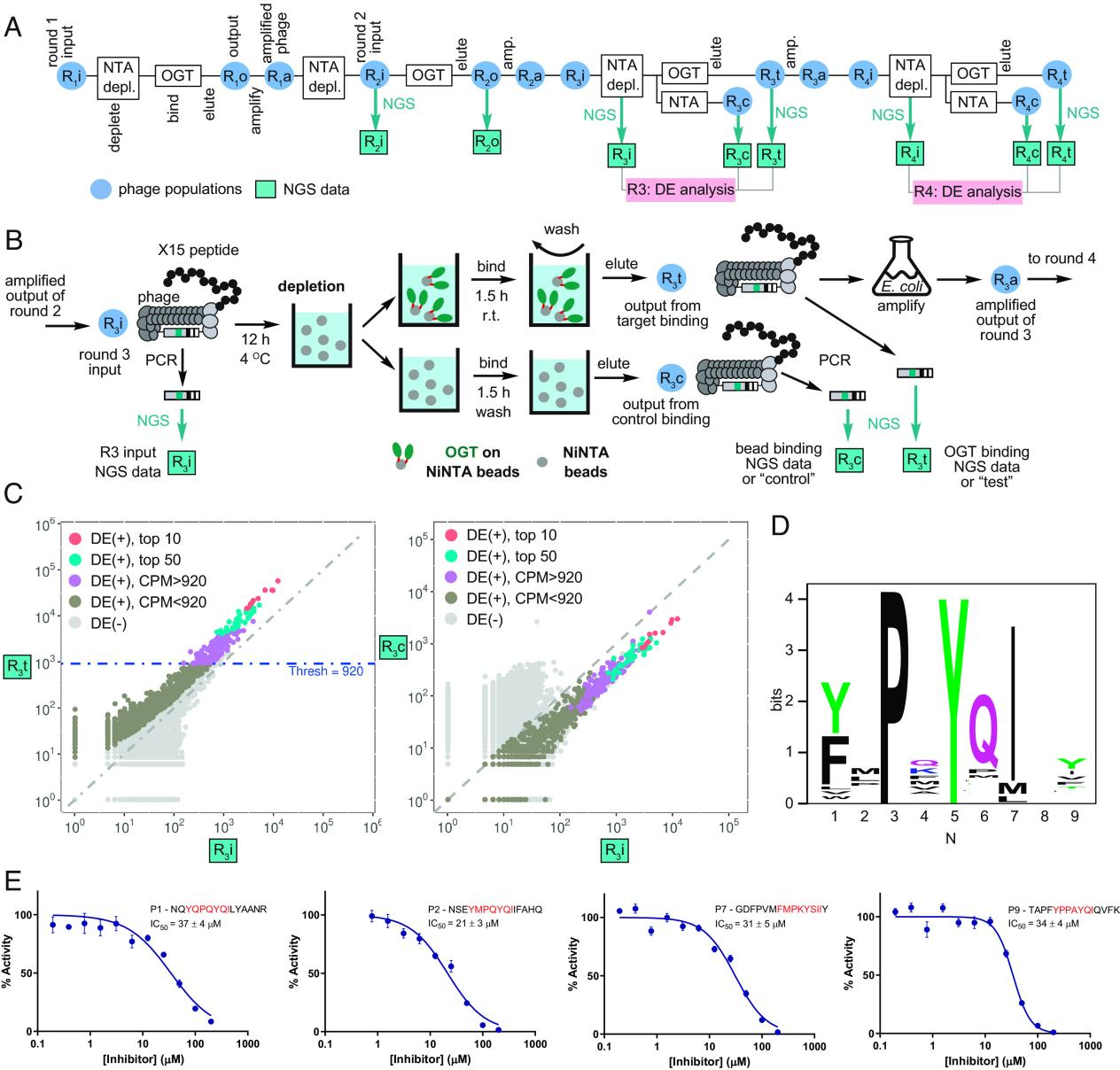
Figure 2: Phage display screening workflow integrated with NGS[6]
III. Core Value of CRO Outsourcing
Building a peptide library from scratch is no easy task. The phage display platform was one of the earliest peptide library expression systems, and to this day, it remains one of the mainstream methods due to its powerful functionality, simplicity, low cost, and ease of use. However, the entire process-from in vitro assembly of random DNA sequences to vector construction, transformation, amplification, screening, and sequence identification-typically takes 3-6 months, and requires a high level of expertise in molecular biology and chemical modification on the part of the researchers.
An even more critical issue is the bottleneck in library capacity. No matter how large the theoretical library capacity may be, if the conversion efficiency cannot keep pace, the actual effective library capacity will be significantly reduced. Although the introduction of non-natural amino acids in recent years has further expanded the chemical space of peptide libraries, these technological breakthroughs require specialized support from both biology and chemistry.
Professional biotech companies not only have ready-made peptide libraries but can also provide customized library designs based on target characteristics-which often translates to a time advantage of several months or even longer. In the field of innovative drug development, six months can be the difference between a “first-in-class” drug and a “me-too” drug.
Peptide drugs are evolving from the dominance of GLP-1 to a period of widespread growth, and peptide library construction and screening have always been the fundamental driving force behind this field. From high-throughput screening of linear peptide libraries to conformation-constrained optimization of cyclic peptide libraries, and on to precision screening enabled by NGS technology-each technological iteration is pushing the boundaries of peptide drugs while redefining the professional standards required of CROs.
For most pharmaceutical companies and R&D institutions, building an in-house peptide library platform not only involves a time investment of several months but is also constrained by technical barriers in areas such as conversion efficiency, quality control, and data interpretation. Entrusting specialized tasks to a professional company is not merely a matter of “outsourcing”; rather, it involves leveraging mature technical platforms and extensive project experience to accelerate the critical leap from massive sequences to lead compounds.
KMD Bioscience has been deeply involved in the fields of phage display and peptide library construction for many years, and is committed to providing global research institutions and pharmaceutical companies with one-stop solutions ranging from peptide library design and construction to screening. Based on the phage display system, the company supports the customized construction of linear and cyclic peptide libraries and continues to expand into cutting-edge technologies such as NGS-assisted screening, leveraging reliable technical delivery to support the first mile of peptide drug discovery.
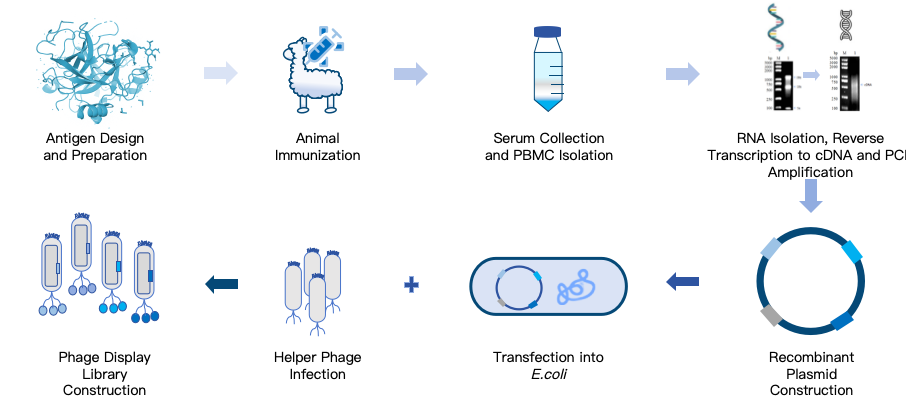
Figure 3: Service Workflow for KMD Bioscience’s Phage Display Library Construction Platform
[1]AlShaer D, Al Musaimi O, Albericio F, de la Torre BG. 2025 FDA TIDES (Peptides and Oligonucleotides) Harvest. Pharmaceuticals (Basel). 2026 Jan 30;19(2):244. doi: 10.3390/ph19020244. PMID: 41754785; PMCID: PMC12943124.
[2]Cunningham AD, Qvit N, Mochly-Rosen D. Peptides and peptidomimetics as regulators of protein-protein interactions. Curr Opin Struct Biol. 2017 Jun;44:59-66. doi: 10.1016/j.sbi.2016.12.009. Epub 2017 Jan 4. PMID: 28063303; PMCID: PMC5496809.
[3]Thean D, Ebo JS, Luxton T, Lee XC, Yuen TY, Ferrer FJ, Johannes CW, Lane DP, Brown CJ. Enhancing Specific Disruption of Intracellular Protein Complexes by Hydrocarbon Stapled Peptides Using Lipid Based Delivery. Sci Rep. 2017 May 11;7(1):1763. doi: 10.1038/s41598-017-01712-5. PMID: 28496125; PMCID: PMC5431883.
[4]Roxin Á, Zheng G. Flexible or fixed: a comparative review of linear and cyclic cancer-targeting peptides. Future Med Chem. 2012 Aug;4(12):1601-18. doi: 10.4155/fmc.12.75. PMID: 22917248.
[5]Bakhshinejad B, Kjaer A. NGS and the design of an optimized phage display workflow for peptide discovery. Amino Acids. 2025 Dec 26;58(1):5. doi: 10.1007/s00726-025-03492-z. PMID: 41452380; PMCID: PMC12775084.
[6]Alteen MG, Meek RW, Kolappan S, Busmann JA, Cao J, O'Gara Z, Chou Y, Derda R, Davies GJ, Vocadlo DJ. Phage display uncovers a sequence motif that drives polypeptide binding to a conserved regulatory exosite of O-GlcNAc transferase. Proc Natl Acad Sci U S A. 2023 Oct 17;120(42):e2303690120. doi: 10.1073/pnas.2303690120. Epub 2023 Oct 11. PMID: 37819980; PMCID: PMC10589721.
FAQs
Q1: Linear Peptide Libraries vs. Cyclic Peptide Libraries: Which Should I Choose?
This depends on your research objectives. Linear peptide libraries are simple to construct, cost-effective, and offer high screening throughput, making them suitable for preliminary screening and epitope mapping to quickly identify initial sequences that bind to the target. However, linear peptides are prone to degradation in vivo and have relatively limited binding affinity. Cyclic peptide libraries enhance binding affinity and metabolic stability through conformational constraints, making them suitable for targeting “undruggable” targets such as protein-protein interactions (PPIs), as well as development projects requiring oral or in vivo administration. Simply put: use linear libraries during the lead discovery phase, and cyclic peptide libraries during the lead optimization and drug development phases.
Q2: Cyclic peptides sound much better than linear peptides, so why not just replace the linear peptide library with a cyclic peptide library?
Cyclic peptides are not “universally superior.” Because their conformation is restricted to a specific shape, they may fail to identify the optimal binding sequences for certain targets. Linear peptides, on the other hand, offer “greater flexibility and a wider range of conformations,” allowing them to cover a broader space around the target and, as a result, increasing the probability of identifying initial binding compounds. Many drug discovery strategies first use linear libraries to identify lead compounds, which are then optimized for activity and stability through cyclization modifications.
Q3: How exactly has NGS technology transformed peptide library screening?
Traditional screening relies on Sanger sequencing, which can only sequence a small number of randomly selected clones—akin to “seeing only a glimpse through a tube.” NGS, on the other hand, enables in-depth sequencing of the entire library after each round of screening, achieving three things:
Ø Assess the true diversity and quality of the corpus;
Ø Tracking the enrichment dynamics of target sequences across each round of screening;
Ø Quickly identify the highest-quality candidate molecules from massive amounts of data, significantly shortening the screening cycle.
Q4: Does NGS technology have any drawbacks? Does using NGS mean all your problems are solved?
No. NGS places extremely high demands on experimental design—multiple control groups must be established, including sequencing of the original library, sequencing of the amplified library, screening of untargeted controls, and repeated screening, in order to effectively distinguish true specific binding sequences from nonspecific background noise. Furthermore, insufficient sequencing depth can underestimate library diversity, while excessive depth can significantly increase costs and complicate data analysis. NGS is a powerful tool, but if used improperly, it can lead to misleading conclusions.
Q5: Since the article states that building your own peptide library takes 3–6 months, what exactly are the advantages of choosing a CRO?
The core value of a CRO lies in “time” and “success rate.” This is specifically reflected in:
Ø Time savings: CROs have ready-made libraries of pre-synthesized peptides and technical platforms, so clients do not have to wait for the initial library construction phase.
Ø Technical Barriers: CROs possess extensive screening experience and a robust quality control system, which effectively prevent common issues associated with in-house biobanks, such as “inflated capacity claims” and “false positives in screening.”
Ø Flexible customization: Specialized libraries can be designed based on target characteristics, rather than using a “one-size-fits-all” approach.
- peptide library screening
- peptide service
- peptide libraries
- peptide library synthesis

- Protein Platform
- Protein Expression Services
- Protein Modification & Detection Services
- Protein Interaction Services
- Protein Purification Service
- Antibody Discovery Platform
- VHH Antibody Platform
- Phage Display Platform
- Antibody Humanization Platform
- Single B Cell Screening Platform
- Antibody Expression & Validation Platform
- Peptide Library Platform
- Custom Antibody Platform
- Innovative Drug Discovery Platform
- Product Center
- Proteins
- Antibodies
- Raw Materials Reagents
- Small Molecule Reagents
- Peptide Products
- Nanoparticle Products
- Contact Us
- Phone:400-621-6806
- Mobile:13110936064(WeC
- E-mail:[email protected]
- Address:Room 108, Building 10, No. 6 Hechang Road, Wuqing Development Zone, Tianjin City
-

WeChat
-
Service Account
-
 400-621-6806
 -
 3599163699
 -
 Monday to Friday 9:00-18:00
 -

-
 0
0
-
