


An antibody that binds a disease-related target with excellent affinity is not automatically a suitable human therapeutic candidate. If its sequence originates from a mouse, rat, alpaca, or another non-human species, its compatibility with the human immune system, molecular stability, and clinical performance all require careful consideration. Antibody humanization is one of the key engineering steps that can help turn a promising discovery molecule into a more developable therapeutic candidate.
Direct Answer: Why Do Therapeutic Antibodies Require Humanization?
Therapeutic antibodies derived from non-human species often require humanization to reduce potentially problematic immune recognition, improve compatibility with human antibody structures, and support further drug development. Humanization replaces selected non-human antibody regions with human antibody sequence features while attempting to preserve the original antigen-binding properties.
However, humanization is not a universal requirement. Fully human antibodies may not need conventional humanization, and some antibody formats, including camelid-derived VHH nanobodies, require a format-specific engineering strategy rather than simply applying a standard human IgG workflow. The right decision depends on the antibody's origin, sequence, structure, target, intended use, and development data.
Quick Answer: 8 Reasons for Antibody Humanization
Reduce potential immunogenicity: Decrease selected non-human sequence features that may be recognized by the human immune system.
Improve human compatibility: Adapt antibody variable-region frameworks toward human antibody sequence characteristics.
Support sustained treatment: Help address immune responses that could affect repeated administration.
Protect therapeutic activity: Preserve antigen recognition while modifying non-human sequence regions.
Improve developability: Evaluate and optimize expression, stability, aggregation tendency, and other molecular properties.
Support clinical development: Generate a more appropriate candidate for subsequent preclinical and clinical evaluation.
Improve molecular consistency: Use rational sequence design and experimental screening to select better-characterized candidates.
Create a stronger development foundation: Integrate humanization with functional validation, expression, and quality assessment.
Our position: Humanization is worth considering early when a non-human antibody is intended for human therapeutic development. It should not be treated as a cosmetic sequence conversion or as proof that a candidate will be safe, effective, or non-immunogenic.
1. What Is Therapeutic Antibody Humanization?
Therapeutic antibody humanization is a protein-engineering process that modifies an antibody derived from a non-human species to make its sequence more similar to human antibodies. The main objective is to reduce selected non-human sequence characteristics while retaining the molecular features responsible for antigen recognition and biological activity.
Most conventional antibodies contain variable heavy-chain and variable light-chain domains. Within these domains, complementarity-determining regions (CDRs) contribute substantially to antigen binding, while framework regions provide structural support and help position the CDR loops.
In a traditional CDR-grafting approach, the CDRs from a non-human antibody are transferred onto selected human antibody frameworks. Additional sequence changes, sometimes called back-mutations, may be necessary when framework residues contribute to binding-loop geometry, antigen interaction, or structural stability.
Humanization is therefore a balancing exercise. Replacing too few non-human residues may leave undesirable sequence features. Replacing too many may disrupt the original binding conformation, reduce affinity, or negatively affect expression and stability.
Humanization Is Not the Same as Chimerization
These terms are often confused. A chimeric antibody typically combines non-human variable regions with human constant regions. A humanized antibody generally has non-human-derived antigen-binding residues, or selected portions of them, placed within predominantly human variable-region frameworks, alongside human constant regions where applicable.
A fully human antibody is different again: its antibody sequence is derived from human antibody sequence sources or designed through platforms that produce human antibody candidates. It may still require optimization and immunogenicity assessment, but it does not necessarily require conventional humanization.
2. How Does Antibody Humanization Work?
Professional humanization should begin with an understanding of the original antibody, not with an automatic instruction to replace every non-human residue. A reliable workflow combines sequence analysis, structural interpretation, candidate design, and experimental validation.
Step 1: Analyze the Parental Antibody
The starting material is the original antibody sequence, ideally with supporting information about its antigen, binding activity, and functional mechanism. The variable heavy-chain (VH) and variable light-chain (VL) sequences are analyzed to identify CDRs, framework regions, conserved residues, potential liabilities, and relevant sequence differences from human germline or antibody frameworks.
Step 2: Select Appropriate Human Frameworks
Human framework selection is a critical design decision. A framework should not be selected solely because it produces the highest overall sequence identity. Structural compatibility, CDR conformation, VH/VL pairing, interface residues, and the antibody's original binding behavior all matter.
Step 3: Design Humanized Variants
Depending on the antibody, the design may use CDR grafting, framework optimization, resurfacing, germline-based approaches, or a combination of methods. Selected parental framework residues may be retained as back-mutations if they are important for maintaining binding geometry or molecular stability.
Step 4: Express and Screen Candidates
Designed sequences are expressed and evaluated. Relevant tests may include expression yield, purity, antigen-binding affinity, specificity, thermal stability, aggregation, and functional activity. The appropriate assay panel depends on the target and intended therapeutic mechanism.
Step 5: Compare and Refine
The best candidate is not necessarily the one with the highest human sequence identity. A practical selection process compares humanization, binding, function, and developability together. If the first design loses affinity or exhibits poor expression, the framework or selected residues may need to be reconsidered.
Important distinction: Humanization can reduce certain sequence-related immunogenicity risks, but it cannot establish clinical immunogenicity or guarantee that anti-drug antibodies will not develop. Patient factors, disease, dose, route, treatment duration, product quality, and other molecular characteristics also influence immune responses.
3. 8 Reasons Therapeutic Antibodies Require Humanization
Reason 1: Reduce the Risk of Unwanted Immune Recognition
The most widely recognized reason for humanizing a non-human therapeutic antibody is to reduce the potential for the human immune system to recognize the drug as foreign. Non-human antibody sequences may contain peptide regions that can be processed and presented by human antigen-presenting cells. In some circumstances, this can contribute to T-cell responses and the development of anti-drug antibodies (ADAs).
ADAs can have different consequences. Some are transient or have no measurable clinical effect. Others may alter drug exposure, interfere with target binding, reduce efficacy, or contribute to adverse reactions. Neutralizing antibodies are particularly important when they interfere with the biological activity of the therapeutic antibody.
Humanization can reduce selected non-human sequence features, but it does not eliminate all potential immune epitopes. A humanized antibody can still trigger an immune response. We recommend treating humanization as one risk-reduction measure within a broader immunogenicity strategy, not as a substitute for appropriate testing.
Reason 2: Improve Compatibility with Human Antibody Structures
Human and non-human antibodies share a broadly conserved immunoglobulin architecture, but their variable-region sequences are not identical. Framework residues influence the shape and flexibility of CDR loops, the relative positioning of VH and VL domains, and the overall stability of the antibody structure.
Humanization aims to place the antigen-binding regions within a framework that is more compatible with human antibody sequence characteristics. This can provide a more suitable molecular starting point for therapeutic development.
However, a more human-like sequence is not automatically a better antibody. A framework that is highly similar to a human germline sequence may still be structurally incompatible with a particular set of CDRs. From our experience with antibody development workflows, framework selection should be evaluated in the context of the original molecule rather than treated as a simple sequence-matching exercise.
Reason 3: Support Repeated or Long-Term Administration
Many therapeutic antibodies are designed for repeated administration. Depending on the disease and treatment strategy, patients may receive a drug over an extended period. An immune response that develops after initial exposure can become relevant to subsequent doses.
For example, if ADAs increase drug clearance or interfere with target binding, the concentration of active therapeutic antibody may fall below the level needed to achieve the intended pharmacological effect. This may complicate dose management and treatment evaluation.
Humanization can help address one potential source of unwanted immune recognition in non-human-derived candidates. It is particularly relevant when repeated dosing is anticipated, although the actual immune response must still be evaluated using appropriate clinical and analytical data.
Reason 4: Preserve Antigen Binding While Improving Human Compatibility
An antibody's value comes from its ability to recognize and interact with its intended target. Humanization must therefore preserve the binding characteristics that made the original antibody attractive.
This is more difficult than simply transferring CDR sequences. Some framework residues support the conformation of CDR loops or participate directly in antigen interactions. Changing these residues may alter affinity, specificity, or functional activity.
For this reason, a professional humanization program compares the parental antibody with multiple humanized candidates. Binding affinity alone is not enough. Depending on the mechanism, the assessment may also include cell-based binding, receptor blocking, ligand inhibition, internalization, or other functional assays.
Our recommendation: Do not accept a humanized sequence as a successful result until its binding and relevant biological function have been experimentally compared with the parental antibody.
Reason 5: Improve Developability and Molecular Quality
Humanization is often an opportunity to identify and address molecular characteristics that could create problems during later development. These may include poor expression, aggregation, instability, unfavorable surface properties, or sequence liabilities.
Not every developability issue is caused by non-human sequence content, and humanization alone will not fix every issue. Nevertheless, evaluating several framework designs can reveal useful differences in expression and biophysical behavior.
For commercial development programs, this matters because a candidate that binds strongly but expresses poorly or aggregates readily can become expensive to manufacture and difficult to formulate. A slightly different humanized variant with a more balanced profile may be a better development choice than the highest-affinity candidate.
Reason 6: Strengthen the Foundation for Preclinical and Clinical Development
Therapeutic antibody development requires a connected body of evidence covering identity, purity, binding, biological activity, pharmacology, safety, and immunogenicity. A humanized candidate may be a more appropriate starting point for human therapeutic development than an otherwise comparable non-human antibody.
However, humanization does not itself establish clinical suitability. It does not replace toxicology, pharmacokinetic evaluation, functional characterization, manufacturing process development, or clinical studies. Nor does it guarantee regulatory acceptance.
Regulatory guidance emphasizes a risk-based assessment of immunogenicity for therapeutic protein products. The extent of testing should be determined by the product's characteristics, intended clinical use, and potential consequences of an immune response. The FDA's guidance on immunogenicity assessment provides an important framework for this work.
Reason 7: Improve Candidate Selection Through Rational Engineering
Modern antibody humanization is not limited to one fixed CDR-grafting recipe. Sequence analysis, structural modeling, human germline comparisons, and experimental screening can be combined to evaluate different design options.
This is valuable when a parental antibody has unusual CDR features or when a straightforward graft causes loss of affinity. A structured design strategy can compare alternative frameworks and selected back-mutations rather than relying on a single predicted sequence.
Computational tools can help prioritize candidates, identify potential sequence liabilities, and reduce unnecessary experimental work. They should be used as decision-support tools, not as replacements for experimental evidence. A predicted improvement in humanness does not prove a reduction in clinical immunogenicity.
Reason 8: Create a More Adaptable Starting Point for Different Antibody Formats
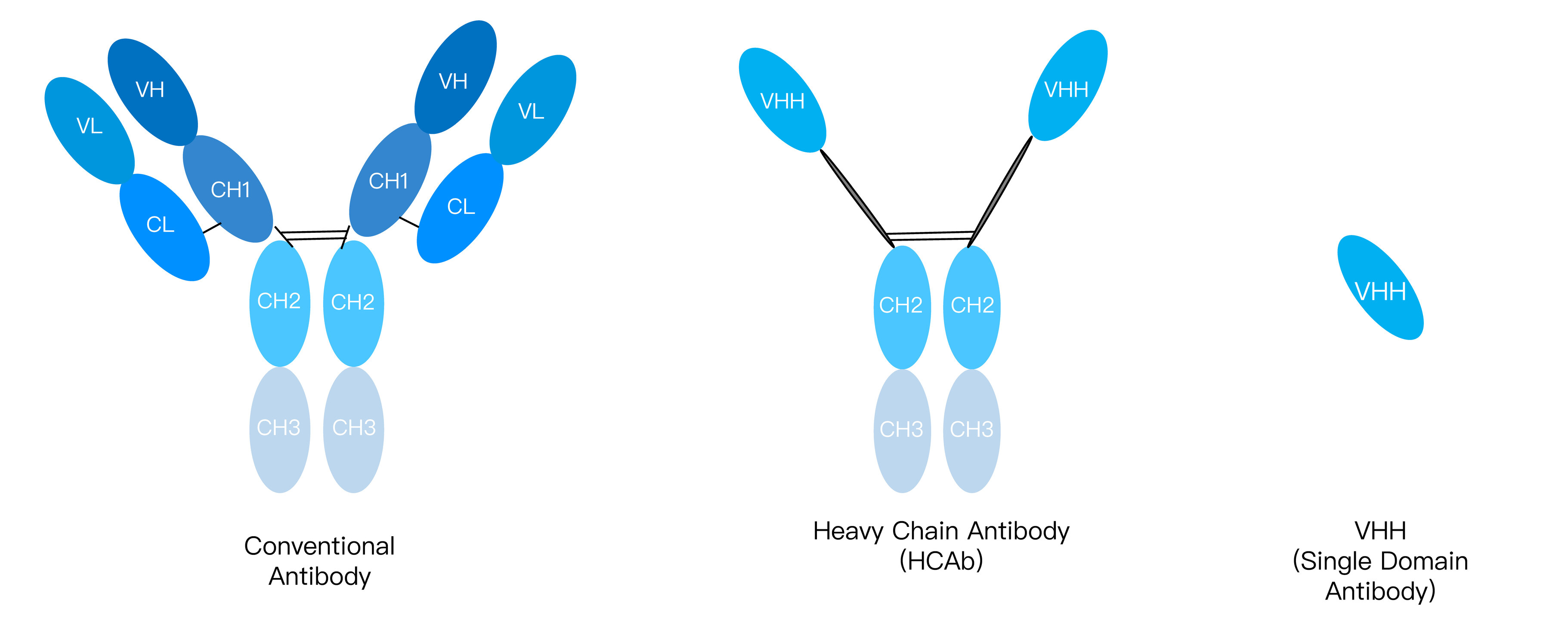
Antibody therapeutics are not limited to conventional full-length IgG molecules. Development programs may involve Fab fragments, single-chain variable fragments (scFv), bispecific antibodies, and single-domain antibodies such as VHH nanobodies.
These formats have different structural and functional requirements. Humanization approaches developed for conventional VH/VL antibodies cannot simply be transferred to every format without considering domain architecture, folding, solubility, binding-loop structure, and expression behavior.
For camelid-derived VHH antibodies, the goal may involve improving human compatibility while preserving the distinctive single-domain structure and binding characteristics. The design strategy must account for the VHH framework and the contribution of individual residues to stability and antigen recognition.
For research teams exploring VHH candidates, a dedicated VHH antibody platform can be relevant before deciding whether a particular candidate needs humanization or another form of sequence optimization.
4. Antibody Types and Humanization Requirements
Not every antibody discovery route creates the same humanization requirement. The following comparison is a practical starting point for choosing the right development strategy.
| Antibody Type | Typical Sequence Origin | Humanization Consideration | Practical Development Advice |
|---|---|---|---|
| Mouse monoclonal antibody | Mouse antibody sequence | Often a strong candidate for humanization when intended for human therapeutic use. | Evaluate CDR grafting, framework selection, and back-mutations while retaining binding activity. |
| Chimeric antibody | Non-human variable regions with human constant regions | May still retain substantial non-human variable-region sequence content. | Consider further humanization if the development objective and sequence-risk assessment support it. |
| Humanized antibody | Predominantly human framework with selected non-human-derived binding residues | Conventional humanization has already been performed, but immunogenicity risk remains. | Validate the final sequence and assess immunogenicity as part of the wider development program. |
| Fully human antibody | Human antibody sequence sources or human antibody discovery platforms | Usually does not require conventional humanization. | Focus on developability, target biology, product quality, and immunogenicity assessment. |
| Camelid VHH nanobody | Single-domain antibody from camelid sources | May require a format-specific humanization or sequence-optimization strategy. | Preserve VHH folding, solubility, stability, and antigen binding during engineering. |
5. Benefits and Limitations of Antibody Humanization
Humanization can be a valuable engineering step, but its benefits depend on the quality of the design and the evidence generated afterward. A decision based only on the percentage of human sequence is incomplete.
Quick Summary Table: Benefits, Limitations, and Development Impact
| Development Factor | Potential Benefit | Limitation or Risk | What to Verify |
|---|---|---|---|
| Immunogenicity | May reduce selected non-human sequence-related risks. | Does not eliminate ADA formation or clinical immune responses. | Sequence risk assessment and fit-for-purpose immunogenicity testing. |
| Antigen binding | Can retain the parental antibody's recognition properties. | Framework changes may alter CDR conformation and affinity. | Binding affinity, specificity, and relevant functional assays. |
| Expression | Framework optimization may improve expression in some candidates. | Some humanized variants express less efficiently. | Expression yield, purity, and reproducibility. |
| Stability | Design comparison may identify more stable variants. | Humanization does not guarantee improved thermal or colloidal stability. | Thermal stability, aggregation, and formulation-relevant studies. |
| Development readiness | Can provide a more appropriate candidate for further therapeutic evaluation. | Additional preclinical, analytical, and clinical work remains necessary. | Integrated molecular and functional characterization. |
Pros vs. Cons of Humanizing a Non-Human Antibody
| Pros | Cons |
|---|---|
| Can reduce selected non-human sequence features associated with immune recognition. | Does not guarantee low immunogenicity or eliminate anti-drug antibodies. |
| Can improve the human sequence characteristics of the antibody variable regions. | Sequence changes may reduce affinity or alter specificity. |
| Creates an opportunity to compare framework designs and improve developability. | Additional design, expression, screening, and validation work increases project scope. |
| May provide a more suitable starting point for human therapeutic development. | Does not replace safety, pharmacology, toxicology, or clinical evaluation. |
| Can be integrated with antibody discovery and optimization workflows. | Results are clone-specific; a successful strategy for one antibody may fail for another. |
6. Who Should Use Antibody Humanization, and Who May Not Need It?
Who Should Consider Humanization?
Biopharmaceutical companies: Teams advancing non-human monoclonal antibodies toward human therapeutic development.
Biotechnology startups: Companies with promising discovery-stage antibodies that need sequence engineering before further development.
Academic translational research teams: Researchers moving from an animal-derived research antibody toward a potential human therapeutic candidate.
Antibody discovery organizations: Groups that want to integrate humanization with screening, affinity optimization, and functional validation.
VHH development teams: Researchers evaluating camelid-derived single-domain antibodies for applications where human compatibility is an important development consideration.
Who May Not Need Conventional Humanization?
Teams using fully human antibodies: Conventional humanization may be unnecessary, although sequence optimization and immunogenicity assessment can still be relevant.
Basic research users: If an antibody is intended only as a laboratory reagent and not for human administration, therapeutic humanization may not justify the cost.
Projects with no human therapeutic objective: An animal antibody used for a species-specific research assay may not need humanization.
Early discovery projects without a validated lead: It may be more efficient to establish target specificity and functional activity before investing in extensive humanization work.
The key question is not whether humanization is technically possible. It is whether the expected development benefit justifies the engineering and validation effort at the current project stage.
7. Common Antibody Humanization Mistakes
Mistake 1: Assuming More Human Sequence Always Means a Better Candidate
Maximizing human sequence identity without considering structure can damage CDR positioning and binding. A candidate with a higher humanization score may perform worse than a variant that retains selected parental residues. Evaluate function and developability alongside sequence characteristics.
Mistake 2: Using Only One Human Framework
A single framework choice may not be optimal for every antibody. If the first graft loses affinity or expresses poorly, compare alternative frameworks and carefully selected back-mutations rather than assuming the original antibody is unsuitable.
Mistake 3: Measuring Affinity but Ignoring Biological Function
Strong binding does not always translate into the intended biological effect. A blocking antibody, agonist, internalizing antibody, or receptor-modulating antibody may require different functional assays. Select tests that reflect the intended mechanism of action.
Mistake 4: Treating Computational Scores as Experimental Proof
In silico tools can rank designs and identify potential liabilities, but they cannot fully reproduce the complexity of human immune responses or every aspect of antibody behavior. Use computational prediction to guide experiments, not to replace them.
Mistake 5: Ignoring Expression and Stability
A humanized antibody that binds well but has poor expression, low recovery, or a tendency to aggregate may be difficult to advance. Include developability measurements early enough to influence candidate selection.
Mistake 6: Applying Conventional IgG Humanization Directly to VHH Nanobodies
VHH antibodies have a distinct single-domain architecture. Their framework and binding loops must be considered as a connected structure. A conventional VH/VL CDR-grafting strategy may not be suitable without adaptation.
Mistake 7: Assuming Humanization Guarantees Clinical Safety
Humanized antibodies can still induce immune responses. Product-related factors, patient characteristics, disease state, route of administration, dose, and treatment duration all contribute to the overall risk profile. Clinical safety cannot be inferred from sequence origin alone.
8. How to Choose an Antibody Humanization Service Provider
Choosing a humanization provider is not simply a matter of comparing quotations. The quality of the design process, the experimental evidence, and the ability to connect humanization with downstream development are more important than a low initial service price.
1. Check Whether the Provider Understands Your Antibody Format
Ask whether the team has experience with your specific molecule: conventional IgG, Fab, scFv, bispecific antibody, or VHH nanobody. A provider should be able to explain how its design strategy changes according to the antibody format.
2. Review the Humanization Design Strategy
Ask how the provider identifies CDRs, selects human frameworks, evaluates sequence liabilities, and decides whether back-mutations are needed. A credible technical proposal should explain the reasoning behind candidate designs rather than promise a universally successful sequence conversion.
3. Confirm the Experimental Validation Plan
At minimum, discuss which tests are included and which are optional. Depending on the project, relevant work may include gene synthesis, recombinant expression, purification, antigen-binding analysis, specificity testing, and functional validation.
4. Ask How Candidates Are Compared
Clarify whether the provider delivers one designed sequence or multiple candidates for evaluation. For higher-value therapeutic programs, comparing several designs may provide a better basis for selecting a lead than relying on a single predicted construct.
5. Evaluate Downstream Technical Support
Humanization should connect logically with expression and characterization. A provider with relevant downstream capabilities can help reduce the handoff between sequence design, recombinant production, and functional testing.
6. Clarify Deliverables and Project Boundaries
Before starting, confirm sequence reports, construct information, raw or processed assay data, sample quantities, acceptance criteria, timelines, intellectual property arrangements, and any additional fees. Do not assume that humanization automatically includes expression, purification, or validation.
Service Comparison: What Should You Buy?
| Service Option | What It Typically Covers | Best Use Case | Our Recommendation |
|---|---|---|---|
| Sequence analysis only | Sequence review, CDR identification, framework analysis, and design recommendations. | Teams with in-house molecular biology and antibody validation capabilities. | Suitable for experienced teams that can independently test the proposed designs. |
| Humanization design | Framework selection, CDR grafting or other engineering, and candidate sequence design. | Projects that need engineered sequences but have their own expression and screening workflow. | Choose this when your laboratory can complete downstream validation. |
| Humanization with expression | Design plus recombinant expression and, depending on scope, purification. | Teams that need physical antibody candidates for further evaluation. | A practical option when expression capacity is limited in-house. |
| Integrated humanization and validation | Design, expression, purification, binding assessment, and agreed functional testing. | Programs that need evidence-based candidate comparison. | Often the strongest choice for projects where candidate quality matters more than minimizing the initial service scope. |
Cost-Benefit Considerations
The lowest-cost design is not necessarily the least expensive development decision. If a single humanized variant loses affinity or has poor expression, the project may require redesign and repeat testing. A broader initial design and screening plan can cost more upfront but may reduce avoidable rework.
For early discovery projects, a staged approach is often sensible: begin with sequence analysis and a focused design set, then expand expression and validation based on the first results. For a lead already supported by strong functional data, it may be worth investing in a more comprehensive humanization and candidate-comparison package.
9. KMD Bioscience Antibody Humanization and VHH Capabilities
KMD Bioscience provides antibody-related research and development services designed to support different stages of antibody discovery and engineering. For teams evaluating a non-human antibody, the Antibody Humanization Platform is a relevant starting point for discussing sequence design and humanization project requirements.
Humanization is most useful when it is connected to the broader development workflow. Depending on the project, teams may also need antibody discovery, screening, recombinant expression, and functional characterization. KMD Bioscience's related capabilities include a Phage Display Platform, a Single B Cell Screening Platform, and an Antibody Expression and Validation Platform.
For projects focused on camelid single-domain antibodies, VHH discovery and humanization should be considered in the context of the distinctive VHH structure. KMD Bioscience reports over nine years of experience in VHH library construction and screening, with a technical team supporting integrated project workflows.
Alpaca VHH Antibody Library Construction
KMD Bioscience offers Alpaca VHH library construction and screening services supported by a comprehensive VHH display technology platform. The workflow can include antigen design, alpaca immunization, VHH library construction, phage display screening, and functional validation.
The service is relevant for research teams seeking VHH candidates with desired binding characteristics. VHH discovery and VHH humanization are related but distinct activities: whether a selected VHH requires humanization should be decided after considering its sequence, structure, intended application, and experimental properties.
Explore the Alpaca VHH Library Construction Service
For projects that need additional protein production support, KMD Bioscience also provides protein expression platform services. Teams can review relevant protein expression systems when planning downstream production and characterization.
Project scope should always be confirmed before work begins. The required antibody format, starting sequence, target information, expected deliverables, and validation assays determine the most appropriate service combination.
10. Expert Recommendation: When Is Antibody Humanization Worth the Investment?
From our experience with antibody development workflows, the most effective time to consider humanization is after a non-human antibody has demonstrated meaningful target recognition and sufficient functional potential to justify further investment. Humanizing every early discovery hit is rarely the best use of project resources.
For a non-human monoclonal antibody intended for human therapeutic development, we recommend evaluating humanization before the candidate becomes deeply embedded in downstream development. This gives the team an opportunity to compare frameworks, preserve important parental residues, and identify potential expression or stability issues while there is still flexibility to redesign the molecule.
For commercial users, the most important decision is not whether a provider can produce a humanized sequence. It is whether the resulting candidate has been evaluated against the original antibody using evidence that matters to the intended application.
Our Practical Candidate-Selection Checklist
Has the parental antibody demonstrated reproducible target binding?
Is the antigen and intended mechanism of action clearly defined?
Have the VH and VL sequences been confirmed?
Have appropriate human frameworks been selected and justified?
Were alternative designs or back-mutations considered where needed?
Has the humanized candidate been expressed and purified?
Have binding affinity and specificity been compared with the parental antibody?
Have relevant biological functions been tested?
Have expression, purity, aggregation, and stability been considered?
Is there a separate plan for immunogenicity assessment and further development?
Bottom line: Humanization is worth the investment when it addresses a real development need and is followed by appropriate experimental validation. A humanized antibody should be selected because it offers a balanced molecular profile—not simply because its sequence looks more human.
11. Frequently Asked Questions About Therapeutic Antibody Humanization
1. Why do therapeutic antibodies require humanization?
Non-human-derived therapeutic antibodies may contain sequence features that the human immune system recognizes as foreign. Humanization modifies selected regions to increase human sequence characteristics and may reduce some immunogenicity risks. It can also provide an opportunity to optimize molecular properties, but it does not guarantee clinical safety or eliminate immune responses.
2. Does humanization completely eliminate antibody immunogenicity?
No. Humanized antibodies can still induce anti-drug antibodies. Immune responses depend on multiple factors, including antibody sequence, product quality, patient characteristics, disease, dose, route of administration, and treatment duration. Humanization is one part of a broader risk-reduction and immunogenicity assessment strategy.
3. What is the difference between a chimeric and a humanized antibody?
A chimeric antibody typically combines non-human variable regions with human constant regions. A humanized antibody generally has selected non-human antigen-binding residues incorporated into predominantly human variable-region frameworks. Humanization therefore usually reduces the amount of non-human variable-region sequence compared with a conventional chimeric antibody.
4. What is CDR grafting in antibody humanization?
CDR grafting is a common humanization method in which the complementarity-determining regions of a non-human antibody are transferred onto selected human antibody framework regions. Additional framework changes or back-mutations may be needed to preserve the original binding conformation and biological activity.
5. Can humanization reduce antibody binding affinity?
Yes. Changes to framework residues can affect CDR structure, VH/VL orientation, or antigen interactions. A successful workflow compares humanized variants with the parental antibody and uses experimental binding and functional assays to identify candidates that retain the desired activity.
6. Do fully human antibodies need humanization?
Usually not in the conventional sense because their sequences are already derived from human antibody sources or human antibody discovery approaches. However, fully human antibodies may still need affinity optimization, developability engineering, sequence-liability assessment, and immunogenicity evaluation.
7. Do VHH nanobodies require humanization?
Not automatically. Camelid-derived VHH nanobodies have a distinctive single-domain structure, so any humanization strategy should account for their framework, CDRs, folding, solubility, and binding characteristics. Some projects may benefit from VHH humanization or sequence optimization, while others may prioritize different engineering objectives.
8. How is a humanized antibody validated?
Validation depends on the intended application, but commonly includes recombinant expression, purification, antigen-binding affinity, specificity, and relevant functional assays. Developability studies may also assess expression yield, purity, aggregation, and stability. These studies do not replace the immunogenicity and clinical evaluations required for therapeutic development.
9. Is computational antibody humanization sufficient?
No. Computational analysis can help select frameworks, identify potential sequence liabilities, and prioritize designs. However, predictions must be tested experimentally. A favorable humanness score alone does not demonstrate retained binding, improved developability, or reduced clinical immunogenicity.
10. When should a research team start antibody humanization?
It is generally more efficient to begin after a non-human antibody has demonstrated promising binding and functional activity. This avoids investing heavily in humanizing candidates that may not be suitable leads. For programs with a clear human therapeutic objective, humanization should be considered early enough to influence downstream expression, characterization, and development decisions.
12. References
The following regulatory and scientific resources provide further information on therapeutic protein immunogenicity and antibody humanization. They support the scientific principles discussed in this article; they do not replace molecule-specific experimental assessment.
U.S. Food and Drug Administration (FDA). Immunogenicity Assessment for Therapeutic Protein Products: Guidance for Industry. FDA guidance describing a risk-based approach to evaluating and mitigating immune responses to therapeutic protein products.
European Medicines Agency (EMA). Guideline on Immunogenicity Assessment of Biotechnology-Derived Therapeutic Proteins. Guidance addressing immunogenicity risk factors, assessment strategies, and the clinical interpretation of immune responses.
Deane, C. M. et al. Prospects for the Computational Humanization of Antibodies and Nanobodies. Frontiers in Immunology, 2024. A review of experimental and computational approaches, including CDR grafting, sequence humanness, and the challenges of antibody and nanobody humanization.





 0
