


In modern biotherapeutics and high-precision diagnostics, treating the antibody discovery process as a routine laboratory assay is a recipe for burning millions in capital. Too many early-stage biopharma companies rush into animal immunization or naive library panning without rigorously defining target structure, only to end up with candidate leads that exhibit poor affinity, insoluble expression profiles, and severe developability bottlenecks downstream. Generating an antibody that simply lights up an ELISA plate does not mean you have a functional, manufacturable therapeutic or diagnostic lead.
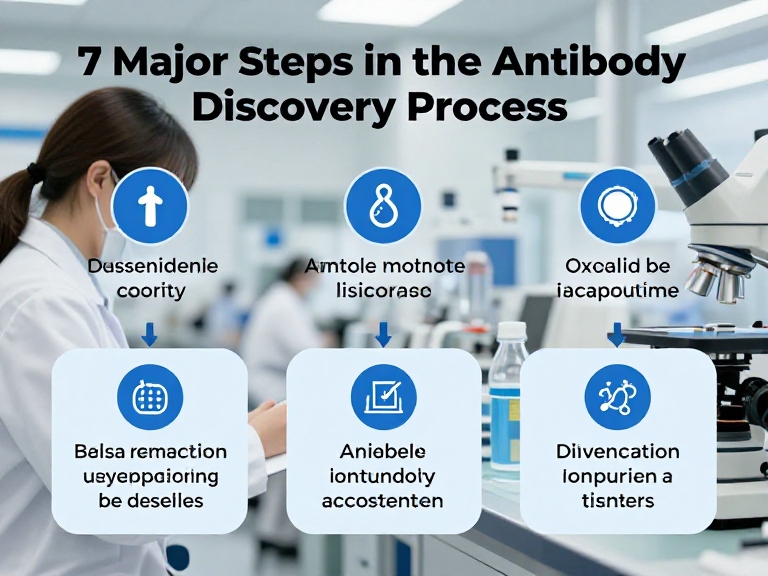
Navigating drug discovery requires practical commercial judgment, rigorous kinetic profiling, and deep structural awareness from day one. Choosing between traditional hybridoma workflows, high-throughput phage display, and modern microfluidic single B-cell isolation dictates your campaign timeline, IP strength, and downstream engineering costs. We dissect the seven essential steps of the modern discovery pipeline, providing practical benchmarks to help discovery teams advance high-affinity binders into clinical candidates without hitting early-phase attrition walls.
Quick Answer: The 7 Core Steps of Antibody Discovery
A modern, clinically viable Antibody Discovery Process comprises seven structured phases: 1) Target Validation & Antigen Engineering (proper folding, post-translational modifications, and epitope masking); 2) Host Immunization or Synthetic Library Construction; 3) High-Throughput Screening & Hit Generation (via Single B-Cell Screening, Phage Display, or Hybridoma); 4) Hit-to-Lead Kinetic & Functional Characterization (SPR/BLI binding kinetics, cell-based signaling, and epitope binning); 5) Sequence Analysis & In Silico Developability Profiling (identifying PTM liabilities, aggregation motifs, and charge patches); 6) Recombinant Expression & Lead Optimization (humanization, affinity maturation, and Fc engineering); and 7) Preclinical In Vivo Validation & Scalability Testing. In most professional situations, early integration of developability assessment in Step 4 saves up to 18 months of wasted cell line development.
Table of Contents
What Is the Antibody Discovery Pipeline and How Does It Operate?
Deep Dive: The 7 Major Steps in the Antibody Discovery Process
Discovery Platform Comparison: Hybridoma vs. Phage Display vs. Single B-Cell Screening
Pros and Cons of In Vivo Immune Repertoires vs. In Vitro Synthetic Libraries
Who Needs Custom Discovery Platforms vs. Off-The-Shelf Reagents
What Is the Antibody Discovery Pipeline and How Does It Operate?
The antibody discovery process is a systematic, multi-disciplinary engineering cascade designed to identify, isolate, and characterize monoclonal antibodies (mAbs) or single-domain antibody fragments (VHH) that bind to a specific disease-relevant epitope with sub-nanomolar affinity and potent biological activity. It bridges basic target biology with biopharmaceutical manufacturing. Unlike simple polyclonal antibody production, modern discovery must generate monoclonal entities with locked nucleotide sequences suitable for recombinant mammalian expression.
In our testing and discovery operations, the workflow operates on continuous funnel attrition. A discovery campaign begins with an immune repertoire containing tens of millions of unique B-cell clones or a synthetic display library with a diversity exceeding 10^10 variants. Through successive rounds of selection, high-throughput screening, and kinetic sorting, this vast pool is narrowed to hundreds of binding hits, dozens of functionally characterized leads, and ultimately two to three developable drug candidates. Success requires optimizing not only binding affinity (KD), but also production titer, thermal melting stability (Tm), solubility, and low immunogenicity from the initial screening stage.
Quick Summary: The 7 Major Pipeline Steps at a Glance
The table below provides a quick operational summary of the seven distinct phases in a commercial discovery campaign, detailing key methods and stage-gate milestones:
| Pipeline Phase | Primary Experimental Methods | Key Quality Gate / Go-No-Go Criteria | Typical Duration |
|---|---|---|---|
| 1. Target & Antigen Engineering | Recombinant protein expression, DNA/mRNA immunogens, VLP display | >95% native conformation purity; verified glycosylation | 3 to 6 Weeks |
| 2. Immunization & Library Prep | Host animal immunization (mouse, rabbit, alpaca) or synthetic library design | Serum titer >1:100,000 on native cell lines via flow cytometry | 6 to 10 Weeks |
| 3. Screening & Hit Isolation | Microfluidic single B-cell sorting, phage/yeast biopanning, hybridoma | >500 sequence-unique antigen-specific binding hits identified | 1 to 4 Weeks |
| 4. Kinetic & Functional Characterization | SPR (Biacore), BLI (Octet), reporter cell assays, epitope binning | KD < 1 nM; specific target blocking/neutralization efficacy | 2 to 4 Weeks |
| 5. Sequence & Developability Profiling | NGS, 3D homology modeling, chemical liability scanning (PTMs) | Zero critical deamidation/isomerization motifs; Tm > 65°C | 1 to 2 Weeks |
| 6. Optimization & Recombinant Prep | CDR grafting/humanization, affinity maturation, transient CHO expression | Affinity retained within 2-fold of parent; yield >1 g/L | 4 to 8 Weeks |
| 7. In Vivo Preclinical Validation | PK/PD animal modeling, xenograft efficacy, tissue cross-reactivity (TCR) | Clear in vivo anti-tumor/neutralization efficacy; linear PK profile | 8 to 16 Weeks |
Deep Dive: The 7 Major Steps in the Antibody Discovery Process
Step 1: Target Validation and Antigen Engineering
The most sophisticated screening technology cannot rescue a discovery campaign built on poorly engineered antigens. If the immunogen fails to present native tertiary or quaternary conformations, your screening will harvest hundreds of high-affinity binders that bind denatured plastic-bound proteins but fail completely against native cell-surface targets. For complex transmembrane targets like GPCRs, ion channels, or viral envelope spikes, discovery teams must choose stable virus-like particles (VLPs), nanodiscs, or native DNA/mRNA immunization vectors rather than simple linear peptides. Ensuring correct post-translational modifications (PTMs) during early antigen production is the single best investment you can make in the entire campaign.
Step 2: Host Immunization and Immune Repertoire Generation
Once native antigens are validated, the immune cascade begins. While mice remain the historical standard for hybridoma lines, modern drug discovery frequently deploys New Zealand white rabbits or camelids (alpacas and llamas). Rabbits possess a unique B-cell development mechanism involving gene conversion, generating antibodies with higher affinity, broader epitope diversity, and superior Picomolar sensitivity. For heavy-duty applications requiring penetration into cryptic enzyme active sites or blood-brain barrier transport, immunizing camelids via a specialized VHH Antibody Platform generates robust single-domain variable fragments (nanobodies) with high thermal stability.
Step 3: High-Throughput Screening and Hit Generation
This stage isolates antigen-specific B-cell lineages from background lymphocytes. Traditional hybridoma electrofusion is being largely replaced by high-throughput platforms. Deploying cutting-edge single B cell antibody discovery allows discovery scientists to interrogate millions of primary B lymphocytes using droplet microfluidics or fluorescence-activated cell sorting (FACS) within days. This recovers native heavy and light chain pairing directly from circulating plasma cells without the stability losses of long-term cell culture. For non-immunogenic or highly toxic human antigens, synthetic human phage display libraries provide completely animal-free in vitro selection.
Step 4: Hit-to-Lead Kinetic and Functional Characterization
Having hundreds of ELISA-positive hits is meaningless without high-resolution biophysical validation. Candidates must immediately undergo real-time label-free kinetic profiling via Surface Plasmon Resonance (SPR) or Bio-Layer Interferometry (BLI). Measuring both on-rate (ka) and off-rate (kd) is essential; a slow off-rate is what maintains therapeutic target engagement in systemic circulation. Concurrently, teams perform high-throughput epitope binning to cluster hits into non-competing groups, confirming diverse mechanisms of action. Functional cell-based assays—such as receptor blocking, antibody-dependent cellular cytotoxicity (ADCC), or viral neutralization—must eliminate inactive non-functional binders immediately.
Step 5: Sequence Analysis and In Silico Developability Profiling
From our experience auditing preclinical pipelines, this is the phase where naive projects fail. Variable domains (VH and VL) are sequenced via Sanger or Next-Generation Sequencing (NGS) and subjected to in silico structural modeling. Computational tools scan for chemical liabilities: asparagine deamidation motifs (Asn-Gly), aspartate isomerization (Asp-Gly), methionine oxidation, and unwanted glycosylation sequons within the CDR loops. Discovering that your lead binder carries an Asp-Gly motif in CDR-H3 means the candidate will isomerize during shelf-life storage, losing potency over time. Early developability filtering ensures you select leads that can survive commercial bioprocessing.
Step 6: Recombinant Engineering, Optimization, and Humanization
Animal-derived variable domains cannot be injected into human patients without inducing anti-drug antibodies (ADAs). Therapeutic leads derived from non-human immunizations must pass through a specialized Antibody Humanization Platform. Structural bioinformaticians graft non-human CDRs onto homologous human germline frameworks, performing rational back-mutations of vernier zone residues to preserve binding pocket geometry. Candidates are cloned into full-length human IgG1, IgG4, or bispecific backbones, transiently expressed in CHO or HEK293 systems, and purified to confirm expression titers exceeding 1 to 2 grams per liter.
Step 7: Preclinical In Vivo Validation and Scale-Up Feasibility
The final step subjects purified leads to rigorous translational testing. In vivo rodent pharmacokinetics (PK) confirm healthy circulating half-lives and absence of rapid systemic clearance caused by polyspecificity. Syngeneic or humanized tumor xenograft models demonstrate therapeutic efficacy in relevant disease environments. Simultaneously, Good Laboratory Practice (GLP) tissue cross-reactivity (TCR) microarrays screen for off-target binding across dozens of human organs, establishing the initial safety window required for Investigational New Drug (IND) filing.
Discovery Platform Comparison: Hybridoma vs. Phage Display vs. Single B-Cell Screening
Choosing the right platform for hit isolation determines your project velocity, lineage diversity, and overall R&D expenditure:
| Evaluation Metric | Traditional Hybridoma Fusion | Phage / Yeast Display Panning | Single B-Cell Screening (Microfluidic) |
|---|---|---|---|
| Screening Throughput | Low to Moderate (10^3 – 10^4 clones) | Massive (10^9 – 10^11 library members) | Very High (10^6 – 10^7 cells per run) |
| Turnaround Time | Slow (12 to 16 weeks) | Fast (4 to 8 weeks) | Fastest (1 to 2 weeks post-immunization) |
| Heavy/Light Chain Pairing | Native in vivo pairing preserved | Randomized / Unnatural pairing in scFv/Fab | Native in vivo pairing locked via single-cell PCR |
| Affinity Maturation Status | In vivo somatically hypermutated | Requires in vitro affinity maturation cycles | Fully matured in vivo with Picomolar affinity |
| Direct Compatibility | Rodent models only | Human, camelid, synthetic, non-immunogenic | Rabbit, human PBMC, mouse, alpaca |
Pros and Cons of In Vivo Immune Repertoires vs. In Vitro Synthetic Libraries
Drug developers must choose whether to harness natural animal immune responses or build completely animal-free synthetic discovery libraries:
| Discovery Strategy | Key Operational Advantages (Pros) | Inherent Drawbacks & Bottlenecks (Cons) |
|---|---|---|
| In Vivo Immunization Repertoires (Mouse, Rabbit, Camelid) |
|
|
| In Vitro Display Libraries (Phage, Yeast, Ribosome Display) |
|
|
Who Needs Custom Discovery Platforms vs. Off-The-Shelf Reagents
In our experience advising scientific teams, procurement budgets must be aligned with project risk and downstream clinical application.
Who Needs Custom Discovery Services:
Translational Biopharma Startups: Teams establishing proprietary intellectual property around novel oncology, autoimmune, or neurological targets require bespoke mAb campaigns with unique epitope coverage. Explore our tailored custom antibody development service.
Diagnostic Kit Developers: Manufacturers designing matched sandwich pairs for chemiluminescent immunoassay (CLIA) or lateral flow platforms require custom screening to eliminate cross-reactivity against homologous serum proteins. Check our specialized antibody customization solutions.
Intracellular and Cryptic Target Innovators: If your target is an enzyme catalytic cleft, standard antibodies are often sterically hindered. Deploying single-domain nanobody antibody products provides deep cavity penetration impossible with full-size IgG.
Who Can Rely on Off-the-Shelf Catalog Binders:
Academic Discovery Labs: For standard Western blotting, immunoprecipitation, or baseline immunofluorescence studies, sourcing established catalog reagents from a dedicated primary antibody supplier saves significant budget.
Standard Pathway Researchers: Investigating classical housekeeping controls (e.g., GAPDH, Beta-Actin) requires reliable, validated antibody products rather than multi-month custom discovery pipelines.
Integrated Discovery Solutions: The KMD Bioscience Platform
De-risking an antibody discovery campaign requires working with a partner that bridges antigen production, multiple screening modalities, and downstream biophysical validation under one roof. Fragmented workflows—where one vendor immunizes, another screens, and a third humanizes—inevitably lead to data loss and project delays.
Full-Spectrum Recombinant Discovery: KMD Bioscience Antibody Solutions
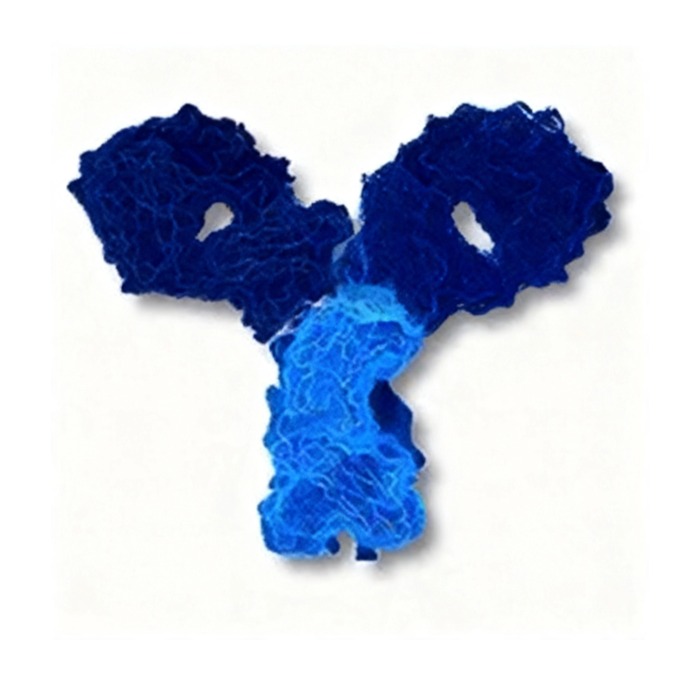
At KMD Bioscience, a diverse range of antibody products has been successfully established and launched, including monoclonal antibodies, polyclonal antibodies, and various engineered antibodies. These can be obtained through hybridoma technology, phage display, or single B-cell screening, and are manufactured at high titers on a large scale. Leveraging years of technical expertise, one-stop customized services can be provided—from antigen design and animal immunization to downstream functional validation—ensuring batch-to-batch consistency, high specificity, and low immunogenicity, thereby offering stable and reliable support for scientific research and drug development.
Whether you require rapid microfluidic single-cell isolation, camelid VHH generation, or rigorous developability scoring via our Antibody Expression & Validation Platform, KMD Bioscience accelerates candidate progression into preclinical testing. Explore our complete portfolio in the Antibodies catalog or configure custom screening projects through our Custom Antibody Platform.
To stay updated on changing regulatory frameworks, review the latest antibody research news and updates and read our industry insights on antibody development news.
Common Costly Mistakes Discovery Teams Make
From our experience evaluating troubled preclinical discovery campaigns, biopharma developers repeatedly commit four expensive errors:
Relying Exclusively on Static ELISA Screening: Selecting hits based solely on high optical density (OD) readings in plate ELISAs is a classic pitfall. Passive adsorption to polystyrene plastic unfolds recombinant antigens, exposing non-native linear epitopes. When those hits are tested on live cells, they fail to bind native membrane-bound targets. Always screen against native targets using flow cytometry or cell-based binding assays.
Postponing Developability Profiling to Stable Cell Line Stages: Discovering that an optimized lead has a low thermal melting temperature (Tm < 55°C), exhibits severe self-association at concentrations above 10 mg/mL, or carries deamidation hotspots in CDR-H2 after investing in stable CHO pool development sets programs back 12 to 18 months. Consult our antibody validation guide to implement developability screening early.
Ignoring Cross-Species Reactivity During Lead Selection: Advancing clinical candidates that bind only to human targets and lack cross-reactivity with cynomolgus monkey or rodent orthologs forces programs to generate surrogate molecules for GLP toxicology studies. This doubles regulatory risk and testing expense.
Failing to Verify Reagent Purity: Conducting sensitive binding screens with degraded target proteins or low-purity detection reagents leads to false hits. Always source high quality primary antibodies and reliable antibody reagents to preserve screen fidelity.
B2B Sourcing Considerations When Selecting a Discovery CRO
Contract research organizations (CROs) vary widely in their platform breadth and technical rigor. When outsourcing your antibody discovery campaign, verify these four essential operational capabilities:
Breadth of Screening Modalities: Avoid providers that force every project into a single discovery funnel. A capable partner should offer hybridoma, phage display, and single B-cell screening, selecting the method that best matches the target biology. For technical details, review our common antibody questions FAQ.
Kinetic Resolution Guarantees: Demand real-time Surface Plasmon Resonance (SPR) or BLI testing from the hit-to-lead stage. Avoid vendors that report only EC50 values from semi-quantitative ELISA assays.
In Silico Structure & Humanization Competency: Verify that the provider uses structural 3D homology modeling to select human framework acceptors, rather than naive BLAST sequence identity matching, preserving vernier zone packing angles.
Transparent IP Ownership: Ensure your discovery service agreement transfers 100% of all intellectual property, sequence data, and biological materials to your organization upon project completion, without hidden milestone royalties. Sourcing from reputable research antibodies for labs partners ensures clean IP transfers.
Expert Recommendation & Strategic Sourcing Verdict
In most professional situations, we recommend moving away from legacy hybridoma fusion as the primary discovery engine for novel therapeutic targets. While cost-effective for standard diagnostics, hybridoma technology is too slow, suffers from unstable chromosome loss, and screens only a tiny fraction of the animal immune repertoire.
For therapeutic and advanced diagnostic discovery, we recommend a dual approach: deploy Single B-cell Screening for projects with high-quality immunogens where native heavy-light pairing and rapid turnaround are paramount; and utilize Phage Display when targeting conserved, non-immunogenic, or toxic antigens where in vitro selection stringency can be controlled precisely. Ensure your project integrates developability scoring—including thermal stability, hydrophobic patch mapping, and deamidation filtering—prior to candidate selection. Sourcing discovery through an integrated partner like KMD Bioscience ensures that the candidate you discover today can be scaled, formulated, and taken into the clinic without unexpected manufacturing roadblocks.
Frequently Asked Questions (FAQ)
What are the 7 major steps in the antibody discovery process?
The seven major steps in the antibody discovery process are: 1) Target Validation and Antigen Engineering; 2) Host Immunization or Synthetic Library Preparation; 3) High-Throughput Screening and Hit Generation; 4) Hit-to-Lead Kinetic and Functional Characterization; 5) Sequence Analysis and In Silico Developability Profiling; 6) Recombinant Optimization and Humanization; and 7) Preclinical In Vivo Validation and Manufacturability Testing.
Why is Single B-cell screening replacing traditional hybridoma technology?
Single B-cell screening interrogates millions of primary B lymphocytes using droplet microfluidics or FACS, isolating candidate leads in days rather than months. Unlike hybridoma fusion, single B-cell isolation preserves native heavy and light chain pairing, bypasses immortalization stability problems, and captures broader clonal diversity directly from mature plasma cells.
What is developability assessment in early antibody discovery?
Developability assessment is the early-stage evaluation of a candidate antibody's biophysical and chemical characteristics. It analyzes thermal stability (Tm), solubility, viscosity at high concentrations, and flags chemical degradation risks such as asparagine deamidation, aspartate isomerization, and oxidation to ensure the lead can be manufactured consistently at commercial scale.
How does phage display differ from animal immunization discovery?
Phage display is an in vitro technique that presents antibody fragments (such as scFv or Fab) on the surface of filamentous bacteriophages, allowing selection against targets without using live animals. This approach enables discovery against toxic or conserved human antigens that do not trigger an in vivo immune response, although it produces randomized rather than native heavy/light chain pairings.
Why is Surface Plasmon Resonance (SPR) preferred over ELISA for hit validation?
While ELISA provides only static end-point measurements of binding, Surface Plasmon Resonance (SPR) measures real-time binding kinetics. SPR quantifies both association rates (ka) and dissociation rates (kd), delivering precise binding affinity constants (KD) that reveal whether an antibody binds rapidly and releases slowly, a critical parameter for in vivo therapeutic efficacy.





 0
0
