


What is Combinatorial Chemistry and High Throughput Screening? A Definitive Industry Guide
- 2026-08-06
- 110
For decades, the drug discovery and biologics development industries were constrained by a frustratingly slow, linear methodology. Chemists and molecular biologists synthesized or isolated compounds one at a time, purified them, and painstakingly tested each one against a biological target. This sequential approach meant that identifying a single viable lead candidate could take years and millions of dollars. From our experience in the biotechnology sector, this methodology is no longer commercially viable. Modern laboratories must pivot to scale.

To survive in today's competitive biopharmaceutical landscape, laboratories rely on a powerful, synergistic technological pairing: combinatorial chemistry and high throughput screening. Whether you are searching for a novel small-molecule therapeutic, engineering an industrial enzyme, or developing monoclonal antibodies, these two technologies form the absolute backbone of modern discovery pipelines. In this comprehensive guide, we will break down exactly what combinatorial chemistry and high throughput screening are, how they integrate, whether your organization actually needs to build these platforms in-house, and how to avoid the most expensive implementation mistakes.
Quick Answer: The Core Concepts
Combinatorial chemistry is a laboratory methodology used to rapidly synthesize massive numbers of different, but structurally related, chemical or biological molecules simultaneously, creating vast "libraries" of compounds. High throughput screening (HTS) is the automated, robotic-driven process of rapidly testing these massive libraries (often hundreds of thousands of compounds per day) against a specific biological target to identify active compounds, or "hits." Together, combinatorial chemistry and high throughput screening allow researchers to condense what used to be years of discovery work into mere weeks.
Table of Contents
| Technology | Primary Function | Required Infrastructure | Ultimate Output |
|---|---|---|---|
| Combinatorial Chemistry | Generates molecular diversity rapidly. | Solid-phase synthesizers, parallel reactors, biological display systems. | Massive compound or biological libraries (10³ to 10¹¹ variants). |
| High Throughput Screening (HTS) | Tests libraries for target affinity or activity. | Robotic liquid handlers, microplate readers, automated incubators. | "Hits" (molecules showing desired biological activity). |
What It Is: Defining the Technologies
To understand the sheer power of combinatorial chemistry and high throughput screening, you must first view them as two halves of the same engine. One generates the fuel; the other burns it to find a spark.
Combinatorial Chemistry moves away from traditional targeted synthesis. Instead of designing a specific molecule, scientists use systematic combinations of basic building blocks. By utilizing techniques like "split-and-mix" synthesis on solid resin beads, a chemist can create tens of thousands of unique compounds in just a few reaction steps. In the modern biologics space, combinatorial chemistry extends beyond small chemicals. It applies heavily to proteins and peptides. For instance, creating vast libraries of mutated protein variants requires robust protein expression platform services to generate the raw biological diversity required for downstream selection.
High Throughput Screening (HTS) is the industrialization of the biological assay. Once a combinatorial library is generated, HTS utilizes advanced robotics, miniaturized microplates (typically 384-well or 1536-well formats), and sensitive optical detectors to run biological tests at a staggering pace. Rather than a scientist pipetting reagents manually, automated liquid handlers dispense nanoliters of compounds and targets. Specialized software then analyzes the resulting data—such as fluorescence or luminescence—to flag molecules that successfully bound to or inhibited the target.
How It Works in Commercial Pipelines
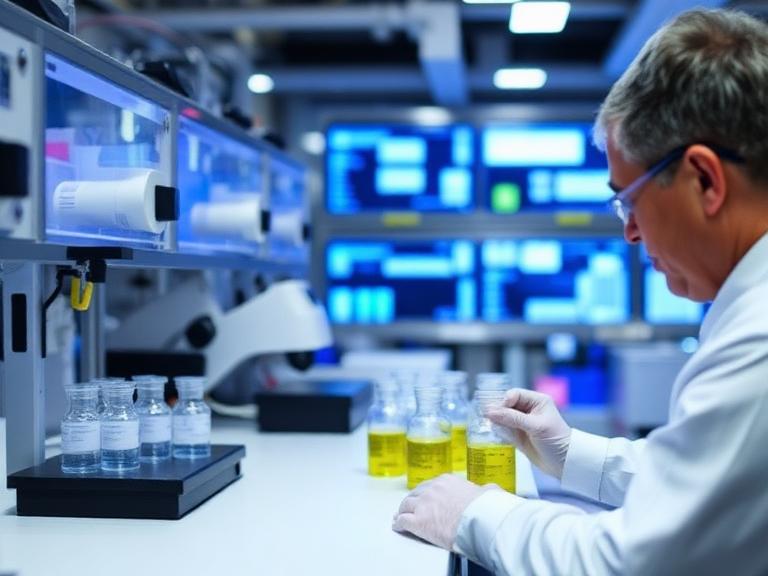
In most professional situations, the integration of combinatorial chemistry and high throughput screening follows a rigid, highly optimized workflow. From our experience, bypassing any of these steps results in catastrophic data failure.
Target Identification and Assay Development: Before any screening occurs, a specific disease target (e.g., a viral surface protein or a cancer-associated kinase) is isolated. Scientists must develop an assay that produces a clear, measurable signal when a compound interacts with this target. This often requires highly purified viral protein research products to serve as the bait.
Library Generation: The combinatorial library is synthesized. In biological screening, this frequently involves generating phage display libraries or utilizing an E. coli protein expression system to express millions of peptide variants.
Automated Screening: The library and the target are loaded into the robotic HTS system. The robotics mix the compounds, incubate them, and read the microplates.
Hit Validation: The HTS system will flag "hits." Because HTS generates noise, these hits must be re-tested in secondary assays to eliminate false positives. For proteins and antibodies, identifying the exact structure of a hit often requires a specialized protein de novo sequencing service.
The Unmatched Benefits of Integration
Why do pharmaceutical giants and leading biotechs invest tens of millions of dollars into these platforms? The benefits of pairing combinatorial chemistry and high throughput screening are transformative.
Unprecedented Speed: What historically took an entire chemistry department a decade to achieve can now be accomplished by a small HTS team in a matter of weeks.
Vast Molecular Diversity: Combinatorial approaches explore chemical and biological space that human intuition would naturally ignore, uncovering novel mechanisms of action and entirely new therapeutic classes.
Cost Efficiency Per Compound: While the initial infrastructure is expensive, the cost of synthesizing and testing a single compound drops from thousands of dollars to mere pennies when performed at an industrial scale.
| Pros | Cons |
|---|---|
| Drastically accelerates the hit identification phase of drug discovery. | Exceptionally high initial capital expenditure for robotics and software. |
| Allows for the exploration of massive chemical and biological diversity. | Prone to false positives; requires rigorous secondary assay validation. |
| Reduces the per-unit cost of compound synthesis and testing. | Massive data generation requires highly specialized bioinformatics teams. |
| Highly adaptable to both small molecule and biologic (antibody/protein) discovery. | "Garbage in, garbage out"—poor library design yields useless hits. |
Limitations and Hidden Bottlenecks
We believe in commercial reality, which means acknowledging that combinatorial chemistry and high throughput screening are not magic bullets. The most significant limitation is the "Garbage In, Garbage Out" paradigm. Early combinatorial libraries focused solely on quantity, resulting in massive collections of highly lipophilic, flat, and non-drug-like molecules. Screening 10 million terrible compounds will yield nothing but false positives.
Furthermore, HTS generates an avalanche of data. If an organization lacks the bioinformatics infrastructure to process, clean, and interpret this data, the screening results become a massive bottleneck. Finally, certain biological targets—particularly complex membrane proteins or whole-cell phenotypic assays—are incredibly difficult to miniaturize and format for automated 1536-well microplates.
| Metric | Traditional Rational Discovery | Combinatorial Chemistry + HTS |
|---|---|---|
| Compound Generation | Linear, one-by-one synthesis. | Parallel, mass-library synthesis. |
| Testing Capacity | 10 to 100 compounds per week. | 10,000 to 100,000+ compounds per day. |
| Design Philosophy | Hypothesis-driven (Structure-Activity Relationship). | Empirical, mass-probability driven. |
| Best Use Case | Lead optimization and final drug refinement. | Initial hit discovery and target validation. |
Who Should Use It & Who Does Not Need It
Who Should Use It: We recommend combinatorial chemistry and high throughput screening for commercial biopharmaceutical companies, large-scale academic screening centers, and agricultural biotechnology firms. If your goal is to discover novel therapeutics, highly specific monoclonal antibodies, or industrial enzymes from scratch, these technologies are mandatory. Access to a sophisticated molecular biology research platform is essential to support these efforts.
Who Does Not Need It: Small academic laboratories focused on basic mechanistic biology or specific pathway elucidation do not need an HTS facility. If your research involves testing five specific inhibitors against a single pathway, manual assays are vastly more cost-effective. Furthermore, labs looking for standard reagents should simply purchase research antibodies for labs rather than attempting to discover their own via combinatorial libraries.
Common Mistakes in Library Design and Screening
In our testing and industry observations, commercial entities routinely make costly errors when implementing these technologies.
The most devastating mistake is rushing assay development. An HTS assay must be rugged. If an assay is sensitive to minor temperature fluctuations or DMSO concentrations, running it across 500 microplates will result in useless, erratic data. Always calculate the Z-factor (a statistical measure of assay quality) before initiating a full screen; a Z-factor below 0.5 means your assay is not ready for HTS.
Another common error is neglecting compound solubility and purity. In biological combinatorial chemistry, such as phage display, failing to use high-quality recombinant protein products as screening targets guarantees that your selected antibodies will bind to impurities rather than the actual target of interest.
Buying Considerations: In-House CapEx vs. CRO Outsourcing
If you are a biotechnology executive deciding how to leverage combinatorial chemistry and high throughput screening, you face a critical commercial decision: Do you build the infrastructure, or do you outsource?
Building an in-house HTS facility requires a minimum capital expenditure (CapEx) of $2 million to $5 million for liquid handlers, readers, compound storage, and LIMS software. You must also hire dedicated automation engineers and assay developers. For heavy-duty applications where a massive pharmaceutical company screens continuously year-round, this CapEx is justified.
However, for start-ups, mid-sized biotechs, and academic spin-offs, we strongly recommend outsourcing to a Contract Research Organization (CRO). Outsourcing shifts CapEx to OpEx (Operational Expenditure), grants immediate access to validated compound libraries, and provides instant expertise without the agonizing multi-year setup phase.
| Consideration | Build In-House HTS Facility | Outsource to a CRO |
|---|---|---|
| Capital Expenditure | Massive ($2M - $5M+). | Zero. Pay per project/milestone. |
| Time to First Screen | 12 to 24 months (procurement and setup). | 1 to 3 months. |
| Expertise Required | Must hire automation engineers, assay biologists, and bioinformaticians. | Leverages the CRO's established team of veteran scientists. |
| IP & Data Control | Absolute internal control and security. | Requires robust legal MSA and confidentiality agreements. |
Expert Recommendation from KMD Bioscience
In modern biopharmaceutical development, securing highly specific binding agents quickly is the difference between leading the market and missing the patent window entirely. Instead of absorbing the immense costs of building internal screening robotics, partnering with an established industry leader is the most practical commercial judgment you can make.
KMD Bioscience has extensive experience in Recombinant Antibody development and research, supported by a robust technical system that provides a distinct edge within the industry. We deliver premium scientific services to our clients. We have achieved outstanding results in preparing scFv, Fab, and VHH Antibodies, earning the trust of clients globally. Utilizing Phage Display Antibody Library Construction (a premier biological application of combinatorial chemistry) followed by multiple rounds of High Throughput ELISA Screening, we efficiently identify high-affinity antibodies for clients. Furthermore, we conduct diverse antibody screening assays tailored to specific client requirements to generate highly specific and stable antibodies.

Frequently Asked Questions (FAQ)
What is the main difference between combinatorial chemistry and high throughput screening?
Combinatorial chemistry is the method used to physically create the massive libraries of chemical or biological compounds. High throughput screening (HTS) is the automated testing infrastructure used to evaluate those massive libraries against a biological target to find active "hits."
Can HTS be used for biologics like antibodies and proteins?
Absolutely. While originally designed for small chemical molecules, modern combinatorial chemistry and high throughput screening are heavily utilized in biologics. Phage display libraries are a perfect example, where billions of protein variants are combinatorially generated and screened via high-throughput methods to find the optimal therapeutic antibody.
What is a "hit" in high throughput screening?
A "hit" is a compound or biological molecule from a combinatorial library that exhibits the desired activity (e.g., binding to a target or inhibiting an enzyme) above a pre-defined statistical threshold during the automated screening process. Hits must subsequently be validated to ensure they are not false positives.
Why do so many HTS hits fail to become drugs?
HTS identifies molecules that interact with a target in a highly controlled, artificial laboratory environment. Many of these "hits" fail later because they are toxic to human cells, have poor solubility, cannot survive liver metabolism, or cannot penetrate cell membranes. HTS is only the first step in a long optimization journey.
Authoritative References
To ensure the highest standards of scientific accuracy, the methodologies and industry standards discussed in this article are aligned with the following authoritative bodies:
- Combinatorial Chemistry and High Throughput Screening

- Protein Platform
- Protein Expression Services
- Protein Modification & Detection Services
- Protein Interaction Services
- Protein Purification Service
- Antibody Discovery Platform
- VHH Antibody Platform
- Phage Display Platform
- Antibody Humanization Platform
- Single B Cell Screening Platform
- Antibody Expression & Validation Platform
- Peptide Library Platform
- Custom Antibody Platform
- Innovative Drug Discovery Platform
- Product Center
- Proteins
- Antibodies
- Raw Materials Reagents
- Small Molecule Reagents
- Peptide Products
- Nanoparticle Products
- Contact Us
- Phone:400-621-6806
- Mobile:13110936064(WeC
- E-mail:[email protected]
- Address:Room 108, Building 10, No. 6 Hechang Road, Wuqing Development Zone, Tianjin City
-

WeChat
-

Service Account
-
 400-621-6806
 -
 3599163699
 -
 Monday to Friday 9:00-18:00
 -

-
 0
0
-
