


Top 5 High Throughput Screening Softwares: A 2026 Industry Review
- 2026-08-04
- 208
In modern biopharmaceutical research, generating data is no longer the primary bottleneck; managing, analyzing, and acting upon that data is. Whether your laboratory is screening small molecule libraries for oncology targets or running thousands of ELISA plates for antibody discovery, the volume of data generated by modern plate readers, liquid handlers, and imaging systems will quickly overwhelm standard spreadsheet applications.
From our experience working alongside elite biotechnology firms and academic research centers, attempting to process 384-well or 1536-well plate data without dedicated informatics infrastructure is a recipe for false positives, irreproducible results, and catastrophic commercial delays. You need specialized High throughput screening softwares to normalize data, calculate IC50/EC50 curves, track plate lineages, and perform quality control (like Z-prime factor calculations) automatically. In this uncompromising guide, we will evaluate the top 5 high throughput screening softwares on the market, dictate which platforms are actually worth your commercial investment, and explain how to streamline your drug discovery and Phage Display Platform workflows.

Quick Answer: The Best HTS Softwares for 2026
In most professional situations, the best High throughput screening softwares depend on the scale of your operations. For enterprise-level, heavy-duty applications, Genedata Screener is the undisputed gold standard for robust data processing. For agile biotech startups needing a cloud-native LIMS and ELN integration, CDD Vault is our top recommendation. Dotmatics offers the best comprehensive suite for end-to-end R&D. For laboratories focused specifically on high-content phenotypic imaging, CellProfiler remains a powerhouse. Finally, for data science teams looking to build custom analytical pipelines, KNIME provides unmatched flexibility. We recommend abandoning legacy spreadsheets immediately in favor of these purpose-built solutions to ensure data integrity.
Table of Contents
What is High Throughput Screening Software?
High throughput screening (HTS) software encompasses specialized informatics platforms designed to capture, manage, analyze, and visualize massive datasets generated during biological and chemical screening campaigns. When a laboratory utilizes an Innovative Drug Discovery Platform, they process thousands of compounds daily. HTS software ingests raw output files from lab instruments (such as luminescence, fluorescence, or absorbance plate readers) and translates that raw data into actionable biological insights.
These platforms handle plate mapping, background subtraction, normalization against positive and negative controls, curve fitting, and hit identification. They are the digital backbone of any modern screening facility, turning terabytes of raw numbers into a curated list of lead candidates.
How HTS Informatics Actually Works
In practice, the software serves as the central hub between your hardware and your scientists. First, researchers define the assay protocol within the software, detailing the plate layouts (e.g., location of DMSO controls, reference inhibitors, and test compounds). As the robotic liquid handlers and readers execute the physical assay, the raw data is automatically parsed via APIs or watched folders into the software.
The system immediately applies predefined mathematical models. It calculates assay quality metrics (like Z' factor and CV), flags outlier wells, normalizes the data, and generates dose-response curves for hit confirmation. In our testing, the ability of modern HTS software to instantly flag a systematic dispensing error across a 1536-well plate saves weeks of wasted downstream validation efforts.
The Top 5 High Throughput Screening Softwares
1. Genedata Screener
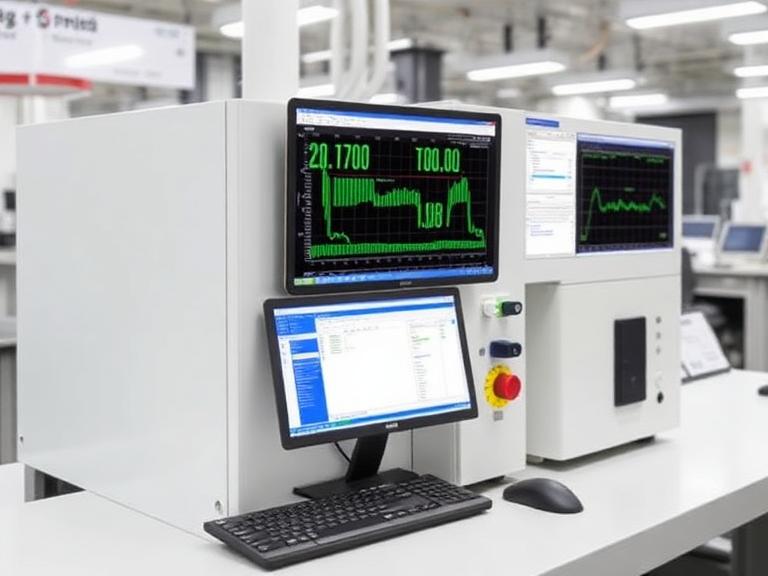
The Enterprise Gold Standard. Genedata Screener is arguably the most powerful data processing engine available for in vitro screening. It is designed for heavy-duty applications inside top-tier pharmaceutical companies. It seamlessly imports complex data from virtually any instrument, standardizes it, and scales effortlessly from target-based biochemical assays to complex high-content screens. If your facility runs continuous, massive screening libraries, Genedata provides unparalleled out-of-the-box analytical depth. However, its pricing and complex implementation put it out of reach for small academic labs.
2. CDD Vault by Collaborative Drug Discovery
The Agile Cloud Solution. For commercial users in the mid-market biotech sector, CDD Vault is a revelation. It is a hosted biological and chemical database that securely manages your private and external data. It features incredibly intuitive dose-response curve generation and chemical structure tracking. From our experience, CDD Vault shines when managing collaborative projects between contract research organizations (CROs) and internal teams, making it an excellent hub for managing data generated through specialized services like a Single B Cell Screening Platform.
3. Dotmatics
The Comprehensive R&D Suite. Dotmatics offers a unified platform that covers biology, chemistry, and screening informatics. Their screening module excels at data capture, plate data management, and hit triage. Because it is highly customizable, it is favored by organizations that want a single software ecosystem to track a molecule from initial screening hit all the way to IND filing. It is highly recommended for labs that need strict data siloing and robust IP protection protocols.
4. CellProfiler
The Phenotypic Imaging Master. Unlike the others on this list, CellProfiler (developed by the Broad Institute) is an open-source tool. It is specifically designed for high-content screening (HCS) and phenotypic image analysis. If your HTS pipeline relies on automated microscopy to detect morphological cellular changes rather than simple luminescence, CellProfiler is essential. It requires significant computational power and some programming knowledge to build the pipelines, but it is unmatched in image cytometry.
5. KNIME Analytics Platform
The Data Scientist's Toolkit. KNIME is not an out-of-the-box HTS software; it is an open-source data analytics, reporting, and integration platform. We include it because, in most professional situations, bioinformatics teams use KNIME to build highly customized, automated HTS data pipelines. By utilizing its visual programming interface, scientists can string together nodes that import plate reader data, perform normalization, run machine learning models for hit prediction, and export results to an ELN. It is for laboratories that require absolute custom control over their algorithms.
| Software Name | Best Suited For | Deployment Model | Price Tier |
|---|---|---|---|
| Genedata Screener | Big Pharma, Enterprise HTS | On-Premise / Enterprise Cloud | Very High |
| CDD Vault | Biotechs, Distributed CRO teams | Cloud-Native SaaS | Medium - High |
| Dotmatics | Unified Chemistry & Biology R&D | Cloud / On-Premise | High |
| CellProfiler | High-Content Image Screening | Desktop / Compute Cluster | Free (Open Source) |
| KNIME | Custom Bioinformatics Pipelines | Desktop / Server | Free to Medium (Server) |
Commercial and Operational Benefits
Implementing proper high throughput screening softwares yields immediate commercial benefits. The primary advantage is the elimination of transcription errors. Manual data entry from a plate reader to a spreadsheet guarantees a baseline error rate. Automated parsing ensures 100% data fidelity.
Secondly, these platforms drastically accelerate the hit-to-lead timeline. By automatically calculating Z-prime scores across hundreds of plates simultaneously, scientists can instantly reject failed assay runs and promote true biological hits. When integrating these softwares with a Protein Interaction Services pipeline, the speed of identifying high-affinity binders is reduced from weeks to hours.
Limitations and Implementation Hurdles
We must use practical commercial judgment: implementing enterprise HTS software is painful. The integration process requires mapping out existing laboratory workflows, establishing data ontologies, and training scientists to abandon their beloved (but flawed) Excel templates. Furthermore, the licensing costs for platforms like Genedata and Dotmatics can consume a significant portion of an early-stage startup's IT budget. Finally, if your laboratory hardware (plate readers, handlers) relies on obsolete proprietary output formats, writing the necessary API parsers to feed the new software can require expensive third-party IT consulting.
Who Should Use It & Who Does Not Need It
For commercial users and core facilities: If your laboratory processes more than ten 384-well plates per week, commercial HTS software is a mandatory requirement. You cannot scale a drug discovery program or an Antibody Humanization Platform without robust informatics to track lineage and assay performance.
Who does not need it: For beginners or small academic labs running manual 96-well assays occasionally, enterprise software is a massive overkill. Standard statistical software (like GraphPad Prism) combined with rigorous notebook keeping is entirely sufficient for low-throughput operations.
Common Mistakes in Software Procurement
The most catastrophic mistake we see is purchasing HTS software without consulting the bench scientists who will actually use it. IT departments often force top-down procurement based on server compatibility, resulting in software that is so hostile to the user that scientists revert to using spreadsheets in secret.
Another frequent error is ignoring instrument integration limits. Before signing a contract, you must physically verify that the software possesses native parsers for the exact file outputs of your specific luminescence readers and flow cytometers.
Crucial Buying Considerations
| Consideration | What to Demand | Why It Matters |
|---|---|---|
| Instrument Integration | Pre-built parsers and open REST APIs. | Without seamless instrument integration, you will require human intervention to format CSVs, destroying the "throughput" of HTS. |
| Quality Control Metrics | Automated Z-prime, CV, and spatial heatmaps. | Visual heatmaps instantly identify edge effects, dispensing errors, or evaporation issues across microplates. |
| Scalability | Cloud infrastructure capable of handling millions of rows. | As you transition from 384 to 1536-well plates, local desktop software will crash under the memory load. |
| Pros | Cons |
|---|---|
| Enforces strict data standardization and FDA/21 CFR Part 11 compliance. | High initial capital expenditure and ongoing licensing fees. |
| Automates complex curve fitting and hit triage instantaneously. | Steep learning curve requires dedicated training for bench scientists. |
| Provides centralized data access for globally distributed teams. | Can require significant IT overhead for initial database configuration. |
Expert Recommendation from KMD Bioscience
In most professional situations, smaller biotech firms and specialized research groups struggle to justify the massive capital expenditure required to license, integrate, and maintain enterprise-grade High throughput screening softwares. Instead of bleeding your capital into IT infrastructure, we recommend outsourcing complex screening bottlenecks to an established industry partner.
KMD Bioscience has extensive experience in Recombinant Antibody development and research, supported by a robust technical system that provides a distinct edge within the industry. We deliver premium scientific services to our clients. We have achieved outstanding results in preparing scFv, Fab, and VHH Antibodies, earning the trust of clients globally. Utilizing Phage Display Antibody Library Construction followed by multiple rounds of ELISA Screening, we efficiently identify high-affinity antibodies for clients. Furthermore, we conduct diverse antibody screening assays tailored to specific client requirements to generate highly specific and stable antibodies.

By leveraging our established Antibody Expression & Validation Platform and comprehensive Detection Platform, you gain access to top-tier HTS data processing capabilities without the software overhead. We provide the normalized, validated hits; you focus on advancing your therapeutic pipeline.
To review the meticulous quality of our deliverables, please visit our COA Download portal.
Frequently Asked Questions (FAQ)
What is the difference between an ELN, a LIMS, and HTS software?
An ELN (Electronic Lab Notebook) is used to document unstructured experimental narratives and protocols. A LIMS (Laboratory Information Management System) tracks the physical inventory of samples, plates, and reagents. HTS software is a highly specialized analytical engine designed specifically to ingest massive arrays of raw data from plate readers, apply complex mathematical normalizations, calculate assay quality (Z-prime), and fit dose-response curves to identify active biological hits.
Can I just use Excel or Python for high throughput screening?
Using Excel for HTS is highly discouraged; it crashes under massive datasets, lacks 21 CFR Part 11 compliance, and is highly prone to human copy-paste errors. While Python is incredibly powerful and frequently used by data scientists to build custom HTS pipelines, it lacks the intuitive graphical user interface (GUI) and centralized database structures that bench scientists require for rapid, daily analysis without coding.
How does HTS software identify a 'hit'?
HTS software identifies a hit by first normalizing the raw data from a microplate against defined positive and negative controls to remove background noise and correct for spatial anomalies (like edge effects). It then applies rigorous statistical thresholds—most commonly identifying compounds whose biological activity exceeds three standard deviations from the mean of the negative controls. These flagged compounds are categorized as "hits" for further downstream validation.
Authoritative References & Industry Standards
To ensure your screening protocols meet the highest scientific standards, we advise consulting the following industry authorities:
SLAS (Society for Laboratory Automation and Screening): The premier international community dedicated to advancing laboratory technology and high-throughput screening methodologies. Explore SLAS Resources
NCBI Assay Guidance Manual: A comprehensive, peer-reviewed manual hosted by the NIH that provides best practices for robust assay design, data normalization, and HTS execution. Review the Assay Guidance Manual
American Chemical Society (ACS) - Chemical Biology: Leading academic literature on the integration of phenotypic imaging and target-based chemical screening software. Read ACS Chemical Biology Journals
- High Throughput Screening Softwares

- Protein Platform
- Protein Expression Services
- Protein Modification & Detection Services
- Protein Interaction Services
- Protein Purification Service
- Antibody Discovery Platform
- VHH Antibody Platform
- Phage Display Platform
- Antibody Humanization Platform
- Single B Cell Screening Platform
- Antibody Expression & Validation Platform
- Peptide Library Platform
- Custom Antibody Platform
- Innovative Drug Discovery Platform
- Product Center
- Proteins
- Antibodies
- Raw Materials Reagents
- Small Molecule Reagents
- Peptide Products
- Nanoparticle Products
- Contact Us
- Phone:400-621-6806
- Mobile:13110936064(WeC
- E-mail:[email protected]
- Address:Room 108, Building 10, No. 6 Hechang Road, Wuqing Development Zone, Tianjin City
-

WeChat
-

Service Account
-
 400-621-6806
 -
 3599163699
 -
 Monday to Friday 9:00-18:00
 -

-
 0
0
-
