


What is a Single Domain Antibody? The Definitive Technical & Commercial Guide for 2026
- 2026-07-01
- 177
The biopharmaceutical industry has heavily relied on conventional monoclonal antibodies for decades. However, as therapeutic targets become increasingly complex and hidden within dense tissue microenvironments, the massive 150 kDa size of traditional IgGs has become a severe structural bottleneck. If your research or therapeutic pipeline is stalling due to poor tissue penetration, lack of stability, or extreme manufacturing costs, you are likely looking at the wrong molecular format.
From our experience working alongside global biotechnology firms, the transition to smaller, more agile molecular formats is not just a trend; it is a commercial necessity for next-generation biologics. This is where the single domain antibody changes the paradigm. Also known as a nanobody or VHH, this ultra-compact format offers the target specificity of a conventional antibody but behaves with the agility of a small molecule. In this guide, we take a clear, practitioner-level approach to explain what a single domain antibody is, why it is disrupting traditional CRO pipelines, and whether it is actually worth integrating into your current discovery platform.
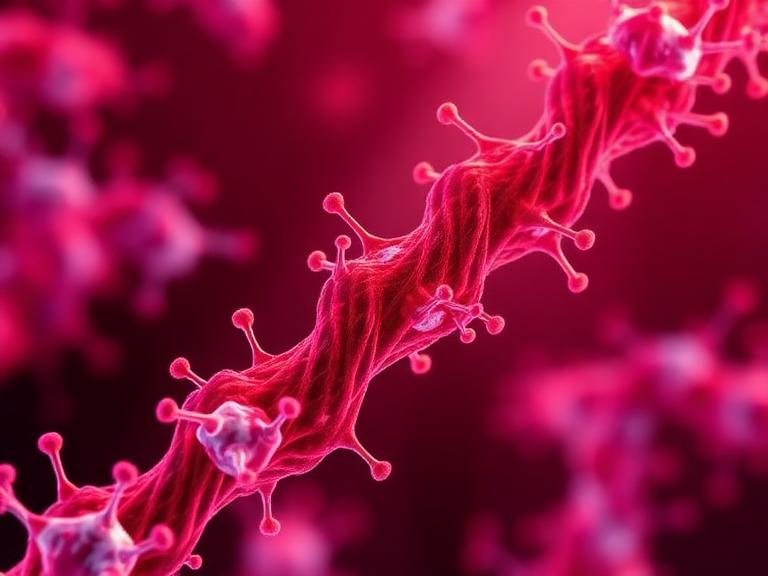
Quick Answer: What is a Single Domain Antibody?
A single domain antibody (sdAb, nanobody, or VHH) is an antibody fragment consisting of a single monomeric variable antibody domain. At merely 15 kDa, it is one-tenth the size of a conventional monoclonal antibody. Derived primarily from the heavy-chain-only antibodies found in camelids (llamas, alpacas), it retains full antigen-binding capabilities. Because of its microscopic footprint, extended CDR3 loops, and high thermal stability, it can penetrate dense tissues like solid tumors, bind to cryptic epitopes (hidden active sites on viruses or enzymes), and be manufactured cost-effectively using microbial expression systems. In most professional situations, we recommend pivoting to a single domain antibody format when conventional IgGs fail to yield desired therapeutic efficacy due to size limitations.
Table of Contents
What It Is: The Biology of the VHH Domain
To understand the value of this technology, you must look at its biological origin. Conventional antibodies found in humans and mice consist of two heavy chains and two light chains. The actual antigen-binding site is formed by the pairing of the variable heavy (VH) and variable light (VL) domains. However, in 1993, researchers discovered that animals in the Camelidae family (alpacas, llamas, camels) naturally produce functional antibodies devoid of light chains, known as heavy-chain-only antibodies (HcAbs).
A single domain antibody is engineered by isolating just the variable region of this camelid heavy chain. This isolated fragment is referred to as the VHH domain. Despite lacking the VL domain, the VHH domain is completely capable of high-affinity antigen binding. At KMD Bioscience, our VHH Antibody Platform specifically harnesses these camelid libraries to identify highly specific binders for complex therapeutic targets.
How It Works: Bypassing Conventional Bottlenecks
The mechanics of a single domain antibody are vastly different from standard Antibodies. Because it lacks a paired light chain, the VHH domain has a distinctly convex shape, characterized by a longer Complementarity Determining Region 3 (CDR3) loop. This extended structural "finger" allows the single domain antibody to reach into narrow cavities, clefts, and enzymatic active sites that are physically inaccessible to the flat or concave binding interfaces of conventional IgGs.
Furthermore, because the hydrophobic interface (which normally binds the VH to the VL in standard antibodies) is replaced by hydrophilic amino acids in VHH domains, single domain antibodies are highly soluble and remarkably resistant to aggregation. They can refold into their active conformation even after exposure to extreme heat or denaturing chemicals.
Commercial and Technical Benefits
In our testing and widespread industry application, the benefits of utilizing a single domain antibody extend far beyond mere target binding:
Unmatched Tissue Penetration: Their 15 kDa size allows them to rapidly penetrate solid tumor microenvironments and cross the blood-brain barrier (BBB) far more effectively than 150 kDa IgGs.
Cryptic Epitope Recognition: The extended CDR3 loop binds to hidden viral spikes and GPCRs, making them elite candidates for neutralizing infectious diseases.
Manufacturing Economics: Unlike full-length IgGs that require expensive mammalian cell cultures (like CHO cells), single domain antibodies can be expressed in high yields using simple microbial systems like E. coli or yeast. If you are struggling with production costs, shifting to our Antibody Expression & Validation Platform for VHH formats will dramatically reduce your Cost of Goods Sold (COGS).
Modularity: They are essentially "plug-and-play" modules. You can easily link multiple nanobodies together to create bi-specific or multi-specific formats without the dreaded chain-mispairing issues seen in standard bispecific antibodies.
Limitations and Pipeline Realities
We must apply commercial and practical judgment here: single domain antibodies are not a universal panacea. Their greatest advantage—their microscopic size—is also their primary physiological weakness. Because they fall well below the renal filtration threshold (roughly 60 kDa), single domain antibodies have a notoriously short serum half-life, often being cleared from the human bloodstream in just a few hours.
If you are developing a therapeutic that requires sustained systemic circulation, you cannot administer a naked VHH. You must engineer a half-life extension strategy, such as fusing the single domain antibody to an Fc domain, PEGylating it, or generating a bi-specific construct where one domain binds to human serum albumin (HSA). Additionally, because they originate from camelids, they possess non-human sequences that risk triggering anti-drug antibodies (ADAs) in patients. Therefore, utilizing a robust Antibody Humanization Platform is absolutely mandatory before advancing to clinical trials.
Who Should Use Single Domain Antibodies

For commercial users and advanced therapeutics: Biopharma companies developing CAR-T cell therapies, targeted radioligands, bispecific T-cell engagers (BiTEs), and therapies targeting solid tumors should aggressively transition to VHH formats. The modularity and penetration capabilities offer a distinct clinical advantage over full-length IgG formats. Similarly, diagnostic developers creating point-of-care rapid tests benefit immensely from the thermal stability of nanobody antibody products.
Who Does Not Need Them
For beginners or basic academic research: If your lab is simply running routine Western blots, standard immunohistochemistry (IHC), or basic ELISAs on easily accessible soluble proteins, investing in custom single domain antibody development is an unnecessary expenditure of your grant funding. Standard polyclonal or conventional monoclonal antibodies are perfectly sufficient, vastly cheaper, and readily available off-the-shelf.
Common Mistakes in Discovery and Development
In most professional situations, the failure of a VHH pipeline happens at the very beginning of the discovery phase. A common mistake is relying on a poorly constructed naïve phage display library. If the library diversity is less than 10^9, you will waste months screening and end up with low-affinity binders. You must partner with a CRO that utilizes immunized alpaca libraries to ensure naturally affinity-matured candidates.
Another profound error is failing to validate the antibody in its final functional format. A nanobody that binds perfectly in a phage ELISA might lose affinity when fused to a bulky Fc region due to steric hindrance. We highly advise consulting an antibody validation guide to ensure your screening assays mimic your end-use application.
Commercial Buying Considerations for CRO Services
When selecting a Contract Research Organization (CRO) to discover and manufacture your single domain antibody, you are buying their expertise in immunization, panning, and humanization. Do not shop purely on price. Ask the vendor about their immunization protocols—do they use proprietary adjuvants? Ask about their panning strategies—can they perform whole-cell panning for complex membrane proteins? If you require specific tailored workflows, you need antibody customization solutions that adapt to your target's unique biochemistry, not a rigid, one-size-fits-all conveyor belt.
Expert Recommendation
KMD Bioscience Co., Ltd. has been committed to becoming a leading provider of therapeutic antibody discovery and related support services since its establishment in 2022. Focusing on technological research and development, the company provides high-quality Contract Research Organization (CRO) services to scientists and research institutions worldwide, aiming to promote the development and innovation of medical science and technology. As a high-tech enterprise, it has been recognized as a National Patent Pilot Unit and obtained ISO9001:2015 Quality Management System certification for its laboratories.
We recommend engaging the Custom Antibody Platform at KMD Bioscience for your next VHH project. Our integrated approach ensures that from alpaca immunization to high-throughput phage display screening and final humanization, your single domain antibody is engineered specifically for commercial and clinical viability. If you want to stay ahead of the curve, keep an eye on our antibody development news and antibody research news and updates.
Essential Data and Comparison Tables
| Characteristic | Single Domain Antibody (VHH) |
|---|---|
| Molecular Weight | ~15 kDa |
| Structure | Monomeric, heavy-chain variable domain only |
| Epitope Preference | Clefts, cavities, enzyme active sites (cryptic epitopes) |
| Expression System | High yield in E. coli and yeast (Pichia) |
| Feature | Conventional Monoclonal Antibody (IgG) | Single Domain Antibody (VHH) |
|---|---|---|
| Size | 150 kDa (Large) | 15 kDa (Ultra-compact) |
| Tissue Penetration | Poor to Moderate | Excellent (Can penetrate solid tumors) |
| Thermal Stability | Moderate (Denatures easily) | Exceptional (Highly stable, reversible folding) |
| Serum Half-Life | Long (Weeks, due to Fc recycling) | Very Short (Hours, rapid renal clearance) |
| Manufacturing Cost | Very High (Mammalian cell cultures required) | Low (Microbial fermentation achievable) |
| Pros (Advantages) | Cons (Limitations) |
|---|---|
| Can be easily engineered into multispecific constructs without mispairing. | Requires complex half-life extension engineering for systemic efficacy. |
| Superior stability allows for alternative delivery routes (aerosol, oral). | Camelid origin necessitates rigorous humanization to prevent immunogenicity. |
| Binds to structurally hidden targets that block standard IgGs. | Lacks inherent effector functions (ADCC/CDC) without adding an Fc region. |
| Service Requirement | What to Look For | Why It Matters |
|---|---|---|
| Library Generation | Immunized libraries vs. Naïve libraries. | Immunized camelids yield in-vivo affinity-matured VHHs, saving months of in-vitro engineering. |
| Humanization Capabilities | CDR-grafting combined with 3D structural modeling. | Prevents the loss of affinity that frequently occurs when humanizing framework regions. |
| Quality Certification | ISO9001:2015 certification. | Ensures laboratory reproducibility and rigorous data documentation required for IND filings. |
The Bottom Line
A single domain antibody is not just a miniaturized version of a standard antibody; it is a fundamentally superior structural format for accessing difficult targets, penetrating dense tissues, and streamlining manufacturing economics. While their rapid renal clearance and required humanization present developmental hurdles, the modularity and stability of VHH domains make them the definitive future of targeted biologics and advanced diagnostics. Do not let outdated large-molecule formats stall your pipeline. By partnering with an elite CRO like KMD Bioscience, you can seamlessly navigate the discovery, humanization, and expression of these next-generation molecules to achieve your commercial milestones.
Frequently Asked Questions
What is the difference between a single domain antibody and a nanobody?
From a scientific standpoint, there is no difference. "Single domain antibody", "VHH", and "nanobody" all refer to the exact same molecule—the isolated variable domain of a heavy-chain-only antibody. The term "Nanobody" was originally trademarked by the biotechnology company Ablynx (now part of Sanofi), so the broader industry utilizes "single domain antibody" or "VHH" to avoid trademark infringement.
Why do single domain antibodies have such a short half-life?
Their short half-life is entirely due to their size. The human kidney filters molecules out of the blood based on a size threshold of approximately 60 kDa. Because a single domain antibody is only 15 kDa, it falls well below this limit and is rapidly excreted in the urine, typically resulting in a serum half-life of just 1.5 to 2 hours unless it is engineered with a half-life extension module. For more detailed troubleshooting, refer to our common antibody questions FAQ.
Can single domain antibodies be given orally?
Yes, in specific applications. Unlike conventional IgGs which unfold and are destroyed by the acidic environment and proteolytic enzymes in the human gastrointestinal tract, single domain antibodies possess remarkable structural stability. Certain VHH constructs have demonstrated the ability to withstand these harsh conditions, opening the door for oral administration of therapeutics targeting gut-specific diseases, a feat largely impossible for standard monoclonal antibodies.
Authoritative Industry References
National Center for Biotechnology Information (NCBI): Comprehensive overview of camelid heavy-chain antibodies and the structural biology of VHH domains. Review NCBI VHH Literature
Nature Biotechnology: Peer-reviewed insights on the clinical translation of nanobodies, including FDA approvals of single-domain antibody therapeutics like Caplacizumab. Explore Nature Biotechnology
European Molecular Biology Laboratory (EMBL): Structural databases and research surrounding the expression and folding of heavy-chain variable domains in microbial systems. Access EMBL Research

- Protein Platform
- Protein Expression Services
- Protein Modification & Detection Services
- Protein Interaction Services
- Protein Purification Service
- Antibody Discovery Platform
- VHH Antibody Platform
- Phage Display Platform
- Antibody Humanization Platform
- Single B Cell Screening Platform
- Antibody Expression & Validation Platform
- Peptide Library Platform
- Custom Antibody Platform
- Innovative Drug Discovery Platform
- Product Center
- Proteins
- Antibodies
- Raw Materials Reagents
- Small Molecule Reagents
- Peptide Products
- Nanoparticle Products
- Contact Us
- Phone:400-621-6806
- Mobile:13110936064(WeC
- E-mail:[email protected]
- Address:Room 108, Building 10, No. 6 Hechang Road, Wuqing Development Zone, Tianjin City
-

WeChat
-

Service Account
-
 400-621-6806
 -
 3599163699
 -
 Monday to Friday 9:00-18:00
 -

-
 0
0
-
