


What is Anti VHH Antibody? The Expert Guide to Nanobody Detection
- 2026-06-22
- 447
The biologics industry is currently undergoing a massive shift away from conventional monoclonal antibodies toward smaller, more versatile nanobodies (VHH). However, as research laboratories and pharmaceutical companies pivot toward camelid single-domain antibodies, they immediately encounter a severe diagnostic bottleneck: detecting these tiny 15kDa proteins in downstream assays. Standard secondary antibodies are completely useless here. If you are developing nanobody therapeutics or diagnostics, you must procure a highly specific anti vhh antibody.
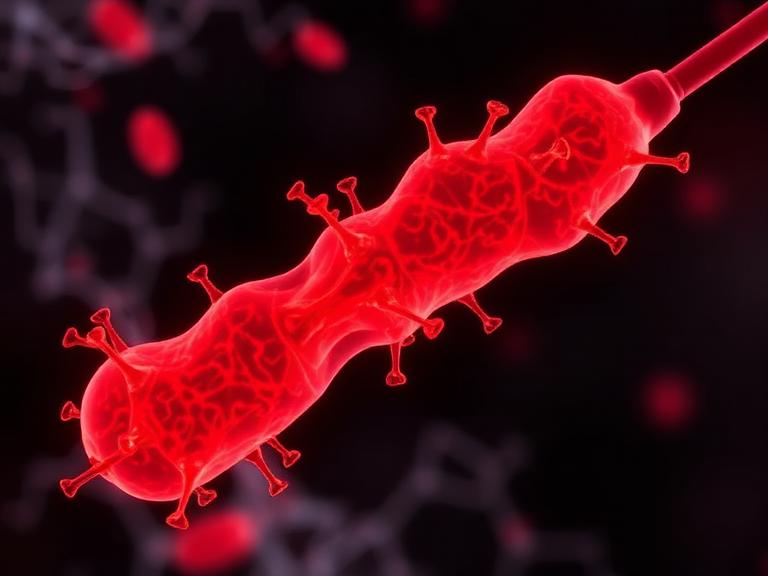
At KMD Bioscience, we process thousands of immunoassay validations annually. Taking a clear, opinionated stance: relying on generic anti-llama IgG to detect your purified VHH domains is a massive operational mistake that leads to false negatives, wasted reagents, and delayed timelines. You cannot cut corners on detection reagents. In this comprehensive guide, we explain the mechanics, commercial applications, and critical purchasing criteria for anti vhh antibodies, ensuring your screening and characterization workflows yield flawless data.
Quick Answer: What is an Anti VHH Antibody?
An anti vhh antibody is a specialized secondary antibody engineered specifically to recognize and bind to the VHH domain (Variable Heavy domain of Heavy-chain antibodies), commonly known as a nanobody. Because nanobodies lack the constant Fc region found in traditional IgG antibodies, standard secondary detection antibodies cannot recognize them. An anti vhh antibody binds to the conserved framework regions of the camelid single domain, allowing researchers to successfully detect, quantify, and purify nanobodies in assays such as ELISA, Western Blot, and Flow Cytometry.
Table of Contents
What It Is: The Science of Nanobody Detection
To understand what an anti vhh antibody is, you must understand the structure of its target. Conventional antibodies (like human or mouse IgG) are massive, Y-shaped proteins consisting of two heavy chains and two light chains. When you buy a standard secondary antibody, it is typically designed to bind to the "tail" (the Fc region) of these Y-shaped molecules.
Camelids (alpacas, llamas, camels) produce unique heavy-chain-only antibodies. When we extract the antigen-binding tip of these antibodies, we get a VHH domain—a nanobody. It is only one-tenth the size of a standard antibody and contains no Fc region and no light chains. Therefore, if you try to use an anti-IgG (Fc specific) secondary antibody to detect your nanobody, you will see absolutely zero signal. An anti vhh antibody is purpose-built to recognize the unique structural framework of this isolated single domain. If you are investing in a nanobody library construction service, pairing it with the correct anti vhh antibody for downstream screening is absolutely non-negotiable.
How It Works in Immunoassays
In most professional situations, the anti vhh antibody functions as the critical signal-generating component in your assay bridge. Here is how the mechanism works in a standard sandwich ELISA or Western Blot:
First, your primary nanobody binds to the target antigen (e.g., a viral spike protein). Next, you wash the plate or membrane. Then, you introduce the anti vhh antibody. This secondary antibody binds tightly to the framework regions (FR1-FR4) of your nanobody. Because the anti vhh antibody is usually conjugated to a reporter enzyme (like HRP) or a fluorophore (like FITC), it produces a quantifiable colorimetric or fluorescent signal when a substrate is added.
Quick Summary Table: Detection Strategies
| Detection Method | Target Region | Application Suitability | Risk of Interference |
|---|---|---|---|
| Anti VHH Antibody | VHH Framework Regions | High (ELISA, WB, FACS) | Low (Does not block CDRs) |
| Anti-His Tag Antibody | C-terminal Polyhistidine | Moderate | High (Tag may be folded inward) |
| Anti-Camelid IgG (Whole Molecule) | Fc and Fab Regions | Very Poor for VHH | Extreme (False negatives common) |
The Commercial Benefits of Specificity
From our experience, the primary benefit of deploying a highly validated anti vhh antibody is the preservation of native protein function. Many researchers attempt to bypass the need for an anti-VHH reagent by aggressively tagging their nanobodies with large fusion tags (like GST or large FLAG tags) just to use standard secondary detection. This is a fatal flaw in drug development.
Large tags alter the thermodynamic folding, solubility, and binding affinity of the 15kDa nanobody. By using a specific anti vhh antibody, you can express tag-free nanobodies, ensuring that your functional assays reflect the true biological activity of the therapeutic candidate. This is exactly why clients utilizing our single B cell antibody discovery platform insist on utilizing tag-free detection during lead characterization.
Limitations and Diagnostic Realities
The main limitation of an anti vhh antibody is its narrow scope of utility. It will only bind to camelid single-domain antibodies. It cannot be used to detect traditional mouse, rabbit, or human monoclonal antibodies. Furthermore, depending on how the anti vhh antibody was raised, it may exhibit slight variations in affinity between different alpaca or llama framework families, though commercial high-grade reagents are usually pooled or engineered to recognize conserved consensus sequences.
Who Should Use It & Who Does Not Need It
For commercial users and biopharma developers: If you are isolating nanobodies for CAR-T cell therapies, targeted oncology payloads, or rapid diagnostic test strips, an anti vhh antibody is a mandatory reagent in your quality control and batch release assays. It is heavily utilized alongside nanobody antibody products.
For heavy-duty high-throughput screening applications: Phage display library panning requires rapid, highly sensitive detection of VHH binders. A conjugated anti vhh antibody is the most robust tool for high-throughput ELISA screening.
Who does not need it: If your laboratory exclusively works with traditional full-length monoclonal antibodies (IgG, IgM, IgA) generated from hybridomas, purchasing an anti-VHH reagent is a waste of budget. You require standard anti-Fc or anti-species secondary antibodies.
Common Mistakes in Nanobody Workflows

In our testing, the most expensive mistake researchers make is assuming their His-tag detection is infallible. They fuse a 6xHis-tag to their nanobody and use an anti-His antibody for Western Blotting. However, because nanobodies are highly compact, the His-tag frequently folds inward, becoming sterically hidden. The anti-His antibody fails to bind, the researcher assumes the nanobody expression failed, and they discard a perfectly good therapeutic clone.
An anti vhh antibody solves this by binding to the universally exposed exterior framework of the nanobody. If you suspect your clones are failing due to tag masking, we highly recommend verifying the exact amino acid sequence through a protein de novo sequencing service before discarding the library.
Comparison Table: VHH Detection Methods
| Metric | Dedicated Anti VHH Antibody | Anti-Tag Antibody (e.g., Anti-His/Myc) |
|---|---|---|
| Sensitivity | Extremely High | Variable (Depends on tag exposure) |
| Impact on VHH Folding | None (Detects native sequence) | High (Adding tags can ruin affinity) |
| Background Noise | Very Low | Moderate (Endogenous histidine interference) |
| Commercial Viability | Standard for FDA pre-clinical filing | Usually restricted to early R&D |
Commercial Buying Considerations
When purchasing an anti vhh antibody, you must exercise strict commercial judgment. We recommend prioritizing polyclonal anti-VHH antibodies for general screening purposes (like ELISA and Western Blot) because polyclonals bind to multiple epitopes across the nanobody framework, drastically amplifying the signal. However, if you are developing a highly standardized, reproducible diagnostic kit, you must secure a monoclonal anti-VHH to guarantee infinite lot-to-lot consistency.
Furthermore, consider the conjugation. Buying an unconjugated antibody requires a tertiary detection step, which wastes time. Source anti vhh antibodies directly conjugated to HRP (for ELISA/WB) or Biotin (for SPR/Bli assays). If you have unique diagnostic requirements, engaging with professional antibody customization solutions is far more cost-effective than trying to force an off-the-shelf reagent to work in a proprietary assay.
Buying Guide Table: Selecting Your Reagent
| Requirement | Recommended Reagent Format | Primary Justification |
|---|---|---|
| High-Throughput ELISA | Anti-VHH Polyclonal (HRP Conjugated) | Maximum signal amplification; rapid one-step detection. |
| Flow Cytometry (FACS) | Anti-VHH (FITC or PE Conjugated) | Direct fluorophore conjugation prevents background noise. |
| Commercial Diagnostic Kit | Anti-VHH Monoclonal | Guarantees absolute lot-to-lot structural consistency over years. |
Pros and Cons Table
| Pros of Using Anti VHH Antibodies | Cons and Limitations |
|---|---|
| Eliminates the need for disruptive structural protein tags. | Higher initial reagent cost compared to generic anti-IgG. |
| Binds universally to conserved camelid framework regions. | Not applicable for testing standard full-length monoclonal antibodies. |
| Prevents false negatives caused by sterically hidden His-tags. | Requires careful blocking to prevent non-specific binding in crude lysates. |
| Provides robust signal amplification in Western Blots and ELISA. | May require optimization of dilution ratios depending on the specific VHH clone. |
KMD Bioscience Expert Recommendation
The CRO Laboratory Verdict
In most professional situations, treating nanobodies like standard antibodies during the detection phase results in catastrophic assay failure. We recommend completely abandoning anti-His tags for final lead characterization and adopting highly purified anti vhh antibodies. At KMD Bioscience, our ISO9001:2015 certified facilities utilize these specific reagents daily.
KMD Bioscience Co., Ltd. has been committed to becoming a leading provider of therapeutic antibody discovery and related support services since its establishment in 2022. Focusing on technological research and development, the company provides high-quality Contract Research Organization (CRO) services to scientists and research institutions worldwide, aiming to promote the development and innovation of medical science and technology. As a high-tech enterprise, it has been recognized as a National Patent Pilot Unit and obtained ISO9001:2015 Quality Management System certification for its laboratories. The company has been granted more than 30 patents and 4 registered trademarks. If your laboratory requires specialized detection tools, our custom antibody development service can engineer the exact anti-VHH specificity your pipeline demands.
The Bottom Line
An anti vhh antibody is not an optional luxury in a modern biologics laboratory; it is a foundational necessity. Because camelid nanobodies lack an Fc region, standard detection methodologies will consistently fail. By investing in dedicated anti-VHH reagents, you ensure the structural integrity of your tag-free therapeutic clones, maximize your assay sensitivity, and eliminate the costly false negatives that plague early-stage drug discovery. Match your cutting-edge nanobody research with the appropriate, specialized detection tools.
Frequently Asked Questions
Can I use anti-llama IgG to detect a VHH nanobody?
Generally, no. Most commercial anti-llama IgG antibodies are raised against the Fc region of the heavy chain. Because a VHH nanobody is only the variable binding domain and lacks an Fc region entirely, standard anti-llama IgG will fail to detect it. You must use a specific anti vhh antibody.
Will an anti VHH antibody block my nanobody from binding to its target?
In most cases, no. High-quality commercial anti vhh antibodies are engineered to bind to the conserved framework regions (FR1-FR4) of the nanobody, leaving the Complementarity-Determining Regions (CDRs)—the parts that actually bind to your target antigen—completely exposed and functional.
Is a monoclonal or polyclonal anti VHH antibody better for ELISA?
For general screening and maximum sensitivity in an ELISA, a polyclonal anti vhh antibody is better because it binds to multiple epitopes on a single nanobody, resulting in massive signal amplification. Monoclonals are preferred only when you need strict, long-term lot-to-lot consistency for manufacturing commercial diagnostic kits.
Authoritative Industry References
National Institutes of Health (NIH) / PubMed - Comprehensive peer-reviewed database detailing the structural biology, isolation, and therapeutic applications of camelid single-domain antibodies (VHH).
U.S. Food and Drug Administration (FDA) - Regulatory framework and approval guidelines for biological products, including the recent clearances of VHH-based nanobody therapeutics (e.g., Caplacizumab).
European Medicines Agency (EMA) - Clinical guidelines and scientific evaluations standardizing the analytical detection, characterization, and batch release testing required for single-domain antibody drugs in the European market.

- Protein Platform
- Protein Expression Services
- Protein Modification & Detection Services
- Protein Interaction Services
- Protein Purification Service
- Antibody Discovery Platform
- VHH Antibody Platform
- Phage Display Platform
- Antibody Humanization Platform
- Single B Cell Screening Platform
- Antibody Expression & Validation Platform
- Peptide Library Platform
- Custom Antibody Platform
- Innovative Drug Discovery Platform
- Product Center
- Proteins
- Antibodies
- Raw Materials Reagents
- Small Molecule Reagents
- Peptide Products
- Nanoparticle Products
- Contact Us
- Phone:400-621-6806
- Mobile:13110936064(WeC
- E-mail:[email protected]
- Address:Room 108, Building 10, No. 6 Hechang Road, Wuqing Development Zone, Tianjin City
-

WeChat
-

Service Account
-
 400-621-6806
 -
 3599163699
 -
 Monday to Friday 9:00-18:00
 -

-
 0
0
-
