


The Expert Guide to the Anti Human Antibody Test: Examples, Assays, and Applications
- 2026-06-23
- 160
In the realm of biotherapeutics and clinical diagnostics, precision is not just a preference; it is an absolute requirement. As biological drug development accelerates, the need to accurately detect and quantify human immunoglobulins in various biological matrices has never been more critical. Whether you are running pharmacokinetic (PK) assays, assessing immunogenicity, or diagnosing autoimmune profiles, deploying a reliable anti human antibody test is the foundational step.
However, the industry is saturated with subpar reagents. From our experience at KMD Bioscience—where we operate as a premier custom antibody development service—we see researchers repeatedly sabotage their own clinical data by utilizing poorly validated secondary antibodies. In most professional situations, treating your detection reagents as an afterthought leads to high background noise, catastrophic cross-reactivity, and ultimately, failed regulatory submissions.

This comprehensive guide will strip away the marketing fluff surrounding antibody procurement. We will dissect exact anti human antibody test examples, explain the underlying mechanics of these assays, and provide actionable, commercial judgment on how to select reagents that guarantee assay fidelity.
Direct Answer: What is an Anti Human Antibody Test?
An anti human antibody test is a specialized immunological assay utilizing a secondary antibody (typically raised in a host species like a goat, rabbit, or mouse) that specifically targets and binds to human immunoglobulins (such as human IgG, IgM, or IgA). These tests are utilized primarily in two scenarios: first, as a detection mechanism in standard benchtop assays (like ELISA or Western Blots) to visualize human primary antibodies; and second, in clinical settings to detect Anti-Drug Antibodies (ADA) where a patient's immune system has mounted a defense against a humanized therapeutic monoclonal antibody.
Quick Answer: Core Assay Applications
If you are planning to implement an anti human antibody test in your laboratory, you must align the test format with your analytical goals:
Indirect ELISA: The gold standard for quantifying human antibodies in patient serum. Relies on an enzyme-conjugated anti-human secondary antibody.
Immunogenicity (ADA) Assays: Critical for therapeutic drug developers to determine if a humanized drug is triggering an immune response in clinical trials.
Flow Cytometry: Utilizes fluorophore-conjugated anti-human antibodies to detect human immunoglobulins expressed on the surface of B-cells.
Western Blotting: Used to confirm the presence and molecular weight of specific human antibodies in complex protein mixtures.
We recommend sourcing only validated antibody products that have been explicitly cross-adsorbed against other species' serum proteins to prevent false-positive signals.
Table of Contents
What It Is: Defining the Reagents and the Assays
To fully grasp the scope of an anti human antibody test, you must understand the distinction between the reagent itself and the assay it enables. The reagent is typically a specialized secondary antibody. For example, a Goat Anti-Human IgG (H+L). This means a goat was immunized with human IgG, and the resulting antibodies produced by the goat (which target the Heavy and Light chains of the human antibody) were harvested and purified.
These reagents power several critical test examples in modern biotechnology:
Autoimmune Serology Testing: In hospitals, an anti human antibody test is used to detect autoantibodies. Patient serum is exposed to human tissue antigens; if the patient has autoantibodies, they bind to the tissue. A fluorescently labeled anti-human antibody is then added to illuminate the presence of these harmful autoantibodies.
Therapeutic Drug Monitoring (TDM): When a patient is administered a humanized therapeutic antibody (like Adalimumab), researchers must track the drug's concentration in the blood. They use an anti-human IgG specific to the drug's unique idiotype to quantify it.
Vaccine Efficacy Testing: To determine if a vaccine works, researchers use an anti human antibody test (usually an ELISA) to measure the titer of human antibodies generated against the vaccine antigen.
How It Works: The Mechanics of Detection
The fundamental mechanism of any anti human antibody test relies on precise molecular recognition. An antibody consists of a variable region (Fab) that binds to the target antigen, and a constant region (Fc) that dictates the antibody's isotype (IgG, IgA, IgM).
When you design an assay, you immobilize your target antigen on a solid phase (like a 96-well microtiter plate). You introduce the human sample. If the human antibodies specific to the antigen are present, they bind. Because these human antibodies are invisible to standard optical readers, you must introduce the "anti-human" secondary antibody. This secondary antibody is conjugated to a reporter molecule—often Horseradish Peroxidase (HRP), Alkaline Phosphatase (AP), or a fluorescent dye like FITC.
In our testing, the location of binding is crucial. If you are trying to detect all subclasses of human IgG, you need an anti-human antibody that binds to the Fc region. If your assay requires distinguishing between closely related monoclonal variants, you might require an anti-idiotypic antibody generated through single B cell antibody discovery platforms to achieve hyper-specificity.
The Tangible Benefits of High-Fidelity Testing
Deploying a meticulously optimized anti human antibody test provides immense analytical power. The primary benefit is signal amplification. Because multiple secondary anti-human antibodies can bind to a single primary human antibody, the detection signal is exponentially magnified, allowing for the detection of picogram-level concentrations in complex matrices like plasma or serum.
Furthermore, these tests offer profound versatility. A single, high-quality, HRP-conjugated Goat Anti-Human IgG can be utilized across Western Blotting, ELISA, and Immunohistochemistry (IHC), streamlining laboratory inventory and standardizing Standard Operating Procedures (SOPs) across different research departments.
Limitations and Analytical Bottlenecks
We must use commercial and practical judgment: these assays are not foolproof. The most severe limitation is cross-reactivity. Human immunoglobulins share high structural homology with primate, bovine, and even murine immunoglobulins. If your patient sample contains bovine serum albumin (BSA) from a cell culture medium, a poorly refined anti-human antibody might bind to the bovine proteins, generating massive false-positive data.
Additionally, the "hook effect" can plague anti human antibody tests in ELISA formats. If the concentration of human antibodies in the sample is exceptionally high, it can saturate the assay, preventing the formation of the necessary sandwich complexes and paradoxically resulting in a low signal reading. This requires meticulous sample dilution strategies.
Who Should Use It & Who Does Not Need It
For commercial users and therapeutic developers: Implementing rigorous anti human antibody testing is a regulatory mandate. The FDA and EMA require exhaustive Anti-Drug Antibody (ADA) assay data to prove that your humanized biologic does not trigger an adverse immune response. Sourcing highly refined reagents is non-negotiable.
For beginners and academic researchers: If you are transitioning from murine models to human patient samples, you must immediately upgrade your detection reagents. You cannot repurpose anti-mouse secondary antibodies and expect reliable data.
Who does not need it: If your laboratory operates exclusively in basic veterinary research, plant biology, or utilizes exclusively murine/rabbit models without humanized components, purchasing anti-human specific reagents is an unnecessary expenditure.
Common Mistakes in Assay Design
Failing to use Cross-Adsorbed Antibodies: In multiplex assays involving tissues from other species, failing to use an anti-human antibody that has been cross-adsorbed against bovine, mouse, or rabbit serum will ruin the assay. Cross-adsorption physically removes antibodies that bind to non-target species.
Ignoring the Isotype: Purchasing an anti-human IgG when the patient is mounting an early-stage IgM response will result in a false negative. You must match the secondary reagent to the biological timeline of the immune response.
Inadequate Blocking: Using human serum as a blocking agent in an anti human antibody test. This is a catastrophic error that will result in the secondary antibody binding to the entire plate. Always use BSA, casein, or non-target animal serum for blocking. Read more on optimization in our antibody validation guide.
Strategic Buying Considerations
When selecting reagents for an anti human antibody test, you must look beyond the price tag. Evaluate the Host Species. Donkey or goat are standard, but if your assay requires extremely low background, consider specialized host animals. Assess the Clonality. Polyclonal anti-human antibodies offer high signal amplification because they bind to multiple epitopes on the human antibody. Monoclonal anti-human antibodies offer infinite reproducibility and lower background noise.
For heavy-duty applications, such as high-throughput clinical screening, we strongly advise partnering with a reliable primary antibody supplier that operates under ISO9001:2015 Quality Management Systems. Consistency between lots is the difference between a successful multi-year clinical trial and an assay validation failure.
Summary & Comparison Tables
Comparison Table: Assay Formats for Anti Human Antibody Testing
| Assay Format | Primary Application | Sensitivity | Required Conjugate |
|---|---|---|---|
| ELISA (Enzyme-Linked) | Quantification of human antibodies in serum / ADA testing. | High (Picogram level) | Enzyme (HRP, AP) |
| Flow Cytometry | Detecting surface-bound human immunoglobulins on living cells. | Moderate to High | Fluorophore (FITC, PE) |
| Western Blot | Confirming molecular weight and presence of specific human Ig chains. | Moderate | Enzyme (HRP) or Near-IR dye |
| Immunohistochemistry (IHC) | Visualizing human antibody localization within tissue sections. | Moderate | Enzyme (HRP) or Fluorophore |
Pros and Cons: Polyclonal vs. Monoclonal Anti-Human Reagents
| Reagent Type | Pros | Cons |
|---|---|---|
| Polyclonal Anti-Human | Massive signal amplification; robust detection across slight antigen variations; generally lower cost. | Higher risk of cross-reactivity; subject to batch-to-batch variation as animal source changes. |
| Monoclonal Anti-Human | Absolute lot-to-lot consistency; zero batch variability; extremely low background noise; highly specific. | Lower signal amplification; higher initial development/procurement cost; vulnerable to epitope masking. |
Expert Recommendation from KMD Bioscience
The CRO Perspective on Assay Fidelity
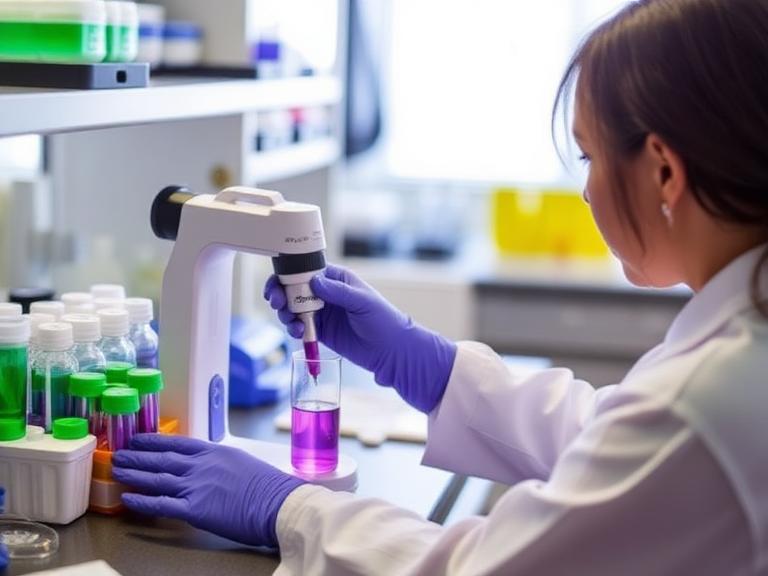
As a leading Contract Research Organization, KMD Bioscience views assay development through a commercial and regulatory lens. We recommend completely avoiding generic, off-the-shelf secondary reagents if you are conducting late-stage preclinical or clinical work. The cost savings are negligible compared to the cost of repeating an assay due to high background. If you are developing a novel therapeutic and require absolute precision in your ADA assays, utilize tailored antibody customization solutions to generate highly specific anti-idiotypic antibodies that target your drug exactly, minimizing interference from endogenous human immunoglobulins.
The Bottom Line
Precision Reagents Dictate Clinical Success
Implementing an anti human antibody test is a highly technical endeavor that requires a deep understanding of molecular interactions, cross-reactivity profiles, and assay kinetics. Whether you are running a routine diagnostic ELISA or a complex flow cytometry panel, the fidelity of your data rests entirely on the quality of your detection reagents. Do not compromise your research. Invest in rigorously validated, cross-adsorbed reagents from ISO-certified suppliers, and ensure your laboratory protocols prioritize specificity and reproducibility above all else.
Frequently Asked Questions
What is cross-adsorption in anti human antibodies?
Cross-adsorption is a purification process where the anti-human antibody is passed over a column containing serum proteins from other species (like mouse, rat, or bovine). Antibodies that bind to these non-target species are physically removed. This ensures that the final reagent will only bind to human immunoglobulins, drastically reducing background noise in multiplex assays.
Can I use an anti-human IgG test to detect human IgM?
No. An antibody specifically raised against the Heavy chain of human IgG (gamma chain specific) will not recognize human IgM (mu chain). However, if you use an anti-human secondary that targets the Light chains (Kappa/Lambda), it may detect both, as light chains are shared across isotypes. For precise assays, always use heavy-chain specific reagents.
What is an Anti-Drug Antibody (ADA) assay?
An ADA assay is a specific type of anti human antibody test used in clinical trials. It determines if a patient has produced their own antibodies against a therapeutic biologic drug (which is often a humanized antibody). High ADA levels can neutralize the drug's efficacy or cause severe adverse immune reactions.
Authoritative Industry References
U.S. Food and Drug Administration (FDA) - Official guidance for industry on Immunogenicity Testing of Therapeutic Protein Products, detailing requirements for ADA assay validation and anti-human detection.
National Center for Biotechnology Information (NCBI) - Peer-reviewed literature on the critical optimization of ELISA formats, cross-reactivity profiling, and the minimization of matrix effects in human serum assays.
Nature Scientific Reports - Academic analysis on the generation, characterization, and application of highly specific anti-idiotypic antibodies for pharmacokinetic monitoring in human patients.

- Protein Platform
- Protein Expression Services
- Protein Modification & Detection Services
- Protein Interaction Services
- Protein Purification Service
- Antibody Discovery Platform
- VHH Antibody Platform
- Phage Display Platform
- Antibody Humanization Platform
- Single B Cell Screening Platform
- Antibody Expression & Validation Platform
- Peptide Library Platform
- Custom Antibody Platform
- Innovative Drug Discovery Platform
- Product Center
- Proteins
- Antibodies
- Raw Materials Reagents
- Small Molecule Reagents
- Peptide Products
- Nanoparticle Products
- Contact Us
- Phone:400-621-6806
- Mobile:13110936064(WeC
- E-mail:[email protected]
- Address:Room 108, Building 10, No. 6 Hechang Road, Wuqing Development Zone, Tianjin City
-

WeChat
-

Service Account
-
 400-621-6806
 -
 3599163699
 -
 Monday to Friday 9:00-18:00
 -

-
 0
0
-
