


The 5 Best High-Throughput Screening Software Platforms in 2026
- 2026-05-11
- 320
Authored by Tianjin KMD Bioscience Co., Ltd. Since our establishment in 2022, we have been committed to becoming a leading provider of therapeutic antibody discovery and related support services. Focusing on technological research and development, we provide high-quality Contract Research Organization (CRO) services to scientists and research institutions worldwide. Recognized as a National Patent Pilot Unit with ISO9001:2015 Quality Management System certification, our team—composed of over 90% master's degree holders or higher—delivers unparalleled technical consultation, solution design, and project delivery.
In the modern biotechnology and pharmaceutical industries, discovering novel therapeutic candidates requires analyzing millions of biochemical interactions. Whether evaluating small molecule libraries or screening complex antibody panels, laboratories generate astronomical volumes of raw data daily. To ingest, normalize, and interpret this data efficiently, research organizations must deploy robust high-throughput screening software. From our experience managing intricate screening cascades within our Antibody Drug Discovery Platform, the choice of informatics software directly dictates the speed, accuracy, and overall success of identifying viable clinical leads.
As a professional CRO, we understand that standard laboratory spreadsheets fail entirely when confronted with 384-well or 1536-well plate data, complex kinetic curves, and multi-parametric phenotypic screens. Purpose-built high-throughput screening software provides the automated curve fitting, statistical quality control, and database integration required to transform raw instrument readouts into actionable scientific insights. In this authoritative industry guide, we will outline the crucial criteria for evaluating informatics tools and review the 5 best high-throughput screening software platforms available to researchers and pharmaceutical companies in 2026.
Table of Contents
1. The Role of High-Throughput Screening Software in Drug Discovery
2. Key Criteria for Selecting High-Throughput Screening Software
5. Integrating Informatics with KMD Bioscience Service Platforms
1. The Role of High-Throughput Screening Software in Drug Discovery
The generation of monoclonal antibodies and small molecule drugs has become highly commoditized, significantly increasing the demand for advanced analytical tools. When conducting high-throughput screening (HTS), instruments such as microplate readers, flow cytometers, and Surface Plasmon Resonance (SPR) biosensors generate continuous streams of data. Without sophisticated high-throughput screening software, analyzing binding kinetics, affinities, and epitope coverage becomes an insurmountable bottleneck.
We recommend utilizing high-throughput screening software to automate the calculation of critical pharmacological metrics, such as Half-Maximal Inhibitory Concentration (IC50) and Half-Maximal Effective Concentration (EC50). Furthermore, this software ensures strict quality control by calculating the Z-prime (Z') factor for every assay plate, instantly flagging systematic errors, edge effects, or dispensing anomalies. For organizations operating under stringent quality standards, such as our ISO9001:2015 certified laboratories, deploying reliable high-throughput screening software guarantees data integrity and reproducible project deliveries.
2. Key Criteria for Selecting High-Throughput Screening Software
Evaluating and adopting a new informatics platform is a major capital and operational investment. Based on our extensive technical service consultations with domestic and international biotechnology firms, we recommend assessing high-throughput screening software against the following core criteria:
Automated Data Processing: The software must seamlessly import raw data from diverse laboratory instruments without manual reformatting. It should automatically apply normalization algorithms (e.g., percent inhibition, robust Z-score) across thousands of plates.
Advanced Curve Fitting: The best high-throughput screening software will feature highly customizable mathematical models to fit complex dose-response curves, allowing researchers to accurately rank hits based on potency and efficacy.
Cross-Platform Integration: HTS data must not exist in a silo. The software must integrate fluidly with Electronic Lab Notebooks (ELN), Laboratory Information Management Systems (LIMS), and chemical/biological registration databases.
Scalability and Cloud Architecture: As screening libraries grow into the millions, the high-throughput screening software must leverage cloud computing to process massive queries without crashing, while maintaining secure access controls for intellectual property protection.
3. The 5 Best High-Throughput Screening Software Platforms
After evaluating industry trends and applying our rigorous CRO standards, we have identified the five premier solutions that dominate the market in 2026. Each high-throughput screening software offers unique strengths tailored to different research environments.
3.1 Genedata Screener
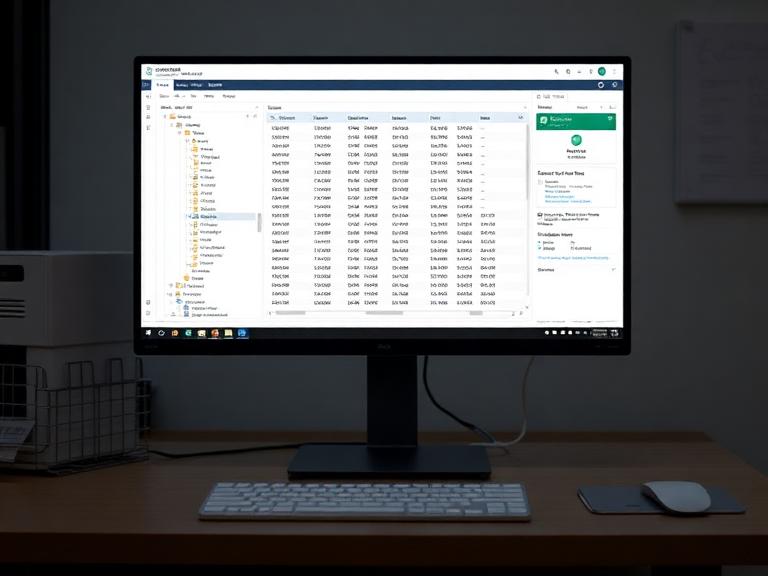
From our experience, Genedata Screener is universally recognized as the gold standard for high-throughput screening software in enterprise pharmaceutical companies and top-tier CROs. This platform is engineered specifically to capture, analyze, and manage screening data from virtually any instrument. Its ability to process complex, multi-dimensional data—such as time-series kinetics, high-content imaging, and Surface Plasmon Resonance (SPR) readouts—is unparalleled.
We recommend Genedata Screener for laboratories conducting vast, heterogeneous screening campaigns. The software excels in automating the entire data analysis workflow, from plate normalization to final IC50 reporting, significantly reducing manual review times. Its robust statistical algorithms ensure that false positives and false negatives are minimized, which is critical when advancing candidates into our Antibody Engineering and Optimization Platform.
3.2 Dotmatics
Dotmatics provides a highly integrated scientific informatics suite that bridges the gap between biology and chemistry. As a comprehensive high-throughput screening software, the Dotmatics platform (specifically its Screening and Assay Management modules) allows researchers to define complex assay protocols, capture plate data, and immediately link those biological results to specific chemical structures or biological sequences stored in their central registry.
For organizations requiring a unified data ecosystem, we recommend Dotmatics. It eliminates the need to transfer data between disparate software silos. While the initial setup and customization can require dedicated IT support, the resulting workflow automation provides incredible long-term value for identifying structure-activity relationships (SAR) during drug optimization.
3.3 CDD Vault (Collaborative Drug Discovery)
In the modern biotech landscape, research is highly collaborative, often spanning multiple institutions, academic labs, and CROs like KMD Bioscience. CDD Vault is a cloud-based high-throughput screening software designed precisely for this distributed model. It offers an exceptionally intuitive user interface, allowing biologists and chemists to upload, normalize, and visualize screening data with minimal training.
We recommend CDD Vault for biotech startups, mid-sized pharma, and academic groups that prioritize ease of use, secure external collaboration, and rapid deployment. Its built-in ELN and inventory management features make it a highly cost-effective, all-in-one high-throughput screening software solution that ensures intellectual property remains secure while sharing data across global teams.
3.4 PerkinElmer Signals (Revvity)
Following corporate restructuring into the Revvity ecosystem, the PerkinElmer Signals platform (including Signals Notebook and Signals Screening) continues to be a powerhouse in the informatics space. This high-throughput screening software leverages the powerful TIBCO Spotfire analytics engine to provide industry-leading data visualization capabilities. Researchers can interactively explore massive screening datasets, identifying hidden trends and outliers through dynamic scatter plots, heat maps, and trellis charts.
From our experience, human insight is just as critical as machine calculation. We recommend Signals for teams that rely heavily on visual data exploration to make critical decisions. It expertly handles high-content screening data and multiplexed assays, making it highly suitable for deep phenotypic profiling.
3.5 BIOVIA Pipeline Pilot
Developed by Dassault Systèmes, BIOVIA is an enterprise-grade high-throughput screening software provider heavily utilized by the world's largest chemical and pharmaceutical corporations. At the core of its screening capability is Pipeline Pilot, a visual programming environment that allows researchers to build highly customized, automated data processing workflows without writing complex code.
We recommend BIOVIA for laboratories that require strict regulatory compliance and highly specialized, non-standard assay analyses. While the licensing costs and implementation times are significant, BIOVIA's ability to integrate predictive machine learning models directly into the high-throughput screening software pipeline offers a massive competitive advantage for advanced in-silico drug design and virtual screening.
4. Summary Comparison Table
To assist your procurement and IT teams in selecting the optimal high-throughput screening software, we have summarized the core strengths of each platform.
| Software Platform | Primary Strength | Ideal User Profile | Cloud Capability |
|---|---|---|---|
| Genedata Screener | Unmatched processing of complex, multi-dimensional assay data (SPR, FACS). | Enterprise Pharma, Large CROs | Yes (Enterprise Cloud) |
| Dotmatics | Deep integration between biology screening and chemistry registration. | Mid-to-Large Biotech, Multi-disciplinary teams | Yes |
| CDD Vault | Highly intuitive interface and secure cross-institutional collaboration. | Biotech Startups, Academic Institutes, Collaborative CROs | Yes (Cloud-Native) |
| PerkinElmer Signals | Elite data visualization and interactive analytics via Spotfire engine. | High-Content Screening Labs, Phenotypic Discovery | Yes |
| BIOVIA Pipeline Pilot | Customizable visual programming workflows and strict regulatory compliance. | Global Enterprise Pharma, Materials Science | Yes (On-Premise options available) |
5. Integrating Informatics with KMD Bioscience Service Platforms
As a high-tech enterprise granted more than 30 patents, Tianjin KMD Bioscience Co., Ltd. relies on rigorous data analysis to deliver nearly a thousand technical service projects annually. Utilizing robust high-throughput screening software is essential to the function of our core service platforms. When clients utilize our Stable Cell Line Development and Microbial Strain Engineering Platform, we generate immense datasets to select the highest-expressing clones. Advanced software ensures we identify the optimal strain with absolute statistical confidence.
Similarly, within our Recombinant Antibody and Protein Expression and Purification Platform, screening software tracks binding kinetics and yield optimization parameters. For professionals looking to stay informed on how informatics drives these fields, we encourage you to review our antibody research news and updates, explore the latest protein research insights, follow our biotech industry trends blog, and read our antibody development news.
6. Frequently Asked Questions (FAQs)
What is the primary function of high-throughput screening software?
The primary function of high-throughput screening software is to automate the ingestion, normalization, and statistical analysis of massive datasets generated by laboratory instruments (such as plate readers). It calculates metrics like IC50, evaluates assay quality (Z-factor), and helps researchers identify active therapeutic compounds or antibodies from libraries containing thousands or millions of samples.
How does high-throughput screening software improve quality control?
High-throughput screening software improves quality control by automatically calculating statistical parameters for every assay plate. It identifies systematic errors, such as dispensing anomalies or edge effects, ensuring that only statistically valid data is used to make critical drug discovery decisions. This aligns with strict standards like ISO9001:2015.
Can high-throughput screening software manage both small molecules and biologics?
Yes. From our experience, top-tier high-throughput screening software platforms, such as Genedata Screener and Dotmatics, are designed to handle both small molecule chemical screens and complex biologics, including monoclonal antibodies, peptides, and recombinant proteins, accommodating the distinct data formats and kinetics associated with each.
7. Authoritative References
To ensure your laboratory adheres to the highest scientific and regulatory standards when implementing new informatics solutions, we recommend consulting the following authoritative sources:
National Center for Biotechnology Information (NCBI) - Peer-reviewed literature on assay development, Z-factor statistical validation, and HTS methodologies.
National Center for Advancing Translational Sciences (NCATS) - Guidelines and resources on high-throughput screening protocols and drug discovery innovation.
U.S. Food and Drug Administration (FDA) - Regulatory frameworks regarding electronic records, data integrity, and compliance (21 CFR Part 11) for pharmaceutical research.
- High-Throughput Screening Software

- Protein Platform
- Protein Expression Services
- Protein Modification & Detection Services
- Protein Interaction Services
- Protein Purification Service
- Antibody Discovery Platform
- VHH Antibody Platform
- Phage Display Platform
- Antibody Humanization Platform
- Single B Cell Screening Platform
- Antibody Expression & Validation Platform
- Peptide Library Platform
- Custom Antibody Platform
- Innovative Drug Discovery Platform
- Product Center
- Proteins
- Antibodies
- Raw Materials Reagents
- Small Molecule Reagents
- Peptide Products
- Nanoparticle Products
- Contact Us
- Phone:400-621-6806
- Mobile:13110936064(WeC
- E-mail:[email protected]
- Address:Room 108, Building 10, No. 6 Hechang Road, Wuqing Development Zone, Tianjin City
-

WeChat
-

Service Account
-
 400-621-6806
 -
 3599163699
 -
 Monday to Friday 9:00-18:00
 -

-
 0
0
-
