


The 7 Main Methods of Chemical Screening
- 2026-05-05
- 136
In the rapidly evolving landscape of drug discovery and molecular biology, identifying the precise molecular interactions that drive therapeutic efficacy is paramount. As a premier biotech research service provider, KMD Bioscience is dedicated to becoming a leading provider of therapeutic antibody discovery and related support services. Through our extensive work with scientists and research institutions worldwide, we have observed that understanding the primary methods of Chemical screening is essential for accelerating the pipeline from early target identification to lead optimization. Chemical screening serves as the critical bottleneck through which vast libraries of compounds are distilled down to viable drug candidates. By examining the diverse methods of Chemical screening, researchers can systematically interrogate biological pathways, elucidate complex disease mechanisms, and uncover novel therapeutic interventions.
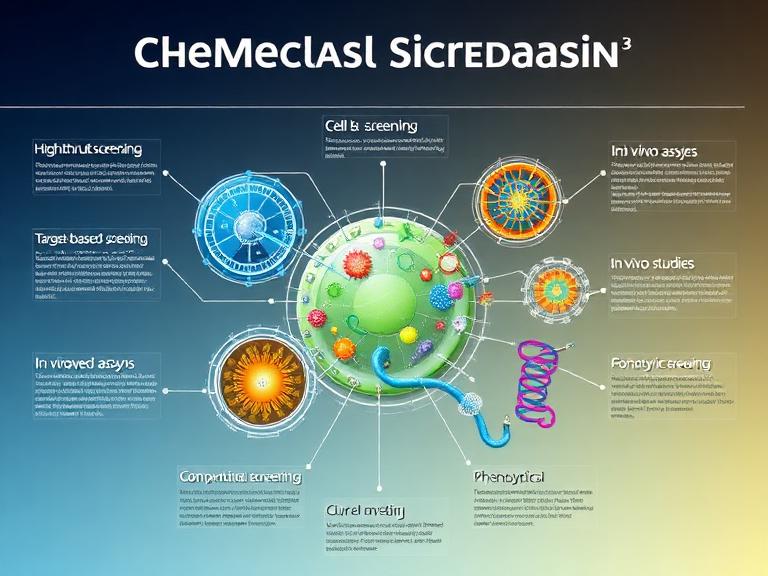
Table of Contents
1. The Role of Chemical Screening in Modern Biotechnology
Drug discovery is inherently an optimization problem of monumental proportions. With technology R&D at our core, we deliver high-quality CRO (Contract Research Organization) services that rely heavily on isolating high-affinity binding partners from diverse molecular pools. When assessing how a small molecule or a biologic interacts with a specific target, scientists must employ robust methods of Chemical screening. These methodologies dictate how efficiently a laboratory can process libraries containing thousands to millions of compounds, ensuring high reproducibility while minimizing false positives and false negatives.
From our experience navigating complex biopharmaceutical projects, relying on a single screening assay is rarely sufficient. A hybrid approach utilizing multiple methods of Chemical screening provides orthogonal validation, which is crucial for de-risking early-stage drug development. Whether a project requires finding a small molecule inhibitor for a novel kinase or identifying a payload for an Antibody-Drug Conjugate (ADC), mastering these screening frameworks is a baseline requirement for success in the life sciences sector.
2. The 7 Main Methods of Chemical Screening
The pharmaceutical and biotechnology industries currently rely on seven fundamental methods of Chemical screening to identify active compounds, known as "hits." Each of these methods offers distinct advantages depending on the target class, the required throughput, and the available structural data.
2.1. High-Throughput Screening (HTS)
High-Throughput Screening (HTS) is arguably the most widely recognized among the classical methods of Chemical screening. It involves the use of highly automated robotics, sensitive detectors, and specialized liquid handling systems to rapidly test hundreds of thousands of compounds against a specific biological target. HTS typically utilizes 384-well or 1536-well microplates to miniaturize assay volumes, dramatically reducing reagent costs and enabling massive scale.
From our experience, successful HTS campaigns depend entirely on assay robustness, usually quantified by the Z-factor. We recommend optimizing conditions such as enzyme concentration, incubation time, and buffer composition before launching a full-scale HTS run. Common readout technologies include fluorescence resonance energy transfer (FRET), luminescence, and absorbance. While HTS is highly efficient, it generally provides a binary "hit or no-hit" result and requires subsequent secondary assays to confirm the mechanism of action.
2.2. High-Content Screening (HCS)
High-Content Screening represents an evolution in the methods of Chemical screening, integrating automated fluorescence microscopy with sophisticated image analysis algorithms. Unlike standard HTS which relies on a single bulk measurement per well, HCS allows researchers to extract multiparametric data from individual cells. This means we can observe changes in cellular morphology, protein localization, apoptosis markers, and cell cycle status simultaneously.
For research institutions focused on oncology or neurodegeneration, HCS provides invaluable physiological context. We recommend utilizing High-Content Screening when the target biology is complex and simple biochemical assays fail to capture the nuance of the compound's effect. The data richness generated by HCS heavily informs structure-activity relationship (SAR) studies, although it requires significant computational power to process the vast amounts of imaging data.
2.3. Fragment-Based Drug Design (FBDD)
Fragment-Based Drug Design is a highly rational approach among the modern methods of Chemical screening. Instead of screening fully elaborated, complex molecules, FBDD screens libraries of very small compounds (fragments) with a molecular weight typically under 300 Daltons. These fragments have a higher probability of matching the binding pockets of a target protein, albeit with very weak binding affinities (often in the millimolar range).
Because the affinities are low, highly sensitive biophysical techniques such as Nuclear Magnetic Resonance (NMR) spectroscopy, X-ray crystallography, or Surface Plasmon Resonance (SPR) are required to detect binding. From our experience in protein-ligand interactions, we recommend FBDD for challenging targets, such as protein-protein interactions (PPIs), where traditional HTS often fails. Once a fragment is identified, structural biology guides its chemical elaboration into a highly potent and specific lead compound, a process known as fragment growing or linking.
2.4. Virtual Screening (In Silico)
With the exponential growth of computational power and artificial intelligence, Virtual Screening has become an indispensable first step among the primary methods of Chemical screening. This in silico approach uses computer algorithms to dock massive digital libraries of chemical compounds into the 3D structural model of a target protein. Virtual screening scores and ranks compounds based on predicted binding free energy and geometric complementarity.
Virtual screening can evaluate billions of compounds in a fraction of the time and cost required for physical screening. We recommend pairing Virtual Screening with empirical testing; the top-ranked computational hits must always be validated through in vitro biochemical or cellular assays. As structural biology advances—partially through breakthroughs like cryo-EM and AI-driven protein folding predictions—the accuracy of this computational screening method continues to climb, drastically narrowing down the physical testing funnel.
2.5. Phenotypic Screening
Phenotypic screening represents a return to the roots of pharmacology and remains one of the most productive methods of Chemical screening for discovering first-in-class drugs. Unlike target-based approaches, phenotypic screening does not require prior knowledge of the specific molecular target. Instead, researchers apply compounds to a cellular model, tissue, or even a whole organism (like zebrafish), and look for a desired observable change—the phenotype.
This method is highly advantageous because it operates in an unbiased, biologically relevant environment. If a compound successfully reverses a disease phenotype, it inherently proves cell permeability and physiological activity. From our experience, the primary challenge following a successful phenotypic screen is target deconvolution—the complex process of identifying the exact protein the compound binds to in order to exert its effect. Read more on how target identification integrates with larger research initiatives in our latest protein research insights.
2.6. Target-Based Biochemical Screening
Target-based screening is the cornerstone of modern reverse pharmacology. In contrast to phenotypic screening, this method begins with a clearly defined, isolated target protein whose role in a disease pathway has been thoroughly validated. The goal is straightforward: find a chemical entity that binds to and modulates the activity of this specific isolated protein.
As experts in protein expression and characterization, KMD Bioscience understands that the success of target-based methods of Chemical screening hinges entirely on the quality and folding of the recombinant target protein. Using technologies like Microscale Thermophoresis (MST) or time-resolved fluorescence energy transfer (TR-FRET), researchers can precisely measure enzyme inhibition or receptor antagonism. We recommend rigorous quality control of the target protein, as misfolded or aggregated proteins will lead to high background noise and failed screening campaigns.
2.7. DNA-Encoded Library (DEL) Screening
DNA-Encoded Library (DEL) screening is one of the most innovative breakthroughs in the methods of Chemical screening in recent decades. DEL technology involves synthesizing vast libraries of small molecules (often billions of compounds) where each chemical compound is covalently attached to a unique short sequence of DNA. This DNA acts as a molecular barcode.
The entire library is mixed in a single tube with the target protein attached to a solid matrix. Non-binding compounds are washed away, and the binders are eluted. The unique barcodes of the bound compounds are then amplified using PCR and read via Next-Generation Sequencing (NGS). This allows for the simultaneous screening of billions of molecules at a fraction of the cost of HTS. We recommend DEL screening for organizations looking to explore unprecedented chemical space without the heavy infrastructure requirements of automated HTS robotics.
3. Integrating Chemical Screening with Antibody Discovery
While KMD Bioscience is widely recognized for our core competency in large molecule development, the intersection between small molecule chemistry and biologics is increasingly vital. Antibody-Drug Conjugates (ADCs) and Proteolysis Targeting Chimeras (PROTACs) represent hybrid modalities that rely on combining highly specific antibodies with potent chemical effectors discovered through rigorous methods of Chemical screening.
From our experience, the most successful therapeutic pipelines do not treat small molecule discovery and biologics as isolated silos. Integrating advanced methods of Chemical screening with robust antibody discovery platforms enables the creation of targeted therapies with unprecedented precision.
By delivering high-quality CRO services to scientists worldwide, KMD Bioscience supports the critical interface between target validation, protein production, and downstream screening. Whether you are conducting a target-based screen requiring high-purity recombinant proteins or validating a phenotypic hit via specialized cellular assays, partnering with a comprehensive CRO streamlines the workflow. For more on how these modalities intersect, we encourage professionals to explore our antibody research news and updates.
4. Summary Table of Chemical Screening Methods
To assist researchers in selecting the most appropriate protocol for their specific drug discovery campaigns, we have compiled a comparative overview of the seven methods of Chemical screening discussed above.
| Method of Chemical Screening | Primary Mechanism | Key Advantages | Main Limitations |
|---|---|---|---|
| High-Throughput Screening (HTS) | Automated bulk testing of libraries using microplates | Massive scale, rapid processing | High cost of robotics, frequent false positives |
| High-Content Screening (HCS) | Automated cellular imaging and multiparametric analysis | Physiological relevance, rich morphological data | Computationally heavy data analysis, lower throughput than HTS |
| Fragment-Based Drug Design (FBDD) | Screening ultra-small compounds for weak target binding | High ligand efficiency, maps difficult binding pockets | Requires complex biophysics (NMR, X-ray), extensive chemistry to build leads |
| Virtual Screening (In Silico) | Computational docking of compound libraries into 3D structures | Extremely fast, highly cost-effective, accesses massive virtual libraries | Relies strictly on structure availability and accurate scoring algorithms |
| Phenotypic Screening | Testing compounds for desired observable cellular changes | Discovers novel targets, confirms cell permeability natively | Target deconvolution is highly complex and time-consuming |
| Target-Based Screening | Testing compounds against an isolated, validated protein | Direct measurement of affinity and kinetics, clear mechanism | Requires high-quality recombinant proteins, may fail in live cells |
| DNA-Encoded Library (DEL) | Screening billions of DNA-barcoded molecules in a single tube | Unmatched library size, low material cost per compound | DNA tag may interfere with binding, requires next-generation sequencing |
5. Frequently Asked Questions (FAQs)
How do I choose between phenotypic and target-based methods of Chemical screening?
We recommend target-based screening when the biology of the disease is well understood and a specific protein is known to drive the pathology. Phenotypic screening is preferable when the mechanism of the disease is complex or unknown, as it allows you to identify compounds that alter the disease state without predefined target bias. Both are crucial methods of Chemical screening, often used sequentially in a discovery pipeline.
Can Virtual Screening completely replace physical methods of Chemical screening?
No. While Virtual Screening is an incredibly powerful tool for library triage and hit enrichment, computational predictions always carry margins of error. From our experience, virtual models cannot perfectly simulate dynamic protein flexibility or complex solvent interactions. Therefore, in silico hits must always be validated using physical methods of Chemical screening, such as target-based biochemical assays.
Why is the purity of the target protein so important in these screening methods?
In all target-based methods of Chemical screening, the quality of the read-out is directly proportional to the quality of the input. Misfolded, degraded, or aggregated proteins will lead to non-specific binding, rendering the screening data useless. As a specialized CRO, KMD Bioscience ensures that all proteins used in assay development meet stringent purity and structural integrity standards. Stay updated on these protocols through our biotech industry trends blog.
What is the next frontier for methods of Chemical screening?
The integration of deep learning and artificial intelligence is fundamentally changing how we approach these methods. AI is improving the predictive accuracy of virtual screening, assisting in complex target deconvolution in phenotypic screens, and driving the rapid design of DNA-encoded libraries. We anticipate closer alignment between these screening tools and biotherapeutics, a topic frequently covered in our antibody development news.
6. References
National Institutes of Health (NIH). (2024). Overview of High-Throughput Screening in Drug Discovery. Retrieved from nih.gov
National Center for Biotechnology Information. (2023). Advances in DNA-Encoded Library Technologies. Retrieved from PubMed Central
Food and Drug Administration (FDA). (2025). Guidance on Cellular Assays and Phenotypic Screening Validations. Retrieved from fda.gov
By understanding and leveraging these seven critical methods of Chemical screening, research teams can dramatically reduce the attrition rates of early-stage drug candidates. KMD Bioscience remains committed to providing the essential biological reagents, assay development expertise, and high-quality CRO services that empower these discoveries worldwide.

- Protein Platform
- Protein Expression Services
- Protein Modification & Detection Services
- Protein Interaction Services
- Protein Purification Service
- Antibody Discovery Platform
- VHH Antibody Platform
- Phage Display Platform
- Antibody Humanization Platform
- Single B Cell Screening Platform
- Antibody Expression & Validation Platform
- Peptide Library Platform
- Custom Antibody Platform
- Innovative Drug Discovery Platform
- Product Center
- Proteins
- Antibodies
- Raw Materials Reagents
- Small Molecule Reagents
- Peptide Products
- Nanoparticle Products
- Contact Us
- Phone:400-621-6806
- Mobile:13110936064(WeC
- E-mail:[email protected]
- Address:Room 108, Building 10, No. 6 Hechang Road, Wuqing Development Zone, Tianjin City
-

WeChat
-

Service Account
-
 400-621-6806
 -
 3599163699
 -
 Monday to Friday 9:00-18:00
 -

-
 0
0
-
