


CD25 - A Novel Direction in Tumor Immunotherapy
- 2026-05-14
- 313
1.What is CD25?
The functional interleukin-2 receptor (IL-2R) consists of three subunits: the α-chain (IL-2Rα, also known as CD25), the β-chain (IL-2Rβ, also known as CD122), and the γ-chain (IL-2Rγ, also known as CD132). All three subunits are indispensable for the function and binding affinity of IL-2R.Resting T cells, B cells, and monocytes rarely express CD25. However, CD25 is highly expressed in regulatory T cells (Tregs) but not in effector T cells (Teffs). Eliminating or reversing the immunosuppressive function of Tregs is a key strategy in cancer immunotherapy. As a potential target for Treg depletion, CD25 has attracted significant attention for its role in both the tumor microenvironment (TME) and the peripheral microenvironment.
2.Nanobodies and Their Advantages
Heavy-chain-only antibodies (HcAbs) have been identified in camelids. Unlike conventional IgG, these antibodies lack the CH1 domain and do not have a light chain. The specificity of HcAbs relies solely on the heavy variable domain, known as VHH. Recombinant production of VHH yields fragments called single-domain antibodies (sdAbs) or nanobodies. Due to their high sequence identity with human VH (family 3), nanobodies are expected to exhibit low immunogenicity in human therapies and can be easily humanized. The first therapeutic nanobody, caplacizumab, has been approved by the European Medicines Agency (EMA).The CDR3 loop of nanobodies is typically longer than that of conventional VH, enabling binding to unconventional epitopes such as protein crevices. Furthermore, structural studies have revealed that nanobodies often possess greater paratope diversity, involving amino acids within both the variable loops and framework regions. Nanobodies also demonstrate excellent solubility and stability under varying pH and temperature conditions.
Additionally, nanobodies can be engineered into larger molecules with multivalency or multispecificity and can be readily conjugated to imaging agents or drug delivery systems.
3.CD25 Signaling Pathway and Its Expression in Tumors
When IL-2 specifically binds to the extracellular domain of IL-2Rα, it induces the heterodimerization of IL-2Rβ and IL-2Rγ. IL-2 undergoes slight conformational changes, facilitating the formation of the IL-2Rα/β/γ and IL-2 tetrameric complex. This triggers the JAK/STAT5, PI3K/Akt/mTOR, and MAPK signaling pathways, all of which play crucial roles in cell growth, survival, differentiation, and immune responses.
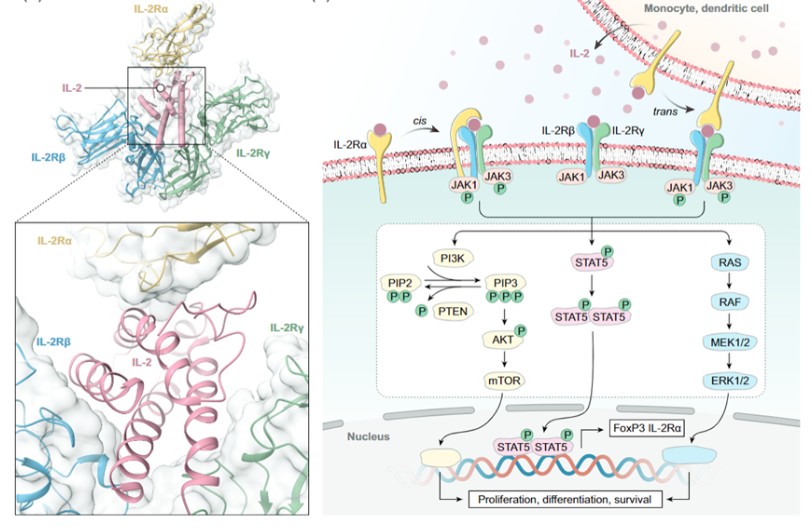
Fig. 1: Crystal structure of the quaternary IL-2-IL-2R complex and IL-2R-mediated signaling pathway
CD25 is a marker of regulatory T cells (Tregs) and is highly expressed in the majority of Tregs. A high ratio of Teff/Treg cells can lead to autoimmune diseases due to excessive activation of Teff cells or excessive depletion of Tregs. Conversely, a low Teff/Treg ratio results in weakened antitumor immunity. CD25 is expressed at low levels in most solid tumors. However, it is highly expressed in Tregs, which frequently infiltrate solid tumors.
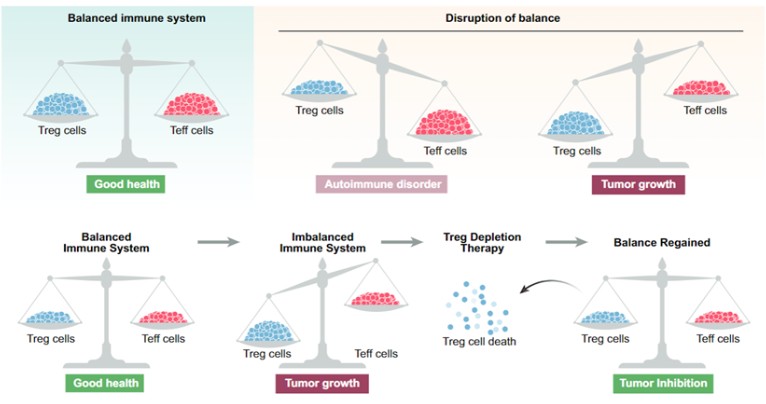
Fig. 2: The relationship between Tregs and tumors
4.Nanobodies as Delivery Vehicles for Cytokines
IL-2 is a cytokine involved in immune cell activation and proliferation and was the first immunotherapy approved for cancer as early as 1992. However, although cytokines exhibit potent antitumor efficacy, their major limitation is off-target activation and associated toxicity. The primary strategies to circumvent this limitation include genetic transfer for localized cytokine production or antibody-directed cytokines (immunocytokines). Both IL-2-nanobody and IFN-γ-nanobody synergize with anti-TAA antibodies to suppress tumor growth. Immune infiltration analysis revealed an increased CD8+ count, though the IL-2 construct also promoted Treg proliferation.
5.CD25-Targeting Drugs
Currently, drugs targeting CD25 for cancer treatment have been developed based on two approaches. First, recombinant IL-2, mutant IL-2, receptor-biased IL-2, and anti-CD25 monoclonal antibodies can act as immunomodulators to regulate IL-2 signaling, thereby influencing tumor initiation and progression. Second, cytotoxic agents can be delivered to CD25+ cells to kill tumors. These CD25+ cells may either be tumor cells or immune cells that regulate tumor cell survival.
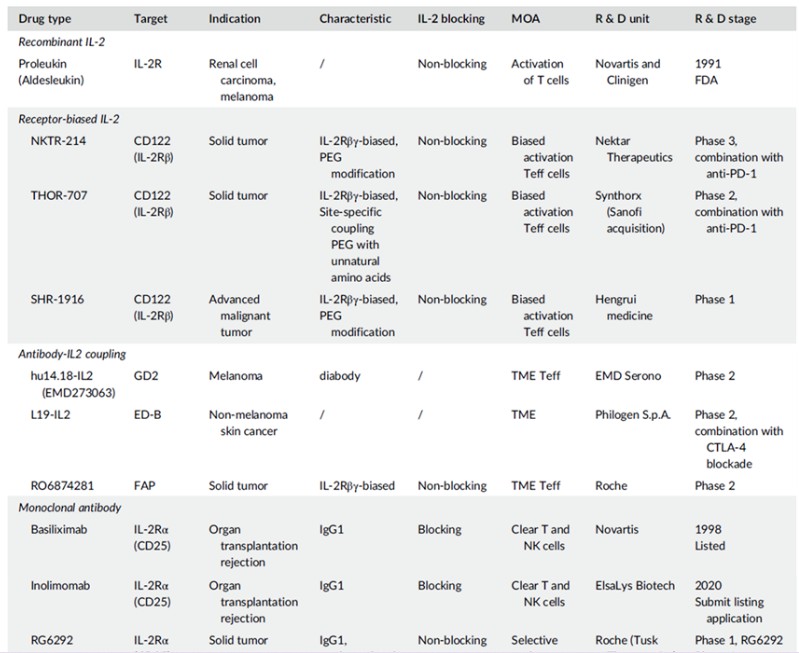
Figure 3: IL-2R-targeting biologics currently on the market or in clinical trials
6.KMD Bioscience Provides High-Quality Alpaca Nanobody Discovery Services
Compared to traditional monoclonal antibodies, nanobody production offers significant advantages. The process involves obtaining antibody genes through alpaca immunization and acquiring target antibody sequences via phage display. It primarily consists of four key steps: alpaca immunization, phage library construction, antibody library screening, and antibody expression with functional validation.
6.1 Advantages of Nanobody Production
Compared to traditional monoclonal antibodies, nanobody production offers significant advantages. The process can be summarized as obtaining antibody genes by immunizing alpacas and acquiring target antibody sequences through phage display. It mainly consists of four steps: alpaca immunization, phage library construction, antibody library screening, and antibody expression with functional validation.
6.1.1 Alpaca Immunization
Select age-appropriate alpacas → Prepare antigens → Immunize alpacas → Collect blood to measure antibody titers → Isolate PBMCs
6.1.2 Phage Library Construction
RNA extraction → cDNA synthesis via reverse transcription → PCR amplification → Vector ligation and electroporation → Establishment of bacterial library/phage library
6.1.3 Antibody Library Screening
Common screening methods include solid-phase screening, magnetic bead screening, and cell screening. KMD Bioscience can provide customized screening systems based on client requirements.
6.1.4 Antibody Expression and Functional Validation
Construct mammalian expression vectors for production → Purification via nickel column → Affinity measurement
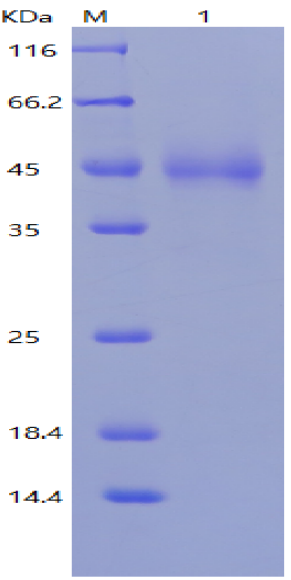
Figure 4: Expression results of Fc-VHH nanobody.
CD25 has emerged as a potential therapeutic target with promising preclinical/clinical applications in immunotherapy. Extensive research has been conducted on various types of drugs targeting CD25. Due to their small molecular weight, nanobodies can more effectively penetrate tumor tissues. Serving as cytokine delivery vehicles, IL-2-nanobody conjugates demonstrate synergistic effects in suppressing tumor growth, offering novel strategies for cancer treatment.

- Protein Platform
- Protein Expression Services
- Protein Modification & Detection Services
- Protein Interaction Services
- Protein Purification Service
- Antibody Discovery Platform
- VHH Antibody Platform
- Phage Display Platform
- Antibody Humanization Platform
- Single B Cell Screening Platform
- Antibody Expression & Validation Platform
- Peptide Library Platform
- Custom Antibody Platform
- Innovative Drug Discovery Platform
- Product Center
- Proteins
- Antibodies
- Raw Materials Reagents
- Small Molecule Reagents
- Peptide Products
- Nanoparticle Products
- Contact Us
- Phone:400-621-6806
- Mobile:13110936064(WeC
- E-mail:[email protected]
- Address:Room 108, Building 10, No. 6 Hechang Road, Wuqing Development Zone, Tianjin City
-

WeChat
-

Service Account
-
 400-621-6806
 -
 3599163699
 -
 Monday to Friday 9:00-18:00
 -

-
 0
0
-
