


Advantages of Nanobodies in Small Molecule Detection
- 2026-05-14
- 443
Nanobodies, as a new member of the antibody industry, serve as a valuable complement to conventional antibodies and demonstrate tremendous application potential across various biotechnology fields including diagnostics and therapeutics. Owing to their favorable properties, nanobodies have already been adopted as alternatives to traditional antibodies in certain applications. Notably, nanobodies possess unique advantages in small molecule detection.
Introduction to Nanobodies:
Human immunoglobulin IgG consists of two heavy chains and two light chains, whereas camelid antibodies contain only heavy chains, hence termed heavy-chain antibodies (hcAbs). Llama heavy-chain antibodies are naturally occurring special antibodies composed solely of two heavy chains, containing only one variable domain (VHH, Variable Domain of Heavy Chain of Heavy-chain antibody), one hinge region, and two constant domains (CH2 and CH3). These heavy-chain antibodies bind antigens through their variable domain (VHH), which can stably exist independently in vitro. This isolated variable domain is referred to as a nanobody or single-domain antibody (sdAb).
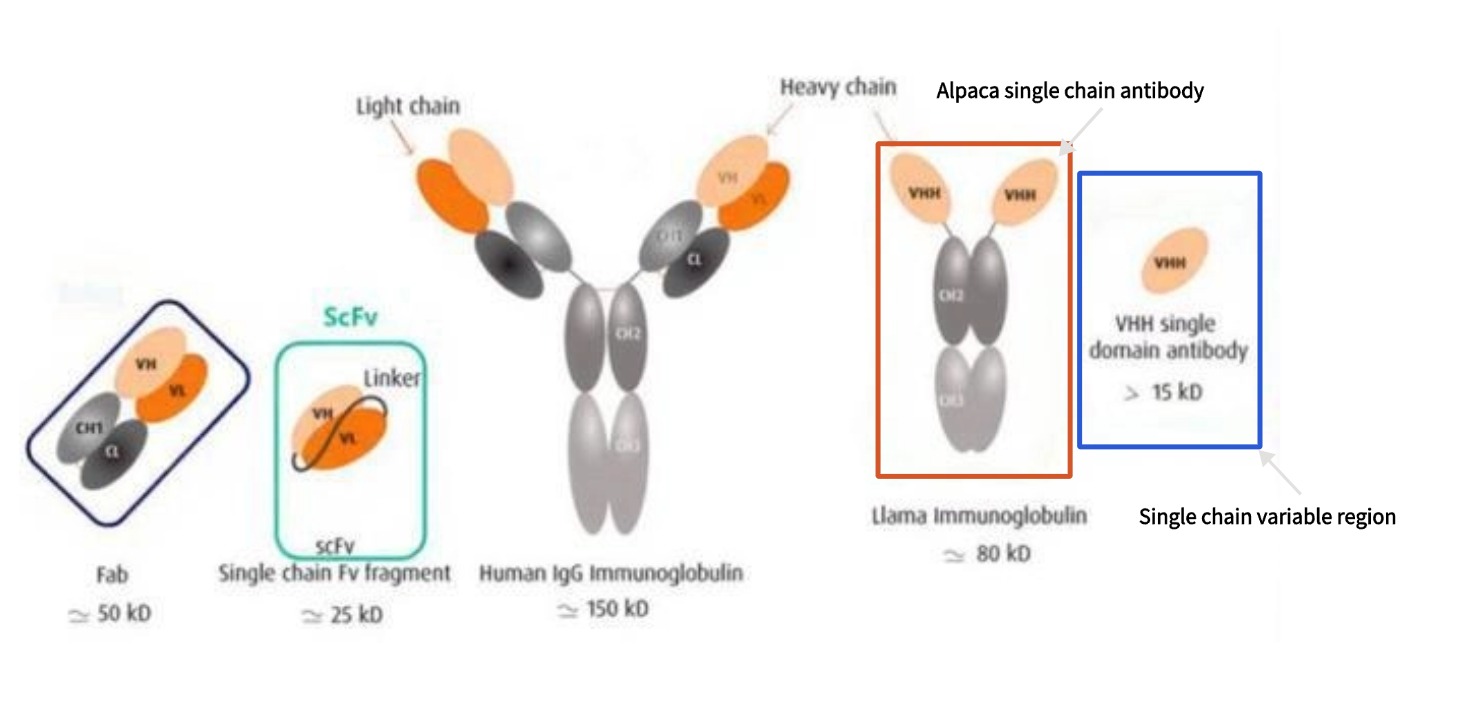
Fig. 1. Schematic structure of a nanobody.
Nanobodies are a novel type of antibody with an oval shape and small size, having a relative molecular mass only 1/10 that of monoclonal antibodies. Due to their compact size and lower molecular weight, they exhibit greater structural flexibility, enabling them to recognize certain epitopes that traditional antibodies cannot. They can cross the blood-brain barrier to reach the brain and, compared to conventional antibodies, demonstrate higher specificity, stronger affinity, and superior antigen-binding capabilities. Additionally, they exhibit better tolerance to extreme temperature or pH conditions.Nanobodies have potential applications in the treatment of diseases such as cancer, disease detection, and vaccine development.
Small Molecule Detection Applications:
The production of antibodies for detecting low-molecular-weight compounds (<1000 da="">
In the field of food safety, nanobodies have been utilized for the determination of mycotoxins and successfully employed in detecting these compounds in crops. Strong tolerance to temperature and organic solvents is particularly important in this field, making nanobodies suitable for detecting contaminants in diverse environments.
Advantages of Nanobodies in Small Molecule Detection:
Compared to traditional monoclonal and polyclonal antibodies, nanobodies offer the following main advantages:
1.Greater Stability: Nanobodies possess inherent thermal stability due to their unique structure, significantly extending the shelf life of reagents.
2.High Tolerance to Organic Solvents: For lipophilic small molecules, organic solvents such as methanol, DMSO, and acetic acid are often required during extraction. However, these solvents can cause matrix interference in detection. While dilution can mitigate matrix interference, it demands antibodies with higher sensitivity. In contrast, nanobodies exhibit superior resistance to organic solvents compared to traditional monoclonal antibodies. For example, the nanobodies Nb26 and Nb28, targeting the lipophilic mycotoxin Aflatoxin B1 (AFB1), retain antibody activity even in 70% methanol.
3.Ease of Genetic Manipulation: Nanobodies can be engineered into bivalent or multivalent forms to enhance affinity. Additionally, various tags can be incorporated to facilitate diverse detection applications. For instance, direct fusion with alkaline phosphatase (AP) can shorten detection time and reduce batch-to-batch variability caused by chemical conjugation.
Thanks to their small size, high solubility, and excellent chemical stability, nanobodies can overcome matrix interference and enhance the analytical performance of conventional antibodies. They are well-suited for bioengineering research and hold great promise in the development of diagnostic applications for small molecules.
KMD Bioscience possesses extensive experience and an advanced technology platform in nanobody production, offering comprehensive services ranging from design, screening, and production to functional validation. Our services include the design of target-specific nanobodies, high-throughput screening using technologies such as phage display or yeast two-hybrid systems to obtain nanobodies with high specificity and affinity. Subsequently, we employ optimized expression systems for efficient nanobody production, combined with state-of-the-art purification techniques, ensuring high purity and excellent bioactivity.Finally, we provide functional validation services, including but not limited to ELISA, flow cytometry, and immunofluorescence assays, to guarantee that the produced nanobodies fully meet clients' application needs in research, diagnostics, and therapeutics.Backed by a professional technical team and cutting-edge production facilities, KMD Bioscience is committed to delivering high-quality nanobody production services to global clients, accelerating scientific research and drug development, and driving innovation and progress in the life sciences field.
- Nanobodies
- small molecule detection

- Protein Platform
- Protein Expression Services
- Protein Modification & Detection Services
- Protein Interaction Services
- Protein Purification Service
- Antibody Discovery Platform
- VHH Antibody Platform
- Phage Display Platform
- Antibody Humanization Platform
- Single B Cell Screening Platform
- Antibody Expression & Validation Platform
- Peptide Library Platform
- Custom Antibody Platform
- Innovative Drug Discovery Platform
- Product Center
- Proteins
- Antibodies
- Raw Materials Reagents
- Small Molecule Reagents
- Peptide Products
- Nanoparticle Products
- Contact Us
- Phone:400-621-6806
- Mobile:13110936064(WeC
- E-mail:[email protected]
- Address:Room 108, Building 10, No. 6 Hechang Road, Wuqing Development Zone, Tianjin City
-

WeChat
-

Service Account
-
 400-621-6806
 -
 3599163699
 -
 Monday to Friday 9:00-18:00
 -

-
 0
0
-
