


Introduction to the Construction of CRISPR/Cas9 Knockout Cell Lines
- 2026-07-10
- 372
1. What Are CRISPR/Cas9 Knockout Cell Lines?
CRISPR/Cas9 (Clustered Regularly Interspaced Short Palindromic Repeats) is an emerging technology in which sgRNA guides the Cas nuclease to perform specific DNA modifications on target genes. The CRISPR/Cas9 system is widely found in the genomes of prokaryotes and represents an adaptive immune defense mechanism evolved by bacteria and archaea to counter constant attacks from viruses and plasmids.
2. Principles of CRISPR/Cas9 Knockout Cell Lines
The CRISPR/Cas system is divided into two major categories; the most typical and widely used CRISPR system is the Type II CRISPR/Cas9 system. In the Type II CRISPR system, CRISPR RNA (crRNA) anneals with trans-activating crRNA (tracrRNA) via base pairing to form a complex capable of specifically recognizing genomic sequences. This complex then binds to the PAM (5’-NGG-3’) sequence and penetrates the DNA, guiding the Cas9 nuclease to cleave the target fragment and create double-strand breaks (DSBs).
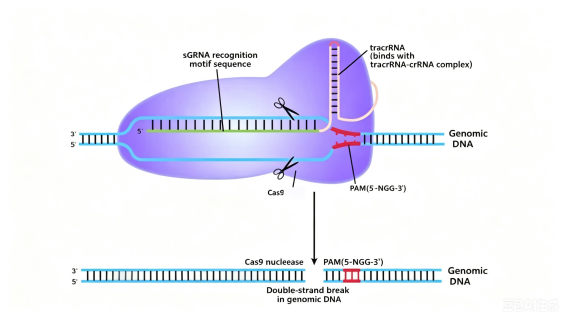
Figure 1: Schematic Diagram of CRISPR/Cas9
3. Advantages of Our CRISPR/Cas9 Knockout Cell Line Service
(1) Offers advantages such as high editing efficiency, simple construction, and ease of use
(3) Enables effective and flexible gene knockout at a low cost
(4) Is broadly applicable, with no restrictions on genes, cells, or species
(5) Allows simultaneous gene targeting at multiple sites
(6) Is highly versatile, enabling a variety of genetic modifications including knockout, insertion, inhibition, and activation
4. Major Applications of CRISPR/Cas9 Knockout Cell Lines
CRISPR/Cas9 knockout cell lines are widely used in many fields. They hold tremendous potential, particularly in the treatment of genetic diseases, the screening and detection of disease-associated genes, cancer therapy, the transformation of plants and animals, and the prevention of pathogenic microorganisms, and can effectively improve the quality of human life.
5. Challenges Facing CRISPR/Cas9 Knockout Cell Lines
Although the previous discussion indicates that CRISPR/Cas9 is a promising method, this editing system still has many limitations and risks. Due to its recent discovery and use in humans, its application in clinical trials remains challenging. Immunogenicity, off-target effects, polymorphisms, delivery technology, and ethical issues are the primary limitations and difficulties.
6. KMD Bioscience Provides Clients with a Comprehensive Overview of the CRISPR/Cas9 Knockout Cell Line Workflow
KMD Bioscience is able to provide clients with CRISPR/Cas9 knockout cell lines. The main workflow is as follows: gRNA design, cell transfection, single-cell cloning, single-clone screening, single-clone sequencing analysis, and delivery of reports.
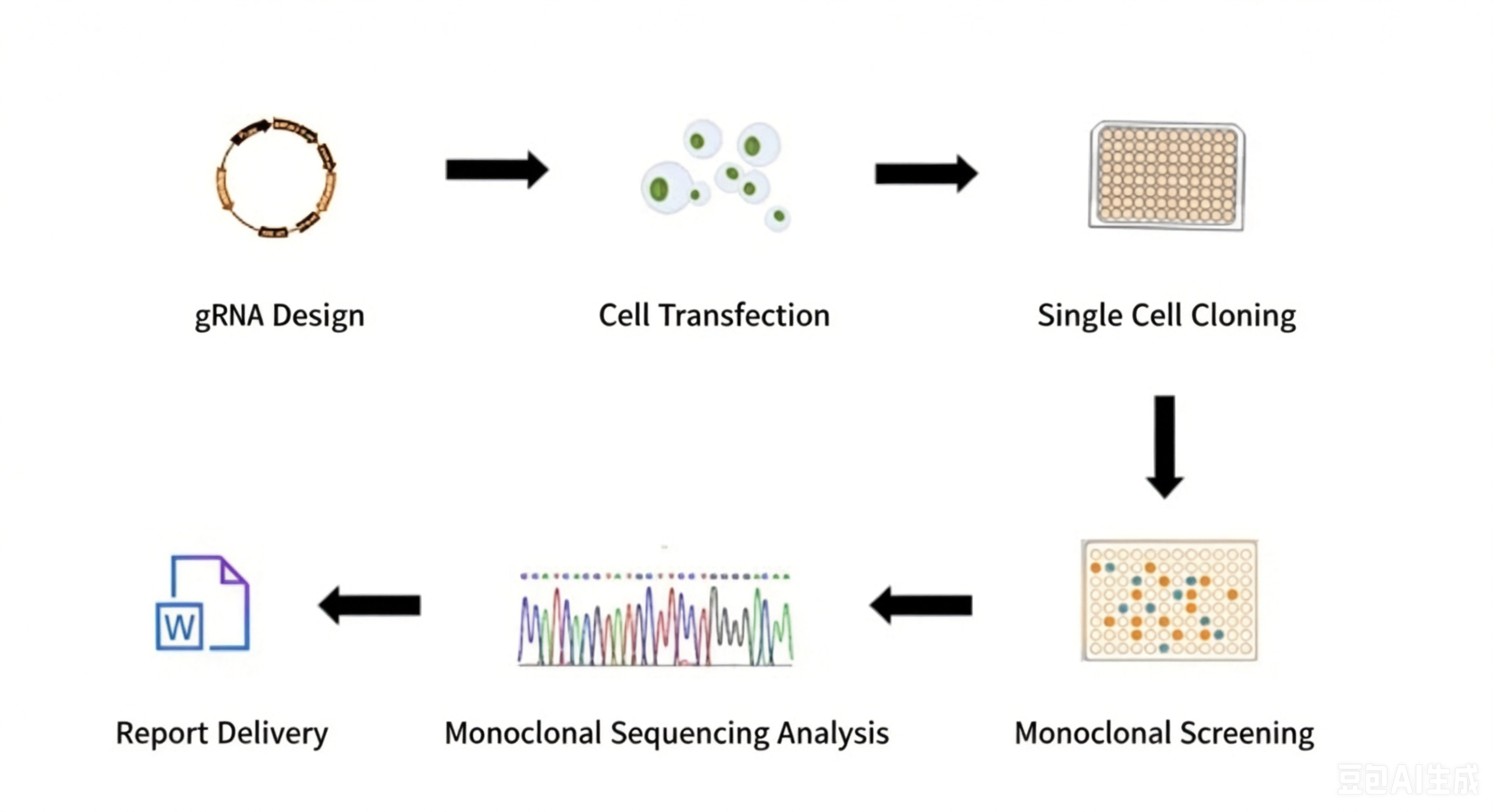
Figure 2: CRISPR/Cas9 Flowchart
6.1 gRNA Design
6.1.1 Digest the vector plasmid pAC1371 with BbsI at 37°C.
6.1.2 Recover the target vector according to the instructions for the DNA fragment recovery kit.
6.1.3 Primer annealing.
Perform annealing in a PCR cycler using the following parameters:
Reagents | Usage |
Oligo 1(100μM) | 1 |
Oligo 2(100μM) | 1 |
ddH2O | 7.5 |
T4 PNK(NEB) | 0.5 |
Total | 10 |
37°C for 30 minutes, 95°C for 5 minutes, then cool the temperature to 25°C at a rate of 5°C per minute.
6.1.4 Ligase reaction.
6.1.5 Plasmid transformation
(1) Thaw DH5α competent cells on ice. After thawing, add 5–10 µL of the ligation product to the competent cells and gently mix with a pipette tip (do not shake vigorously). Incubate at room temperature for 25–30 minutes.
(2) Place the competent cells on ice, then transfer them to a water bath preheated to 42°C and heat for 90 seconds.
(3) Add 500 µL of liquid medium preheated to room temperature, then place the tube in a 37°C shaking incubator to allow the cells to recover and grow for 1 hour.
(4) Centrifuge at 3,000 rpm for 3 minutes. Discard part of the supernatant, then use a sterile glass rod cooled to room temperature to spread the cells onto plates. Incubate overnight at 37°C.
(5) Randomly select individually growing colonies and culture them in liquid medium for 6–8 hours, then perform colony PCR.
(6) Perform agarose gel electrophoresis on the PCR products. Visualize the results using a gel imager, and select positive colonies to send to a sequencing company for sequencing and identification.
(7) Based on the sequencing results, select target colonies for subculturing, extract plasmids, and prepare them for subsequent laboratory use.
6.2 Cell Transfection
6.2.1 Preparation: Prepare cells by passaging a specific number of well-growing HEK293T cells.
6.2.2 Replace half of the medium in well-growing HEK293T cells at an appropriate density with fresh medium.
6.2.3 Mix 1 µg of pMD2.G, 1 µg of paspax2, 2 µg of the transgene, and 0.126 mL of Optimem; let stand at room temperature for 5 minutes. Separately, mix 8 µL of Lipofectamine 2000 with 0.125 mL of Optimem; let stand at room temperature for 5 minutes.
6.2.4 After 5 minutes, gently combine the two mixtures from step 5.2.3 and let stand at room temperature for 15 minutes.
6.3 Single-Cell Cloning
Seed 100 cells in a large dish or a 96-well plate. Freeze the remaining cells. When cell clusters resembling colonies become visible to the naked eye, digest them from the large dish or 96-well plate and transfer them to a 12- or 24-well plate for further expansion. Take care not to contaminate other cell clusters, and avoid selecting overly dense clusters.
6.4 Monoclonal Screening
The use of specific screening markers, such as fluorescent proteins or antibiotic resistance genes, can also aid in identifying clones in which the target gene has been successfully knocked out.
6.5 Sequencing Analysis of Single Clones
Use polymerase chain reaction (PCR) to amplify the DNA sequence of the target gene, and detect mutations or deletions via gel electrophoresis or sequencing techniques.
6.6 Delivery
Delivery of a comprehensive report documenting the entire experimental process.
With the continuous advancement of CRISPR/Cas9 technology, it has been widely applied across various species. KMD Bioscience offers high-quality CRISPR/Cas9 knockout cell line generation services, as well as a variety of gene editing services including gene knockout, overexpression, silencing, and site-specific integration. Our services are characterized by high efficiency, system stability, low off-target effects, excellent cost-effectiveness, and full transparency.
- CRISPR/Cas9 system
- gene knockout
- overexpression

- Protein Platform
- Protein Expression Services
- Protein Modification & Detection Services
- Protein Interaction Services
- Protein Purification Service
- Antibody Discovery Platform
- VHH Antibody Platform
- Phage Display Platform
- Antibody Humanization Platform
- Single B Cell Screening Platform
- Antibody Expression & Validation Platform
- Peptide Library Platform
- Custom Antibody Platform
- Innovative Drug Discovery Platform
- Product Center
- Proteins
- Antibodies
- Raw Materials Reagents
- Small Molecule Reagents
- Peptide Products
- Nanoparticle Products
- Contact Us
- Phone:400-621-6806
- Mobile:13110936064(WeC
- E-mail:[email protected]
- Address:Room 108, Building 10, No. 6 Hechang Road, Wuqing Development Zone, Tianjin City
-

WeChat
-

Service Account
-
 400-621-6806
 -
 3599163699
 -
 Monday to Friday 9:00-18:00
 -

-
 0
0
-
