


Recombinant protein expression systems
- 2026-07-10
- 390
Choosing the appropriate protein expression system is crucial for the successful expression of recombinant proteins. The following factors need to be considered, including: the properties of the target protein, its intended use, protein yield, and cost. Additionally, many protein expression projects carry risks, especially for large proteins, membrane proteins, nuclear proteins, and proteins with extensive post-translational modifications.
Currently, KMD Bioscience can provide several expression systems for customers to choose from, each with different characteristics and applications. Here, we will introduce four expression systems commonly used in research and industrial settings, namely: bacterial expression systems, yeast expression systems, baculovirus expression systems, and mammalian expression systems.
1. Prokaryotic Expression System
The Escherichia coli expression system is the most prominent and well-established expression system. The primary method involves introducing the target DNA fragment into host cells, followed by protein expression induction using IPTG.
As the earliest developed and most widely used classical expression system, the E. coli expression system offers numerous advantages, including a well-understood genetic background, rapid cultivation, low cost, high expression yield, ease of product purification, good stability, strong resistance to contamination, and broad applicability. However, prokaryotic expression systems also have several drawbacks: for instance, not all proteins are soluble. Misfolded proteins in the cytoplasm can form insoluble aggregates known as inclusion bodies, complicating protein purification. Additionally, prokaryotic expression systems lack comprehensive post-translational modification processes, resulting in lower biological activity of the expressed products.
Therefore, other more complex systems are being developed, which may enable the expression of proteins previously deemed impossible to produce in E. coli, such as glycosylated proteins.
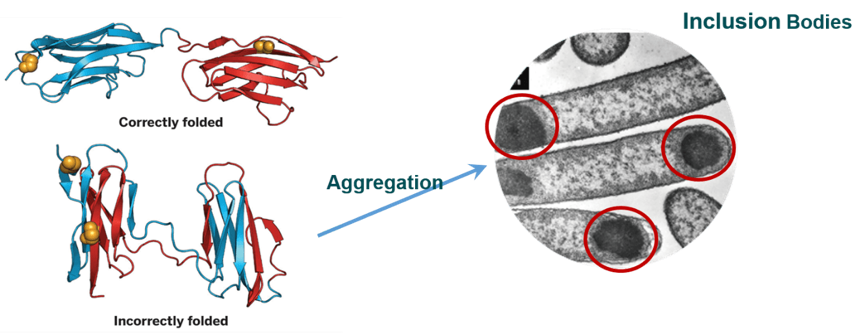
Figure 1. Misfolding and Inclusion Bodies
2. Yeast Expression System
As a novel exogenous protein expression system, the yeast expression system combines the advantages of both prokaryotic and eukaryotic expression systems and has been widely applied in the field of genetic engineering. In 1996, the complete genome sequence of Saccharomyces cerevisiae was sequenced. Saccharomyces cerevisiae has been used in brewing and baking industries for thousands of years and is recognized as a GRAS (Generally Recognized as Safe) organism that does not produce toxins, which is also approved by the FDA. Therefore, products expressed by the yeast system do not require extensive host safety testing. However, compared to newer yeast systems, the Saccharomyces cerevisiae expression system is unsuitable for high-density cultivation, lacks strong and tightly regulated promoters, and exhibits low secretion efficiency. In particular, many target proteins with molecular weights greater than 30 kDa are rarely secreted.
Later, the fission yeast and methanol yeast expression systems were developed. Among them, the methanol yeast expression system is the most widely used yeast expression system. Currently, the main methanol yeasts include Hansenula polymorpha, Candida boidinii, and Pichia pastoris. Pichia pastoris is the most popular tool strain. Most methanol yeasts contain the methanol yeast oxidase gene-1 (AOX1), where exogenous genes are expressed under the control of the AOX1 promoter (PAOX1). PAOX1 is a strong promoter when glucose or glycerol is used as the carbon source, but the expression of AOX1 in methanol yeast is usually repressed. When methanol is the sole carbon source, PAOX1 can be activated, thereby increasing the expression of the AOX1 gene under its regulation. Using methanol yeast to express exogenous proteins typically yields protein production at the gram level. Compared to Saccharomyces cerevisiae, its translation process is closer to that of mammalian cells and does not result in hyperglycosylation.
3. Insect Baculovirus Expression System
The insect expression system is a widely used eukaryotic expression system capable of translating and modifying foreign proteins in a manner similar to higher eukaryotes. The expression of foreign proteins in insect cell systems using recombinant baculoviruses is a popular expression method. Protein yields can reach 1–500 mg/L, but they are limited and influenced by various factors such as culture medium, oxygen supply, and logarithmic growth conditions.
Baculoviruses are the largest known group of insect viruses and are the earliest, most extensively studied, and most applicable insect viruses. The baculovirus genome is a single closed circular double-stranded DNA molecule, ranging in size from 80 to 160 kb. It can replicate and transcribe in the nuclei of insect cells. During DNA replication, the viral genome is assembled into rod-shaped nucleocapsids, offering great flexibility to accommodate large foreign DNA insertions. This makes baculoviruses an ideal vector for expressing large DNA fragments.
The main advantages of the baculovirus expression system include:
* Recombinant proteins possess complete biological functions such as proper folding and disulfide bond formation;
* Post-translational modifications;
* High expression levels, up to 50% of total cellular protein;
* Capability to accommodate large insertions of foreign proteins;
* Ability to express multiple genes simultaneously.
The primary disadvantage is that exogenous protein expression is controlled by viral promoters which act relatively slowly, causing cells to begin dying from viral infection before optimal protein production is achieved.
The insect expression system is commonly used for membrane protein production, although glycosylation patterns may differ from those found in vertebrates. Generally, it is considered safer to use than mammalian viral systems because of its limited host range - without modification, it cannot infect vertebrate cells.
4. Mammalian Expression System
Recombinant proteins expressed in mammalian cells are typically produced using plasmid transfection or viral vector infection. Establishing stable plasmid-transfected cell lines can take several weeks or even months, whereas viral vectors can rapidly infect cells within a few days.
Based on the temporal and spatial differences in protein expression, expression systems can be categorized into transient, stable, and inducible expression systems. A transient expression system refers to a scenario where host cells gradually lose expression as they divide in the absence of selective pressure and exogenous vectors, resulting in short-lived target protein expression. The advantages of transient expression systems include short experimental cycles and simplicity. A stable expression system means that the vector DNA is stably replicated and expressed in host cells over an extended period. Due to the need for selection resistance and pressure steps, stable expression is relatively time-consuming and labor-intensive. An inducible expression system refers to the initiation of target gene expression under the induction of exogenous small molecules. The use of heterologous promoters, enhancers, and amplifiable genetic markers can increase protein yield.
Mammalian Cell Protein Expression System
This system offers unique advantages in protein initiation signals, processing, secretion, and glycosylation, making it highly suitable for expressing intact macromolecules.
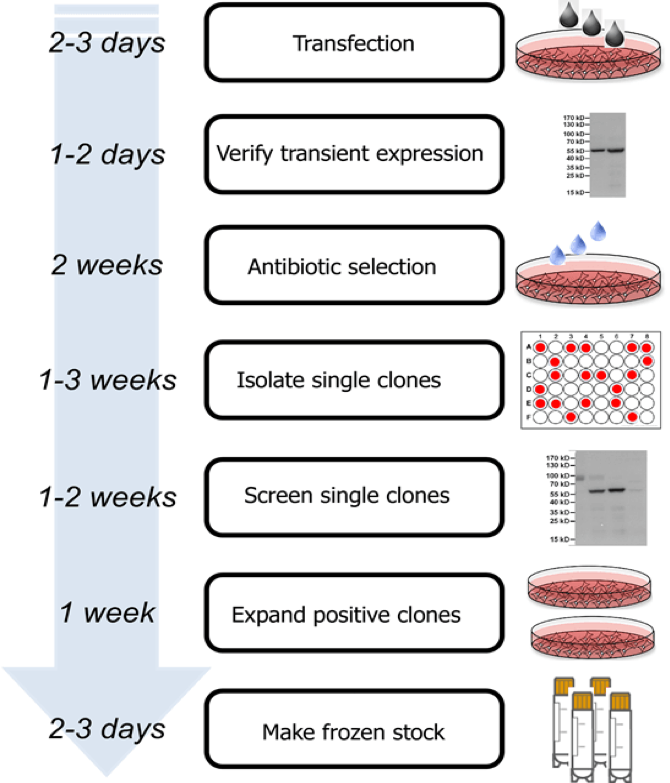
Figure 2. Stable Cell Line Development
Heterologous proteins produced by mammalian cells are closer to natural proteins and exhibit significantly higher activity than those generated by prokaryotic expression systems or eukaryotic systems such as yeast and insect cells. However, this technology has drawbacks, including complex and demanding processes, low yields, and occasional viral contamination.
All these expression systems have advantages and disadvantages. The E. coli and yeast expression systems offer high expression levels and low costs, but their modification systems differ from those of insect and mammalian cells. While mammalian cells produce proteins similar to natural ones, their disadvantages include low expression levels and complicated procedures. The biological activity and immunogenicity of recombinant proteins produced by different expression systems may vary due to differences in post-translational modifications.Therefore, when selecting an expression system, multiple factors must be considered, such as whether the target protein is toxic, whether biological activity is required, whether glycosylation is necessary, as well as cost-effectiveness, yield, purification, and safety.
Table 1. A Brief Comparison of the Four Expression Systems
| Prokaryotic expression system | Yeast expression system | Insect expression system | Mammalian expression system | |
| Speed | ★★★★ | ★★★ | ★★ | ★ |
| Output | ★★★ | ★★★★ | ★★ | ★ |
| PTM (Relative to people) | ★ | ★★ | ★★★ | ★★★★ |
| Price | ★ | ★★ | ★★★★ | ★★★ |
| Application | Prokaryotic proteins, simple eukaryotic proteins | Secretory proteins, disulfide-bonded proteins, glycosylated protein | Membrane proteins, high molecular weight proteins, viral vaccines, signaling proteins, cytokines, kinases | Complex eukaryotic proteins, proteins requiring precise PTMs (post-translational modifications) |
- Protein Expression
- Bacterial Expression System
- Yeast Expression System
- Baculovirus Expression System

- Protein Platform
- Protein Expression Services
- Protein Modification & Detection Services
- Protein Interaction Services
- Protein Purification Service
- Antibody Discovery Platform
- VHH Antibody Platform
- Phage Display Platform
- Antibody Humanization Platform
- Single B Cell Screening Platform
- Antibody Expression & Validation Platform
- Peptide Library Platform
- Custom Antibody Platform
- Innovative Drug Discovery Platform
- Product Center
- Proteins
- Antibodies
- Raw Materials Reagents
- Small Molecule Reagents
- Peptide Products
- Nanoparticle Products
- Contact Us
- Phone:400-621-6806
- Mobile:13110936064(WeC
- E-mail:[email protected]
- Address:Room 108, Building 10, No. 6 Hechang Road, Wuqing Development Zone, Tianjin City
-

WeChat
-

Service Account
-
 400-621-6806
 -
 3599163699
 -
 Monday to Friday 9:00-18:00
 -

-
 0
0
-
