


Immunoprecipitation (Co-IP)
- 2026-02-11
- 279
I. Introduction to Co-IP (Co-immunoprecipitation)
Co-immunoprecipitation (Co-IP) is a technique that utilizes antibodies to specifically recognize and bind antigens in samples, capturing target proteins. The process then employs agarose-crosslinked protein A/G-specific binding antibodies to precipitate the antigen-antibody complexes [1]. Following elution and gel electrophoresis separation, techniques such as Western blot are used for quantitative or qualitative analysis of specific antigen levels in samples. By employing non-denaturing conditions, the method preserves the physiological interactions between proteins and peptides, as well as between proteins within intact cells. This approach verifies the natural binding of two proteins in cellular environments, aligning with in vivo conditions and yielding highly reliable results. Co-IP is widely used to study interactions between proteins and peptides, as well as between proteins.
II. Principle of Immunoprecipitation (Co-IP)
After cell lysis, the interactions between proteins are preserved. Antibodies against protein X bind to Protein A/G on agarose magnetic beads. When the antibody immunoprecipitates the antigen protein X, the target protein Y bound to antigen protein X is also precipitated, forming an "immunocomplex of target protein + antigen protein + antibody + Protein A/G." The target protein can then be detected by Western blot or mass spectrometry [2].
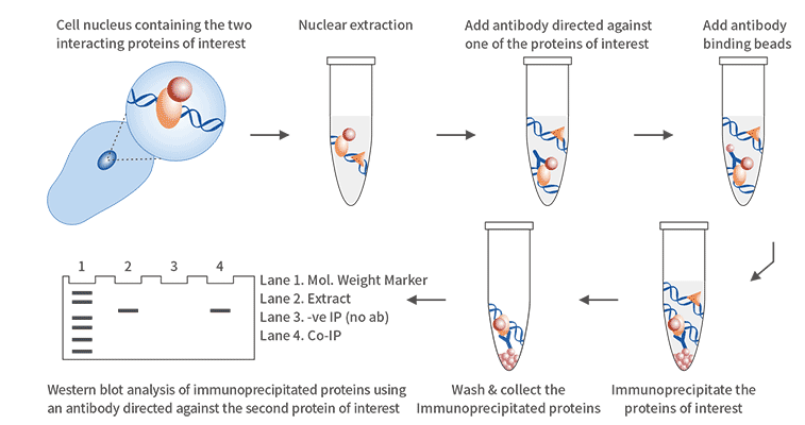
Figure 1: Schematic diagram of immunoprecipitation (Co-IP)
III. Advantages of Immunoprecipitation (Co-IP)
(1) Proteins exist in their natural post-translational modified state [3].
(2) Western blotting can be used to detect interactions between two known proteins, and mass spectrometry can be employed to identify unknown proteins interacting with known proteins [4].
(3) Multiple samples can be selected for experimentation to verify the natural binding of the two proteins within cells, which aligns with in vivo conditions and ensures high reliability of the test results.
(4) Immunoprecipitation can detect protein-protein interactions under natural conditions [5], and this method minimizes artificial interference.
IV. Precautions for Immunoprecipitation (Co-IP)
(1) Specific IP-level bait protein antibodies are required (priority);
(2) If no specific antibodies are available, consider constructing recombinant tag plasmids for Co-IP experiments using tag antibodies;
(3) Sample category risk: Overexpression cell samples <cell samples <animal tissue samples <plant samples (typically transgenic plants, where tag antibodies also struggle to achieve specific enrichment);
(4) CoIP-MS risk: Due to the presence of high-abundance specific antibodies, mass spectrometry may not reliably identify the bait protein.
(5) The use of monoclonal antibodies can prevent contamination and ensure that the protein precipitation is due to the action of the antibodies.
(6) The antibody must possess specificity to ensure binding with the antigen in the sample.
reference documentation
[1] Whiterhiannon R , Ponsfordamy H , Weekesmichael P ,et al.Co-immuno-precipitation (co-IP) and yeast-2-hybrid (Y2H) analyses of TsUBE2L3.[J].PLOS Pathogens, 2016.DOI:10.1371/journal.ppat.1005977.g004.
[2] Tiwari K K .Study of nitric oxide synthase-interacting proteins by mammalian Co-IP and yeast two hybrid assay[J].Dissertations & Theses - Gradworks, 2012.
[3] Steinbrenner J , Eldridge M ,Daniel F. A. Tomé,et al.A Simple and Fast Protocol for the Protein Complex Immunoprecipitation (Co-IP) of Effector: Host Protein Complexes[J].Methods in Molecular Biology, 2014, 1127:195.DOI:10.1007/978-1-62703-986-4_16.
[4] Hui,Hu,Tao,et al.Screening and identification of proteins interacting with IL-24 by the yeast two-hybrid screen, Co-IP, and FRET assays.[J].Anti-cancer drugs, 2016.DOI:10.1097/CAD.0000000000000343.
[5] Steinbrenner J , Eldridge M ,Daniel F. A. Tomé,et al.A Simple and Fast Protocol for the Protein Complex Immunoprecipitation (Co-IP) of Effector: Host Protein Complexes[J].Methods in Molecular Biology, 2014, 1127:195.DOI:10.1007/978-1-62703-986-4_16.

- Protein Platform
- Protein Expression Services
- Protein Modification & Detection Services
- Protein Interaction Services
- Protein Purification Service
- Antibody Discovery Platform
- VHH Antibody Platform
- Phage Display Platform
- Antibody Humanization Platform
- Single B Cell Screening Platform
- Antibody Expression & Validation Platform
- Peptide Library Platform
- Custom Antibody Platform
- Innovative Drug Discovery Platform
- Product Center
- Proteins
- Antibodies
- Raw Materials Reagents
- Small Molecule Reagents
- Peptide Products
- Nanoparticle Products
- Contact Us
- Phone:400-621-6806
- Mobile:13110936064(WeC
- E-mail:[email protected]
- Address:Room 108, Building 10, No. 6 Hechang Road, Wuqing Development Zone, Tianjin City
-

WeChat
-

Service Account
-
 400-621-6806
 -
 3599163699
 -
 Monday to Friday 9:00-18:00
 -

-
 0
0
-
