


Overview of Peptide Library Technology: Technical Principles, Experimental Procedures, and Applications
- 2026-02-05
- 389
I. Background
Proteins and peptides play critical roles in biological processes, ranging from cellular signaling to precise immune responses, and are involved in nearly all essential biological activities. In life science research and drug development, Peptide Library Technology enables rapid and efficient screening of functionally active peptides from vast sequence libraries. This article introduces Peptide Library Technology with respect to its technical principles, experimental workflow, and application prospects.
II. Technical Principle
1. Chemical Synthesis
Chemically Synthesized Peptide Libraries are constructed using solid-phase peptide synthesis (SPPS), with the Split-Mix synthesis method as the classical strategy. The process includes:
(i) Split: The solid-phase support is divided into equal portions, each coupled with a different protected amino acid. Each resin portion is then bound to a single type of amino acid.
(ii) Mix: All reacted resins are pooled and thoroughly washed.
(iii) Cycle: The mixed resin is again divided into equal portions for the next round of amino acid coupling.
Through multiple cycles of splitting, mixing, and re-splitting, a mixture of all possible peptide sequences is generated. The total number of sequences equals the number of amino acid types raised to the power of n, with each individual resin bead bearing a one-of-a-kind peptide sequence. Such libraries offer enormous diversity, allow incorporation of non-natural amino acids, and greatly expand chemical space.
2. Biological Display
Biological Display techniques directly link peptide phenotype to genotype. Phage Display is the most commonly used method[1].
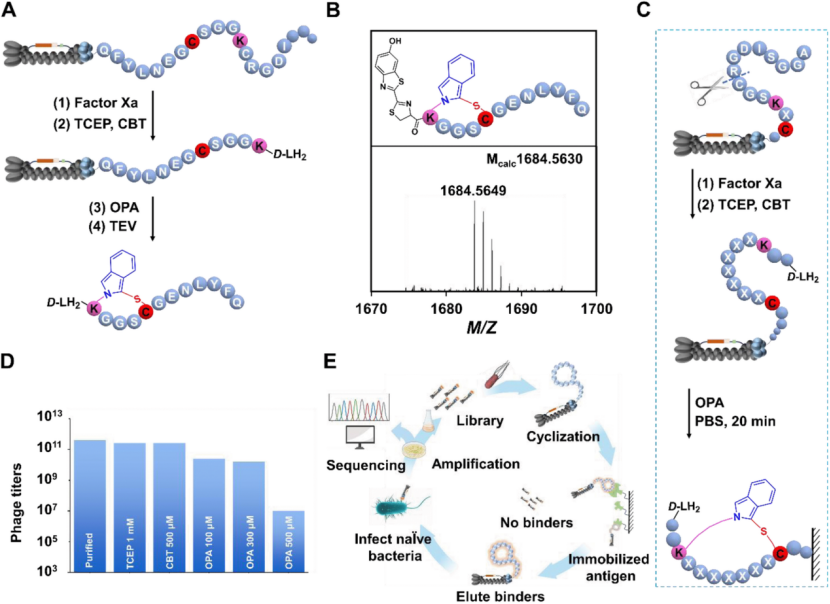
Fig 1 Construction of a cyclic peptide phage library[1]
(https://doi.org/10.1039/d4sc04026k)
An exogenous peptide gene is inserted into a specific capsid protein gene of the phage. After assembly of the recombinant phage, the exogenous peptide is displayed on the viral surface, while the DNA encoding the peptide remains protected inside. This creates a phage library. When the library, containing numerous displayed peptides, is incubated with an immobilized target molecule, phages displaying peptides that bind specifically to the target are selected.
After elution, the selected phages are amplified by infecting E. coli, resulting in an enriched sub-library of high-affinity binders. Repeating this process over several rounds enables efficient screening of a few peptide sequences with high specificity and affinity from an immense initial library. These are then sequenced and analyzed.
III. Experimental Workflow
Using Phage Display Peptide Library Screening as an example[2], a standard screening process includes the following key steps:
1. Library Design and Construction
An initial library is designed according to research objectives. Completely Random Libraries are used to explore novel binding peptides, while Site-Directed Mutagenesis Libraries are employed to optimize known active peptides. Oligonucleotides are synthesized and cloned into a phage display vector. The vector is then transformed into bacteria and amplified to produce a high-titer primary phage peptide library.
2. Affinity Screening (Biopanning)
(i) Immobilization of Target: Purified target proteins are coated onto ELISA plate wells or immobilized on magnetic beads via a biotin-streptavidin system.
(ii) Blocking: Non-specific binding sites are blocked using bovine serum albumin (BSA) or skim milk to reduce background noise.
(iii) Incubation and Proteins and peptides play critical roles in biological processes, ranging from cellular signaling to precise immune responses, and are involved in nearly all essential biological activities. In life science research and drug development, Peptide Library Technology enables rapid and efficient screening of functionally active peptides from vast sequence libraries. This article introduces Peptide Library Technology with Binding: The phage peptide library is incubated with the immobilized target, allowing phages displaying specific binding peptides to attach.
(iv) Washing: Multiple washes with buffers containing mild detergents are performed under increasing stringency to remove unbound or weakly bound phages.
(v) Elution: Specifically bound phages are eluted using an acidic buffer or through competition with soluble target molecules. If a protease cleavage site is designed between the peptide and the carrier, enzymatic elution may also be used.
3. Amplification and Enrichment
Eluted phages are used to infect E. coli for amplification. The amplified phage pool is used in the next round of screening. Typically, 3–4 rounds of affinity screening are performed, with increasing wash stringency in each round to enrich high-affinity and high-specificity clones.
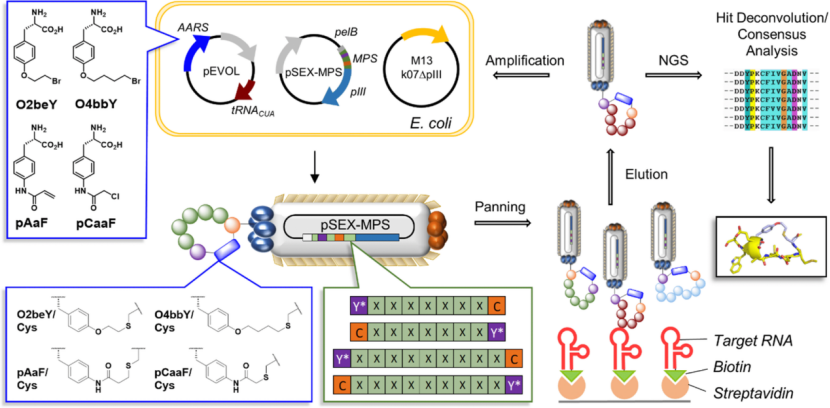
Fig 2 Screening of a peptide phage library[2]
(https://doi.org/10.1039/d4sc03207a)
4. Analysis and Identification
(i) Clone Picking: The final screening output is plated, and individual phage plaques are picked and expanded.
(ii) Preliminary Screening: Assess the binding activity of each clone to the target molecule via phage ELISA[3];
(iii) DNA Sequencing: Perform sequencing on ELISA-positive clones to determine the peptide sequences and conduct subsequent analysis.
(iv) Synthesis and Validation: Candidate peptides are chemically synthesized based on sequencing results. Their affinity, specificity, and biological functions are further evaluated to confirm activity.
IV. Application Prospects
Peptide Library Technology holds broad application potential, including: Innovative drug discovery: rapid identification of peptide compounds targeting disease-related proteins; Antibody epitope mapping: precise and efficient localization of antibody-binding sites on antigens; Targeted delivery systems: screening of peptides that specifically bind certain cell types using whole cells or tissues as targets; Novel diagnostic tools: high-affinity, high-specificity peptides serve as recognition elements in biosensors, protein arrays, or in vitro diagnostic reagents.
V. Conclusion and Outlook
Peptide Library Technology, with its powerful high-throughput screening capacity, significantly accelerates functional peptide discovery. KMD Bioscience provides comprehensive phage display peptide library services utilizing our proprietary Peptide Library Platform. Our end-to-end solutions—from chemical synthesis and biological display to library construction and affinity screening—help scientists tackle complex research challenges and drive their exploratory projects forward.
Reference
[1] Jacob A. I., Rachel B., Andrew S. H., et al. Cyclic peptides targeting the SARS-CoV-2 programmed ribosomal frameshifting RNA from a multiplexed phage display library[J]. Chemical Science, Volume 15, Issue 46, 2024, Pages 19520-19533. https://doi.org/10.1039/d4sc04026k
[2] Hua X., Liwen B., Xindan Z., et al. A facile strategy for the construction of a phage display cyclic peptide library for the selection of functional macrocycles[J]. Chemical Science, Volume 15, Issue 30, 2024, Pages 11847-11855. https://doi.org/10.1039/d4sc03207a
[3] Ruchir M., Ya G., Pavan K., et al. Streamlined phage display library protocols for identification of insect gut binding peptides highlight peptide specificity[J]. Current Research in Insect Science, Volume 1, 2021, 100012. https://doi.org/10.1016/j.cris.2021.100012
- Peptide Library
- Peptide Library Screening
- Phage Peptide Library
- Random Peptide Library

- Protein Platform
- Protein Expression Services
- Protein Modification & Detection Services
- Protein Interaction Services
- Protein Purification Service
- Antibody Discovery Platform
- VHH Antibody Platform
- Phage Display Platform
- Antibody Humanization Platform
- Single B Cell Screening Platform
- Antibody Expression & Validation Platform
- Peptide Library Platform
- Custom Antibody Platform
- Innovative Drug Discovery Platform
- Product Center
- Proteins
- Antibodies
- Raw Materials Reagents
- Small Molecule Reagents
- Peptide Products
- Nanoparticle Products
- Contact Us
- Phone:400-621-6806
- Mobile:13110936064(WeC
- E-mail:[email protected]
- Address:Room 108, Building 10, No. 6 Hechang Road, Wuqing Development Zone, Tianjin City
-

WeChat
-

Service Account
-
 400-621-6806
 -
 3599163699
 -
 Monday to Friday 9:00-18:00
 -

-
 0
0
-
