


Finding an antibody against a rare target is not simply a matter of screening more samples. The real challenge is recovering the right antibody-producing cell, preserving its native heavy- and light-chain pairing, and confirming that the resulting antibody performs the required function. When conventional discovery methods struggle to deliver suitable candidates, Single B Cell Screening for Rare Antibody Targets can provide a more direct route from an individual B cell to a recombinant monoclonal antibody candidate.
This approach is particularly relevant to biotechnology companies, pharmaceutical research teams, diagnostic developers, and organizations investigating difficult antigens. However, it is not automatically the best method for every antibody project. Target biology, donor or animal immunization strategy, screening assay quality, and downstream validation all influence the outcome.
Single B cell screening is worth considering when the objective is to identify rare antigen-specific B cells, recover naturally paired antibody heavy- and light-chain sequences, or prioritize candidates with a defined binding or functional profile. It can reduce dependence on large combinatorial libraries and help preserve antibody-pairing information, but success still depends on the availability of suitable B cells, the sensitivity and specificity of screening assays, and rigorous downstream validation.
Direct Answer: When Is Single B Cell Screening the Right Choice?
Choose single B cell screening when you need to identify antibody candidates from individual B cells rather than rely exclusively on a constructed antibody library. It is especially compelling when the target is rare, the desired epitope is difficult to reproduce in a screening format, or retaining the original heavy- and light-chain pairing is important to antibody performance.
For example, a research team pursuing an antibody against a low-abundance viral antigen may need to distinguish genuine target-specific cells from a much larger background of unrelated B cells. A team developing antibodies against a conformational epitope may also benefit from screening cells whose antibodies recognize the target in a biologically relevant form.
Our recommendation is to evaluate single B cell screening against the actual project bottleneck. If the primary problem is discovering rare native antibody sequences, it can be an excellent fit. If the main problem is poor antigen quality, an unsuitable functional assay, or a target that is not sufficiently immunogenic, changing the discovery platform alone will not solve it.
What Is Single B Cell Screening?
Single B cell screening is an antibody discovery approach in which individual B cells are isolated, screened, or selected according to defined criteria, and their antibody genes are recovered for recombinant expression and characterization. Depending on the project, the starting material may come from immunized animals, human samples, or other appropriate biological sources.
Each conventional antibody-producing B cell generally carries a rearranged immunoglobulin heavy-chain variable-region sequence and a light-chain variable-region sequence. Recovering these sequences from the same cell helps preserve the natural pairing associated with that cell's antibody. The corresponding genes can then be cloned or synthesized for recombinant expression.
Methods vary by platform. Fluorescence-activated cell sorting (FACS), antigen-specific labeling, single-cell molecular methods, and downstream sequence analysis may be used in different combinations. Some workflows prioritize antigen-binding B cells, while others begin with antibody-secreting cells or use functional screening strategies. The most suitable workflow depends on the biological source and the intended antibody characteristics.
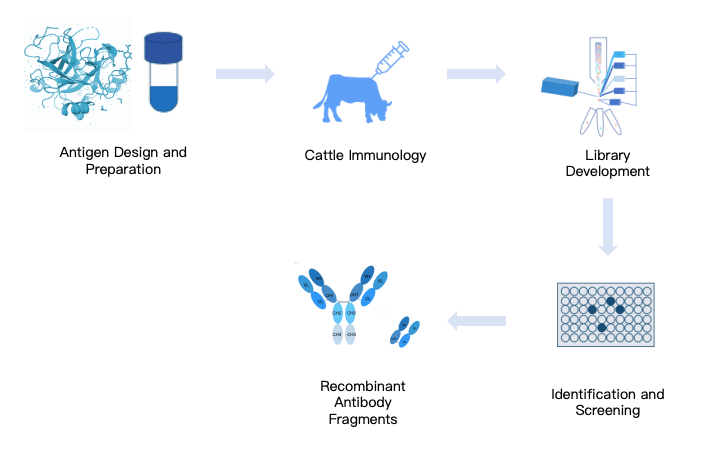
After sequence recovery, candidate antibodies are commonly expressed in a suitable host system and evaluated for expression, purity, binding, specificity, and relevant biological activity. The result is not a guaranteed finished therapeutic or diagnostic antibody. It is a set of candidates that must pass the project's downstream validation criteria.
1. Target Rare Antigen-Specific B Cells More Directly
One of the strongest reasons to use single B cell screening is the opportunity to recover antibody sequences from a small population of antigen-specific B cells. In complex biological samples, most B cells will not recognize the antigen of interest. When the desired specificity is uncommon, bulk analysis can dilute useful signals among a large number of irrelevant sequences.
Single-cell isolation changes the unit of investigation. Instead of treating the sample as one mixed population, the workflow can examine individual cells selected through a defined antigen-binding or cell-selection strategy. This makes it possible to link an individual cell to its recovered antibody sequence and subsequent recombinant candidate.
When this advantage matters most
The antigen is weakly immunogenic or produces a limited measurable response.
The project requires antibodies against a specific domain or antigen variant.
The desired binding population is expected to be small relative to the overall B-cell population.
The research team wants traceability from selected cells to candidate antibody sequences.
There is an important qualification: single-cell methods do not automatically make a rare cell detectable. The sample must contain relevant B cells, the selection markers must represent the desired target, and the screening process must be sensitive enough to identify them. If the starting population contains no useful cells, even a sophisticated screening platform cannot recover an antibody that is not present.
2. Preserve Natural Heavy- and Light-Chain Pairing
Antibody recognition depends on the combined structure of the heavy and light chains. Their variable regions work together to form the antigen-binding site, so a useful heavy-chain sequence paired with an unrelated light chain may not reproduce the original antibody's binding properties.
Single B cell antibody discovery offers a practical advantage because the heavy- and light-chain sequences can be recovered from the same cell. This preserves the original pairing information and gives the research team a more biologically grounded starting point for recombinant expression.
In contrast, some library-based approaches construct many possible chain combinations. That strategy can generate substantial diversity, but the resulting pair may not match the natural combination present in an original B cell. Library construction and screening can also introduce selection biases.
Professional recommendation: If natural antibody pairing is important to your research objective, ask the provider how both chains are linked to the same single-cell identity, how sequence integrity is checked, and how candidate sequences are connected to the final expression records.
Natural pairing is not a guarantee of superior affinity, stability, expression yield, or functional activity. It is a useful preservation advantage, not a substitute for recombinant antibody characterization. For projects that require sequence confirmation and additional engineering, a custom antibody development service may be a logical downstream step.
3. Improve the Chance of Finding Antibodies Against Native or Difficult Epitopes
Some targets are relatively straightforward to recognize using purified recombinant proteins. Others are more difficult because their relevant epitopes depend on folding, molecular interactions, post-translational modifications, membrane presentation, or a particular conformational state.
Single B cell screening can be designed around antigen presentations that better reflect the intended application. Depending on the target, a project may use appropriately folded proteins, labeled cells expressing a target, domain-specific antigens, or other validated reagents. The goal is to make the selection conditions relevant to the epitope the final antibody must recognize.
This matters because a strong signal against an isolated fragment does not necessarily mean an antibody will recognize the full-length protein in its native context. Similarly, binding to an immobilized antigen may reflect a surface or conformation that is not available in a cell-based or solution-phase assay.
How to reduce false positives
Define the target form and relevant epitope before choosing the screening assay.
Include negative controls and, where appropriate, related proteins or target-negative cells.
Confirm promising candidates with an independent assay format.
Test cross-reactivity when the target belongs to a homologous protein family.
For rare antibody targets, assay design is often as important as the screening technology. A poorly presented antigen can cause the project to select antibodies that bind the reagent but fail in the intended application. Teams should therefore evaluate antigen quality before investing heavily in screening.
4. Connect Antibody Discovery With Functional Screening
Binding is often necessary, but it is not always the desired endpoint. A research antibody may need to block a receptor interaction, detect a biomarker in a complex sample, recognize an infected cell, or distinguish one protein variant from another. These objectives require more than a positive antigen-binding signal.
Single B cell workflows can be organized to prioritize cells or antibody candidates according to a defined functional objective, where the biological system and assay permit it. A binding screen may be followed by receptor-blocking, competition, neutralization, cell-based, or other mechanism-relevant assays. The exact design depends on the project and must be validated for its intended use.
For instance, a diagnostic developer may need high specificity in the presence of related proteins. A therapeutic discovery program may prioritize activity in a relevant biological assay rather than the strongest binding signal alone. These are different screening objectives and should not be treated as interchangeable.
We recommend agreeing on the success criteria before screening starts. Define the target, positive and negative controls, minimum binding performance, acceptable cross-reactivity, and any functional thresholds. This makes the screening strategy more useful commercially because the team can rank candidates against the real development requirements instead of selecting the most visually impressive assay result.
When the program involves specialized targets, related protein products or viral protein research products may be relevant to assay development, depending on the target and the available product specifications.
5. Reduce Dependence on Constructed Antibody Libraries
Phage display and other display technologies are established antibody discovery approaches. They are valuable when broad sequence diversity, library screening, or iterative enrichment is central to the project. However, their strengths do not eliminate every limitation associated with library construction and selection.
Single B cell screening starts from biological cells rather than relying exclusively on a constructed library of antibody variants. This can be advantageous when a project aims to capture antibody sequences already generated by an immune response or another relevant B-cell population.
The distinction is especially important when the objective is to preserve natural chain pairing or recover a rare specificity represented in the source sample. Conversely, a synthetic or semi-synthetic library may be more appropriate when the target requires diversity beyond what the available biological source is likely to provide.
Single B cell screening is therefore not a universal replacement for display-based discovery. The better decision is to compare the source of diversity, desired sequence provenance, screening constraints, and downstream development goals.
For teams considering both routes, review KMD Bioscience's phage display platform alongside its single B cell screening platform. A meaningful comparison should focus on the specific project rather than a blanket claim that one method is always faster or more successful.
6. Enable Sequence-Level Follow-Up and Reproducible Candidate Tracking
Recovering an antibody sequence creates a practical bridge between the original biological sample and later recombinant development. Once the heavy- and light-chain sequences have been identified and verified, the team can express the antibody in a suitable system, compare candidate variants, and preserve sequence records for future studies.
This is particularly useful when a program must move beyond an initial binding result. Candidate sequences can support expression optimization, antibody humanization, sequence comparison, or additional developability evaluation, subject to project scope and intellectual-property arrangements.
For example, a discovery team may identify several antibodies that bind the same target but differ in affinity, specificity, expression, or stability. Sequence-level records help researchers connect each result to a defined molecular candidate instead of treating the screening output as an untraceable list of positive wells or signals.
However, sequence recovery does not itself establish reproducibility or commercial readiness. The team should verify sequence identity, retain sample and assay records, document expression conditions, and define how results will be reported. Data traceability is particularly important when multiple candidates are transferred between discovery, engineering, and analytical teams.
Depending on the program, downstream characterization may also involve protein de novo sequencing services or additional molecular biology support. These are complementary capabilities rather than automatic components of every single B cell screening engagement.
7. Build a Focused Candidate Panel Instead of Chasing One Positive Signal
Rare-target projects often have uncertain outcomes at the beginning. The first useful antibody may not be the best final candidate. One sequence may bind strongly but cross-react with a related protein; another may show more modest binding but better specificity or expression characteristics.
A disciplined single B cell screening project should therefore aim to identify and characterize a panel of credible candidates when sample availability and project scope allow. This gives the team room to compare biological performance, molecular properties, and intended-use suitability before selecting a lead.
For commercial users, this can improve decision quality. Selecting a single candidate solely because it produces the strongest initial binding signal creates avoidable risk. A small panel with complementary properties may offer a more useful foundation for subsequent validation or engineering.
What should be compared?
Binding: strength, concentration dependence, and consistency across assay formats.
Specificity: recognition of the intended target versus related molecules and assay components.
Function: performance in the biological or analytical system relevant to the application.
Expression: yield and reproducibility under the selected recombinant production conditions.
Developability: preliminary solubility, stability, aggregation risk, and other relevant properties.
Sequence documentation: verified chain identity and traceable records for each candidate.
These criteria should be weighted according to the intended application. A research-use reagent, diagnostic antibody, and therapeutic lead do not share identical acceptance criteria. For therapeutic programs in particular, a discovery-stage result is only an early milestone and does not establish clinical suitability.
8. Support Specialized Antibody Discovery Programs
Single B cell screening can support research programs involving challenging proteins, uncommon epitopes, species-specific targets, and other specialized discovery requirements. The key advantage is not that every difficult target becomes easy; it is that the discovery workflow can be tailored to the biological source, target presentation, and screening objective.
For example, bovine antibody discovery may be relevant when the research question requires antibodies derived from a bovine immune response. The workflow must account for the species-specific immunoglobulin repertoire, sample quality, target design, and downstream expression strategy. The same principles apply to other source species, although the operational details and validation requirements can differ.
KMD Bioscience provides a single B cell screening service and a dedicated single B cell antibody discovery offering. When evaluating a provider, request a clear scope of work rather than assuming every project includes immunization, sample collection, cell isolation, sequence recovery, recombinant expression, and functional validation.
For projects that require a different antibody format, the VHH antibody platform may also be relevant. The appropriate route depends on whether the objective is a conventional paired-chain antibody, a VHH-based binder, or another engineered format.
How Single B Cell Screening Works: From Sample to Recombinant Antibody
Although implementation varies by provider, a typical single B cell antibody discovery workflow includes several linked stages. Understanding these stages helps buyers assess feasibility, estimate project complexity, and determine what deliverables should be included in a service agreement.
Define the target and success criteria. Establish the target identity, relevant antigen form, desired binding or functional properties, exclusion criteria, and intended application.
Prepare and qualify the biological material. Select a suitable source and confirm that the sample strategy is compatible with the research objective. If immunization is involved, the study design and applicable ethical or regulatory requirements must be addressed.
Prepare the screening reagents. Use an antigen or target presentation that reflects the desired recognition profile. Include appropriate controls to help distinguish genuine target-specific signals from nonspecific binding.
Identify and isolate individual B cells. Depending on the workflow, this may involve FACS or another suitable single-cell isolation method.
Recover antibody gene sequences. Obtain the relevant heavy- and light-chain variable-region sequences and associate them with the correct single-cell identity.
Express recombinant candidates. Use an appropriate expression system to produce antibodies for downstream evaluation.
Screen and characterize candidates. Assess binding, specificity, expression, and relevant functional properties according to the agreed project criteria.
Deliver documented results. Confirm which sequences, expression products, assay results, and supporting records are included in the final deliverables.
These stages should not be treated as a guaranteed fixed timeline. Sample quality, target complexity, assay development, cell recovery, expression performance, and the number of candidates requiring follow-up can all affect the schedule.
Quick Summary Table: Is Single B Cell Screening Worth Using?
| Project situation | Potential value | Our recommendation |
|---|---|---|
| Rare antigen-specific B cells | Direct isolation and sequence recovery from selected individual cells | Strong candidate approach if the source sample contains relevant cells |
| Need to retain natural chain pairing | Heavy- and light-chain sequences can be linked to the same cell | Prioritize workflows with clear chain-pairing and sequence-verification procedures |
| Conformational or cell-surface target | Screening can be designed around a relevant target presentation | Invest in assay design and orthogonal validation |
| Need broad synthetic sequence diversity | A constructed display library may offer a better starting point | Compare with phage display or other library-based approaches |
| Need a functional therapeutic lead | Discovery can generate candidates for functional evaluation | Budget for substantial downstream validation and developability work |
| Limited or poor-quality biological material | Rare-cell recovery may be constrained before screening begins | Assess sample feasibility before committing to the full workflow |
Single B Cell Screening vs. Phage Display vs. Hybridoma
There is no universally superior antibody discovery method. The best choice depends on whether the project needs natural antibody sequences, broad engineered diversity, established hybridoma workflows, or a combination of approaches. The following comparison is a decision framework, not a guarantee of performance across all targets.
| Factor | Single B cell screening | Phage display | Hybridoma technology |
|---|---|---|---|
| Starting material | Individual B cells from a suitable biological source | Antibody fragments displayed from a constructed or sourced library | Antibody-producing B cells fused with suitable myeloma cells |
| Natural chain pairing | Can preserve original heavy- and light-chain pairing when correctly recovered | Depends on library design; natural pairing is not inherent to many constructed libraries | Secreted monoclonal antibodies originate from selected hybridoma clones |
| Sequence diversity | Limited by the source repertoire and cells successfully recovered | Can provide extensive library diversity, depending on library quality | Limited to the antibody-producing cells available and recovered |
| Target-specific selection | Can use antigen-binding or functional screening strategies | Uses binding selection and enrichment, with possible additional screening | Typically screens clones for desired binding or other properties |
| Sequence recovery | Sequence recovery is a central part of many workflows | Sequences are generally recovered from selected library clones | Sequence identification may require additional work |
| Best-fit scenario | Rare source-derived specificities and natural chain-pairing needs | Broad library-based discovery or engineered diversity | Projects suited to established cell-fusion and clone-selection workflows |
| Key limitation | Requires suitable source cells and a well-designed screening strategy | Library composition, display behavior, and selection conditions can bias outcomes | Fusion efficiency, clone stability, and workflow constraints can affect outcomes |
For a project focused on rare source-derived antibodies, we would first assess single B cell screening. For a project that needs extensive synthetic diversity or iterative library optimization, phage display may be the better starting point. Hybridoma technology remains relevant where its established workflow fits the target and project requirements.
Pros and Cons of Single B Cell Screening
| Pros | Cons |
|---|---|
| Can link a candidate antibody sequence to an individual selected B cell | Depends on the availability and quality of relevant source cells |
| Can preserve natural heavy- and light-chain pairing | Pairing and sequence recovery require reliable technical procedures |
| Can support screening against selected antigen forms or cell-based targets | Antigen presentation and assay artifacts can still generate false positives |
| Can provide sequence-defined candidates for recombinant production | Expression, specificity, stability, and function still need validation |
| Can be tailored to specialized target and application requirements | Customization, assay development, and additional screening may increase project cost |
| Can generate a panel of candidates for informed lead selection | Rare targets do not guarantee that a useful candidate will be recovered |
Common Mistakes That Undermine Rare Antibody Discovery
Choosing the platform before defining the target
Teams sometimes select a technology based on its general reputation rather than the target's biology. Before requesting a quote, clarify whether the target is soluble, membrane-bound, conformational, modified, or part of a homologous protein family. These properties can change the screening strategy significantly.
Using an antigen that does not represent the intended application
A positive signal against a purified protein does not guarantee recognition of the same target in a cell or clinical sample. Use a target presentation that reflects the intended application and confirm candidates in an independent assay whenever possible.
Confusing binding with function
High-affinity binding is not proof of neutralization, receptor blocking, diagnostic sensitivity, or clinical utility. Define the required function early and budget for the assays needed to measure it.
Ignoring nonspecific binding and cross-reactivity
Rare-target screening can be especially vulnerable to misleading signals if the assay lacks suitable negative controls. Include target-negative samples, related molecules, or other controls appropriate to the biological question.
Requesting too few deliverables
A report containing candidate names or positive signals may be insufficient for further development. Specify whether the project includes sequence data, paired-chain records, recombinant antibody, expression information, assay results, and relevant quality documentation.
Comparing service prices without comparing scope
One provider's quotation may include screening only, while another includes sequence recovery, recombinant expression, and validation. Comparing the headline price without normalizing deliverables can lead to an inaccurate cost assessment.
How to Choose a Single B Cell Screening Service Provider
For B2B antibody discovery, the provider's process and documentation are as important as the technology name. A credible service should be able to explain how the workflow addresses your target, what is included in the quotation, and how candidate quality will be evaluated.
1. Review target-specific feasibility
Ask how the provider would present your antigen, identify relevant cells, and control nonspecific signals. If the target is unusual or difficult, request a discussion of risks and alternatives before committing to the full project.
2. Confirm sequence and pairing records
Ask whether heavy- and light-chain sequences are recovered from the same cell, how sequence identity is verified, and how candidates are tracked between cell isolation, expression, and validation.
3. Define the service scope in writing
Confirm whether sample preparation, immunization, antigen design, cell sorting, gene recovery, recombinant expression, binding assays, functional assays, and follow-up characterization are included or quoted separately. Not every project requires every stage, but exclusions should be explicit.
4. Evaluate the validation plan
Ask which assays will be used to establish binding and specificity, whether independent confirmation is available, and what happens if no candidates meet the predefined criteria. A clear plan is more valuable than an unsupported promise of success.
5. Clarify ownership, confidentiality, and data transfer
For commercial projects, discuss ownership of sequences and resulting antibodies, permitted use of biological material, confidentiality, publication restrictions, and delivery formats before work begins. These contractual details should be resolved with the provider rather than assumed.
6. Check documentation and quality expectations
Determine what analytical evidence accompanies the final material. Depending on the product or service, relevant records may include sequence verification, expression details, purity data, assay results, and a certificate of analysis when applicable. KMD Bioscience also provides a COA download resource for applicable products; confirm the documentation available for your specific custom project.
7. Compare total project cost, not only discovery cost
A lower initial screening price may not be the lowest-cost route if substantial re-screening, sequence recovery, or validation is excluded. Compare the complete path from sample preparation to usable, sequence-defined candidates. Include the cost of follow-up expression and functional evaluation in the decision.
Questions to send with your inquiry
What biological source and sample quality do you require?
How will the target be presented during screening?
Can the workflow preserve and verify natural heavy- and light-chain pairing?
Which binding and functional assays are included?
What sequence, antibody, and analytical deliverables will be transferred?
What are the main feasibility risks, exclusions, and criteria for project completion?
Cost-Benefit Analysis: Is Single B Cell Screening Worth the Investment?
The commercial value of single B cell screening depends on the cost of finding a useful antibody, not simply the cost of running the initial screen. For rare targets, a workflow that preserves natural pairing and provides traceable sequences may be valuable if it improves the relevance of the candidates delivered to downstream development.
However, the method can require specialized reagents, single-cell handling, molecular biology, recombinant expression, and assay development. The total budget may rise when the target is difficult to present, the source material is limited, or multiple functional assays are required. There is no responsible way to promise a universal cost saving or fixed timeline without project-specific information.
| Cost consideration | Potential benefit | What to verify |
|---|---|---|
| Single-cell isolation and screening | Focused identification of candidate-producing cells | Cell throughput, selection criteria, controls, and repeat-screen policy |
| Sequence recovery | Traceability and access to candidate antibody genes | Chain pairing, sequence verification, and file formats |
| Recombinant expression | Material for characterization and follow-up work | Expression system, quantity, purity, and delivery conditions |
| Functional validation | Evidence that candidates meet application-specific requirements | Assay scope, controls, acceptance criteria, and exclusions |
| Downstream engineering | Potential optimization for research, diagnostic, or therapeutic development | Separate scope, ownership, and added cost for humanization or other engineering |
Our recommendation is to fund the discovery workflow around a defined decision point. First establish which candidates meet binding and specificity requirements; then decide whether the evidence supports further investment in functional validation, engineering, or scale-up. This staged approach helps prevent a project from spending heavily on candidates that fail basic quality criteria.
Who Should Use Single B Cell Screening?
Good fit
Biotechnology and pharmaceutical teams seeking rare source-derived antibody specificities.
Diagnostic developers who need sequence-defined antibodies against a particular biomarker or target form.
Research laboratories studying specialized epitopes or antibody responses.
Organizations that value natural heavy- and light-chain pairing and need recombinant candidates.
Projects with a defined screening assay, suitable biological material, and a realistic validation plan.
Who may not need it?
Projects that already have a validated antibody with adequate performance and no unmet discovery objective.
Teams seeking only a routine, readily available research antibody, where purchasing a validated reagent is more economical.
Projects that primarily require extensive synthetic sequence diversity and are better served by a suitable library-based platform.
Programs lacking sufficient target information, usable biological material, or a workable assay strategy.
For a straightforward research need, start by checking available antibody products before commissioning custom discovery. A custom project makes more sense when existing reagents cannot satisfy the required specificity, target form, or functional profile.
Expert Recommendation: Design the Discovery Project Around the Final Use
For rare antibody targets, we recommend choosing the discovery strategy only after defining what a successful antibody must do. The phrase “target-specific antibody” is not a complete specification. A research-use reagent may need reliable detection, while a diagnostic candidate may require strict discrimination between related analytes. A therapeutic program may require functional activity, developability, and a much more extensive development pathway.
Single B cell screening is a strong option when source-derived specificity and natural chain pairing are important. Its value increases when the screening assay reflects the intended target form and the final deliverables include verified sequences, recombinant candidates, and meaningful characterization data.
Before commissioning a project, we would take four steps:
Write a clear target and application specification, including what must not bind.
Confirm that the biological source and antigen presentation can support the intended selection strategy.
Agree on sequence, material, assay, and documentation deliverables in the statement of work.
Set candidate acceptance criteria before screening and reserve budget for independent validation.
KMD Bioscience's Single B Cell Screening Platform is a relevant starting point for discussing a source-derived antibody discovery project. For broader needs, the company's antibody customization solutions can be reviewed as part of the downstream development plan.
The final decision should be based on project fit, technical feasibility, documented deliverables, and total cost. Single B cell screening is not a shortcut around antibody validation, but when the main challenge is recovering rare, naturally paired antibody candidates, it can be a well-justified investment.
Frequently Asked Questions
1. What is single B cell screening used for?
It is used to identify individual B cells of interest, recover their antibody gene sequences, and generate recombinant antibody candidates for further characterization. It is particularly relevant when researchers want source-derived specificities or need to preserve natural heavy- and light-chain pairing.
2. Why use single B cell screening for rare antibody targets?
The method can help researchers focus on individual cells selected for relevant antigen-binding or other defined properties. It creates a link between a selected cell and its antibody sequence, which can be useful when relevant B cells are uncommon. Success still depends on source material, assay design, and downstream validation.
3. Does single B cell screening guarantee a high-affinity antibody?
No. Screening can identify candidates that meet predefined criteria, but affinity and functional performance must be measured. A strong initial signal does not automatically establish specificity, stability, expression quality, or suitability for a therapeutic or diagnostic application.
4. How is single B cell screening different from phage display?
Single B cell screening investigates individual cells from a biological source and can preserve their original heavy- and light-chain pairing. Phage display selects antibody fragments from a displayed library and can offer broad library-based diversity. The best choice depends on the source of diversity, target, and project objectives.
5. Can single B cell screening identify functional antibodies?
It can support discovery workflows that include functional selection or follow-up functional assays. The exact capabilities depend on the assay system and project design. Functional claims should be based on appropriate experimental evidence rather than antigen-binding results alone.
6. What deliverables should a single B cell screening service provide?
Depending on the agreed scope, useful deliverables may include recovered heavy- and light-chain sequences, sequence-pairing records, recombinant antibodies, binding and specificity data, functional assay results, and supporting analytical documentation. Confirm all inclusions and exclusions before the project begins.
7. Is single B cell screening suitable for therapeutic antibody discovery?
It can be used as an early antibody discovery approach for therapeutic research. However, discovery-stage candidates require additional evaluation, potentially including functional characterization, developability assessment, humanization or engineering, and other preclinical development work. Screening alone does not establish clinical suitability.
8. How should I request a quote for single B cell screening?
Provide the target identity, target form, intended application, biological source if known, desired antibody properties, available assay information, and required deliverables. Ask the provider to specify feasibility assumptions, validation scope, timeline dependencies, sequence and material ownership, and any additional costs.
References
The following authoritative resources provide background on antibody structure, B-cell biology, and flow cytometry methods relevant to single-cell antibody discovery.
National Center for Biotechnology Information (NCBI), Immunobiology: The Immune System in Health and Disease. Background on antibody structure, B-cell biology, and adaptive immune responses.
National Library of Medicine, PubMed, Research literature on single B cell antibody discovery. A searchable collection of peer-reviewed studies covering single-cell antibody isolation and discovery approaches.
National Cancer Institute, Flow Cytometry. An overview of flow cytometry, a method used to analyze and sort cells based on measurable characteristics.





 0
