


7 Key Stages of Small Molecule Drug Discovery: An Expert Practitioner's Guide
- 2026-09-17
- 26
The pharmaceutical industry operates in an environment of brutal attrition. Bringing a single novel therapeutic to market currently costs upwards of $2.5 billion and consumes a decade of rigorous scientific labor. Despite the recent explosive rise of biologics and monoclonal antibodies, small molecules remain the absolute bedrock of modern medicine. They possess unique pharmacokinetic properties—namely oral bioavailability and the ability to cross cell membranes to reach intracellular targets—that large biologics simply cannot match.
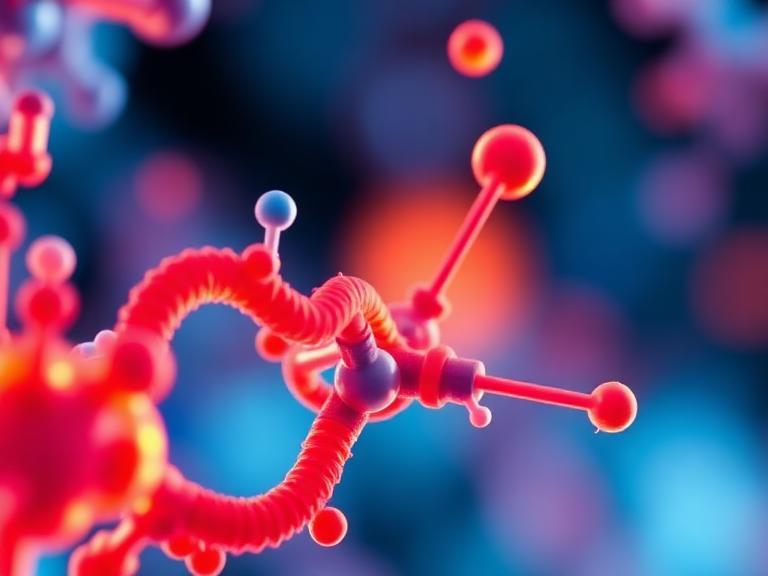
From our experience engineering advanced bioconjugation and raw materials at KMD Bioscience, the failure of most drug pipelines occurs not in late-stage clinical trials, but because of critical oversights during the initial validation and screening phases. If your assay reagents are impure or your target is fundamentally flawed, you are merely accelerating toward an incredibly expensive failure. In this uncompromising guide, we will cut through the academic theory and dissect the Key Stages of Small Molecule Drug Discovery. We will explain the commercial realities of each phase, provide actionable buying advice for your critical reagents, and deliver the hard truths about whether your specific therapeutic target is actually suitable for a small molecule approach.
Quick Answer: The Pipeline at a Glance
If you are managing a pipeline or establishing a new biotech venture, these are the 7 Key Stages of Small Molecule Drug Discovery you must successfully navigate:
Target Identification & Validation: Identifying the disease-causing protein or gene and proving that manipulating it yields a therapeutic effect.
Hit Discovery: Utilizing High-Throughput Screening (HTS) or virtual screening to identify chemical compounds ("hits") that interact with the target.
Hit to Lead (H2L): Evaluating and modifying hits to establish clear structure-activity relationships (SAR) and eliminate highly toxic compounds.
Lead Optimization: Iteratively refining the chemical structure to improve potency, selectivity, and ADMET (Absorption, Distribution, Metabolism, Excretion, and Toxicity) properties.
Preclinical Development: Rigorous in vitro and in vivo animal testing to establish safety profiles, dosing, and pharmacokinetics prior to human exposure.
Clinical Trials (Phases I-III): Testing the drug in human subjects to prove safety (Phase I), efficacy (Phase II), and superiority against current standard-of-care (Phase III).
Regulatory Approval: Submitting a New Drug Application (NDA) to regulatory bodies (FDA, EMA) for commercialization.
In most professional situations, we recommend front-loading your investment into ultra-high-purity reagents during the Hit Discovery phase. Cheap screening compounds yield false positives that will hemorrhage your clinical budget years down the line.
Table of Contents
What is Small Molecule Drug Discovery?
A small molecule drug is an organic compound characterized by a low molecular weight—typically under 900 Daltons. Their diminutive size is their superpower. Because they are so small, they can easily traverse intestinal walls for oral absorption and effortlessly penetrate cell membranes to interact with intracellular targets, such as enzymes, nuclear receptors, and specific ion channels.
The discovery process is a massive funnel. You begin with libraries containing millions of chemical compounds and systematically whittle them down through the Key Stages of Small Molecule Drug Discovery until you have a single, highly optimized, non-toxic, and highly efficacious molecule ready for human consumption.
How It Works: The 7 Key Stages of Small Molecule Drug Discovery
1. Target Identification and Validation
You cannot cure a disease if you do not know the biological mechanism driving it. This stage involves identifying specific Proteins or nucleic acids that, when inhibited or activated, alter the disease state. Target validation requires rigorous genetic knockdown (CRISPR/siRNA) and pharmacological inhibition to prove that the target is both relevant and "druggable."
2. Hit Discovery
Once the target is locked, researchers deploy High-Throughput Screening (HTS). This involves automated robotic systems testing hundreds of thousands of compounds against the target to see which ones "hit" or bind. This stage heavily relies on highly purified assay components, including specialized Small Molecule Reagents to establish baseline binding affinities.
3. Hit to Lead (H2L)
A "hit" is not a drug; it is a raw starting point. During H2L, medicinal chemists evaluate the hits to ensure they are not "pan-assay interference compounds" (PAINS) that cause false positives. The hits are grouped into chemical series, and minor modifications are made to identify which parts of the molecule drive binding (the pharmacophore).
4. Lead Optimization
This is where chemistry meets biology. The lead compounds are aggressively modified to improve their ADMET profile. A drug that binds perfectly to a target in a petri dish is useless if the human liver immediately metabolizes it or if it cannot survive the acidic environment of the stomach. Efficacy is balanced strictly against toxicity.
5. Preclinical Development
Before a human can ingest the compound, it must survive rigorous in vitro cell line testing and in vivo animal models. Researchers determine the maximum tolerated dose, the no-observed-adverse-effect level (NOAEL), and potential genetic toxicity. For reliable biomarker analysis during this phase, utilizing highly validated Antibodies for immunohistochemistry and western blotting is critical.
6. Clinical Trials
The clinical phase is the financial gauntlet, broken into three distinct hurdles:
Phase I: Administered to a small group of healthy volunteers (20-100) strictly to assess safety, dosage tolerance, and pharmacokinetics.
Phase II: Administered to a larger group of patients with the target disease (100-300) to evaluate preliminary efficacy and short-term side effects.
Phase III: Massive, randomized, double-blind, placebo-controlled trials (1,000-3,000+ patients) to confirm effectiveness, monitor adverse reactions, and compare it against the current gold-standard treatments.
7. Regulatory Approval & Commercialization
If Phase III is successful, the data is compiled into a New Drug Application (NDA) submitted to the FDA (or EMA in Europe). The regulatory body audits the clinical data and the manufacturing facility. Once approved, the drug enters the market, accompanied by Phase IV post-marketing surveillance.
Commercial Benefits of Small Molecules
For commercial users evaluating pipeline strategies, small molecules offer unparalleled logistical and financial advantages. They can typically be formulated as oral pills, drastically improving patient compliance compared to IV-infused biologics. Furthermore, once the complex synthesis route is finalized, the cost of goods sold (COGS) for mass-manufacturing small molecules is incredibly low. They are chemically stable, rarely require cold-chain logistics, and boast extensive shelf lives.
Limitations and Hard Truths
We must present commercial and practical judgment: small molecules are inherently promiscuous. Because they are tiny chemical structures, they often bind to off-target proteins, leading to severe toxicity and side effects. In our testing and observation of industry trends, achieving absolute target selectivity with a small molecule is phenomenally difficult compared to the pinpoint accuracy of a monoclonal antibody.
Who Should Pursue This Pathway
For commercial users and heavy-duty applications: Pharmaceutical giants and biotech firms targeting intracellular kinases, central nervous system (CNS) disorders, or diseases requiring oral administration must utilize small molecule discovery. If your target is hidden deep inside the cell, large biologics simply cannot reach it.
Who Does Not Need It (The Biologics Route)
When to pivot: If your therapeutic target involves disrupting a massive, flat protein-protein interaction (PPI) on the surface of a cell, a small molecule will fail. It lacks the surface area to block the interaction. In these scenarios, you must abandon small molecules and pivot to biologics. Utilizing a Phage Display Platform or a Single B Cell Screening Platform to discover highly specific antibodies is the only scientifically viable path.
Common Mistakes in Early Discovery
Expert Insight: The most catastrophic mistake we see in early-stage biotech is utilizing low-purity, poorly characterized reagents during the Hit Discovery and Lead Optimization phases.
If your screening assays are built on degraded proteins or non-specific antibodies, your HTS data is garbage. You will push a false-positive compound into expensive in vivo animal models, wasting months of capital before realizing the drug does not actually bind the intended target. The Key Stages of Small Molecule Drug Discovery demand absolute reagent purity.
Expert Buying Considerations for Reagents
When you are sourcing Raw Materials Reagents for your discovery pipeline, you must scrutinize your vendor's quality control. Demand transparency. Always ensure you can access batch-specific documentation, such as executing a COA Download (Certificate of Analysis) to verify purity, stability, and proper conjugation. Do not buy from brokers who cannot trace their supply chain back to the primary synthesis lab.
Summary and Comparison Tables
Quick Summary Table: The 7 Stages
| Stage | Primary Objective | Average Duration |
|---|---|---|
| 1. Target ID | Identify and validate the disease mechanism. | 1 - 2 Years |
| 2. Hit Discovery | Find initial chemical starting points (HTS). | 0.5 - 1 Year |
| 3. Hit to Lead | Establish initial structure-activity relationships. | 1 Year |
| 4. Lead Opt | Refine ADMET properties and maximize potency. | 1.5 - 2 Years |
| 5. Preclinical | Prove animal safety and establish human dosing. | 1 - 2 Years |
| 6. Clinical (I-III) | Prove human safety, efficacy, and superiority. | 5 - 7 Years |
| 7. Regulatory | FDA/EMA submission and commercialization. | 1 - 2 Years |
Comparison Table: Small Molecules vs. Biologics
| Attribute | Small Molecules | Biologics (Monoclonal Antibodies) |
|---|---|---|
| Size | Low (<900 Daltons) | Massive (~150,000 Daltons) |
| Target Location | Intracellular & Extracellular | Strictly Extracellular (Cell surface/secreted) |
| Administration | Usually Oral (Pills) | Injection or IV Infusion |
| Manufacturing | Chemical Synthesis (Highly scalable) | Living Cell Cultures (Complex/Expensive) |
| Selectivity | Moderate (Risk of off-target toxicity) | Extremely High (Pinpoint accuracy) |
Pros and Cons of a Small Molecule Pipeline
| Pros (Advantages) | Cons (Limitations) |
|---|---|
| Ability to hit deeply hidden intracellular targets. | Extremely high clinical attrition rate (~90% failure). |
| Patient-friendly oral administration boosts compliance. | Prone to off-target binding and systemic toxicity. |
| Low manufacturing costs once synthesis is optimized. | Generic competition is fierce immediately post-patent. |
| No complex cold-chain logistics required for transport. | Cannot block large, flat protein-protein interactions. |
Expert Recommendation: KMD Bioscience Reagents
In most professional situations, the integrity of your assay data dictates the survival of your pipeline. You cannot execute the Key Stages of Small Molecule Drug Discovery utilizing substandard chemical libraries or haptens. We recommend securing your raw materials directly from a manufacturer with a proven bioconjugation pedigree.
Small Molecule Reagents
Leveraging robust chemical synthesis and bioconjugation platforms, KMD Bioscience offers a comprehensive portfolio of high-quality small molecule reagents, including diverse haptens and their derivatives. Our products are characterized by high purity and exceptional stability.
To support specific application requirements, we provide Customized Conjugation Services with various carrier proteins (e.g., BSA, OVA, KLH) to ensure optimal immunogenicity or detection sensitivity. With a rigorous quality management system and scalable manufacturing capabilities, KMD Bioscience is committed to providing consistent, high-performance raw materials that support global clients in methodology validation and the advancement of diagnostic solutions.
Explore Small Molecule Reagents
If your pipeline dictates a pivot toward biologics due to target undruggability, our VHH Antibody Platform and Antibody Humanization Platform provide the exact infrastructure required to transition your discovery efforts seamlessly.
Frequently Asked Questions (FAQ)
What is the most common reason small molecules fail in clinical trials?
Historically, the most common reason for failure in Phase II clinical trials is a lack of efficacy, meaning the drug does not work as intended in humans despite working in animal models. In Phase I and preclinical stages, unexpected toxicity and poor pharmacokinetics (ADME issues) are the primary drivers of compound attrition.
What is the difference between Hit Discovery and Lead Optimization?
Hit Discovery is the initial process of finding any chemical compound that shows interaction with the biological target. These 'hits' are often weak and potentially toxic. Lead Optimization occurs much later; it involves taking the best hits and making precise chemical modifications to improve their potency, selectivity, and safety profile so they can survive the human digestive system and liver metabolism.
Why do we still need small molecules if biologics are so successful?
Biologics, such as monoclonal antibodies, are massive molecules that cannot cross the cell membrane. They can only target receptors on the outside of a cell or proteins floating in the blood. If a disease is caused by an enzyme or receptor located deep inside the cell (like many cancer-causing kinases), a small molecule is physically required to penetrate the cell wall and reach the target.
Authoritative Industry References
To ensure our therapeutic discovery guidelines align with global regulatory and scientific standards, we reference data from the following authorities:
U.S. Food and Drug Administration (FDA): Detailed regulatory frameworks for the Investigational New Drug (IND) and New Drug Application (NDA) processes. Visit FDA Drug Development Guide
National Institutes of Health (NIH): Foundational research and grants supporting early-stage target identification and high-throughput screening methodologies. Visit NIH
Nature Reviews Drug Discovery: The premier peer-reviewed journal providing comprehensive analyses on clinical attrition rates, medicinal chemistry, and biopharma pipeline metrics. Visit Nature Reviews
- Stages of Small Molecule Drug Discovery

- Protein Platform
- Protein Expression Services
- Protein Modification & Detection Services
- Protein Interaction Services
- Protein Purification Service
- Antibody Discovery Platform
- VHH Antibody Platform
- Phage Display Platform
- Antibody Humanization Platform
- Single B Cell Screening Platform
- Antibody Expression & Validation Platform
- Peptide Library Platform
- Custom Antibody Platform
- Innovative Drug Discovery Platform
- Product Center
- Proteins
- Antibodies
- Raw Materials Reagents
- Small Molecule Reagents
- Peptide Products
- Nanoparticle Products
- Contact Us
- Phone:400-621-6806
- Mobile:13110936064(WeC
- E-mail:[email protected]
- Address:Room 108, Building 10, No. 6 Hechang Road, Wuqing Development Zone, Tianjin City
-

WeChat
-

Service Account
-
 400-621-6806
 -
 3599163699
 -
 Monday to Friday 9:00-18:00
 -

-
 0
0
-
