


7 Key Steps in Single B Cell Antibody Discovery: A Commercial Engineering Guide
- 2026-09-16
- 37
The biopharmaceutical industry is undergoing a radical shift in how therapeutic targets are pursued. For decades, drug developers relied on hybridoma technology or phage display libraries to generate monoclonal antibodies. While historically significant, these traditional methods are slow, inefficient, and frequently fail to produce antibodies with the high-affinity natural pairing required for modern clinical success. If you are developing a drug against a complex membrane protein or a rare viral epitope, relying on cellular fusion techniques is commercial negligence.
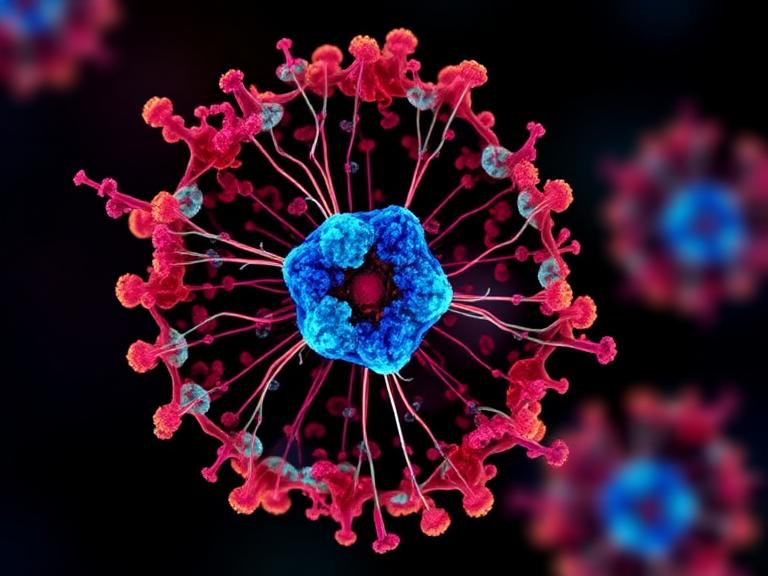
From our experience engineering advanced therapeutic candidates at KMD Bioscience, the implementation of Single B Cell Antibody Discovery is the only mathematically viable route to rapidly secure high-affinity, naturally paired antibodies. This technology isolates the genetic blueprint of an antibody directly from an individual, immunized B cell, preserving the original heavy and light chain pairing crafted by the host's immune system. In this uncompromising guide, we will strip away the academic theory and deliver a hard, practical analysis of the 7 key steps involved in Single B Cell Antibody Discovery, helping commercial users and therapeutic developers make an informed procurement decision.
Quick Answer: The 7 Step Process
If you are evaluating Contract Research Organizations (CROs) for your next pipeline project, you must ensure they flawlessly execute the following 7 Key Steps in Single B Cell Antibody Discovery:
Immunization & PBMC Isolation: Generating a robust immune response in the host animal and harvesting Peripheral Blood Mononuclear Cells.
B Cell Enrichment: Using magnetic beads or column chromatography to isolate the B cell population from other leukocytes.
Antigen-Specific Sorting: Utilizing Flow Cytometry (FACS) to identify and isolate only the B cells binding to the target antigen.
Single Cell Isolation: Depositing individual cells into microplate wells or microfluidic chips.
Single Cell Lysis & RT-PCR: Extracting fragile mRNA and reverse-transcribing it into stable cDNA.
V-Region Amplification & Cloning: Amplifying the specific VH and VL variable regions and cloning them into expression vectors.
Recombinant Expression & Validation: Transfecting mammalian cells to produce the antibody for final binding and functional assays.
In most professional situations, we recommend bypassing hybridoma entirely and utilizing a Single B Cell Screening Platform to cut discovery timelines from six months down to mere weeks.
Table of Contents
What is Single B Cell Antibody Discovery?
Single B Cell Antibody Discovery is a high-throughput molecular cloning technology. Instead of fusing mortal B cells with immortal myeloma cells to create a hybridoma (a process that suffers from massive cell death and loss of rare clones), this method directly interrogates the genetic material of an individual, antigen-specific B cell. By amplifying the variable regions of the heavy (VH) and light (VL) chains from a single cell, the native pairing of the antibody is perfectly preserved.
This preservation is the commercial holy grail of immunology. In artificial libraries like phage display, heavy and light chains are paired randomly, often resulting in antibodies that suffer from poor developability, low stability, or rapid aggregation during manufacturing. Single B cell technology bypasses this by copying exactly what a living immune system has already successfully engineered.
How It Works: The 7 Key Steps
Executing Single B Cell Antibody Discovery requires a masterclass in molecular biology and precision liquid handling. Here is the strict chronological workflow.
1. Immunization & PBMC Harvesting
The process begins by immunizing a host animal (mouse, rabbit, alpaca, or humanized models) with the target antigen. The immunization strategy dictates everything. From our experience, utilizing powerful adjuvants and precise boosting schedules is non-negotiable. Once a high antibody titer is confirmed, peripheral blood mononuclear cells (PBMCs) or lymphatic tissues are harvested. Unlike hybridoma, which relies primarily on the spleen, this method can successfully utilize peripheral blood, making it ideal for human therapeutic discovery.
2. B Cell Enrichment
The harvested tissue contains a chaotic mixture of T cells, macrophages, and red blood cells. To proceed efficiently, the total B cell population must be enriched. We recommend utilizing negative selection via Magnetic-Activated Cell Sorting (MACS) to remove non-B cells, leaving the fragile B cells untouched and unactivated by magnetic beads.
3. Antigen-Specific Sorting (FACS)
Enrichment leaves you with millions of B cells, but only a tiny fraction are producing the specific antibody you need. Fluorescently labeled antigens are introduced to the cell pool. Using Fluorescence-Activated Cell Sorting (FACS), researchers isolate the exact memory B cells or plasma cells that bind to the target. This step requires immense technical expertise to prevent false positives.
4. Single Cell Isolation
The sorted, antigen-specific B cells must now be physically separated into individual compartments. This is traditionally done by sorting single cells directly into 96-well or 384-well PCR plates using the FACS machine. For heavy-duty applications, advanced microfluidic chips or optofluidic platforms (like the Beacon system) are used to trap single cells in nano-pens for direct observation.
5. Single Cell Lysis & RT-PCR
This is the most critical and fragile step. The single cell is chemically lysed (broken open) to release its mRNA. Because mRNA degrades incredibly fast, it must immediately undergo Reverse Transcription Polymerase Chain Reaction (RT-PCR) to convert the fragile RNA into stable complementary DNA (cDNA). If laboratory conditions are not strictly RNase-free, the genetic blueprint is lost forever.
6. V-Region Amplification & Cloning
Using nested PCR and highly specific primer sets, the variable heavy (VH) and variable light (VL) chain sequences are amplified from the cDNA. In our testing, the design of these primer sets separates top-tier CROs from amateurs. Once amplified, these sequences are seamlessly cloned into linear expression vectors containing the constant regions of the desired antibody isotype.
7. Recombinant Expression & Validation
The cloned expression vectors are transiently transfected into mammalian cells (typically HEK293 or CHO cells). Within days, the cells secrete the recombinant monoclonal antibody into the culture media. The supernatant is harvested and run through an Antibody Expression & Validation Platform to confirm binding affinity (via ELISA or SPR) and functional neutralization.
Commercial and Technical Benefits
Why should a pharmaceutical company pay a premium for Single B Cell Antibody Discovery? The return on investment is absolute speed and uncompromised quality.
Speed to Market: Hybridoma takes 4 to 6 months. Single B cell discovery can identify lead candidates in 2 to 4 weeks. In the patent-driven drug market, three months of saved time is worth millions.
Native Pairing: By sequencing directly from a single cell, the natural, highly evolved pairing of the heavy and light chain is retained, guaranteeing superior stability and low immunogenicity.
Unmatched Diversity: Cellular fusion kills up to 99% of B cells. Single B cell isolation recovers rare clones that fusion simply destroys.
Limitations and Hard Truths
We must use practical commercial judgment: this technology is not without friction. The primary limitation is the high capital expenditure (CapEx). The FACS machines, microfluidic platforms, and single-cell sequencing reagents require massive financial investment. Furthermore, the molecular biology involved in single-cell RT-PCR is highly susceptible to contamination and requires elite laboratory technicians. If a single well is contaminated, that clone is lost.
Who Should Use It
For commercial users and therapeutic developers: If you are building a pipeline for immuno-oncology, autoimmune diseases, or rapid viral countermeasures, Single B Cell Antibody Discovery is mandatory. It is the core engine behind any modern Innovative Drug Discovery Platform.
Who Does Not Need It
For beginners or basic diagnostics: If you simply need a cheap, workhorse antibody to use as a generic reagent for an ELISA or Western Blot in a university lab, you do not need single B cell sequencing. Traditional hybridoma or even a basic polyclonal antiserum will suffice perfectly and save your grant money.
Common Mistakes in Discovery
Expert Insight: The most catastrophic mistake we witness in early-stage discovery is poorly designed antigen bait during the FACS sorting phase.
If your fluorescently labeled antigen does not perfectly mimic the native conformation of the target protein on the cell surface, you will sort B cells that produce antibodies against denatured junk. You will spend tens of thousands of dollars cloning and expressing antibodies that fail in functional assays. Always validate your antigen through a robust Molecular Platform before sorting.
Expert Buying Considerations
When evaluating a partner for your custom antibody needs, scrutinize their downstream capabilities. Finding the sequence is only half the battle. Can they express it? Can they scale it? Ensure your chosen CRO has a fully integrated Process Development Platform to take your sequence from a 24-well plate up to a 50-liter bioreactor without shifting vendors.
Summary and Comparison Tables
Quick Summary Table: The 7 Key Steps
| Step | Process | Critical Objective |
|---|---|---|
| 1. Immunization | Antigen delivery and PBMC harvest | Generate a robust, high-titer immune response. |
| 2. Enrichment | MACS separation | Remove T cells and isolate the B cell pool. |
| 3. Sorting | FACS via fluorescent antigens | Identify B cells specific only to the target. |
| 4. Isolation | Deposition into microplates | Ensure exactly one cell per well. |
| 5. RT-PCR | Lysis and reverse transcription | Convert fragile mRNA into stable cDNA. |
| 6. Cloning | Amplification and vector insertion | Create an expression-ready genetic construct. |
| 7. Validation | Mammalian expression and assay | Confirm binding affinity and function. |
Comparison Table: Single B Cell vs. Legacy Methods
| Feature | Single B Cell Discovery | Hybridoma Technology | Phage Display |
|---|---|---|---|
| Discovery Timeline | 2 - 4 Weeks (Very Fast) | 4 - 6 Months (Slow) | 4 - 8 Weeks (Moderate) |
| Native Chain Pairing | Yes (Perfectly retained) | Yes (But low survival rate) | No (Randomized pairing) |
| Throughput / Diversity | Extremely High | Low (Many clones die) | Extremely High |
| Developability Risk | Very Low | Moderate | High (Aggregation issues) |
Pros and Cons of Single B Cell Technology
| Pros (Advantages) | Cons (Limitations) |
|---|---|
| Drastically shortens the therapeutic discovery timeline. | Requires massive initial CapEx for FACS and microfluidics. |
| Captures rare clones that hybridoma fusion destroys. | Strict RNA handling requirements; highly sensitive to contamination. |
| Preserves natural, highly stable heavy/light chain pairing. | Higher upfront service cost compared to basic hybridoma. |
| Applicable to almost any host species, including human PBMC. | Relies heavily on the exact conformational quality of the sorting antigen. |
Expert Recommendation: Partnering with KMD Bioscience
In most professional situations, attempting to build a Single B Cell capability in-house from scratch will result in millions of dollars burned on optimizing primer sets and managing RNase contamination. We strongly recommend outsourcing this highly specialized workflow to a dedicated facility.
KMD Bioscience Single B Cell Screening Platform
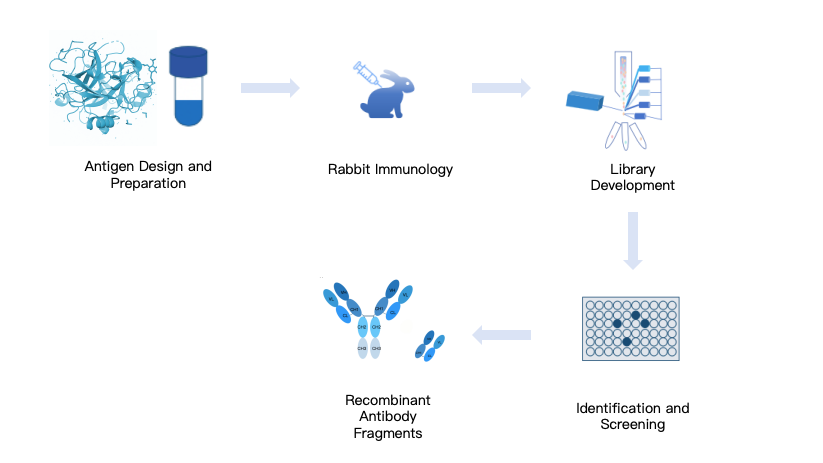
KMD Bioscience offers an advanced single B cell screening platform, a next-generation antibody development technology that enables efficient and rapid isolation of specific antibodies from individual B cells. Compared to traditional hybridoma and phage display techniques, single B cell screening represents a significant breakthrough, offering advantages such as high specificity, high activity, and high affinity.
Through this platform, we provide clients with monoclonal antibodies derived from various species (e.g., rabbit, mouse, camel, sheep, chicken, etc.), meeting diverse research needs. Seamlessly transition your discovered sequences into our Custom Antibody Platform for immediate scale-up and validation.
Explore the Single B Cell Platform
Frequently Asked Questions (FAQ)
Why is Single B Cell Antibody Discovery faster than hybridoma?
Single B Cell Antibody Discovery bypasses the cellular fusion step. In hybridoma, researchers must fuse cells, wait weeks for the hybrid cells to grow, and then perform tedious limiting dilution cloning to ensure stability. Single B cell technology extracts the genetic sequence directly and expresses it recombinantly in a matter of days, shaving months off the timeline.
Does Single B Cell Discovery work for human antibodies?
Yes, absolutely. Because the technology only requires isolating B cells from a blood sample (PBMCs), researchers can isolate antigen-specific memory B cells directly from human patients who have recovered from a disease, making it the premier method for discovering fully human therapeutic antibodies.
What happens if the RNA degrades during single cell isolation?
If the messenger RNA (mRNA) degrades before reverse transcription occurs, the genetic blueprint for the antibody is permanently lost. This is why stringent RNase-free environments, cold processing temperatures, and immediate lysis buffers are hyper-critical during the single cell sorting and isolation steps.
Authoritative Industry References
To ensure our therapeutic development guidelines align with rigorous scientific standards, we reference the following authorities:
National Center for Biotechnology Information (NCBI): Comprehensive database for peer-reviewed literature detailing the molecular mechanisms of B cell sorting and RT-PCR protocols. Visit NCBI
The Antibody Society: The premier international non-profit association representing individuals and organizations involved in antibody research and therapeutic development. Visit The Antibody Society
Nature Biotechnology: Leading scientific journal publishing breakthrough advancements in microfluidics, single-cell sequencing, and recombinant antibody expression. Visit Nature Biotechnology

- Protein Platform
- Protein Expression Services
- Protein Modification & Detection Services
- Protein Interaction Services
- Protein Purification Service
- Antibody Discovery Platform
- VHH Antibody Platform
- Phage Display Platform
- Antibody Humanization Platform
- Single B Cell Screening Platform
- Antibody Expression & Validation Platform
- Peptide Library Platform
- Custom Antibody Platform
- Innovative Drug Discovery Platform
- Product Center
- Proteins
- Antibodies
- Raw Materials Reagents
- Small Molecule Reagents
- Peptide Products
- Nanoparticle Products
- Contact Us
- Phone:400-621-6806
- Mobile:13110936064(WeC
- E-mail:[email protected]
- Address:Room 108, Building 10, No. 6 Hechang Road, Wuqing Development Zone, Tianjin City
-

WeChat
-

Service Account
-
 400-621-6806
 -
 3599163699
 -
 Monday to Friday 9:00-18:00
 -

-
 0
0
-
