


8 Steps to Express and Validate a Recombinant Antibody: An Expert CRO Guide
- 2026-09-10
- 70
Navigating the transition from in silico sequence data to a physical, high-yield, functional protein is the most critical bottleneck in biotherapeutics and diagnostics. Many research teams underestimate the complexity required to properly express and validate a recombinant antibody. From our experience, treating mammalian cell culture like simple bacterial expression is a catastrophic error that results in truncated proteins, missing post-translational modifications, and ultimately, failed downstream assays.

In most professional situations, you cannot afford months of troubleshooting low transfection efficiencies or aggregate-heavy purifications. Whether you are developing an IgG, a scFv, or a bispecific construct, you need a rigorous, reproducible pipeline. In this comprehensive guide, we strip away the academic theory and provide commercial and practical judgment on how to express and validate a recombinant antibody effectively, outlining when to build this capability in-house and when it is absolutely necessary to partner with an established Contract Research Organization (CRO).
Quick Answer: How to Express and Validate a Recombinant Antibody
To successfully express and validate a recombinant antibody, you must execute 8 critical steps with strict quality control:
Sequence Optimization: Codon adaptation for the host cell.
Vector Construction: Cloning heavy and light chains into high-expression plasmids.
Cell Line Selection: Choosing HEK293 (transient) or CHO (stable).
Transfection: Introducing the plasmids into the host cells.
Expression & Harvest: Culturing the cells and collecting the supernatant.
Purification: Utilizing Protein A/G affinity chromatography.
Biochemical Validation: Verifying purity and molecular weight (SDS-PAGE, SEC-HPLC).
Functional Validation: Confirming antigen binding affinity (ELISA, SPR, BLI).
Expert Bottom Line: If your laboratory lacks dedicated mammalian bioreactors and high-throughput screening equipment, attempting to express and validate a recombinant antibody internally will drain your budget and extend your timeline. We recommend leveraging a specialized Antibody Expression & Validation Platform for guaranteed yields and batch-to-batch consistency.
Table of Contents
What Does It Mean to Express and Validate a Recombinant Antibody?
To express and validate a recombinant antibody means to artificially synthesize a specific antibody using genetically engineered host cells, followed by a rigorous series of analytical tests to prove the resulting molecule is pure, structurally sound, and functionally active against its target antigen. Unlike traditional hybridoma techniques which rely on animal immune systems and cellular fusions, recombinant technology relies entirely on known genetic sequences.
This process is the backbone of modern drug discovery. However, the true challenge does not lie merely in the expression phase; it lies in the validation. A bioreactor full of misfolded proteins is commercially worthless. Proper validation ensures the molecule possesses the correct binding kinetics, minimal aggregation, and appropriate glycosylation profiles required for in vivo efficacy.
How It Works: The 8 Essential Steps
In our testing and routine facility operations, bypassing any of the following steps guarantees a substandard product. Here is how professionals express and validate a recombinant antibody.
1. Sequence Design and Codon Optimization
Before a single cell is cultured, the antibody's variable (VH/VL) and constant regions must be electronically mapped. Because mammalian host cells (like CHO) have specific codon preferences, the DNA sequence must be computationally optimized. Failing to optimize codons results in ribosomal stalling and drastically lower protein yields.
2. Expression Vector Construction
The optimized genes are synthesized and cloned into high-efficiency expression plasmids. For a full-length IgG, the heavy and light chains can be placed on separate vectors (co-transfection) or a single bicistronic vector. The choice of promoter (such as CMV) is critical for driving high transcription rates.
3. Cell Line Selection (HEK293 vs. CHO)
You must make a strategic decision here. If you need milligrams of antibody in a few weeks for initial screening, you utilize HEK293 cells for transient expression. For commercial users aiming for clinical trials and large-scale manufacturing (grams to kilograms), you must invest in generating a stable CHO (Chinese Hamster Ovary) cell line.
4. Transfection into Host Cells
Introducing the plasmid DNA into the mammalian cells requires high-efficiency transfection reagents (lipid-based or polymer-based like PEI) or electroporation. The ratio of heavy chain to light chain plasmid DNA during co-transfection is a tightly guarded industry variable that directly dictates the percentage of fully assembled monomers.
5. Cell Culture, Expression, and Harvest
The transfected cells are scaled up in suspension cultures using specialized, serum-free media. During this phase, environmental parameters (pH, dissolved oxygen, temperature, and feeding strategies) are strictly monitored. Once cell viability drops (usually after 5 to 14 days), the culture is centrifuged, and the antibody-rich supernatant is harvested. For optimized protocols, commercial users rely heavily on dedicated Protein Expression Services.
6. Affinity Purification
The harvested supernatant contains host cell proteins, DNA, and media components. The primary capture step to express and validate a recombinant antibody is affinity chromatography. For IgG, Protein A or Protein G resin is utilized to capture the Fc region. The column is washed, and the antibody is eluted using a low-pH buffer, followed immediately by neutralization to prevent protein denaturation.
7. Biochemical Validation (Purity and Integrity)
You cannot assume your purified liquid contains active antibodies. You must perform biochemical validation. SDS-PAGE (reducing and non-reducing) is run to confirm the presence of heavy and light chains at the correct molecular weights. SEC-HPLC (Size Exclusion Chromatography) is mandatory to detect and quantify protein aggregates. High aggregation renders an antibody useless for therapeutic applications.
8. Functional Validation (Binding Kinetics)
The final and most critical step to express and validate a recombinant antibody is proving it binds to the target antigen. An indirect ELISA is the baseline test. However, for heavy-duty applications, Surface Plasmon Resonance (SPR) or Bio-Layer Interferometry (BLI) must be utilized to determine the exact on/off rates (binding kinetics) and overall affinity (KD). Advanced projects will also utilize a dedicated Detection Platform for cell-based neutralization assays.
Handling Specialized Antibody Formats (VHH)
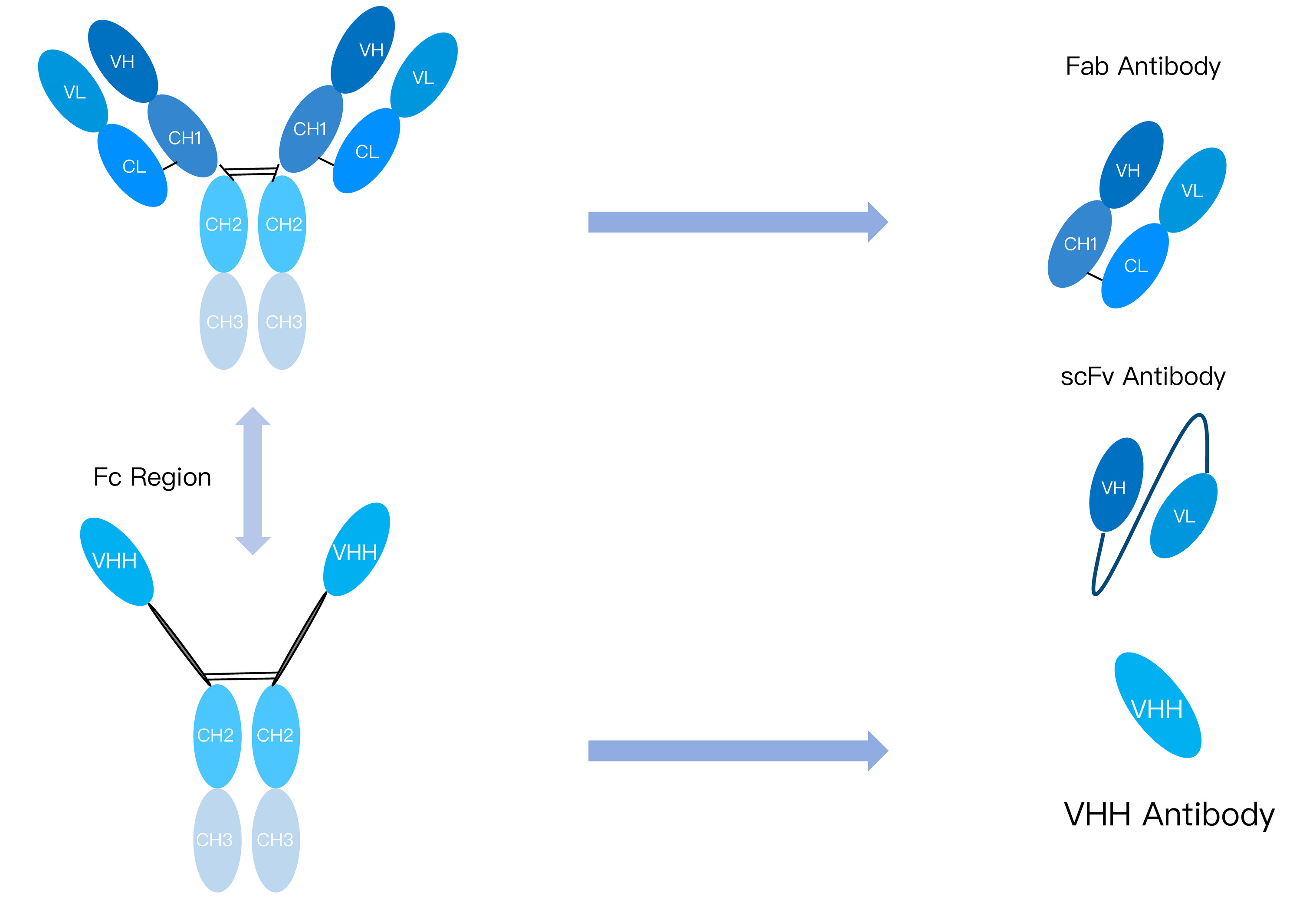
Standard IgGs are not the only molecules demanding expression. The rise of single-domain antibodies (VHH/Nanobodies) requires a slightly modified pipeline, often utilizing microbial systems (E. coli) or yeast due to the lack of complex glycosylation requirements.
Camel Immune VHH Antibody Library Construction
KMD Bioscience has extensive experience in the field of Antibody Discovery and provides clients with high-quality Camel VHH Antibody Library Construction Services. Our scientists design and prepare Camel VHH Antibody Phage Display Libraries, adhering to stringent human vaccine-grade standards, following the QbD (Quality by Design) principles of biopharmaceuticals, and respecting ICH guidelines.
Our service offers clients a one-stop traceability system and comprehensive documentation support, covering key stages including Antigen Design, Animal Immunization, Library Construction and Panning, and Functional Validation. For comprehensive single-domain workflows, explore our VHH Antibody Platform.
Quick Summary Table of the Pipeline
| Step | Process Core Activity | Primary Deliverable / Milestone |
|---|---|---|
| 1. Design | Codon optimization and gene synthesis | Host-optimized DNA sequence |
| 2. Cloning | Vector assembly and plasmid prep | Transfection-ready expression plasmids |
| 3. Cell Selection | Choosing transient (HEK) or stable (CHO) | Appropriate mammalian host culture |
| 4. Transfection | Introducing DNA into host cells | Viable, producing cell population |
| 5. Expression | Scaling culture in bioreactors | Antibody-rich crude supernatant |
| 6. Purification | Protein A/G affinity chromatography | Purified antibody eluate |
| 7. Bio-Validation | SDS-PAGE and SEC-HPLC analysis | Proof of purity and monomeric state |
| 8. Func-Validation | ELISA and SPR/BLI kinetic analysis | Proof of high-affinity antigen binding |
Benefits and Limitations: In-House vs. Outsourced
When you decide to express and validate a recombinant antibody, the commercial calculation is brutal. Building this capability in-house allows for total control over intellectual property and immediate scheduling flexibility. However, the capital expenditure (CapEx) for wave bioreactors, AKTA purification systems, and SPR machines runs into millions of dollars.
Furthermore, mammalian cell culture is incredibly sensitive to contamination. A single mycoplasma infection can wipe out months of work. For commercial users and biotech startups, outsourcing to a Custom Antibody Platform converts these unpredictable CapEx and labor costs into predictable, fixed operational expenses (OpEx) with guaranteed deliverables.
Pros and Cons of In-House Recombinant Expression
| Pros (Benefits of In-House) | Cons (Limitations of In-House) |
|---|---|
| Absolute internal control over proprietary sequences. | Massive upfront equipment costs (bioreactors, SPR). |
| Ability to pivot project priorities on a daily basis. | High risk of batch failure due to lack of specialized staff. |
| No external shipping delays or customs holds for biologics. | Difficulty maintaining expensive cell lines year-round. |
| Direct hands-on training for junior laboratory personnel. | Yields are frequently lower than optimized CRO platforms. |
Comparison Table: Transient vs. Stable Expression
To properly express and validate a recombinant antibody, you must select the correct cellular expression strategy based on your project phase.
| Feature | Transient Expression (HEK293) | Stable Cell Line (CHO) |
|---|---|---|
| Time to Product | 2 to 4 weeks (Rapid) | 4 to 6 months (Slow) |
| Typical Yield | 10 mg to 500 mg per Liter | 1 g to 5+ g per Liter |
| Primary Use Case | Early-stage screening and proof-of-concept. | Clinical trials and commercial manufacturing. |
| Cost per Batch | Low initial cost, expensive at scale. | Massive initial cost, highly economical at scale. |
Who Should Use Professional CRO Services (And Who Does Not Need To)
Who Should Outsouce: We unequivocally recommend outsourcing to an Innovative Drug Discovery Platform if you are a biotech startup lacking downstream purification infrastructure, a pharmaceutical company needing to screen 50+ antibody variants simultaneously, or an academic lab that needs a highly validated positive control but lacks SPR binding capabilities.
Who Does Not Need It: If you are an academic researcher conducting basic, un-validated Western blots and only need crude, unpurified supernatant from a small 10mL HEK culture plate, contracting a commercial CRO is an unnecessary expense. Stick to basic benchtop transfection kits.
Common Mistakes in Expression and Validation
Expert Insight: The most catastrophic mistake we observe is researchers skipping the SEC-HPLC step during validation. You cannot express and validate a recombinant antibody based on an ELISA alone. An ELISA will bind aggregates, giving a false-positive reading of high affinity, while the actual monomeric protein is useless for in vivo applications.
Another prevalent error involves sequence origin. If you transition an antibody from a murine (mouse) model to a human therapeutic, you must engage an Antibody Humanization Platform before expression. Expressing a raw murine sequence for human therapeutic testing will result in severe immunogenicity (HAMA response), wasting the entire expression budget.
Finally, always demand proper documentation. Whether internal or outsourced, if you cannot generate a comprehensive COA Download (Certificate of Analysis) detailing endotoxin levels, purity, and concentration, the batch cannot be used for rigorous downstream assays.
Expert Buying Considerations for CROs
When selecting a partner to express and validate a recombinant antibody, do not just look at the lowest price per milligram. Look at their analytical capabilities. Ensure they offer a robust Protein Expression Platform backed by tangible validation data. Ask if they perform endotoxin removal as a standard procedure. Verify that their functional validation utilizes label-free interaction analysis (SPR/BLI) rather than just rudimentary ELISA data.
The KMD Bioscience Recommendation
From our experience, achieving high-titer expression and pristine validation is a multidisciplinary challenge requiring molecular biologists, cell culture engineers, and analytical chemists. KMD Bioscience eliminates this operational friction.
We recommend partnering with our experts to seamlessly bridge the gap from sequence to validated protein. Whether you require standard mammalian expression, specialized Phage Display Platform screening, or integration with our Single B Cell Screening Platform, our strict adherence to ICH guidelines ensures your recombinant antibodies are structurally sound, functionally active, and delivered with absolute traceability. Do not leave your therapeutic candidates to chance—leverage precision engineering.
Frequently Asked Questions (FAQ)
How long does it take to express and validate a recombinant antibody?
In most professional situations utilizing transient HEK293 expression, sequence synthesis to final purified and validated delivery takes approximately 4 to 6 weeks. Developing a stable CHO cell line for the same antibody takes 4 to 6 months.
Why did my recombinant antibody expression fail to yield protein?
Common causes for low or zero yield include failing to codon-optimize the DNA sequence for the mammalian host, using an incorrect ratio of heavy to light chain plasmids during transfection, or culturing the cells in non-optimized media that leads to premature cell death before peak expression.
What is the best method to validate the binding affinity of my antibody?
While ELISA is the standard screening tool, the gold standard to validate binding affinity is Surface Plasmon Resonance (SPR) or Bio-Layer Interferometry (BLI). These label-free technologies provide real-time kinetic data, specifically the association (Kon) and dissociation (Koff) rates.
Can I use E. coli to express full-length IgG antibodies?
No. E. coli lacks the necessary cellular machinery to perform complex post-translational modifications, such as glycosylation, which are mandatory for the stability and effector function of full-length IgGs. E. coli is only suitable for small fragments like scFv or VHH nanobodies.
Authoritative References & Industry Standards
To ensure our methodologies align with global biopharmaceutical standards, we strictly adhere to protocols and guidance established by the following authorities:
NCBI / PubMed (Academic Baseline): Standardized protocols for mammalian cell culture and recombinant protein expression. Access biological literature at PubMed.
U.S. Food and Drug Administration (FDA): Regulatory considerations and quality requirements for monoclonal antibody manufacturing. Review FDA Guidance Documents.
International Council for Harmonisation (ICH): Quality by Design (QbD) principles and Q5 series guidelines concerning the quality of biotechnological products. View ICH Quality Guidelines.
- Express and Validate a Recombinant Antibody

- Protein Platform
- Protein Expression Services
- Protein Modification & Detection Services
- Protein Interaction Services
- Protein Purification Service
- Antibody Discovery Platform
- VHH Antibody Platform
- Phage Display Platform
- Antibody Humanization Platform
- Single B Cell Screening Platform
- Antibody Expression & Validation Platform
- Peptide Library Platform
- Custom Antibody Platform
- Innovative Drug Discovery Platform
- Product Center
- Proteins
- Antibodies
- Raw Materials Reagents
- Small Molecule Reagents
- Peptide Products
- Nanoparticle Products
- Contact Us
- Phone:400-621-6806
- Mobile:13110936064(WeC
- E-mail:[email protected]
- Address:Room 108, Building 10, No. 6 Hechang Road, Wuqing Development Zone, Tianjin City
-

WeChat
-

Service Account
-
 400-621-6806
 -
 3599163699
 -
 Monday to Friday 9:00-18:00
 -

-
 0
0
-
