


8 Proven Methods for Improving Peptide Purity and Yield in Modern Synthesis
- 2026-09-09
- 51
Solid-phase peptide synthesis (SPPS) looks deceptively straightforward on a blackboard: deprotect, couple, wash, repeat, and cleave. Yet any process chemist or structural biologist working on demanding targets knows the brutal truth of crude peptide recovery. You spend two weeks synthesizing a hydrophobic 38-mer, run the analytical HPLC, and discover an incomprehensible forest of deletion sequences, diastereomers, and truncation products. Your target peak is barely 22% pure, and your recovered mass after preparative purification will never satisfy the quantitative demands of subsequent assays.
From our experience directing synthesis pipelines and downstream purification suites at KMD Bioscience, poor crude quality is not bad luck; it is poor thermodynamic and kinetic control. In most professional situations, laboratories waste massive quantities of acetonitrile and column resins trying to chromatographically rescue a peptide that was destroyed during coupling or cleavage. Deploying systematic methods for improving peptide purity during both assembly and downstream processing separates commercial-grade APIs from academic waste. In this guide, we bypass superficial textbook overviews to evaluate eight rigorous, shop-tested methods for improving peptide purity and crude yield, giving you actionable decision metrics to optimize your synthesis workflows.
Quick Answer: The Most Effective Methods for Improving Peptide Purity
To maximize target yield and reduce downstream chromatographic failure, execute these targeted protocols: 1) Lower resin loading density (0.15 to 0.25 mmol/g) to eliminate on-resin steric clumping; 2) Deploy modern carbodiimide/ethyl 2-cyano-2-(hydroxyimino)acetate (DIC/Oxyma Pure) coupling chemistries to suppress epimerization; 3) Incorporate pseudoproline and isoacyl dipeptide building blocks to disrupt beta-sheet secondary structure aggregation; 4) Enforce systematic capping with acetic anhydride to convert deletions into easily separated truncations; 5) Calibrate microwave heating limits strictly below 75°C to prevent aspartimide rearrangement; 6) Formulate cleavage scavenger cocktails specific to your sequence (DODT over ethanedithiol) to suppress cation re-alkylation; 7) Apply multi-dimensional RP-HPLC mobile-phase orthogonal shifts (switching counter-ions between TFA and TEAP); and 8) Stabilize freeze-drying parameters with controlled acetate counter-ion conversion. We recommend prioritizing resin loading and coupling reagent updates first, as over 60% of crude impurities originate in these initial stages.
Table of Contents
What It Is: The Physics of Purity Loss in Peptide Synthesis
Peptide synthesis is an exponential decay process governed strictly by stepwise efficiency. In solid-phase peptide synthesis (SPPS), if your average single-step coupling yield drops from 99.5% to 97.0% across a 30-amino-acid chain, your theoretical crude purity plunges from 86% down to 40%. The remaining 60% of the material is not empty space; it consists of near-identical side-product contaminants, including des-amino acid deletions, insertion sequences, racemized enantiomers, and alkylated adducts.
Methods for improving peptide purity are deliberate interventions engineered to preserve stepwise coupling efficiency, prevent secondary structure collapse on the resin, and prevent post-cleavage reattachment of reactive protecting groups. Whether you are generating antigen conjugates for our Custom Antibody Platform or testing synthetic binders on a Peptide Library Platform, your raw material must maintain reliable analytical purity. A peptide that is 70% pure contains 30% sequence-similar competitors that can generate completely false-positive readouts in biological assays.
How It Works: Reaction Kinetics and Aggregation Dynamics
In our testing, the primary physical barrier to high-purity synthesis is on-resin chain aggregation, commonly referred to as the "hydrophobic collapse" or beta-sheet formation. Starting around residues 5 through 15, growing peptide chains begin interacting with neighboring chains anchored to the same polymer bead. They form stable, intermolecular hydrogen-bonded networks identical to amyloid fibrils.
When this occurs, the N-terminal alpha-amine becomes sterically shielded inside the polymer matrix. Coupling reagents and activated Fmoc-amino acids cannot diffuse into the crowded core. As a result, coupling times skyrocket, unreacted chains accumulate, and subsequent deprotection steps stall. True methods for improving peptide purity work by physically altering these thermodynamics: forcing solvent-swelling into the resin, disrupting backbone hydrogen bonds, or using elevated thermal fields to kinetically override the activation energy of the hindered amine.
8 Core Methods for Improving Peptide Purity
1. Transition to DIC/Oxyma Pure Coupling Chemistry
Traditional uronium and phosphonium activators such as HBTU, HATU, and PyBOP were long considered the gold standard of peptide chemistry. However, in modern automated synthesis, uronium salts carry a dangerous liability: excess activated reagent can react with the free N-terminal amine of the peptide to form an irreversible tetramethylguanidinium capping byproduct, permanently terminating chain extension. Furthermore, HATU promotes significant epimerization of sensitive residues like cysteine and histidine.
We recommend transitioning to diisopropylcarbodiimide paired with ethyl 2-cyano-2-(hydroxyimino)acetate (DIC/Oxyma Pure). Oxyma not only out-performs traditional hydroxybenzotriazole (HOBt) in suppressing racemization during difficult couplings, but it also completely eliminates guanidinylation side reactions. For commercial users handling long sequences, DIC/Oxyma systems generate dramatically cleaner crude profiles that cut preparative chromatography runtimes in half.
2. Restrict Initial Resin Loading Density
A common commercial temptation is using high-loading resins (0.60 to 1.00 mmol/g) to maximize the mass yield per synthesis run. In reality, high loading is the direct cause of catastrophic purity collapse. Packing peptide chains too tightly within cross-linked polystyrene beads creates extreme local crowding, virtually guaranteeing inter-chain aggregation by the eighth residue.
For sequences longer than 15 amino acids, or those with known hydrophobic stretches (Val, Ile, Leu, Phe), reduce resin loading to 0.15 to 0.25 mmol/g. If commercial low-load resins are unavailable, chemically down-load a standard 2-chlorotrityl or Wang resin by titrating the initial Fmoc-protected amino acid to 0.2 equivalents, capping all remaining functional sites with methanol or acetic anhydride before starting elongation. This spatial isolation guarantees each growing chain behaves like an independent molecule in solution.
3. Strategically Insert Pseudoproline and Isoacyl Dipeptides
When a sequence contains repeating hydrophobic motifs, chemical reagents alone cannot keep the peptide backbone extended. The most powerful method for disrupting secondary structure formation is introducing reversible backbone kinks using pseudoproline dipeptides (Fmoc-X-Ser(psiMe,Mepro)-OH or Fmoc-X-Thr(psiMe,Mepro)-OH) or isoacyl dipeptides. Pseudoprolines introduce a temporary oxazolidine ring that locks the peptide bond into a cis-conformation, bending the backbone at a rigid 90-degree angle.
This steric bend disrupts beta-sheet assembly entirely, instantly restoring normal solvent swelling to the resin core. Once the synthesis is complete, standard trifluoroacetic acid (TFA) cleavage smoothly hydrolyzes the oxazolidine ring back into a native serine or threonine residue without trace artifacts. Integrating pseudoprolines at 5- to 6-residue intervals transforms intractable "brick" peptides into rapid, high-yielding syntheses.
4. Implement Systematic Acetic Anhydride Capping Cycles
Even with optimized coupling times, difficult positions will inevitably leave 0.2% to 1.5% of chains uncoupled. If left unchecked, these uncoupled amines will react on the next cycle, generating deletion sequences (e.g., des-Leu, des-Ile). Because deletion peptides differ from the target sequence by only a single amino acid, they exhibit virtually identical chromatographic retention times on reverse-phase silica, making baseline purification nearly impossible.
Incorporate a systematic capping step after every single coupling cycle. Flooding the reaction vessel with a mixture of acetic anhydride, pyridine, and DMF immediately converts unreacted N-terminal amines into inert, acetylated truncation fragments. These truncated fragments are significantly shorter and considerably less hydrophobic than the full-length target, allowing them to wash off the preparative column during the initial low-solvent wash while your pure target elutes cleanly in the gradient peak.
5. Calibrate Temperature Windows in Microwave-Assisted SPPS
Microwave and conductive heating technologies have revolutionized cycle times, compressing a four-hour coupling into four minutes. However, thermal energy is a double-edged sword. Running high-temperature synthesis (>80°C) indiscriminately across an entire sequence drives severe thermally-induced side reactions, most notably aspartimide formation at Asp-Gly and Asp-Ala junctions, as well as cysteine desulfurization.
Calibrate temperature parameters on an amino-acid-specific basis. Maintain standard coupling steps at 70°C to 75°C, but immediately throttle temperatures down to 50°C for histidine, and run cysteine coupling at room temperature using non-basic activation (DIC/Oxyma, omitting DIPEA) to prevent alpha-carbon epimerization. Intelligent thermal budgeting yields the speed advantages of modern microwave reactors without generating diastereomeric impurities that cannot be resolved chromatographically.
6. Sequence-Tailored Scavenger Cocktail Selection
Crude purity is often ruined in the final thirty minutes of the protocol: global deprotection and TFA cleavage. As acidolytic cleavage removes triphenylmethyl (trityl), tert-butyl, and Pbf protecting groups from side chains, it generates highly reactive carbocations, sulfonium species, and tert-butyl cations in the cleavage bath. If scavengers are poorly matched, these cations will immediately re-alkylate nucleophilic residues, permanently modifying tryptophan, methionine, tyrosine, and cysteine.
Abandon generic "Reagent K" formulations when synthesizing complex sequences. Replace toxic, malodorous ethanedithiol (EDT) with 2,2-(ethylenedioxy)diethanethiol (DODT). For sequences with multiple Pbf-protected arginine residues, increase the water and triisopropylsilane (TIPS) ratio and extend the cleavage duration to fully eliminate persistent Pbf adducts. For peptides containing easily oxidized methionine or sensitive tryptophan residues, include ammonium iodide and dimethyl sulfide to guarantee complete side-chain reduction prior to ether precipitation.
7. Multi-Dimensional Orthogonal RP-HPLC Method Development
When crude purity stalls at 60% to 70%, relying on a single standard C18 column running a water/acetonitrile gradient with 0.1% TFA is an exercise in futility. Closely related deletion sequences and desamido impurities often co-elute under standard acidic conditions because their hydrophobic footprints are identical.
We recommend deploying orthogonal mobile-phase manipulations. Run your primary preparative separation using an alternative ion-pairing modifier such as 0.1% heptafluorobutyric acid (HFBA) or triethylammonium phosphate (TEAP) buffered to pH 2.5 or pH 6.5. Changing the ion-pairing reagent dramatically shifts the selectivity of the stationary phase, resolving critical pairs that overlap completely in TFA systems. Once the target fraction is pooled, perform a rapid desalt-and-exchange step on a C4 or phenyl-hexyl column to return the peptide to its required pharmaceutical salt form.
8. Counter-Ion Conversion and Controlled Lyophilization
The final, frequently ignored stage of peptide manufacturing is the freeze-drying protocol. Synthetic peptides emerging from standard RP-HPLC are delivered as trifluoroacetate salts. TFA is not only toxic to mammalian cells in functional screening assays, but it is also chemically aggressive: residual TFA traces slowly catalyze the hydrolysis of sensitive bonds (such as Asp-Pro) and promote beta-turn aggregation while resting in storage vials.
For commercial and biological applications, perform an on-column counter-ion exchange, washing the purified peptide with dilute ammonium acetate or hydrochloric acid solutions to replace TFA with biocompatible acetate or chloride counter-ions. Furthermore, optimize your primary drying cycle: snap-freeze the peptide solution in liquid nitrogen to generate small, high-surface-area ice crystals, and maintain the shelf temperature below the glass transition temperature (Tg') of the cake. This prevents melt-back, collapse, and moisture entrapment, ensuring a stable, fluffy lyophilizate that dissolves instantaneously in assay buffers.
Commercial and Research Benefits
Rigorous implementation of these methods for improving peptide purity delivers direct operational savings. At the bench level, elevating crude purity from 40% to 80% triples the loading capacity of your preparative HPLC columns. A purification run that previously required eight repetitive injections can be executed in two, slashing acetonitrile and HPLC-grade water consumption by over 60%.
From a drug discovery standpoint, high-purity peptides eliminate false lead validation. In competitive binding experiments handled through our Protein Interaction Services, trace deletion impurities can act as partial agonists or competitive antagonists, skewing affinity calculations by orders of magnitude. When screening synthetic targets for downstream validation in an Innovative Drug Discovery Platform, purity is not an aesthetic metric; it is the foundation of biological reproducibility.
Limitations and Capital Trade-Offs
We must apply realistic commercial judgment: these optimization methods introduce logistical trade-offs. Pseudoproline dipeptides and specialized amino acid derivatives are expensive, often costing ten to twenty times more per gram than standard Fmoc-monomers. Using them indiscriminately across an unchallenging 10-mer peptide is a severe misallocation of laboratory capital.
Additionally, multi-dimensional HPLC requires dedicated instrumentation, explosion-proof fraction collection systems, and extensive analytical development time. Laboratories must balance target value against optimization costs: low-value diagnostic peptides produced at milligram scale rarely justify complex two-dimensional chromatography, whereas therapeutic peptide candidates demand full structural and counter-ion control regardless of upfront cost.
Who Should Implement These Methods
These advanced optimization protocols are mandatory for core synthesis facilities, pharmaceutical analytical teams, and researchers developing long (>25 residues), hydrophobic, or cyclic peptide therapeutics. Scientists preparing custom peptide probes to interrogate targets discovered via our VHH Antibody Platform or Phage Display Platform must demand high purity to ensure target-specific binding kinetics without background noise.
Who Does Not Need Complex Synthesis Optimization
For beginners generating short, hydrophilic control peptides (5 to 10 amino acids) containing high fractions of alanine, glycine, and serine, basic room-temperature SPPS with standard DIC/HOBt activation is entirely sufficient. Crude purities for simple, short sequences routinely exceed 85% without pseudoprolines, specialized heating profiles, or multi-dimensional chromatography. Simple targets do not need costly process overhauls.
Common Mistakes in Peptide Recovery
In our technical audits, the single most destructive mistake chemists make is concentrating cleavage mixtures to complete dryness on a rotary evaporator before ether precipitation. When you evaporate TFA to dryness, you concentrate the reactive scavenger-carbocation adducts directly onto the unprotected peptide, forcing massive side-chain re-alkylation that cannot be reversed. Always evaporate the TFA cleavage volume down to roughly 10% to 15% before pouring the slurry into an excess of ice-cold diethyl ether or methyl tert-butyl ether (MTBE).
A second catastrophic error is over-sonication of poorly soluble peptides during HPLC sample preparation. Subjecting hydrophobic peptides to prolonged ultrasonic baths in aqueous-organic mixtures drives dissolved oxygen to generate reactive hydroxyl radicals, oxidizing methionine to methionine sulfoxide within minutes. If a crude peptide refuses to dissolve, adjust pH strategically: add a drop of pure acetic acid for basic sequences, or dilute ammonium bicarbonate for acidic sequences, rather than hammering the sample with destructive ultrasonic energy.
Reagent Selection and Procurement Considerations
When procuring raw materials to support these methods for improving peptide purity, verify reagent quality before putting chemistry onto an automated synthesizer. Always demand lot-specific HPLC and chiral purity certificates for Fmoc-amino acids; purchasing cut-rate monomers that harbor 0.5% D-enantiomer contamination will ruin the stereochemical integrity of your final API.
For solvents, DMF must be certified peptide-synthesis grade, completely free from dimethylamine (DMA) impurities. Residual DMA in cheap DMF cleaves the Fmoc protecting group prematurely during the coupling phase, creating high levels of insertion impurities that no chromatographic protocol can remove. For researchers managing large portfolio libraries, coordinating with specialized providers for bulk Protein Expression Services or automated library screening ensures standardized, high-throughput results.
Expert Recommendation from KMD Bioscience
From our experience engineering complex bioconjugates and high-affinity ligands, the most efficient path to high peptide purity is a proactive, sequence-guided defense. Do not wait for the preparative HPLC stage to solve chemical problems that should have been managed on the resin. Map your sequence before synthesis: identify potential beta-sheet regions, reduce resin loading to 0.20 mmol/g, drop in pseudoprolines at known aggregation bottlenecks, and use DIC/Oxyma Pure with mandatory capping.
When your downstream research demands rapid screening of thousands of functional peptides without spending years manually optimizing individual couplings, leveraging established high-throughput screening platforms is the smartest commercial path forward.
Peptide Library Screening Services at KMD Bioscience
KMD Bioscience has dedicated years to research in protein expression, production, and related structural fields. Our scientists provide comprehensive solutions for protein-related challenges. In the study of protein interactions, there is an urgent need for high-throughput screening services to meet the needs of researchers hunting for protein or enzyme ligands.
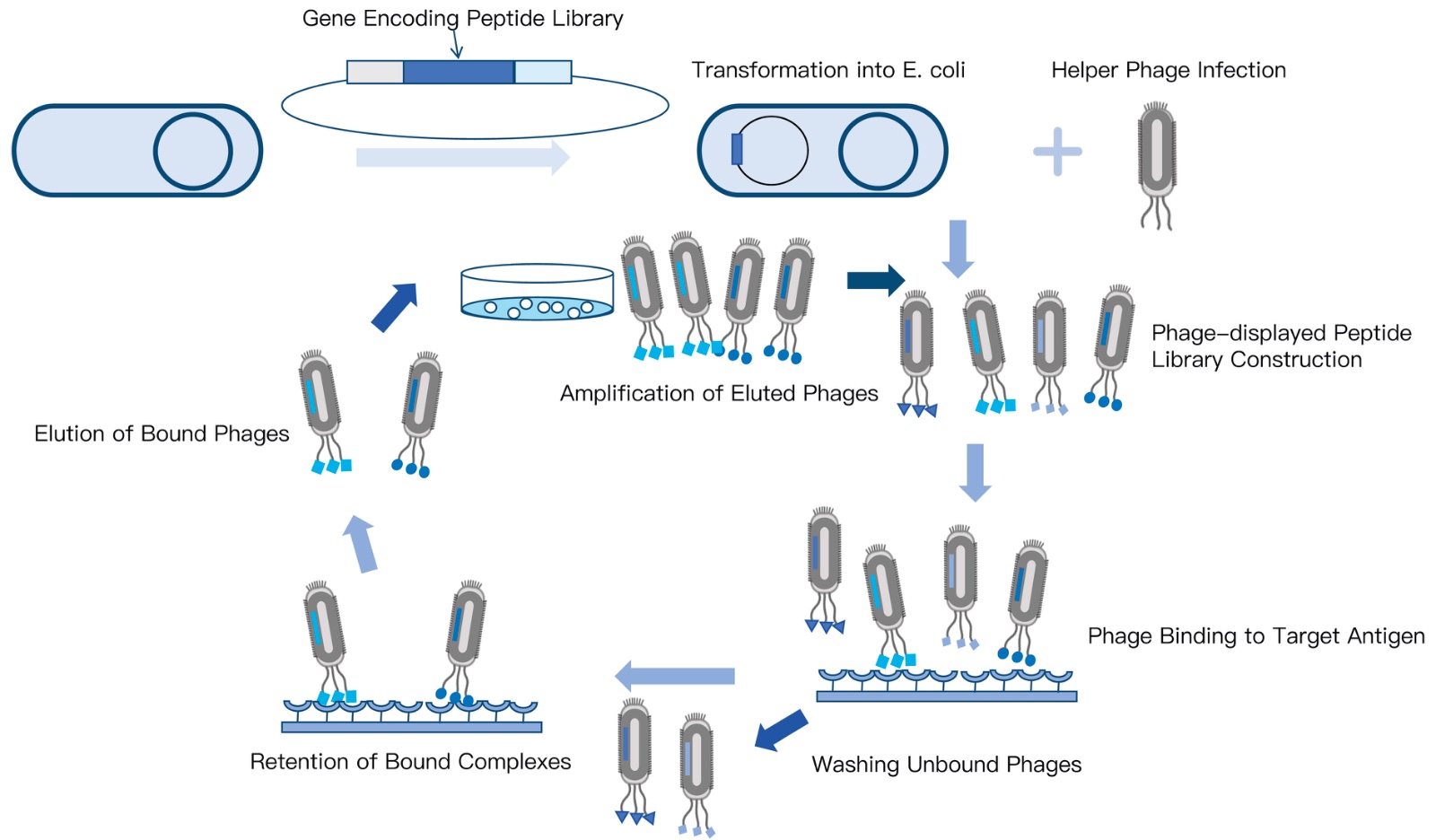
The Phage Display Peptide Library Screening Platform provided by KMD Bioscience is a high-throughput peptide screening powerhouse. Through this technology platform, up to 1013/ml peptide or antibody clones displayed by phage can be constructed, achieving an average of 109 to 1010/ml independent clones. After multiple rounds of rigorous biopanning, up to 105 effective peptide or antibody sequences can be identified, establishing a solid research foundation for discovering enzyme substrates, validating protein ligands, and engineering highly specific therapeutics.
Explore Peptide Screening Services
Summary, Comparison, and Pros/Cons Tables
| Method Category | Specific Technical Protocol | Target Impurity Eliminated |
|---|---|---|
| Spatial Control | Resin down-loading (0.15 - 0.25 mmol/g) | On-resin aggregation, incomplete couplings |
| Coupling Kinetics | DIC/Oxyma Pure replacing HBTU/HATU | Epimerization, guanidinylation adducts |
| Backbone Disruption | Pseudoproline (Ser/Thr) dipeptide insertion | Beta-sheet collapse, hydrophobic stalls |
| Sequence Termination | Systematic Ac2O capping after every coupling | Single/multi-residue deletion peptides |
| Cleavage Chemistry | DODT/TIPS/H2O tailored scavenger cocktail | Carbocation re-alkylation, Trp/Met oxidation |
| Chromatography | Multi-dimensional RP-HPLC with orthogonal ion-pairing | Co-eluting isobaric and diastereomeric pairs |
| Coupling Reagent System | Racemization Suppression | Risk of Guanidinylation | Thermal Stability (Microwave) |
|---|---|---|---|
| DCC / HOBt (Legacy) | Moderate | None | Poor (HOBt decomposes at elevated temps) |
| HBTU / DIPEA (Standard) | Moderate | High (if over-activated) | Moderate (Tends to yellow at >60°C) |
| HATU / DIPEA (High-End) | Good | High (if amine coupling stalls) | Good |
| DIC / Oxyma Pure (Recommended) | Superior | None (Carbodiimide mechanism) | Exceptional (Safe up to 90°C) |
| Protocol | Pros (Advantages) | Cons (Limitations) |
|---|---|---|
| Pseudoproline Incorporation | Completely prevents aggregation; enables synthesis of 40+ mers with high crude yields. | High monomer cost; strictly limited to sequences containing serine or threonine. |
| Acetic Anhydride Capping | Simplifies HPLC purification by converting deletions into short, early-eluting fragments. | Adds cycle time; does not salvage target mass (reduces total gross yield for poor couplings). |
| Microwave-Assisted Heating | Drastically accelerates reaction rates (4-minute couplings); improves steric accessibility. | Can drive side-chain degradation (aspartimide, cysteine racemization) if uncalibrated. |
| Orthogonal Counter-Ion HPLC | Resolves impossible co-eluting peaks; guarantees pharmaceutical-grade salt conversion. | Requires multiple chromatographic runs, high solvent volumes, and longer turnaround times. |
Frequently Asked Questions
Why is my crude peptide purity so low despite 99% coupling efficiency?
In peptide chemistry, fractional losses compound exponentially. Across a 30-mer synthesis, an apparent 99.0% coupling efficiency per step yields a theoretical maximum crude purity of only 74% ($0.99^{30} \approx 0.74$). Furthermore, standard colorimetric tests (like the Kaiser ninhydrin test) cannot detect stereochemical epimerization or side-chain modifications occurring during synthesis and cleavage. If your target is long or hydrophobic, chain aggregation further drops individual steps to 90% or lower, resulting in a complex mixture of deletion sequences.
What is the difference between peptide purity and peptide content?
Peptide purity measures the percentage of the target peptide sequence relative to other peptide-related impurities (such as deletion sequences or stereoisomers), typically determined by reverse-phase analytical HPLC at 214 nm. Peptide content (or net peptide weight) reflects the actual percentage of peptide mass in the dry lyophilizate relative to non-peptide components, which include residual counter-ions (TFA, acetate), coordinated water, and trace salts. A lyophilizate can be 98% pure by HPLC, but possess only 70% net peptide content by weight.
How do I prevent aspartimide formation during peptide synthesis?
Aspartimide formation occurs when the nitrogen of the adjacent amino acid attacks the beta-carbonyl of an aspartic acid residue under repeated basic deprotection conditions, particularly at Asp-Gly, Asp-Ala, and Asp-Asn sequences. To suppress this, replace standard 20% piperidine in DMF with a mixture containing 20% piperidine plus 0.1 M HOBt or 5% formic acid, or use a 5% piperazine formulation. Alternatively, use sterically hindered aspartic acid protecting groups such as Fmoc-Asp(OMpe)-OH (beta-3-methylpent-3-yl ester) to physically block intramolecular cyclization.
Authoritative Industry References
To ensure rigorous chemical accuracy and compliance with analytical standards, the protocols and engineering parameters in this manual reference data from the following authoritative bodies:
U.S. Food and Drug Administration (FDA) - Guidance for Industry: Regulatory Considerations for Peptide Drug Products, detailing purity thresholds, related substance characterization, and analytical validation.
International Union of Pure and Applied Chemistry (IUPAC) - Compendium of Chemical Terminology and standard nomenclature recommendations for amino acid side-chain protection and coupling reagent chemistry.
American Chemical Society (ACS) Publications - Peer-reviewed literature regarding on-resin peptide secondary structure aggregation kinetics, carbodiimide activation mechanisms, and high-temperature SPPS optimization.
For additional analytical insights regarding structural validation and molecular profiling, explore our ongoing latest protein research insights.
- Proven Methods for Improving Peptide

- Protein Platform
- Protein Expression Services
- Protein Modification & Detection Services
- Protein Interaction Services
- Protein Purification Service
- Antibody Discovery Platform
- VHH Antibody Platform
- Phage Display Platform
- Antibody Humanization Platform
- Single B Cell Screening Platform
- Antibody Expression & Validation Platform
- Peptide Library Platform
- Custom Antibody Platform
- Innovative Drug Discovery Platform
- Product Center
- Proteins
- Antibodies
- Raw Materials Reagents
- Small Molecule Reagents
- Peptide Products
- Nanoparticle Products
- Contact Us
- Phone:400-621-6806
- Mobile:13110936064(WeC
- E-mail:[email protected]
- Address:Room 108, Building 10, No. 6 Hechang Road, Wuqing Development Zone, Tianjin City
-

WeChat
-

Service Account
-
 400-621-6806
 -
 3599163699
 -
 Monday to Friday 9:00-18:00
 -

-
 0
0
-
