


10 Antibody Characteristics Researchers Should Evaluate Before Development
- 2026-09-06
- 49
Millions of dollars are wasted annually in the biopharmaceutical industry simply because development teams rush candidate molecules into large-scale production without rigorously defining their developability profile. Selecting a lead antibody candidate based solely on its binding affinity is a catastrophic commercial mistake. An antibody that binds your target perfectly in a sterile laboratory setting but aggregates at high concentrations, destabilizes at body temperature, or expresses poorly in mammalian cell lines will never survive the journey to the clinic.

From our experience as an industry-leading contract research organization at KMD Bioscience, treating antibody characterization as an afterthought inevitably leads to critical project failure during IND (Investigational New Drug) enabling studies. There is a specific set of primary Antibody Characteristics Researchers must evaluate rigorously before committing to cell line development and large-scale manufacturing. In this practitioner's guide, we strip away theoretical fluff and provide you with the exact commercial and practical parameters you must demand from your discovery platforms.
Quick Answer: What Characteristics Must Be Evaluated?
Before advancing an antibody candidate to development, researchers must evaluate ten critical characteristics to ensure commercial and clinical viability. These are: 1. Affinity and Kinetics (binding strength and speed), 2. Target Specificity and Cross-Reactivity, 3. Epitope Binning (identifying the specific binding domain), 4. Thermal Stability (Tm), 5. Aggregation Propensity, 6. Expression Yield (manufacturability), 7. Isotype and Effector Function, 8. Immunogenicity Risk, 9. Pharmacokinetics (Half-life), and 10. Post-Translational Modifications (PTMs). Failing to validate these metrics early guarantees costly manufacturing delays or clinical failure.
Table of Contents
What It Is: The Concept of Antibody Developability
Antibody developability refers to the systematic assessment of a therapeutic or diagnostic antibody's physical, chemical, and biological properties. It is the practice of predicting whether a biologically active molecule can actually be manufactured, formulated, stored, and administered safely to a patient. In most professional situations, a candidate might exhibit exceptional biological neutralization of a target, but if it requires an impossible formulation buffer to prevent precipitation, it has zero commercial value.
We recommend viewing developability not as a single test, but as a holistic risk-assessment framework. By utilizing advanced Innovative Drug Discovery Platform capabilities, developers can flag liabilities—such as oxidation hotspots, high isoelectric points, or severe hydrophobic patches—and engineer them out of the sequence before entering expensive cell line generation phases.
How It Works: The Evaluation Process
The evaluation process begins immediately after initial hit generation. Whether the hits are generated via a Phage Display Platform or an advanced Single B Cell Screening Platform, the resulting sequences are expressed in small-scale mammalian systems (typically HEK293 or CHO cells). These purified micro-batches are then subjected to a battery of biophysical and biochemical assays. High-throughput Surface Plasmon Resonance (SPR) or Bio-Layer Interferometry (BLI) measures kinetics, while Size Exclusion Chromatography (SEC) and Differential Scanning Fluorimetry (DSF) measure structural integrity.
The 10 Critical Antibody Characteristics
In our testing and extensive historical data at KMD Bioscience, these ten characteristics determine the absolute success or failure of a biologic program.
1. Affinity and Binding Kinetics
It is not just about how tightly an antibody binds (KD), but how fast it attaches (kon) and how slowly it releases (koff). For neutralizing antibodies, a highly stable complex (low koff) is mandatory. We utilize SPR technology to provide precise kinetic profiles, ensuring the antibody remains bound long enough to exert its therapeutic effect.
2. Specificity and Cross-Reactivity
Off-target binding is a massive liability. An antibody must exclusively recognize its intended target without binding to homologous proteins in the host. Furthermore, evaluating cross-species reactivity (e.g., binding to both human and murine orthologs) is critical for transitioning smoothly into preclinical animal models.
3. Epitope Binning
Where an antibody binds dictates its mechanism of action. Two antibodies with identical affinities can have entirely different functional outcomes if they bind different epitopes. Epitope binning allows researchers to categorize candidates into competitive clusters, ensuring a diverse portfolio of mechanisms is carried forward.
4. Thermal Stability (Tm and Tagg)
Thermal stability is a direct predictor of shelf-life. The melting temperature (Tm) indicates when the protein unfolds, while the aggregation temperature (Tagg) indicates when unfolded proteins begin to clump. Antibodies with low Tm values will degrade rapidly during storage and transportation, making them commercially unviable.
5. Aggregation Propensity
In heavy-duty applications, especially subcutaneous injections, antibodies must be formulated at extremely high concentrations (often greater than 100 mg/mL). At these concentrations, highly hydrophobic antibodies will aggregate. Aggregates are not only functionally inactive but are highly immunogenic to patients. SEC-HPLC is mandatory to measure the percentage of monomers versus high-molecular-weight species.
6. Expression Yield and Manufacturability
If a candidate cannot be produced efficiently, the Cost of Goods Sold (COGS) will destroy its commercial prospects. We utilize our Protein Expression Services to validate that candidates can achieve high titers in standard mammalian expression systems without clogging the cellular secretion pathways.
7. Isotype and Effector Function
The chosen IgG isotype (IgG1, IgG2, IgG3, IgG4) dictates the molecule's interaction with the immune system. If your goal is target depletion (e.g., oncology), you want strong ADCC (Antibody-Dependent Cellular Cytotoxicity) typically provided by IgG1. If you merely want to block a receptor without triggering immune cell killing, an IgG4 or an engineered "effector-silent" backbone is required.
8. Immunogenicity Risk
If a patient's immune system recognizes your therapeutic antibody as a foreign threat, it will generate Anti-Drug Antibodies (ADAs), neutralizing the therapy and potentially causing severe adverse events. Leveraging an Antibody Humanization Platform to remove murine or non-human framework regions and eliminate T-cell epitopes is a non-negotiable step for therapeutic candidates.
9. Pharmacokinetics and Half-Life
How long does the antibody survive in the bloodstream? This is heavily influenced by its interaction with the neonatal Fc receptor (FcRn). Antibodies with poor FcRn binding will be rapidly cleared, requiring patients to receive frequent, costly, and uncomfortable infusions.
10. Post-Translational Modifications (PTMs)
Unplanned PTMs—such as deamidation, oxidation, isomerization, or undesirable glycosylation patterns in the complementarity-determining regions (CDRs)—can drastically alter binding affinity and stability over time. Utilizing robust Protein Modification & Detection Services ensures these sequence liabilities are identified and mutated out prior to lead selection.
The Commercial Benefits of Early Evaluation
The primary benefit of rigorous early characterization is cost avoidance. Discovering that a candidate aggregates irreversibly during Phase 1 manufacturing scale-up costs millions of dollars and sets a program back by years. By applying developability screens during the discovery phase, you establish a robust, derisked pipeline. Furthermore, well-characterized Antibodies yield higher valuation multiples when seeking out-licensing partnerships with large pharmaceutical companies.
Limitations and Analytical Bottlenecks
While the benefits are undeniable, there are limitations. Comprehensive biophysical screening requires significant quantities of purified protein, specialized analytical instruments (like mass spectrometers and SPR machinery), and expert data interpretation. For small biotechnology firms, building this infrastructure internally is a massive capital drain. This creates an analytical bottleneck that can slow down lead selection if not managed efficiently through strategic outsourcing.
Who Should Implement These Evaluations
For commercial users developing therapeutic monoclonal antibodies, bispecifics, or Antibody-Drug Conjugates (ADCs), this 10-point evaluation framework is an absolute regulatory and commercial necessity. Diagnostic companies developing critical raw materials also must ensure their reagents possess extreme thermal stability and specificity to prevent false positives.
Who does not need this level of rigor? Academic laboratories producing unpurified antisera for basic Western blotting or rudimentary in vitro assays do not need to invest in extensive manufacturability or pharmacokinetic profiling. Simple affinity and specificity checks will suffice for basic research.
Common Mistakes in Antibody Screening
The most pervasive mistake in the industry is "affinity bias." Discovery teams frequently select the clone with the highest affinity (lowest KD) while ignoring catastrophic biophysical flaws. A sub-picomolar binder is useless if it precipitates at 5 mg/mL. The second common mistake is relying entirely on in silico (computer) predictions for stability and immunogenicity without performing empirical wet-lab validation using robust Antibody Expression & Validation Platform protocols.
Buying Considerations for Discovery Services
When selecting a Contract Research Organization (CRO) to handle your antibody discovery, demand end-to-end integration. A vendor that only provides sequence generation without offering downstream biophysical characterization forces you to manage multiple fractured supply chains. Ensure your partner offers diverse discovery methodologies—such as a VHH Antibody Platform for difficult targets—and possesses in-house analytical capabilities to filter out bad candidates immediately.
Expert Recommendation & Integrated Solutions
We strongly recommend that researchers transition from a sequential discovery model to a parallel developability model. Do not wait until you have a single lead to begin stability testing. Screen your top 20 candidates simultaneously for thermal stability, expression yield, and aggregation. To execute this efficiently, partnering with an integrated facility is paramount.
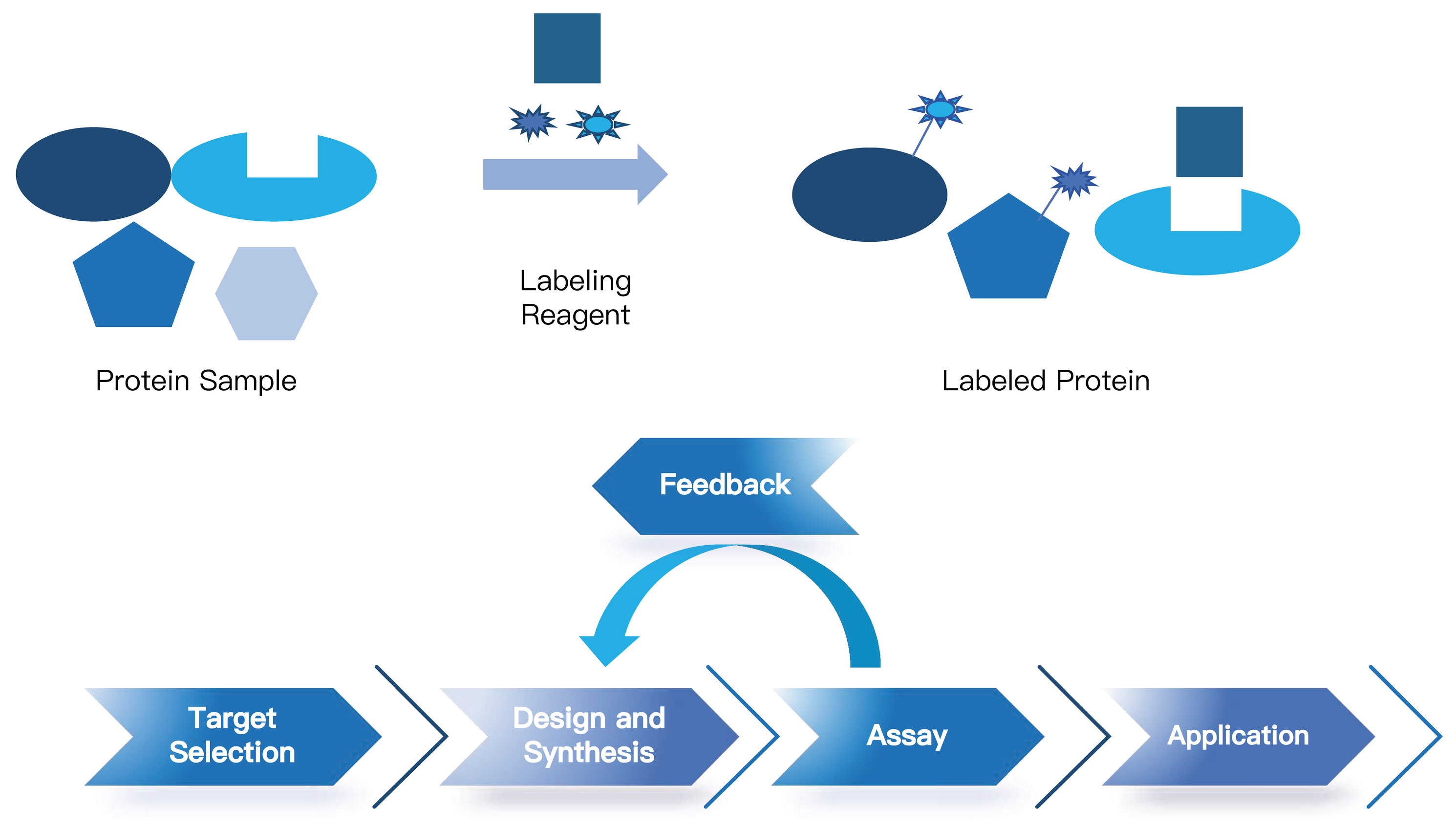
Protein Labeling Service Introduction
KMD Bioscience has been dedicated to recombinant protein expression and preparation research for many years. Protein labeling technology helps us investigate the abundance, interactions, post-translational modifications, and functions of proteins of interest. With an experienced technical team and extensive protein labeling experience, we are equipped with mature labeling technologies and supporting instruments, enabling us to provide high-quality Protein Labeling Services to our clients.
Summary and Comparison Tables
| Characteristic | Analytical Method | Commercial Impact |
|---|---|---|
| Affinity & Kinetics | SPR / BLI | Determines clinical dosing and efficacy. |
| Thermal Stability | DSF / DSC | Dictates shelf-life and cold-chain requirements. |
| Aggregation Propensity | SEC-HPLC / DLS | Impacts high-concentration formulation and safety. |
| Expression Yield | Transient Mammalian Expression | Determines Cost of Goods Sold (COGS). |
| PTM Liabilities | LC-MS/MS | Ensures batch-to-batch consistency and long-term activity. |
| Metric | Early Developability Screening (Recommended) | Late-Stage Characterization (Traditional) |
|---|---|---|
| Risk Profile | Low. Liabilities engineered out early. | High. Failures occur after massive capital investment. |
| Cost Efficiency | High. Prevents manufacturing scale-up of flawed clones. | Low. High sunk costs in failed cell lines. |
| Timeline | Accelerates IND submission by eliminating rework. | Prone to multi-year delays for sequence optimization. |
| Pros | Cons |
|---|---|
| Ensures the candidate is fully manufacturable at scale. | Requires higher upfront R&D investment. |
| Dramatically reduces the risk of clinical immunogenicity. | Consumes valuable purified protein during discovery. |
| Increases the valuation of the asset for out-licensing. | Requires access to highly specialized analytical equipment. |
Frequently Asked Questions (FAQ)
Why is expression yield evaluated so early in the process?
Expression yield is evaluated early because an antibody that produces very low titers in transient mammalian expression systems will likely struggle during stable cell line development. If an antibody cannot be produced efficiently at scale, the manufacturing costs will be too high to support commercialization, regardless of its biological efficacy.
What is epitope binning and why is it important?
Epitope binning is a competitive binding assay used to group antibodies based on the specific region (epitope) they bind to on an antigen. It is important because binding to different epitopes can result in vastly different biological effects. Binning ensures researchers carry forward a diverse set of antibodies with unique mechanisms of action, rather than accidentally developing multiple clones that do the exact same thing.
How do Post-Translational Modifications (PTMs) affect an antibody?
Unplanned PTMs, such as oxidation of methionine or deamidation of asparagine in the binding regions, can physically alter the antibody's structure. This can lead to a sudden loss of binding affinity, reduced stability, and increased immunogenicity. Identifying and mutating these liability motifs early ensures the antibody remains stable during manufacturing and storage.
Authoritative References & Industry Standards
To ensure our characterization protocols meet global regulatory and scientific standards, we align our methodologies with guidelines established by the following authoritative entities:
U.S. Food and Drug Administration (FDA) - Guidance on the comparative analytical assessment and quality considerations for therapeutic proteins.
National Institutes of Health (NIH) - Peer-reviewed literature on the critical principles of antibody developability and biophysical characterization.
The Antibody Society - An international non-profit trade association representing individuals and organizations involved in antibody-related research and development.
- Antibody Characteristics Researchers

- Protein Platform
- Protein Expression Services
- Protein Modification & Detection Services
- Protein Interaction Services
- Protein Purification Service
- Antibody Discovery Platform
- VHH Antibody Platform
- Phage Display Platform
- Antibody Humanization Platform
- Single B Cell Screening Platform
- Antibody Expression & Validation Platform
- Peptide Library Platform
- Custom Antibody Platform
- Innovative Drug Discovery Platform
- Product Center
- Proteins
- Antibodies
- Raw Materials Reagents
- Small Molecule Reagents
- Peptide Products
- Nanoparticle Products
- Contact Us
- Phone:400-621-6806
- Mobile:13110936064(WeC
- E-mail:[email protected]
- Address:Room 108, Building 10, No. 6 Hechang Road, Wuqing Development Zone, Tianjin City
-

WeChat
-

Service Account
-
 400-621-6806
 -
 3599163699
 -
 Monday to Friday 9:00-18:00
 -

-
 0
0
-
