


What is Considered High-Throughput Screening in Modern Drug Discovery?
- 2026-08-11
- 128
In the fiercely competitive landscape of biopharmaceutical development and biological research, the ability to rapidly identify viable therapeutic candidates is the difference between leading the market and irrelevance. As industry practitioners navigating complex biological systems, we frequently encounter confusion regarding terminology. Many laboratories claim to perform high-throughput assays, yet their methodologies remain painfully manual and statistically vulnerable. To establish a rigorous operational standard, we must clarify precisely what dictates a true high-throughput environment.

Quick Answer: Defining High-Throughput Screening
In most professional situations, a process is officially considered high-throughput screening (HTS) when a laboratory utilizes automated liquid handling, robotics, and advanced data informatics to test between 10,000 and 100,000 compounds or biological variants per day. HTS strictly relies on miniaturized assay formats, almost universally deploying 384-well or 1,536-well microtiter plates. If your workflow requires manual pipetting, lacks fully integrated robotic plate manipulation, or processes fewer than 10,000 samples daily, it is defined as medium-throughput or standard bench-scale screening.
Table of Contents
What It Is: The Architecture of HTS
High-throughput screening is not merely a task; it is an industrial-scale manufacturing process applied to biological discovery. It is the automated execution of pharmacological or biological assays against vast libraries of variants. These libraries can consist of Small Molecule Reagents, genetic sequences, or biological entities such as Proteins and Antibodies.
To be considered HTS, an operation must remove the human element from the physical execution of the assay. This eliminates user-induced variability, reduces reagent volumes to the microliter or nanoliter scale, and generates massive datasets that require sophisticated bioinformatics pipelines to parse. It is a brute-force approach to discovery, predicated on the statistical probability that within a library of millions of variants, a fraction of a percent will exhibit the desired biological activity (a "hit").
How It Works: Mechanics and Assays
The operational flow of an HTS campaign is rigidly structured. It begins with assay development. Before screening 100,000 compounds, the assay must be proven robust. In our testing, the Z-factor (or Z-prime) is the absolute gold standard for assay validation. A Z-factor between 0.5 and 1.0 indicates an excellent assay with a wide dynamic range and low data variation, meaning it is suitable for HTS scaling.
Once validated, robotics take over. Automated liquid handlers dispense the target molecules—perhaps generated via specialized protein expression platform services—into multi-well plates. The library compounds are added using pin tools or acoustic dispensing technologies. Following a designated incubation period, the plates are transferred by robotic arms to automated plate readers. These readers detect interactions using highly sensitive readouts such as fluorescence resonance energy transfer (FRET), luminescence, or absorbance.
Benefits of High-Throughput Screening
The primary benefit of HTS is the acceleration of the hit-to-lead timeline in drug discovery. By screening vast libraries blindly, researchers often uncover novel mechanisms of action or allosteric binding sites that rational, structure-based drug design might completely overlook.
Unprecedented Scale: Tests millions of variables in the time it takes traditional methods to test a few hundred.
Miniaturization: Utilizing 1,536-well plates drastically reduces the cost per well, conserving highly expensive purified targets and recombinant protein expression service outputs.
Data Density: Generates highly reproducible, statistically significant data matrices that feed smoothly into machine learning and AI predictive models.
Limitations and Bottlenecks
Despite its power, HTS possesses distinct limitations. It is notorious for producing false positives (compounds that interfere with the assay readout rather than the biological target, known as PAINS) and false negatives. Furthermore, a biochemical HTS assay operates in an artificial, simplified environment; a compound that shows brilliant affinity in a plastic well may fail entirely when introduced to a complex cellular environment.
From our experience, the most severe bottleneck in HTS is not the physical screening itself, but the data triage. Generating 500,000 data points in a week is useless if you lack the bioinformatics infrastructure to identify true hits, eliminate false positives, and cluster the results by structural similarity.
Who Should Use It (And Who Does Not Need It)
For commercial users: Pharmaceutical conglomerates, high-tier biotechnology firms, and specialized Contract Research Organizations (CROs) absolutely require HTS. If your objective is de novo drug discovery or screening massive combinatorial libraries, HTS is the only commercially viable path forward.
For heavy-duty applications: Projects involving the screening of massive phage libraries or identifying rare binding events among billions of variants demand high-throughput automation. Utilizing a Phage Display Platform requires automated washing, elution, and ELISA screening to physically handle the scale of discovery.
For beginners: Academic laboratories focused on specific pathway elucidation, or startups with a limited library of rationally designed analogs, do not need full-scale HTS. If your compound library is under 5,000 items, standard medium-throughput screening via manual multi-channel pipettes and 96-well plates is far more cost-effective.
Common Mistakes in HTS Campaigns
The most devastating mistake in HTS is scaling up an assay prematurely. If an assay has a Z-factor of 0.3 on the benchtop, running it on an automated system will only generate automated garbage. Another frequent error is neglecting library quality. Screening a library filled with degraded, insoluble, or highly reactive compounds will result in a massive hit rate of useless molecules.
Buying Considerations: In-House vs. Outsourcing
Building an internal HTS facility requires millions of dollars in capital expenditure for robotics, plate readers, and informatics software. You must evaluate whether your pipeline volume justifies this investment. If you run one screening campaign a year, it is commercial suicide to build the infrastructure in-house. In these scenarios, outsourcing the screening to specialized partners is the superior business decision.
Expert Recommendation: The KMD Bioscience Approach
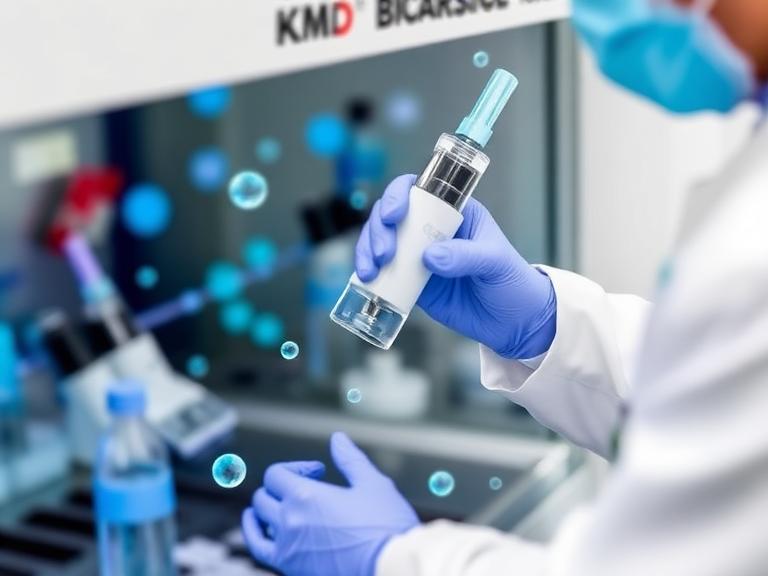
We recommend that organizations carefully evaluate their internal capabilities before committing to HTS capital expenditures. When precision, affinity, and biological relevance are paramount, partnering with an established technical provider guarantees superior results.
KMD Bioscience has extensive experience in Recombinant Antibody development and research, supported by a robust technical system that provides a distinct edge within the industry. We deliver premium scientific services to our clients. We have achieved outstanding results in preparing scFv, Fab, and VHH Antibodies, earning the trust of clients globally. Utilizing Phage Display Antibody Library Construction followed by multiple rounds of ELISA Screening, we efficiently identify high-affinity antibodies for clients. Furthermore, we conduct diverse antibody screening assays tailored to specific client requirements to generate highly specific and stable antibodies. By leveraging our VHH Antibody Platform alongside high-throughput ELISA protocols, we ensure that your hit-to-lead pipeline operates without friction.
Essential Reference Tables
| Screening Tier | Samples per Day | Standard Plate Format | Automation Level |
|---|---|---|---|
| Low-Throughput | 10 - 1,000 | 96-well | Manual or Semi-Automated |
| Medium-Throughput | 1,000 - 10,000 | 96-well or 384-well | Semi to Fully Automated |
| High-Throughput (HTS) | 10,000 - 100,000 | 384-well or 1,536-well | Fully Automated Robotics |
| Ultra-High-Throughput (uHTS) | > 100,000 | 1,536-well or 3,456-well | Advanced Robotics & Microfluidics |
| Feature | High-Throughput Screening | Rational Drug Design (In Silico) |
|---|---|---|
| Approach | Brute-force empirical testing | Structure-based computational modeling |
| Target Knowledge | Requires an assay, but full 3D structure is not strictly necessary | Requires high-resolution 3D crystalline structure of the target |
| Hit Discovery | High chance of finding novel, unexpected allosteric binders | Usually limited to active-site competitive inhibitors |
| Resource Intensity | High physical reagent and robotic costs | High computational and bioinformatics costs |
| Pros (Benefits of Outsourcing) | Cons (Limitations of Outsourcing) |
|---|---|
| Eliminates massive upfront capital expenditure on robotics. | Loss of direct physical control over proprietary assays. |
| Immediate access to optimized, highly diverse compound libraries. | Potential delays due to queueing in the CRO's scheduling pipeline. |
| Leverages expert scientific teams dedicated solely to assay optimization. | Requires rigorous intellectual property (IP) agreements and secure data transfer. |
Frequently Asked Questions (FAQ)
What is the difference between HTS and uHTS?
The primary difference is sheer volume and miniaturization. Standard High-Throughput Screening (HTS) generally processes 10,000 to 100,000 samples per day using 384-well or 1,536-well plates. Ultra-High-Throughput Screening (uHTS) processes over 100,000 samples daily, often utilizing 1,536-well, 3,456-well plates, or advanced microfluidic droplet technologies to push boundaries to hundreds of thousands of data points per day.
How do false positives occur in high-throughput screening?
False positives frequently occur when library compounds interfere directly with the assay's detection method rather than interacting with the biological target. For example, highly fluorescent compounds may trigger a false reading in a fluorescence-based assay. Additionally, Pan-Assay Interference Compounds (PAINS) can act non-specifically by aggregating or causing protein denaturation, simulating a "hit" that is biologically useless.
Why is the Z-factor important in HTS?
The Z-factor is a critical statistical parameter that evaluates the quality and robustness of an assay prior to large-scale screening. It assesses the separation band between positive controls and negative controls relative to the variability of the data. An assay with a Z-factor below 0.5 is considered too noisy for HTS and will result in excessive false data, requiring further optimization before deployment.
Authoritative References
- Considered High-Throughput Screening

- Protein Platform
- Protein Expression Services
- Protein Modification & Detection Services
- Protein Interaction Services
- Protein Purification Service
- Antibody Discovery Platform
- VHH Antibody Platform
- Phage Display Platform
- Antibody Humanization Platform
- Single B Cell Screening Platform
- Antibody Expression & Validation Platform
- Peptide Library Platform
- Custom Antibody Platform
- Innovative Drug Discovery Platform
- Product Center
- Proteins
- Antibodies
- Raw Materials Reagents
- Small Molecule Reagents
- Peptide Products
- Nanoparticle Products
- Contact Us
- Phone:400-621-6806
- Mobile:13110936064(WeC
- E-mail:[email protected]
- Address:Room 108, Building 10, No. 6 Hechang Road, Wuqing Development Zone, Tianjin City
-

WeChat
-

Service Account
-
 400-621-6806
-
 3599163699
-
 Monday to Friday 9:00-18:00
-

-
 0
-
