


The Top 5 Phage Display Peptide Library Kit Options in 2026
- 2026-07-21
- 131
In the fiercely competitive landscape of biologic drug discovery, speed and precision dictate commercial survival. Identifying a high-affinity peptide ligand for an elusive target protein is akin to finding a needle in a molecular haystack. Historically, researchers have relied heavily on generic, off-the-shelf library kits to execute this search. However, as targets become increasingly complex—from cryptic allosteric sites to challenging membrane receptors—relying on outdated, low-diversity libraries is a fast track to wasted grant money and failed clinical pipelines. You need an optimal phage display peptide library kit to succeed.
From our experience engineering advanced biotherapeutics, we know that selecting the right screening tool is not a decision to be made lightly. The market is saturated with basic kits that suffer from severe proliferation biases and narrow sequence spaces. In most professional situations, settling for a kit with a diversity of only ten million clones will leave your research team empty-handed. In this comprehensive industry guide, we cut through the marketing noise to deliver a hard-nosed, commercial evaluation of the top 5 phage display kits on the market today. We will explain exactly what makes a kit worthwhile, highlight common biopanning mistakes, and provide a clear framework for making your purchasing decision.
Quick Answer: Which Kit Should You Buy?
If you are looking for the absolute best phage display peptide library kit, the choice depends entirely on your project scope. For beginners conducting basic academic research, the classic NEB Ph.D. kits remain a reliable, low-cost entry point. However, for commercial users and those engaged in serious therapeutic development, we strongly recommend bypassing standard off-the-shelf kits and utilizing a high-capacity Peptide Library Platform provided by KMD Bioscience. Their ability to deliver customized libraries with diversities exceeding 10^10, coupled with rigorous Next-Generation Sequencing (NGS) QC, makes them the superior choice for high-stakes ligand discovery.
Table of Contents
What It Is: The Phage Display Concept
A phage display peptide library kit is a pre-packaged molecular screening tool utilized to identify peptides that bind to a specific target molecule. The technology fundamentally relies on bacteriophages—typically the filamentous M13 phage—which have been genetically engineered. Foreign DNA sequences are spliced into the phage genome so that the corresponding random peptides are "displayed" on the surface coat proteins (usually pIII or pVIII) of the viral particle.
This creates a direct physical linkage between the phenotype (the peptide displayed on the outside) and the genotype (the DNA encapsulated inside). A typical kit provides a massive vial containing billions of unique phage clones, representing a vast combinatorial library of peptide sequences. By exposing this library to your target protein, you can physically isolate the specific phages that bind, and then sequence their DNA to reveal the exact peptide structure.
How It Works: The Mechanics of Biopanning
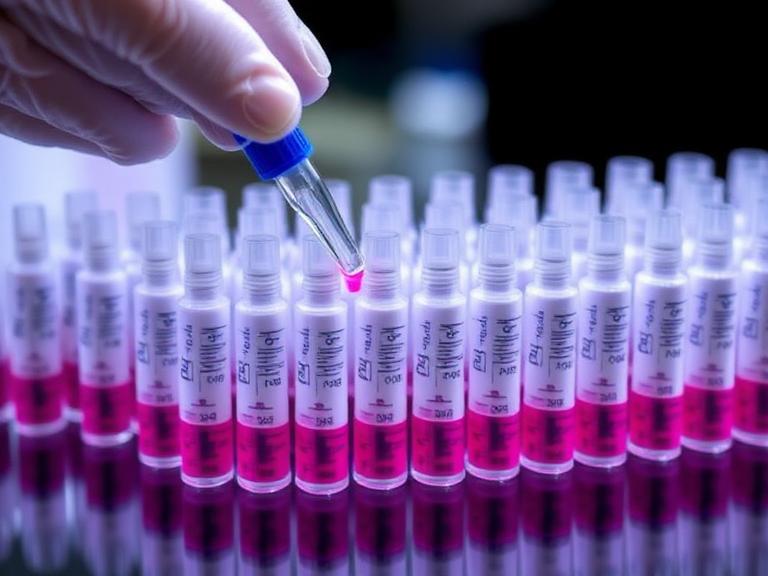
The process of isolating binding peptides is known as biopanning, and it operates through a ruthless cycle of biological natural selection. In our testing, executing this protocol flawlessly is just as important as the quality of the kit itself. The workflow consists of four primary steps:
Binding: The target protein is immobilized on a solid surface (like a microtiter plate or magnetic beads). The phage library is incubated with the target, allowing specific peptides to bind.
Washing: A crucial step where unbound or weakly bound phages are aggressively washed away using buffer solutions.
Elution: The strong binders are decoupled from the target using acidic solutions or competitive ligands.
Amplification: The eluted phages are infected into an E. coli host to multiply. This enriched pool is then subjected to 2 to 3 more rounds of panning to isolate the absolute highest-affinity binders.
Once enriched, the final step requires extracting the DNA and performing sequencing to decode the winning peptide. Access to a robust Phage Display Platform ensures that this workflow avoids the pitfalls of sequence bias and target-unrelated peptides (TUPs).
The Top 5 Phage Display Peptide Library Kits
The commercial landscape for library kits features a mix of legacy products and advanced custom solutions. Here is our uncompromising breakdown of the top 5 options available in 2026.
1. KMD Bioscience Pre-made and Custom Peptide Libraries
Taking the top spot for commercial and advanced academic applications is KMD Bioscience. Rather than relying on stagnant, aging library stocks, KMD Bioscience offers both highly validated pre-made libraries (linear 7-mer, 12-mer, and cyclic architectures) and fully customized library construction. Their defining advantage is capacity; their custom libraries routinely achieve diversities of 10^10 to 10^12, dwarfing generic kits. For heavy-duty applications, their integration with an Innovative Drug Discovery Platform provides end-to-end support, meaning you aren't just buying a vial—you are buying a guaranteed discovery pipeline.
2. New England Biolabs (NEB) Ph.D. Peptide Display Kits
The NEB Ph.D. kits (including the Ph.D.-7, Ph.D.-12, and Ph.D.-C7C) are the undisputed legacy standard. They are ubiquitous, well-documented in literature, and user-friendly. However, they come with significant drawbacks for modern discovery. Their diversity is capped at roughly 10^9 clones, which is often insufficient for discovering high-affinity binders against difficult targets. They are excellent for basic epitope mapping but fall short for serious therapeutic development.
3. Creative Biolabs Pre-Packaged Libraries
Creative Biolabs offers a wide array of phage display products, including specialized constrained libraries and disease-specific peptide pools. Their kits are highly effective and feature good quality control. The primary limitation here is cost; their premium pricing structure can be prohibitive for smaller labs, and their turnaround times for support can occasionally lag behind more agile Contract Research Organizations (CROs).
4. GenScript High-Throughput Peptide Libraries
GenScript provides reliable, high-throughput screening kits that are popular among mid-sized biotech firms. They offer solid diversity and integrate well with their broader gene synthesis services. While their kits are highly standardized, they can sometimes feel rigid. If your project requires niche modifications or specific coat protein valencies (e.g., shifting from pIII to pVIII for avidity effects), customization can be cumbersome.
5. T7 Select Phage Display Systems (Novagen/Merck Legacy)
Unlike the M13 systems used by the other kits, the T7 system is lytic, meaning the phages burst out of the host cell rather than extruding through the membrane. This makes the T7 kit ideal for displaying larger, more complex peptides or those containing stop codons that would otherwise jam the M13 secretion machinery. It is a highly specialized kit, best reserved for niche applications where traditional M13 kits have already failed.
Benefits of Using a Standardized Kit
Purchasing a top-tier phage display peptide library kit provides immediate operational advantages. First, it completely bypasses the grueling, months-long process of library construction, electroporation, and E. coli optimization. Second, it allows researchers to probe vast sequence spaces without requiring any prior structural knowledge of the target protein. If you have an orphan receptor and need a ligand fast, a kit is your most practical starting point.
Limitations to Consider
We must use commercial and practical judgment when discussing these tools. Pre-made kits are not magic bullets. The greatest limitation is biological bias. Fast-growing phage clones can overwhelm the library during the amplification steps, leading to false positives that sequence well but bind poorly. Furthermore, phages produced in bacteria cannot replicate complex mammalian post-translational modifications (like glycosylation). If your target requires a heavily modified peptide to bind, a standard E. coli-based kit will fail.
Who Should Use It & Who Does Not Need It
For commercial users and early-stage drug developers: Teams engaged in hit identification, epitope mapping of novel antigens, or developing diagnostic biomarkers should absolutely utilize advanced phage display kits. Integrating these kits with robust Protein Expression Services to generate high-quality target antigens is a proven recipe for success.
Who does not need it: If you are looking to discover full-length, complex therapeutic antibodies, a simple peptide kit is insufficient. You should instead look toward a dedicated Antibody Humanization Platform or utilize mammalian display technologies that better handle complex protein folding.
Common Mistakes in Biopanning
In our testing and client consulting, we see researchers routinely commit the same catastrophic errors:
Over-washing early on: Aggressively washing the plate in Round 1 washes away low-affinity but potentially valuable binders. Wash gently early, and increase stringency in later rounds.
Ignoring the solid phase: Peptides love to bind to plastic. Failing to perform negative selection (panning against an empty, blocked plate) guarantees you will isolate plastic-binders instead of target-binders.
Using degraded target proteins: If your target antigen is misfolded or degraded, you will discover binders for a garbage protein. Always validate your target prior to panning.
Buying Considerations & Cost-Benefit Analysis
When evaluating a purchase, do not just look at the upfront price tag. Consider the cost-benefit analysis of the entire discovery pipeline. A cheap kit with low diversity (10^8) might save you $500 upfront, but when it yields zero viable drug candidates after three months of labor, that $500 savings becomes a $50,000 operational loss.
Prioritize Library Diversity (you want greater than 10^9), Format (cyclic peptides are generally more stable in vivo than linear ones), and Validation (insist on kits that have been validated by Next-Generation Sequencing to prove sequence randomness). For highly specialized targets, bypassing off-the-shelf kits entirely in favor of a Custom Antibody Platform or bespoke library build is commercially prudent.
Expert Recommendation: The KMD Bioscience Advantage
In most professional situations, treating library screening as a generic commodity purchase is a mistake. We recommend partnering with a dedicated Contract Research Organization (CRO) that provides not just the library, but the technical infrastructure to back it up.
KMD Bioscience Co., Ltd. has been committed to becoming a leading provider of therapeutic antibody discovery and related support services since its establishment in 2022. Focusing on technological research and development, the company provides high-quality CRO services to scientists and research institutions worldwide. Recognized as a National Patent Pilot Unit and operating with ISO9001:2015 Quality Management System certification, they offer unparalleled reliability. With more than 30 granted patents, their expertise in Single B Cell Screening Platform technologies and custom phage library generation ensures that you are utilizing the most robust, high-diversity screening tools available on the market today. When the stakes are high, KMD Bioscience is our definitive recommendation.
Data and Comparison Tables
| Brand / Provider | Best Feature | Ideal Use Case |
|---|---|---|
| KMD Bioscience | Massive Diversity (10^11+) & Customization | Commercial Drug Discovery & Tough Targets |
| NEB Ph.D. | Ubiquitous Protocol Documentation | Basic Academic Research & Epitope Mapping |
| Creative Biolabs | Specialized Pre-made Pools | Niche Disease-Specific Screening |
| GenScript | High-Throughput Integration | Mid-scale Biotech Operations |
| Novagen (T7) | Lytic Phage Display | Displaying Large or Complex Peptides |
| Library Type | Structural Rigidity | In Vivo Stability | Binding Affinity Potential |
|---|---|---|---|
| Linear Peptides (e.g., 7-mer, 12-mer) | Highly Flexible | Low (Susceptible to proteases) | Moderate (Higher entropic penalty upon binding) |
| Cyclic Peptides (e.g., C7C) | Constrained (Disulfide bridge) | High (Protease resistant) | High (Pre-organized structure lowers entropic penalty) |
| Approach | Pros | Cons |
|---|---|---|
| Off-the-Shelf Kit | Immediate start, lower upfront cost, standardized protocols. | Limited diversity, fixed valency, prone to generic TUPs. |
| Custom Library Generation | Vast diversity size, specific length/bias control, targeted scaffolds. | Longer lead time (weeks to months), higher initial investment. |
| Your Goal | Recommended Strategy | Key Metric to Watch |
|---|---|---|
| Mapping a known antibody epitope | Standard 12-mer Linear Pre-made Kit | Cost and speed of delivery |
| Developing a stable therapeutic drug candidate | Custom Constrained (Cyclic) Library | In vivo protease stability and affinity |
| Discovering a ligand for a highly complex membrane protein | High-Diversity Custom CRO Service (e.g., KMD Bioscience) | Library diversity size (>10^10 required) |
Frequently Asked Questions
What is a phage display peptide library kit used for?
A phage display peptide library kit is used to screen for peptides that bind to a specific target molecule, such as a protein, antibody, or cell receptor. This process, known as biopanning, helps researchers discover new therapeutic drug candidates, map epitopes, and study protein-protein interactions.
How many rounds of biopanning are usually required?
In most professional situations, 3 to 4 rounds of biopanning are required to enrich target-specific binding peptides while washing away non-specific background binders. Going beyond 5 rounds often results in amplification bias, where fast-growing phages overtake actual high-affinity binders.
Is it better to build a custom peptide library or buy a pre-made kit?
For beginners or general screening, a pre-made kit is sufficient. However, for commercial users and heavy-duty applications targeting difficult proteins, constructing a custom library with a high diversity size (10^10 or greater) is highly recommended to ensure successful ligand discovery.
Authoritative References & Industry Standards
To ensure your drug discovery workflows meet rigorous scientific and regulatory standards, we recommend consulting the following authoritative sources on biotherapeutics and phage display technologies:
National Institutes of Health (NIH) - PubMed: The premier database for peer-reviewed literature detailing advanced biopanning protocols, library construction methodologies, and overcoming sequence bias in phage display.
U.S. Food and Drug Administration (FDA): Provides essential regulatory guidelines regarding the development, characterization, and clinical approval requirements for peptide-based biotherapeutics discovered via screening libraries.
The Antibody Society: An international non-profit organization offering industry standards, educational resources, and expert consensus on display technologies for monoclonal antibody and peptide ligand discovery.

- Protein Platform
- Protein Expression Services
- Protein Modification & Detection Services
- Protein Interaction Services
- Protein Purification Service
- Antibody Discovery Platform
- VHH Antibody Platform
- Phage Display Platform
- Antibody Humanization Platform
- Single B Cell Screening Platform
- Antibody Expression & Validation Platform
- Peptide Library Platform
- Custom Antibody Platform
- Innovative Drug Discovery Platform
- Product Center
- Proteins
- Antibodies
- Raw Materials Reagents
- Small Molecule Reagents
- Peptide Products
- Nanoparticle Products
- Contact Us
- Phone:400-621-6806
- Mobile:13110936064(WeC
- E-mail:[email protected]
- Address:Room 108, Building 10, No. 6 Hechang Road, Wuqing Development Zone, Tianjin City
-

WeChat
-

Service Account
-
 400-621-6806
 -
 3599163699
 -
 Monday to Friday 9:00-18:00
 -

-
 0
0
-
