


What is the Size of a VHH Antibody? (2026 Expert Guide)
- 2026-07-20
- 141
Antibody intelligence from KMD Bioscience – CRO services for therapeutic discovery
Quick Answer: How big is a VHH antibody?
A VHH antibody (nanobody) has a molecular weight of approximately 12–15 kDa and physical dimensions of about 4 nm × 2.5 nm × 3 nm – roughly an oval or rugby-ball shape. This makes it roughly one-tenth the size of a conventional IgG antibody (~150 kDa) and smaller than a Fab fragment (~50 kDa) or scFv (~25 kDa). In practical terms, VHH antibodies are the smallest known intact antigen-binding fragments in nature.
Contents
What is a VHH Antibody? The Exact Size of a VHH Antibody Comparison with Other Antibody Formats Pros and Cons of Small Size Applications and Buying Considerations FAQ
If you're working in antibody discovery, drug development, or diagnostic research, you've likely encountered VHH antibodies – also known as nanobodies, single-domain antibodies, or camelid antibodies. Their remarkably small size is their defining feature, but what does that actually mean in practical terms?
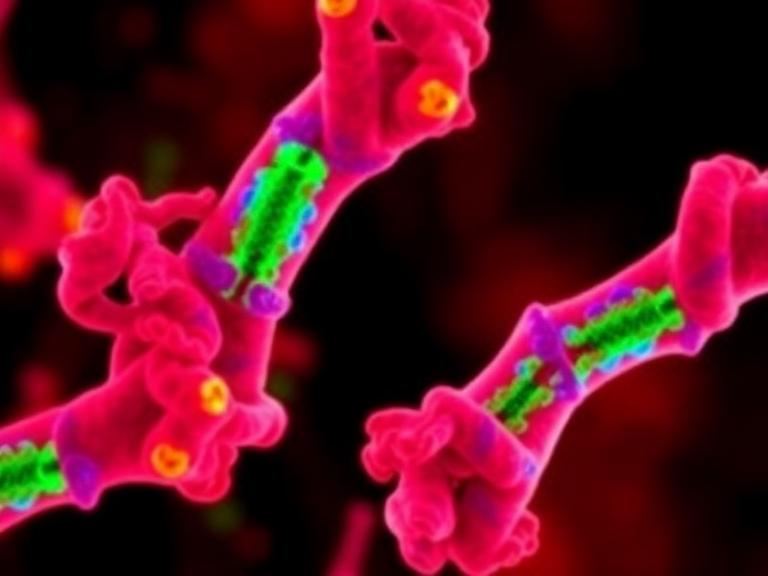
From our experience at KMD Bioscience, where we provide therapeutic antibody discovery and CRO services, the size of a VHH antibody is one of the most frequently asked questions by researchers evaluating this platform. In this guide, we'll give you a definitive answer – and more importantly, explain why size matters for your specific application.
For a deeper understanding of our antibody discovery capabilities, visit our VHH Antibody Platform.
What is a VHH Antibody?
VHH (Variable domain of Heavy chain of Heavy chain antibody) antibodies are derived from the heavy-chain-only antibodies naturally found in camelids such as llamas, alpacas, and camels. Unlike conventional antibodies, which require both heavy and light chains for antigen recognition, VHHs function as a single domain.
How It Works
VHH antibodies retain the antigen-binding region of the heavy chain but lack the light chain and the CH1 constant domain found in conventional antibodies. This structural simplification results in a molecule that is:
Extremely small – ~15 kDa, one-tenth the size of IgG
Highly stable – resistant to heat, pH extremes, and denaturing conditions
Highly soluble – hydrophilic substitutions in the framework regions prevent aggregation
Easy to produce – can be expressed in microbial systems like E. coli
Who Should Use VHH Antibodies?
Researchers – For applications requiring deep tissue penetration or access to cryptic epitopes
Therapeutic developers – For drug candidates where small size enables novel delivery routes (e.g., intranasal, inhaled)
Diagnostic developers – For high-density labelling and super-resolution microscopy
Who might not need VHH? If your application requires effector functions like ADCC or CDC, a VHH alone won't suffice – you would need to fuse it with an Fc domain. Additionally, the short half-life of VHHs (~15 kDa) can be a disadvantage for systemic therapeutic applications.
Learn more about our Protein Expression Platform for recombinant antibody production.
The Exact Size of a VHH Antibody
Let's get specific. Based on crystallographic data and biophysical measurements, the size of a VHH antibody is well-established.
Molecular Weight
The molecular weight of a VHH antibody is approximately 12–15 kDa. Most sources cite 15 kDa as the typical value, though some report 12–14 kDa or up to 16 kDa. The variation depends on the specific VHH sequence, post-translational modifications, and whether it includes affinity tags.
Key comparison: A conventional IgG antibody is ~150 kDa. A VHH is one-tenth the size. A Fab fragment is ~50 kDa, and an scFv is ~25–30 kDa.
Physical Dimensions
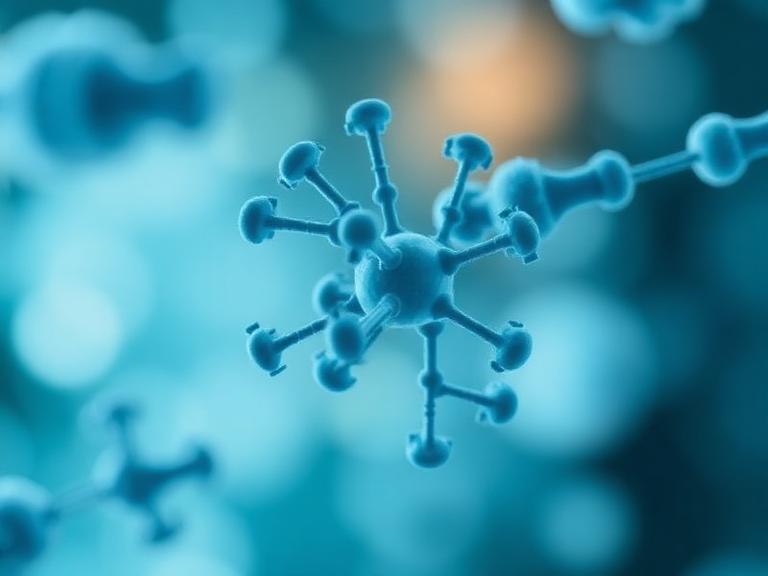
The crystal structure of a VHH antibody is an oval (or rugby-ball) shape with approximate dimensions of 4 nm × 2.5 nm × 3 nm. Some sources describe it as 4 nm in length and 2.5 nm in diameter. It is also sometimes referred to as having a diameter of 2.5 nm and a height of 4 nm.
In biological terms, this is incredibly small – about 1/10,000th the diameter of a human hair. It's small enough to cross the blood-brain barrier and penetrate dense tissues that larger antibodies cannot access.
Amino Acid Composition
A VHH antibody is composed of approximately 110–135 amino acids. The typical VHH consists of four framework regions (FR1–FR4) and three complementarity-determining regions (CDR1–CDR3). The CDR3 loop is notably longer (16–24 amino acids) than in conventional VH domains (averaging 10 amino acids), which allows VHHs to access recessed or cryptic epitopes.
For custom VHH discovery services, explore our Nanobody Platform.
Comparison with Other Antibody Formats
To truly appreciate the size of a VHH antibody, it helps to see it in context.
| Antibody Format | Molecular Weight | Relative Size | Key Feature |
|---|---|---|---|
| Conventional IgG | ~150 kDa | 10× VHH | Full effector functions (ADCC, CDC) |
| Fab Fragment | ~50 kDa | ~3× VHH | Antigen binding only, no Fc |
| scFv | ~25–30 kDa | ~2× VHH | Single-chain variable fragment |
| VHH (Nanobody) | 12–15 kDa | 1× | Smallest intact antigen-binding fragment |
| Heavy-Chain Antibody | ~95 kDa | ~6× VHH | Natural camelid HCAb (two constant domains) |
Data compiled from multiple sources.
From our experience, this size comparison is more than academic – it directly impacts experimental outcomes. For example, a VHH's small size allows for higher labelling density in imaging applications and better tissue penetration in therapeutic contexts.
Pros and Cons of VHH Small Size
The small size of VHH antibodies is both their greatest advantage and their most significant limitation. Here's a balanced view.
Deep tissue penetration – Can reach targets inaccessible to larger antibodies
Cross blood-brain barrier – Enables CNS targeting
High stability – Resists heat, pH extremes, and denaturation
Low immunogenicity – Smaller size reduces immune response
Easy production – Expressible in E. coli and other microbial systems
High solubility – Hydrophilic framework reduces aggregation
Multi-specific engineering – Easy to create bi- and multi-valent formats
Short half-life – Rapid renal clearance (minutes to hours)
No effector functions – Lacks Fc domain for ADCC/CDC
May require fusion – Often fused to Fc or albumin for therapeutic use
Not suitable for all assays – May not work in certain immunoassay formats
Applications and Buying Considerations
From our experience at KMD Bioscience, the decision to use VHH antibodies should be driven by your specific application requirements.
Research and Imaging – VHHs are excellent for super-resolution microscopy, immunofluorescence, and ELISA due to their small size and high stability.
Therapeutic Development – For CNS targets, intranasal delivery, or topical applications, VHHs offer unique advantages. However, consider half-life extension strategies (PEGylation, Fc fusion, albumin binding).
Diagnostics – High-density labelling and stability make VHHs ideal for biosensors, lateral flow assays, and point-of-care diagnostics.
Drug Delivery – VHHs can be used as targeting moieties for nanoparticles, liposomes, or drug conjugates.
Intracellular Applications – VHHs can be expressed intracellularly as "nanobodies" to modulate protein function.
Production Considerations – VHHs can be produced in bacterial systems at low cost, but ensure your supplier has experience with VHH expression, purification, and characterization.
Pro Tip: When sourcing VHH antibodies, always request SDS-PAGE and SEC-MALS data to confirm molecular weight and purity. Some suppliers may provide VHHs with affinity tags that increase the apparent molecular weight – factor this into your experimental design.
For quality-controlled VHH production, explore our Protein Modification and Detection Services.
Our Expert Recommendation: Is VHH Right for You?
After years of working with antibody formats across therapeutic and research applications, here's our practical guidance:
Choose VHH if: You need deep tissue penetration, access to cryptic epitopes, high stability, or low-cost production. VHHs are particularly strong for CNS targets, intranasal delivery, and diagnostic applications.
Avoid VHH if: You require long half-life or effector functions (ADCC/CDC) without additional engineering. In these cases, consider a full IgG or an Fc-fusion format.
Consider hybrid formats: For therapeutic applications, VHH-Fc fusions or bispecific VHH constructs can combine the small size advantage with extended half-life and effector functions.
For custom antibody discovery and development, visit our Technical Resources for more information.
Common Mistakes When Working with VHH Antibodies
Assuming all VHHs are the same size – Molecular weight can vary by 2–3 kDa depending on sequence and tags. Always verify with your supplier.
Ignoring half-life limitations – For in vivo applications, factor in rapid clearance unless modified.
Overlooking valency – Monovalent VHHs may have lower avidity than multivalent formats. Consider bivalent or bispecific designs if needed.
Not checking stability data – While VHHs are generally stable, not all VHHs are created equal. Request thermal stability (Tm) and aggregation data.
Using VHHs in assays that require Fc – VHHs lack Fc domains, so they won't work in assays requiring secondary detection via Fc.
About KMD Bioscience – Since 2022, KMD Bioscience has been committed to becoming a leading provider of therapeutic antibody discovery and related support services. As a high-tech enterprise, we have been recognized as a National Patent Pilot Unit and obtained ISO9001:2015 Quality Management System certification for our laboratories. We provide high-quality Contract Research Organization (CRO) services to scientists and research institutions worldwide, aiming to promote the development and innovation of medical science and technology.
Frequently Asked Questions
What is the exact molecular weight of a VHH antibody?
Typically 12–15 kDa, with most sources citing ~15 kDa. The exact weight depends on the specific sequence and any affinity tags.
How does VHH size compare to a conventional antibody?
A VHH is one-tenth the size of a conventional IgG (~150 kDa). It's also smaller than a Fab fragment (~50 kDa) or an scFv (~25–30 kDa).
What are the physical dimensions of a VHH antibody?
Approximately 4 nm × 2.5 nm × 3 nm – an oval or rugby-ball shape.
Why is the small size of VHH antibodies advantageous?
It enables deep tissue penetration, access to cryptic epitopes, crossing the blood-brain barrier, higher labelling density in imaging, and production in microbial systems at low cost.
What are the limitations of VHH small size?
The main limitations are short half-life (rapid renal clearance) and lack of effector functions (ADCC/CDC). These can be addressed through fusion with Fc domains or half-life extension strategies.
References and Trusted Sources
1. Sinobiological – Nanobody: Structure, Characteristics, and Production Platform
2. Thermo Fisher Scientific – VHH Antibodies (Nanobodies)
3. PubMed – Isolation of novel EGFR-specific VHH domains (16 kDa VHH domain reference)
4. PubMed Central – NANOBODY Molecule Review (size ~15 kDa, 4 nm × 2.5 nm)
5. Biointron – Structure and Characteristics of VHH Domains
Explore more: Protein Interaction Services | Detection Platform | Molecular Platform | Gene Editing Platform | Peptide Products

- Protein Platform
- Protein Expression Services
- Protein Modification & Detection Services
- Protein Interaction Services
- Protein Purification Service
- Antibody Discovery Platform
- VHH Antibody Platform
- Phage Display Platform
- Antibody Humanization Platform
- Single B Cell Screening Platform
- Antibody Expression & Validation Platform
- Peptide Library Platform
- Custom Antibody Platform
- Innovative Drug Discovery Platform
- Product Center
- Proteins
- Antibodies
- Raw Materials Reagents
- Small Molecule Reagents
- Peptide Products
- Nanoparticle Products
- Contact Us
- Phone:400-621-6806
- Mobile:13110936064(WeC
- E-mail:[email protected]
- Address:Room 108, Building 10, No. 6 Hechang Road, Wuqing Development Zone, Tianjin City
-

WeChat
-

Service Account
-
 400-621-6806
 -
 3599163699
 -
 Monday to Friday 9:00-18:00
 -

-
 0
0
-
