


What is a VHH Antibody? Understanding Its Characteristics, Structure, and Clinical Potential
- 2026-06-07
- 195
We see it happening across the global biotechnology landscape: research teams and pharmaceutical developers are increasingly running into the physical and biochemical limitations of conventional monoclonal antibodies. The large size, poor tissue penetration, and highly complex manufacturing protocols of traditional Immunoglobulin G (IgG) molecules frequently hinder the development of next-generation therapeutic breakthroughs. However, the VHH antibody has rapidly emerged as a revolutionary, high-performance alternative. From our experience at KMD Bioscience, thoroughly understanding what a VHH antibody is, alongside its highly specialized characteristics, is the first critical step toward engineering highly efficacious diagnostic tools and targeted therapeutics.
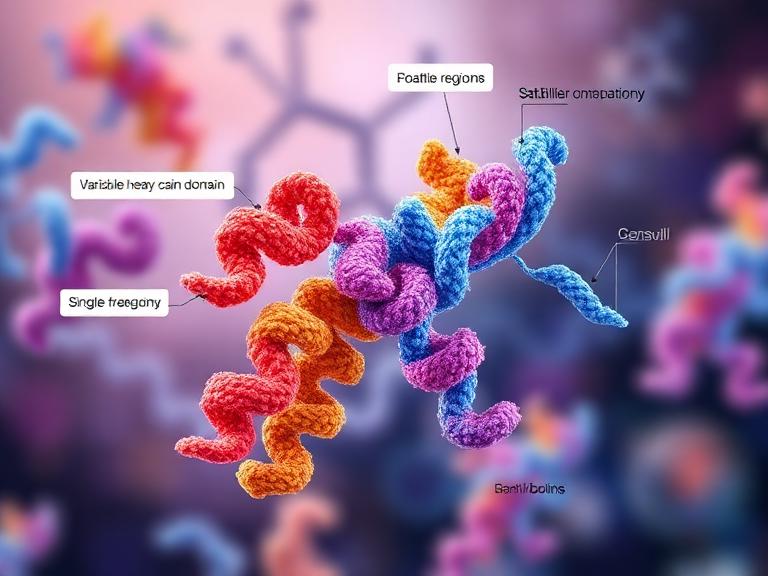
As the field of targeted immunotherapy expands, scientists are looking for smaller, more stable, and highly specific binding domains. The VHH antibody perfectly fills this technological gap. In this comprehensive expert guide, we will break down the precise definition of the VHH antibody, dissect its unique structural biology, outline its unmatched biochemical advantages, and explore how researchers are utilizing these unique proteins to combat complex diseases.
Table of Contents
1. What is a VHH Antibody? The Scientific Definition
To accurately answer the question of what a VHH antibody is, we must look to the unique immunology of the Camelidae family, which includes alpacas, llamas, and camels. In the early 1990s, scientists at the Free University of Brussels made a serendipitous discovery: these specific animals naturally produce a unique class of functional antibodies that are entirely devoid of light chains. These are scientifically referred to as heavy-chain-only antibodies (HcAbs).
In a conventional human or murine antibody, the antigen-binding site is formed by the pairing of a variable heavy (VH) domain and a variable light (VL) domain. In stark contrast, the antigen-binding fragment of a camelid heavy-chain-only antibody consists of a single, monomeric variable domain. This single domain is officially designated as the VHH antibody. It is also widely recognized in the commercial biotechnology industry as a Nanobody. We highly recommend reviewing our comprehensive range of nanobody antibody products to observe how these remarkable single-domain molecules are actively utilized in modern scientific research.
Despite lacking a light chain, the VHH antibody is fully capable of binding to target antigens with affinities and specificities that rival, and sometimes exceed, those of traditional monoclonal antibodies. Because they consist of just one polypeptide chain, they represent the smallest naturally occurring, intact antigen-binding fragment known to science.
2. Structural Characteristics of the VHH Antibody
The profound capabilities of the VHH antibody are directly tied to its unique structural biology. While a VHH antibody shares a high degree of sequence homology (approximately 80%) with the human VH domain, there are several critical structural deviations that grant the VHH antibody its remarkable properties.
The Altered Framework Region 2 (FR2)
In a conventional VH domain, the Framework Region 2 (FR2) contains highly conserved, bulky, hydrophobic amino acids (specifically Valine, Leucine, Tryptophan, and Proline). These hydrophobic residues are essential for the non-covalent interaction with the VL domain. Because the VHH antibody lacks a VL domain, these hydrophobic residues are exposed to the aqueous solvent, which would normally cause the protein to aggregate and precipitate. However, in the VHH antibody, these specific amino acids have evolutionarily mutated into highly hydrophilic residues (such as Phenylalanine, Arginine, Glycine, and Serine). This critical structural adaptation is why the VHH antibody remains highly soluble and stable in aqueous solutions, avoiding the severe aggregation issues that plague artificially engineered human single-domain antibodies.
The Extended CDR3 Loop
The Complementarity Determining Regions (CDRs) are the hypervariable loops responsible for recognizing and binding to the antigen. A defining characteristic of the VHH antibody is its unusually long CDR3 loop. This extended loop protrudes significantly from the paratope surface, forming a convex binding interface. From our experience in molecular engineering, we have observed that this extended CDR3 loop allows the VHH antibody to reach deep into narrow, cryptic cavities on the surface of antigens—such as enzyme active sites or viral receptor-binding clefts—that are physically inaccessible to the bulky, flat binding interface of traditional IgG antibodies. Furthermore, to stabilize this long loop, a VHH antibody often features an extra internal disulfide bond connecting CDR3 to CDR1 or an adjacent framework region, greatly enhancing the overall rigidity and binding affinity of the molecule.
3. Biochemical and Biophysical Advantages
When our clients ask us to compare therapeutic formats, we continually highlight the immense biophysical advantages of the VHH antibody. These characteristics make them highly desirable for pharmaceutical scale-up and novel delivery mechanisms.
Extreme Miniaturization: A standard IgG antibody has a molecular weight of approximately 150 kDa. A VHH antibody, consisting of only about 110 to 130 amino acids, weighs a mere 15 kDa. This nano-scale size grants the VHH antibody superior tissue penetration capabilities. They can rapidly infiltrate dense fibrotic solid tumors and are known to cross the blood-brain barrier (BBB) far more effectively than full-sized antibodies, opening new frontiers for treating neurodegenerative diseases and central nervous system malignancies.
Robust Thermal and Chemical Stability: The VHH antibody exhibits extraordinary thermodynamic stability. They can withstand extreme temperatures, prolonged exposure to harsh organic solvents, and extreme pH environments without denaturing or losing their antigen-binding capacity. This incredible stability means that a VHH antibody can be formulated into novel administration routes. For example, we recommend their use in the development of inhalable aerosolized therapeutics for respiratory diseases or oral therapeutics for gastrointestinal disorders, as they can survive the harsh enzymatic environment of the gut.
High-Yield Microbial Expression: Because conventional antibodies require complex post-translational modifications (like glycosylation) and strict folding between heavy and light chains, they must be produced in expensive mammalian cell lines (such as CHO cells). The VHH antibody, being a simple, single-gene monomer, does not require glycosylation for antigen binding. Therefore, they can be expressed rapidly and cost-effectively in enormous yields using simple microbial systems like Escherichia coli or Saccharomyces cerevisiae (yeast).
4. Production and Discovery Methodologies

The process of isolating a highly potent VHH antibody begins with the immunization of a camelid, typically an alpaca or llama, with the target antigen. The animal's immune system undergoes in vivo affinity maturation, ensuring the generation of highly specific heavy-chain-only antibodies. Following a standard immunization schedule, peripheral blood mononuclear cells (PBMCs) are isolated from the animal, and the RNA encoding the VHH repertoire is extracted and amplified via RT-PCR.
To identify the highest-affinity binders, researchers must utilize advanced screening technologies. We strongly recommend leveraging a robust Phage Display Platform. In this method, the amplified VHH genes are cloned into phagemid vectors and displayed on the surface of bacteriophages. Through iterative rounds of biopanning against the immobilized target antigen, non-binding phages are washed away, and the strongest VHH antibody candidates are selectively enriched and isolated.
Alternatively, for projects requiring ultra-rapid discovery and the preservation of native heavy-light chain pairings (when working with non-camelid models) or pure native VHH repertoires, utilizing a state-of-the-art Single B Cell Screening Platform is highly advantageous. This high-throughput technology allows for the direct interrogation of individual B cells, significantly accelerating the timeline from immunization to validated VHH antibody lead generation.
5. Clinical and Diagnostic Applications
The unique characteristics of the VHH antibody have catalyzed a wave of innovation across both diagnostic and therapeutic disciplines. If you follow the latest antibody development news, you will notice a massive industry shift toward single-domain architectures.
In therapeutics, the modular nature of the VHH antibody allows them to be easily linked together like building blocks. Researchers can engineer bi-specific or multi-specific constructs by fusing multiple VHH domains together using flexible peptide linkers. This allows a single molecule to simultaneously engage multiple different disease targets, or to recruit immune effector cells (like T-cells) directly to the site of a tumor. Furthermore, VHH antibodies are currently revolutionizing Chimeric Antigen Receptor (CAR) T-cell therapy. Utilizing a VHH antibody as the extracellular targeting domain of the CAR construct often results in lower immunogenicity and improved target engagement compared to traditional single-chain variable fragments (scFvs).
In the realm of diagnostics and research, the VHH antibody is utilized for high-resolution imaging. Due to their small size, they can easily penetrate fixed tissues and cells, bringing fluorophores exceptionally close to the target epitope, thereby dramatically improving the resolution of super-resolution microscopy. For laboratories seeking tailored reagents, exploring customized antibody customization solutions is the best strategy for securing high-affinity diagnostic binders.
6. Overcoming Immunogenicity through Humanization
Despite the high sequence similarity between a camelid VHH antibody and a human VH domain, administering an animal-derived protein into a human patient can provoke an Anti-Drug Antibody (ADA) response. This immunogenic reaction can neutralize the therapeutic efficacy of the VHH antibody and cause severe adverse side effects in the patient.
To safely transition a VHH antibody from the laboratory bench to clinical trials, it must undergo strict humanization. From our experience, this is a delicate molecular engineering process. The goal is to mutate the camelid-specific framework residues to match human VH germline sequences without disrupting the structural integrity of the CDR loops that govern antigen binding. We highly recommend utilizing a specialized Antibody Humanization Platform that employs advanced bioinformatics and 3D structural modeling to precisely execute these amino acid substitutions. Proper humanization ensures that the final therapeutic VHH antibody maintains its exceptional affinity and stability while remaining virtually invisible to the human immune system.
Tianjin KMD Bioscience Co., Ltd. has been committed to becoming a leading provider of therapeutic antibody discovery and related support services since its establishment in 2022. Focusing on technological research and development, the company provides high-quality Contract Research Organization (CRO) services to scientists and research institutions worldwide, aiming to promote the development and innovation of medical science and technology. As a high-tech enterprise, it has been recognized as a National Patent Pilot Unit and obtained ISO9001:2015 Quality Management System certification for its laboratories. To learn more about our foundational technologies, we invite you to explore our comprehensive VHH Antibody Platform.
7. Summary Table: VHH Antibody vs. Conventional IgG
To quickly reference the stark biophysical differences and understand why the industry is pivoting, review our expert comparison matrix below.
| Characteristic Parameter | Conventional IgG Antibody | VHH Antibody (Nanobody) |
|---|---|---|
| Molecular Weight | ~150 kDa | ~15 kDa |
| Structure | 2 Heavy Chains + 2 Light Chains | Single Monomeric Variable Domain |
| Tissue Penetration | Poor to Moderate | Excellent (Can cross the BBB) |
| Cryptic Epitope Access | Highly Limited (Flat binding interface) | Highly Effective (Extended CDR3 loop) |
| Thermal & pH Stability | Low to Moderate | Exceptionally High |
| Production System | Mammalian Cells (High Cost) | Microbial Cells (E. coli, Yeast - Low Cost) |
| Format Modularity | Complex engineering required | Highly modular (Easy to create multi-specifics) |
8. Frequently Asked Questions (FAQs)
What animals naturally produce the VHH antibody?
The VHH antibody is derived exclusively from the heavy-chain-only antibodies (HcAbs) naturally produced by members of the Camelidae family. This distinct biological family includes alpacas, llamas, dromedary camels, and Bactrian camels. Similar single-domain antibodies, known as VNARs, are also found in cartilaginous fish like sharks, but VHH specifically refers to the camelid variant.
Why is a VHH antibody more stable than a conventional antibody?
The enhanced stability of a VHH antibody originates from two primary structural adaptations. First, the substitution of hydrophobic framework residues with hydrophilic ones prevents protein aggregation. Second, the presence of an additional internal disulfide bond linking the extended CDR3 loop to the framework heavily restrains the flexibility of the molecule, rendering it highly resistant to thermal denaturation and chemical degradation.
Can a VHH antibody be used as a therapeutic drug?
Absolutely. In fact, the first VHH antibody-based therapeutic, Caplacizumab, was approved by regulatory agencies in 2018 for the treatment of acquired thrombotic thrombocytopenic purpura (aTTP). Since then, numerous VHH-based drugs have entered advanced clinical trials. For the latest breakthroughs regarding therapeutic approvals, we suggest monitoring reputable antibody research news and updates.
9. Academic References
To ensure the highest level of technical accuracy and to provide authoritative E-E-A-T validation for this guide, we base our structural and clinical analysis on peer-reviewed scientific literature. For further extensive reading on the discovery, structural biology, and therapeutic applications of the VHH antibody, please consult the following primary academic sources:

- Protein Platform
- Protein Expression Services
- Protein Modification & Detection Services
- Protein Interaction Services
- Protein Purification Service
- Antibody Discovery Platform
- VHH Antibody Platform
- Phage Display Platform
- Antibody Humanization Platform
- Single B Cell Screening Platform
- Antibody Expression & Validation Platform
- Peptide Library Platform
- Custom Antibody Platform
- Innovative Drug Discovery Platform
- Product Center
- Proteins
- Antibodies
- Raw Materials Reagents
- Small Molecule Reagents
- Peptide Products
- Nanoparticle Products
- Contact Us
- Phone:400-621-6806
- Mobile:13110936064(WeC
- E-mail:[email protected]
- Address:Room 108, Building 10, No. 6 Hechang Road, Wuqing Development Zone, Tianjin City
-

WeChat
-

Service Account
-
 400-621-6806
 -
 3599163699
 -
 Monday to Friday 9:00-18:00
 -

-
 0
0
-
