


Antibody Humanization: Balancing Safety, Efficiency, and Activity
- 2026-08-13
- 123
As of June 2026, the FDA has approved over 144 types of antibody drugs, which are widely used to treat cancers, viral infections, autoimmune diseases, and other conditions. The majority of these antibodies were generated using mouse hybridoma technology[1]. When mouse-derived antibodies enter the human body, the immune system recognizes them as foreign substances, which not only triggers an anti-mouse antibody reaction—thereby reducing the drug’s efficacy—but can also cause serious side effects.
Consequently, humanization technology emerged, but it harbors a profound contradiction: while humanization aims to address immunogenicity, excessive modification can lead to a loss of activity; the pursuit of perfection may slow down R&D progress; and keeping costs down may come at the expense of quality—this is the impossible triangle of antibody humanization.
This article will break down this technical challenge from three perspectives—safety, activity, and efficiency—and explore new solutions for the AI era.
I. Safety vs. Activity
(i) CDR Grafting Technology
CDR transplantation is currently a well-established method in which the CDR sequences from mouse antibodies that directly contact the antigen are grafted onto human antibody frameworks. After CDR grafting, the proportion of mouse-derived residues decreases, and immunogenicity is significantly reduced. However, this grafting is not always successful.
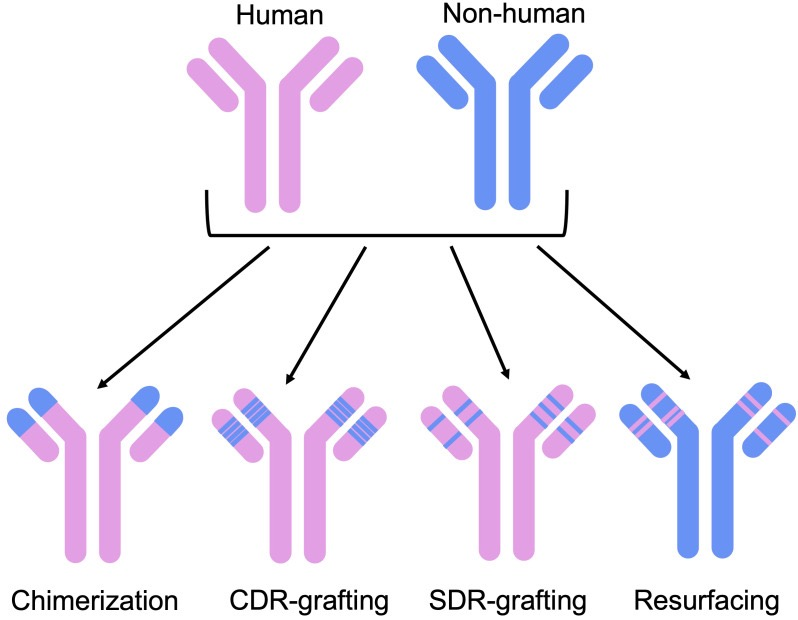
Figure 1: Schematic Diagram of CDR Transplantation Technology[2]
(ii) Loss of Affinity
Ø Due to poor framework-CDR compatibility, antibodies may experience a loss of affinity and impaired function[3]. This is because, although certain framework region residues do not directly contact the antigen, they play a critical role in supporting the three-dimensional conformation of the CDR loops. When these residues are replaced with human sequences, the conformation of the CDRs changes, leading to deformation of the antigen-binding pocket. The following methods can be used to address these issues:
Ø Back-mutation: Restore key framework residues to their original mouse-derived amino acids.
Ø Surface Remodeling: Reducing immunological recognition by replacing only the residues exposed on the antibody surface. Other studies have combined murine CDRs with human germline FR libraries for screening and have successfully identified ideal candidate molecules that could not be obtained through CDR transplantation[1].
(iii) Residual Risk of Immunogenicity
Even when the degree of humanization exceeds 95%, the risk of immunogenicity is not eliminated.
An analysis conducted in Japan on 92 approved antibody drugs revealed that 27.7% of humanized antibodies exhibited reduced drug efficacy due to immunogenicity, whereas this figure was only 8.6% for fully human antibodies[4]. This supports the conclusion that the higher the degree of humanization, the lower the immunogenicity.
Even more alarming is the fact that even fully human antibodies are not entirely free of immunogenicity. The root cause of immunogenicity lies not only in the “non-human” sequences themselves. There are many factors that influence immunogenicity, including solubility, aggregation tendency, cross-reactivity, and product heterogeneity resulting from insufficient thermal stability. In addition, individual differences in patient HLA alleles can also affect T-cell recognition, thereby influencing the immune response.
II. Efficiency vs. Quality
(i) Traditional Approach
The humanization of traditional antibodies relies heavily on structural biology. From framework selection, CDR transplantation, and design of restoration mutations to experimental validation and refinement, this process often takes several months. Whether for scientific research or the urgent development of clinical antibody drugs, the associated time, financial, and opportunity costs are enormous.
(ii) High-Throughput Screening
Phage display technology has, to a large extent, provided an effective tool for improving the efficiency of humanized antibody development. By constructing phage display libraries of humanized antibodies, high-affinity variants can be efficiently screened in vitro. Currently, well-established library screening techniques include Fab antibody library screening, VHH antibody library screening, and scFv antibody library screening.
(iii) Computational Tools
The development of computational biology tools has significantly improved the efficiency of humanized antibody design and has shifted its efficiency boundaries.
Ø Humatch: A computational tool based on three convolutional neural networks (CNNs) that can accurately identify human heavy and light V genes and perform optimized pairing[5].
Ø SITA: A novel predictive tool that not only predicts the B-cell immunogenicity score for the entire sequence but also for individual residues. SITA scores can significantly distinguish the immunogenicity levels of fully human antibodies, therapeutic antibodies, and non-human-derived antibodies[6].
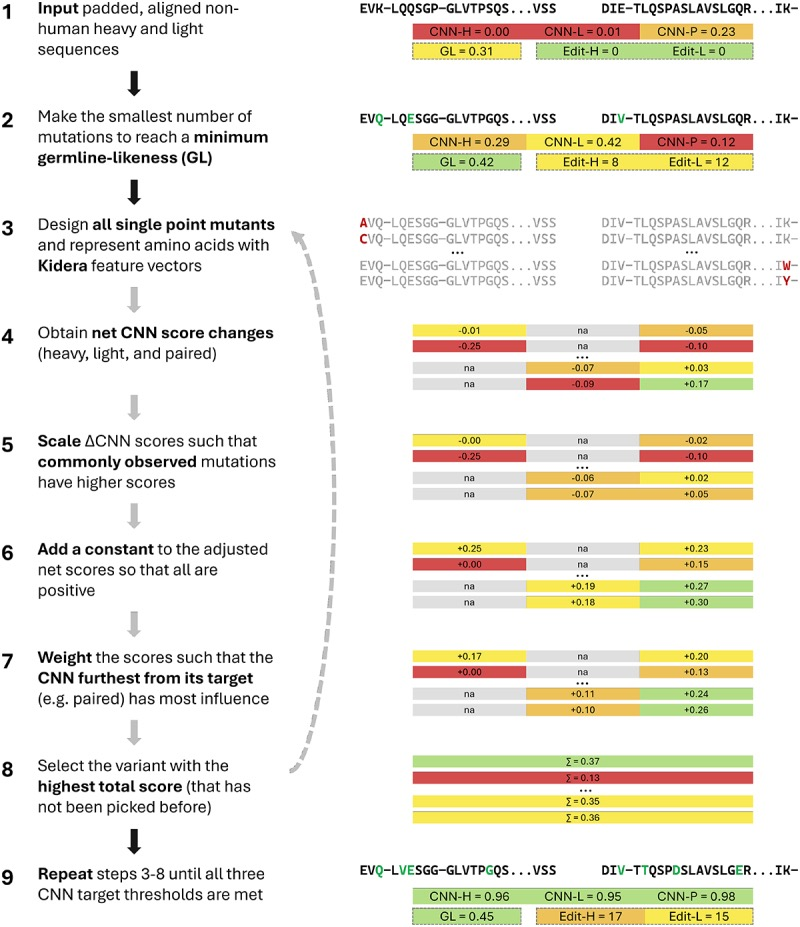
Figure 2: Humatch Flowchart[5]
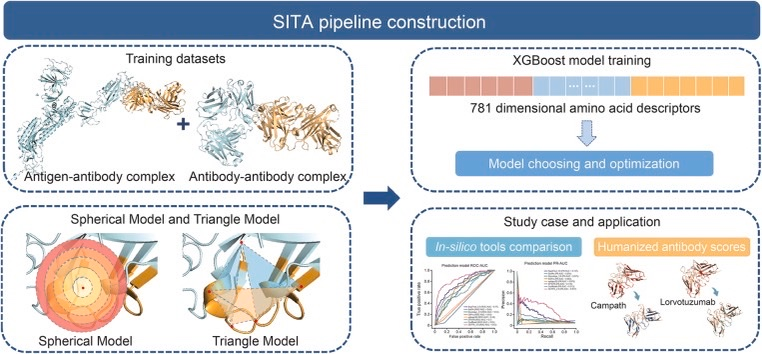
Figure 3: SITA Flowchart[6]
III. Cost vs. Benefit
(i) The Cost Challenge of Fully Human Antibodies
Fully human antibodies can be produced using transgenic mice (which generate antibodies encoded entirely by human genes) or phage display technology (which selects antibodies from human antibody gene libraries). In theory, fully human antibodies have the lowest immunogenicity[4]. However, in practice, fully human antibodies are relatively expensive; the development and maintenance of transgenic mouse models entail enormous financial costs; and phage display technology also requires extensive infrastructure and specialized technical expertise.
(ii) Differentiation Strategy
Different strategies should be adopted for different scenarios to strike a balance between costs and benefits.
Ø Mouse antibodies with confirmed biological activity: Using the classic humanization approach involving CDR transplantation and back-mutation, this process offers manageable risks and relatively low costs.
Ø For novel or challenging targets: Consider a fully human antibody platform; although the initial investment is substantial, it can mitigate the risk of clinical failure later on due to immunogenicity.
IV. A Paradigm Shift Driven by AI Technology
The trade-offs between safety and activity, efficiency and quality, and cost and benefit have long constrained the development of humanized antibodies. However, AI is fundamentally reshaping this landscape,though AI-designed sequences still require experimental validation.
Ø HuAbDiffusion: Starting from three complementary CDRs, the model ultimately generates the entire V-region sequence. Tests have shown that the binding affinity of the humanized antibodies generated by this model is not only preserved but may even be enhanced[7].
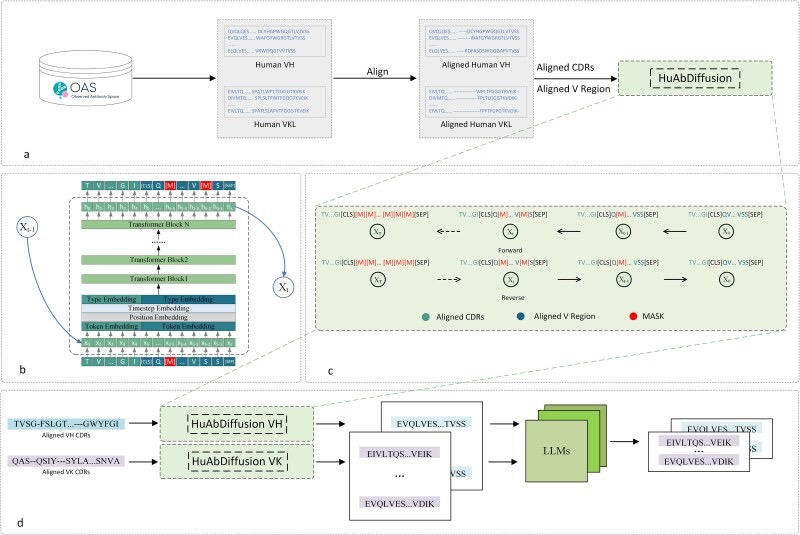
Figure 4: HuAbDiffusion Flowchart[7]
Ø HuDiff comprises two core modules: HuDiff-Ab for conventional antibodies and HuDiff-Nb for nanobodies. This generative model learns directly from data, bypassing empirical dependence on framework selection.
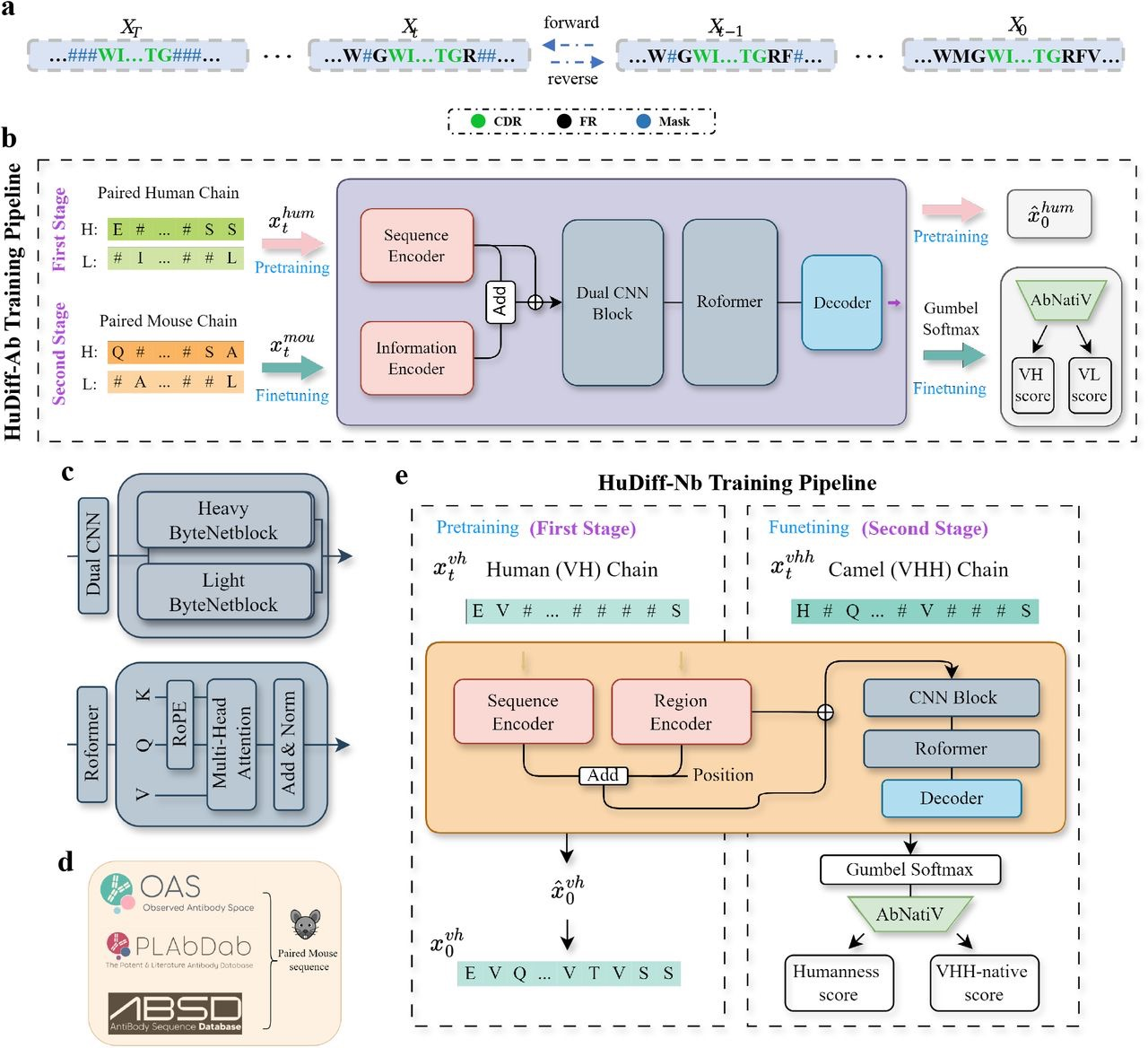
Figure 5: HuDiff Flowchart[8]
Each corner of the impossible triangle once represented an insurmountable barrier in the development of humanized antibodies—the fewer mouse-derived residues, the faster the loss of affinity; the more refined the engineering, the longer the R&D cycle; and the more advanced the platform, the higher the financial barrier. Traditional technical approaches forced researchers to repeatedly weigh these three factors against one another and make reluctant compromises. The emergence of computational tools such as Humatch and SITA has compressed framework screening from months to seconds, beginning to loosen the shackles of inefficiency; meanwhile, the rise of generative AI tools like HuAbDiffusion and HuDiff has fundamentally disrupted the logic of modification at its core—creating directly, without the need for templates. As AI evolves from assisting in scoring to designing from the ground up, the zero-sum game between safety, efficiency, and activity is coming to an end. The development of humanized antibodies is entering a brand-new era where compromise is no longer necessary.
KMD Bioscience has long been dedicated to advancing technologies in the field of antibody engineering and offers products and technical services that closely align with the end-to-end process described in the article. To address humanization design needs, KMD Bioscience provides an antibody humanization platform; for high-throughput screening, the company offers phage display antibody library screening services covering various antibody formats, including Fab, VHH, and scFv. The company is committed to helping researchers find the optimal balance between safety, efficiency, and activity.
[1]Wang Y, Chen YL, Xu H, Rana GE, Tan X, He M, Jing Q, Wang Q, Wang G, Xie Z, Wang C. Comparison of "framework Shuffling" and "CDR Grafting" in humanization of a PD-1 murine antibody. Front Immunol. 2024 Jul 15;15:1395854. doi: 10.3389/fimmu.2024.1395854. PMID: 39076979; PMCID: PMC11284016.
[2]Gordon GL, Raybould MIJ, Wong A, Deane CM. Prospects for the computational humanization of antibodies and nanobodies. Front Immunol. 2024 May 15;15:1399438. doi: 10.3389/fimmu.2024.1399438. PMID: 38812514; PMCID: PMC11133524.
[3]He C, Huang W, Wu X, Xia H. Advances in Techniques for the Structure and Functional Optimization of Therapeutic Monoclonal Antibodies. Biomedicines. 2025 Aug 23;13(9):2055. doi: 10.3390/biomedicines13092055. PMID: 41007619; PMCID: PMC12467787.
[4]Saito M, Urakami-Takebayashi Y, Motohashi H, Nagai J. Clinical Impacts of Immunogenicity in Approved Antibody Drugs in Japan: A Quantitative Evaluation of Pharmacokinetics, Efficacy, and Safety Outcomes. AAPS J. 2025 Oct 16;28(1):1. doi: 10.1208/s12248-025-01165-z. PMID: 41102543.
[5]Chinery L, Jeliazkov JR, Deane CM. Humatch - fast, gene-specific joint humanisation of antibody heavy and light chains. MAbs. 2024 Jan-Dec;16(1):2434121. doi: 10.1080/19420862.2024.2434121. Epub 2024 Nov 29. PMID: 39611407; PMCID: PMC11610552.
[6]Cun Y, Ding H, Mao T, Wang Y, Wang C, Li J, Li Z, Hu M, Cao Z, Qiu T. SITA: Predicting site-specific immunogenicity for therapeutic antibodies. J Pharm Anal. 2025 Jun;15(6):101316. doi: 10.1016/j.jpha.2025.101316. Epub 2025 Apr 21. PMID: 40678479; PMCID: PMC12268063.
[7]Liu D, Hao X, Fan L. HuAbDiffusion: a discrete language diffusion model used for antibody humanization. Brief Bioinform. 2025 Nov 1;26(6):bbaf658. doi: 10.1093/bib/bbaf658. PMID: 41370632; PMCID: PMC12694429.
[8]Ma J , Wu F , Xu T ,et al.An adaptive autoregressive diffusion approach to design active humanized antibodies and nanobodies[J].Nature Machine Intelligence, 2025, 7(10):1698-1712.DOI:10.1038/s42256-025-01120-9.
FAQs
Q1: After CDR transplantation, the affinity of humanized antibodies decreases. Specifically, which framework region residues are most commonly retained in their mouse-derived forms?
These residues are commonly referred to as Vernier zone residues—amino acid sites located in the framework region (FR) but adjacent to the CDR loop, which play a critical role in maintaining the three-dimensional conformation of the CDR. Studies have shown that simply transplanting the CDRs of a murine antibody into a human framework can reduce affinity to as little as 1/40 of the original value, primarily because the replacement of these Vernier residues disrupts the conformational stability of the CDRs.
Common Vernier residue positions include H2, H27, H29, H48, H67, H69, H71, H78, H93, and others in the VH domain, as well as L2, L4, L35, L36, L38, L46, L58, L66, L68, L69, L71, and L87 in the VL domain. Which specific sites need to be retained as mouse-derived depends on the unique structural characteristics of each antibody and must be determined through molecular modeling and experimental validation. It is worth noting that the importance of Vernier residues in antibody humanization is often underestimated in the literature; in recent years, researchers have been re-emphasizing their critical role in antibody engineering.
Q2: How many sites typically need to be mutated to restore affinity?
There is no fixed standard for the number of sites to be mutated in a back-mutation; it depends on the specific antibody structure. Sometimes, a back-mutation at a single key site is sufficient to fully restore affinity, but in most cases, a combination of mutations at 2–5 sites is required. For example, in the case of a humanized anti-CD3 antibody, affinity was “virtually completely lost” following CDR transplantation and had to be rebuilt through back-mutation; in other cases, however, back-mutation of key sites such as the Vernier region alone was sufficient to reduce the proportion of murine sequence to 5–10% while further lowering the HAMA incidence to below 5%.
Q3: Can the strategies of surface remodeling and mutation reversal be used simultaneously?
Absolutely; in fact, they are often used in combination in practical humanization designs. The two approaches follow different modification logics—restoration mutations focus on “structural support residues” within the framework that underpin the CDR conformation (such as Vernier residues), with the goal of maintaining affinity; surface remodeling, on the other hand, focuses on residues exposed on the antibody’s surface, reducing immunogenicity by replacing these “surface targets” that are easily recognized by the immune system. These two approaches address different endpoints of the “impossible triangle” from distinct perspectives; when used in combination, they can achieve a better balance between maintaining activity and reducing immunogenicity.
Q4: Can the results predicted by computational tools (such as SITA’s immunogenicity score) directly replace experimental validation?
Absolutely not. Computational predictions are powerful screening and guidance tools that can significantly reduce the experimental workload and shorten R&D cycles, but the final safety and activity must be validated through in vitro/in vivo experiments. SITA scoring helps researchers identify which residue sites pose the highest immunogenicity risk, while Humatch helps quickly match suitable human frameworks—both of which greatly enhance design efficiency. However, predictive results are merely a “candidate prioritization.” The optimal strategy at present is: computational predictions guide experimental design → experimental validation provides feedback data → iterative model optimization, forming a “wet-and-dry closed-loop” process.
Q5: Why do fully human antibodies still exhibit immunogenicity? Aren’t they supposed to be “fully human”?
“Fully human” does not mean “zero immunogenicity.” Immunogenicity does not stem solely from “non-human sequences,” but also arises from multiple factors:
Ø The CDR region itself: Even in fully human antibodies, the CDR region is generated through in vitro screening or transgenic mice—although these CDR sequences are “human,” they may never have existed in nature, and the human immune system may still recognize them as “non-self.” Some studies have explicitly pointed out that “the residual immunogenicity of antibodies with fully human amino acid sequences is present in the CDR region.”
Ø Factors affecting developability: These include the antibody’s tendency to aggregate, its solubility, and product heterogeneity resulting from insufficient thermal stability. Aggregates are more likely to trigger an immune response than monomers.
Ø Individual Variability Among Patients: Since HLA alleles vary among patients, there is individual variability in T-cell recognition of antibody fragments; the same antibody may elicit completely different immune responses in different patients.
Ø Dosage-related factors: Drug dose, route of administration, drug combinations, impurity contamination, and other factors can all affect immunogenicity.
- antibody humanization service
- humanised antibody
- humanization antibody

- Protein Platform
- Protein Expression Services
- Protein Modification & Detection Services
- Protein Interaction Services
- Protein Purification Service
- Antibody Discovery Platform
- VHH Antibody Platform
- Phage Display Platform
- Antibody Humanization Platform
- Single B Cell Screening Platform
- Antibody Expression & Validation Platform
- Peptide Library Platform
- Custom Antibody Platform
- Innovative Drug Discovery Platform
- Product Center
- Proteins
- Antibodies
- Raw Materials Reagents
- Small Molecule Reagents
- Peptide Products
- Nanoparticle Products
- Contact Us
- Phone:400-621-6806
- Mobile:13110936064(WeC
- E-mail:[email protected]
- Address:Room 108, Building 10, No. 6 Hechang Road, Wuqing Development Zone, Tianjin City
-

WeChat
-

Service Account
-
 400-621-6806
 -
 3599163699
 -
 Monday to Friday 9:00-18:00
 -

-
 0
0
-
