


Antigen Design for Antibody Production
- 2026-07-10
- 297
The design and preparation of antigens are crucial steps in the antibody production process. Poorly designed or prepared antigens may fail to elicit an immune response, so special attention must be paid during antigen design.
An antigen must possess two key properties:
(1) Immunogenicity: the ability of an antigen to induce an immune response in the host.
(2) Antigenicity (or reactivity): the ability of an antigen to specifically bind to its corresponding antibodies or effector cells, either in vivo or in vitro. This involves interactions between the antigen molecule and antibody molecules or antigen receptor molecules (BCR/TCR) on B or T cells.
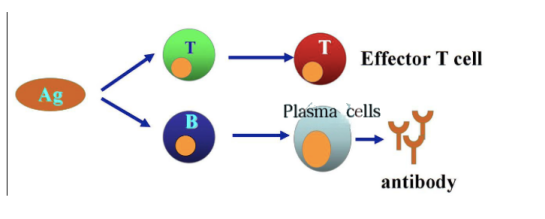
The region on the surface of an antigen molecule that can bind to an antibody or receptor is called an antigenic determinant or epitope.
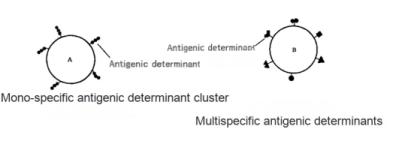
Requirements for Antigens in Antibody Production:
(1) Sufficiently large molecular size. Larger molecules remain in the body longer, providing more opportunities to interact with immune cells and trigger an immune response (the primary role of adjuvants is to encapsulate the antigen in an oil-based substance for slow release, ensuring prolonged stimulation). In contrast, small molecules may be rapidly metabolized and cleared from the body before eliciting an immune response. Additionally, for peptide or protein antigens, each epitope typically consists of 6–8 amino acid residues, with an average of one epitope per 5–10 kDa. Therefore, statistically, very small peptides or proteins are unlikely to contain an epitope (unless artificially designed).
(2) Strong foreignness (non-self origin). During early development, the immune system establishes tolerance to self-molecules, so substances highly similar or identical to the body’s own components are less likely to provoke an immune response. However, components from immune-privileged sites (e.g., the brain, eyes, or testis) are exceptions and do not require consideration of self-tolerance.
(3) Structurally complex composition. Simple, repetitive structures lack immunogenicity. For example, gelatin and starch have very high molecular weights and strong foreignness, but gelatin consists mostly of linear amino acid chains, resulting in weak immunogenicity.
(4) Adequate degradability. An antigen must be degradable; materials like plastics or stainless steel, which resist degradation, exhibit poor immunogenicity. Similarly, proteins or peptides composed of D-amino acids are weakly immunogenic because the body cannot degrade them.
During a comprehensive evaluation process for antibody production services, KMD Bioscience leverages years of immunological expertise to recommend suitable antigen preparation methods for clients. Conventional antigens can be categorized into the following types, which we briefly introduce here:
(1) Naturally purified protein antigens
Natural proteins serve as excellent antigens. These proteins, extracted and purified from biological systems, retain their native structural characteristics (including post-translational modifications and proper conformations). However, purification of natural protein antigens presents significant challenges, as only naturally abundant and structurally stable proteins meet the purification requirements. Antibodies produced using natural protein antigens are particularly suitable for diagnostic applications such as ELISA, immunochromatography, and immunoturbidimetry.
(2) Recombinant Protein Antigens
Commonly used systems for recombinant protein antigen preparation include prokaryotic expression systems, yeast expression systems, eukaryotic expression systems, insect cell-baculovirus expression systems, and mammalian cell expression systems. Recombinant antigen production typically involves adding a purification tag to the protein sequence, which not only facilitates purification but also enhances the protein's solubility and molecular weight. The tag can be cleaved off, or antibodies against the tag in hyperimmune serum can be removed via tag protein immunoadsorption during use. Such antigen preparation is generally suitable for producing diagnostic antibodies used in Western Blot, IHC, colloidal gold, and immunoturbidimetry assays, though further screening and validation with endogenous protein-containing specimens are required.
(3) Peptide Antigens
Peptides generally exhibit weak immunogenicity, so they need to be conjugated to a protein carrier to form a macromolecular antigen, i.e., a complete antigen. Commonly used protein carriers include BSA, RSA, HSA, OVA, GST, and MAP (multiple antigen peptide, primarily poly-Lys). Coupling peptides to a protein carrier is relatively straightforward—carboxyl or amino groups on the peptide chain can be conjugated to the carrier using EDC (carbodiimide) or a combination of EDC/NHS (N-hydroxysuccinimide). For directional conjugation, a thiol group (-SH, from Cys) can be introduced at the N- or C-terminus during peptide synthesis, enabling linkage to the protein carrier via Sulfo-SMCC reagent.The main challenge in using peptides as antigens lies in their design, particularly the selection of epitopes. Compared to natural or recombinant protein antigens, peptide antigens offer the advantage of epitope enrichment, which more effectively stimulates antibody production. Synthetic peptide antigens are primarily used when natural antigens are difficult to extract, challenging to produce via recombinant expression, or when the target protein shares high homology with other endogenous proteins.For more details, please refer to KMD Bioscience’s Peptide Synthesis and Conjugation Services.
(4) Small Molecule Antigens
Small molecule antigens refer to low-molecular-weight compounds. Generally, larger and structurally more complex molecules are more likely to elicit high-affinity antibodies, and small molecules containing aromatic rings tend to induce stronger immune responses.Similar to peptide antigens, small molecules must be conjugated to carrier proteins to form complete antigens. However, small molecules typically require an intermediate linker to facilitate coupling with the protein carrier, as direct conjugation via existing functional groups may alter their structural integrity. If the small molecule contains reactive groups such as -COOH or -NH₂, direct conjugation is possible. However, most small molecules lack such functional groups, necessitating chemical modification to introduce suitable linkers before coupling. Subsequent antibody production often employs competitive immunization strategies to ensure specificity.KMD Bioscience has extensive expertise in developing high-specificity monoclonal antibodies against small molecules. We welcome researchers and scientists to consult our technical team for customized solutions. For more details on small molecule antibody development, please visit our dedicated service page or contact our technical experts.
(5) Whole Virus Particle Antigens
When using whole viruses as antigens for hyperimmune serum production, inactivation is typically required. The fundamental principle of inactivation involves disrupting the viral envelope components to eliminate their ability to infect cells or organisms.For virus particles serving as antigens—particularly when producing high-quality neutralizing antibodies—strict purity requirements must be met. KMD Bioscience offers sucrose density gradient centrifugation and ion-exchange chromatography (IEX) purification to obtain ultra-high-purity viral particles for animal immunization. These purified antigens can then be used to screen various forms of neutralizing antibodies.
(6) Whole Bacterial Particle Antigens
Whole bacterial antigens are typically used for hyperimmune serum production to establish bacterial agglutination immunoassays. It is essential to select bacterial particles in optimal condition, with intact surface structures and appendages (e.g., flagella). To prevent pathogen transmission, the bacteria must be inactivated prior to immunization.Immunization can be performed via direct injection or after emulsification with adjuvants. Antibodies generated through direct immunization with whole pathogens (bacteria or viruses) generally exhibit lower titers. This is because the immune system is challenged by the multitude of antigens/epitopes presented by the whole pathogen, resulting in relatively weaker antibody responses against each individual antigen.
(7) Antigens from Tissues, Whole Cells, or Cellular Components
If antibodies targeting cell or organelle surface antigens are required, immunization should be performed using tissues, whole cells, or intact organelles, preferably in their complete form. When immunizing animals with tissues, whole cells, or organelles, the cells must be isolated and purified as much as possible, with thorough washing to remove serum and cellular debris. The main advantages of this immunization method are that the cells retain their intact particulate nature and exogenous properties, making them more effective in stimulating the immune response, while the target antigen maintains a structure closer to its native conformation. The immunization route is intraperitoneal injection, with a cell dose of at least 1.0×10^5.
For cell membrane and cytoplasmic antigens, the extraction method typically involves using a hypotonic solution to stabilize the nucleus and prevent rupture. Pure cell membrane extraction can be achieved using the Ca²⁺ homogenization and centrifugation method, which precipitates the cell membranes. Organelle extraction primarily relies on density gradient centrifugation. For organelles with very similar densities, more precise density gradient centrifugation is required, and additional auxiliary techniques may be employed as needed, with specific approaches tailored to individual cases.
mRNA Antigen
An mRNA antigen involves introducing an mRNA fragment (typically derived from a virus) encoding a specific antigenic protein directly into the animal's cells. The host cells then synthesize the antigenic protein, triggering an immune response against it. This approach is commonly used in vaccine development.
Although natural proteins are generally superior to recombinant proteins, and recombinant proteins are preferable to synthetic peptides, there are cases where neither natural purification nor recombinant expression can yield the desired protein—particularly for highly valuable membrane proteins (e.g., GPCRs). In such scenarios, mRNA immunization combined with stable cell line screening offers a higher probability of successfully obtaining blocking antibodies.
KMD Bioscience possesses profound expertise in antibody research and development. Our scientists provide clients with comprehensive downstream antibody engineering services, including antibody purification, antibody pairing (custom ELISA development), antibody-antigen binding kinetics analysis, antibody sequencing, and antibody modification—all as one-stop technical solutions. These services help save clients' valuable time and costs.
- Antibody production
- Antigen
- Antigen design
- Antigen types

- Protein Platform
- Protein Expression Services
- Protein Modification & Detection Services
- Protein Interaction Services
- Protein Purification Service
- Antibody Discovery Platform
- VHH Antibody Platform
- Phage Display Platform
- Antibody Humanization Platform
- Single B Cell Screening Platform
- Antibody Expression & Validation Platform
- Peptide Library Platform
- Custom Antibody Platform
- Innovative Drug Discovery Platform
- Product Center
- Proteins
- Antibodies
- Raw Materials Reagents
- Small Molecule Reagents
- Peptide Products
- Nanoparticle Products
- Contact Us
- Phone:400-621-6806
- Mobile:13110936064(WeC
- E-mail:[email protected]
- Address:Room 108, Building 10, No. 6 Hechang Road, Wuqing Development Zone, Tianjin City
-

WeChat
-

Service Account
-
 400-621-6806
 -
 3599163699
 -
 Monday to Friday 9:00-18:00
 -

-
 0
0
-
