


Introduction to Mouse Single B Cell Monoclonal Antibody Production
- 2026-07-08
- 496
1.Principle of Mouse Single B Cell Technology
Single B cell antibody generation technology is a recently developed method for the rapid production of monoclonal antibodies. This technique utilizes flow cytometry-based sorting to isolate single B cells for monoclonal antibody production. Leveraging the fact that each B cell contains only one functional heavy-chain variable region DNA sequence and one light-chain variable region DNA sequence—and thus produces only one specific antibody—B cells are collected from the lymphoid tissues of animals. Through monoclonal expansion technology, the variable region genes of the heavy and light chains are amplified from individual antibody-secreting B cells, allowing the collected B cells to proliferate into clonal populations of single origin. These clones are then introduced into an antibody production host to generate antibodies.Mouse single B cell technology offers advantages such as high specificity and minimal batch-to-batch variation. Monoclonal antibodies produced by this method are widely used in research and applications. Currently, antibodies generated via mouse single B cell technology have broad applications in biomedical research, diagnostic tools, and therapeutic drug development.
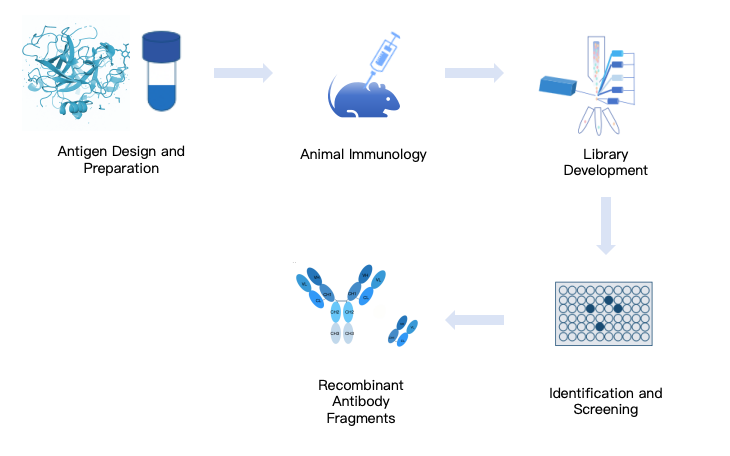
Figure 1: Preparation of mouse recombinant monoclonal antibodies
2. Procedure for Preparing Monoclonal Antibodies from Single Mouse B Cells
① Animal Immunization and PBMC Isolation. Mice are selected as experimental animals and immunized by injecting the target antigen (typically a target protein or peptide) to elicit an immune response. The mice are immunized 4-5 times to activate their immune system, prompting B cells to produce antibodies. Subsequently, ELISA titer determination, peripheral blood collection from immunized mice, and PBMC isolation are performed.
② Flow Cytometry Sorting. Antigen-specific single B cells are sorted using PBMC flow cytometry sorting methods.
③ Single B Cell Culture and Screening. The sorted single B cells are first cultured in vitro in 5–20 96-well plates for single B cell culture. The supernatants from the cell cultures are then screened by ELISA or subjected to preliminary detection methods such as FACS.
④ Sequencing of Positive Clones. At least 20 positive cell clones from the screening are selected for RT-PCR to amplify their antibody variable region genes, followed by sequencing.
⑤ Vector Construction and Antibody Expression/Purification. Finally, mammalian expression vectors for the antibodies are constructed, followed by cell transfection and ELISA validation.
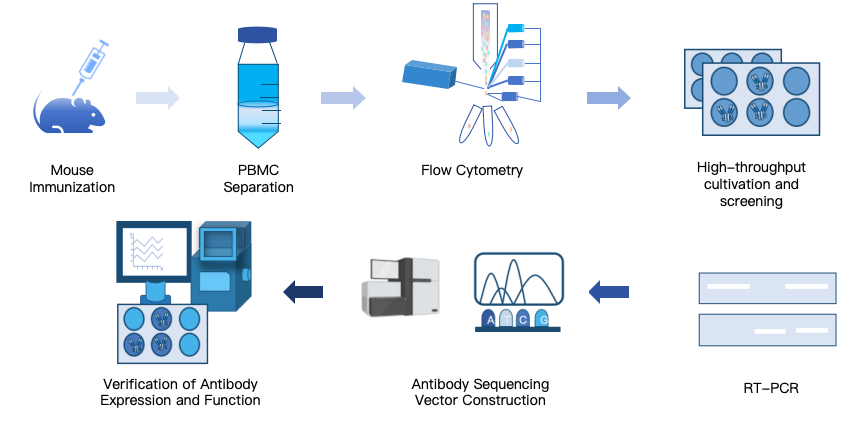
Fig. 2: Flowchart of monoclonal antibody production using the single mouse B cell technology
3. Advantages of Single B Cell Monoclonal Antibody Production
| Categories | Single B Cell Technology | Hybridoma Technology | Phage Display Technology |
| Antibody | Natural | Natural | Not natural |
| Antibody Affinity | High | High | Medium |
| Drugability | High | High | Low |
| Time | 16~20 weeks, rapid immunization optional | 20~26 weeks, rapid immunization optional | 16~20 weeks, rapid immunization optional |
| Antibody Gene Sequence | Get it directly | Further sequencing is required. | Get it directly |
| Antibody Diversity | High | Medium | Medium |
| Screenable Species | No restrictions on species | Rat, Rabbit | No restrictions on species |
The single B cell technology enables rapid monoclonal antibody production based on B cell characteristics, directly yielding complete single-source antibodies. This method is species-independent, highly efficient, and offers superior specificity, high antibody affinity, excellent drugability, robust genetic diversity, and fully natural origins. Additionally, it allows direct acquisition of antibody gene sequences.
4. Applications of Mouse Single B Cell Technology
Antibodies produced using mouse single B cell technology are widely applied in the following four areas:
① Drug Development – Antibodies generated through this technology can be used in the development of novel drugs, particularly showing great potential in the field of cancer treatment.
② Vaccine Development – These antibodies can enhance the efficacy and specificity of vaccines.
③ Immunotherapy – Antibodies produced via mouse single B cell technology can be utilized in immunotherapies, offering more personalized treatment options for patients.
④ Basic Medical Research – Due to their high specificity and diversity, these antibodies are valuable tools for studying biological processes and disease mechanisms.
KMD Bioscience provides high-quality mouse single B cell monoclonal antibody development services for clients.With a professional team and advanced technology platform, we specialize in screening high-affinity and highly specific monoclonal antibodies from murine B cells. Our comprehensive service covers the entire workflow—from cell culture and immunogen preparation to the isolation and cultivation of monoclonal cells—ensuring clients receive satisfactory antibody products.Utilizing cutting-edge biotechnology and a rigorous quality control system, we guarantee the stability and bioactivity of our antibodies. Whether clients require custom antibody development against specific antigens or large-scale antibody production, we deliver tailored solutions to meet diverse needs.Trust KMD Bioscience to obtain premium mouse single B cell monoclonal antibodies and accelerate your research and product development.
- Monoclonal Antibody
- Mouse Single B Cell Antibody Production
- Murine Single B Cell Antibody Manufacturing
- Single B Cell Antibody

- Protein Platform
- Protein Expression Services
- Protein Modification & Detection Services
- Protein Interaction Services
- Protein Purification Service
- Antibody Discovery Platform
- VHH Antibody Platform
- Phage Display Platform
- Antibody Humanization Platform
- Single B Cell Screening Platform
- Antibody Expression & Validation Platform
- Peptide Library Platform
- Custom Antibody Platform
- Innovative Drug Discovery Platform
- Product Center
- Proteins
- Antibodies
- Raw Materials Reagents
- Small Molecule Reagents
- Peptide Products
- Nanoparticle Products
- Contact Us
- Phone:400-621-6806
- Mobile:13110936064(WeC
- E-mail:[email protected]
- Address:Room 108, Building 10, No. 6 Hechang Road, Wuqing Development Zone, Tianjin City
-

WeChat
-

Service Account
-
 400-621-6806
 -
 3599163699
 -
 Monday to Friday 9:00-18:00
 -

-
 0
0
-
